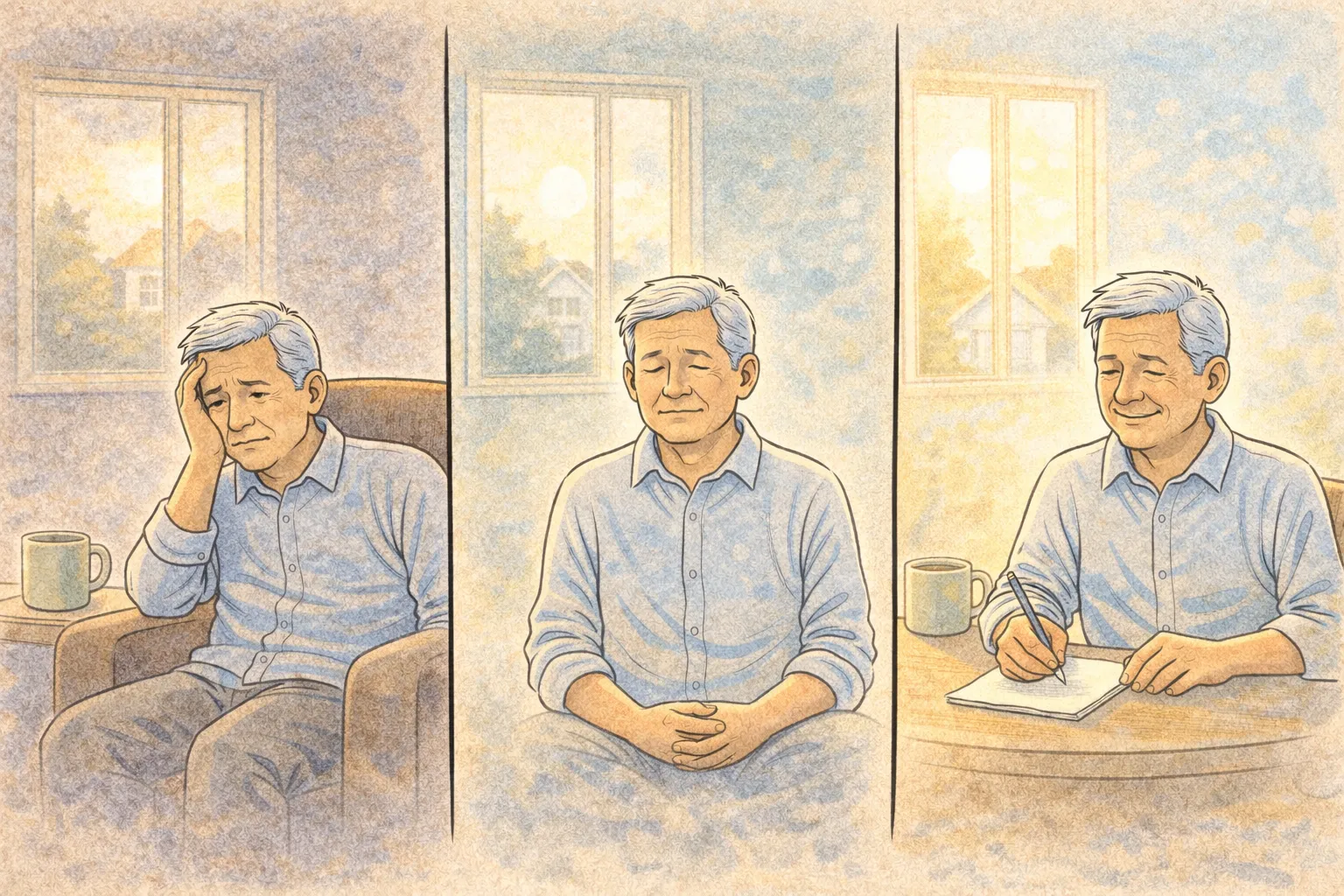
Panoramic comic-style illustration showing a retiree going from low motivation to calm focus through a simple morning routine
“I didn’t really do anything today…”
This feeling shows up more often than expected in retirement.
The day wasn’t bad. Nothing went wrong. You weren’t stressed.
But at the end of the day…
It feels like it didn’t count.
That’s the “wasted day” feeling.
And it has very little to do with how busy you were.
1. Why this feeling happens
A day feels “wasted” when it lacks:
direction
movement
completion
Not productivity.
Just a sense of progress.
2. The real problem
Most retirees don’t need more activity.
They need a clear starting point.
Without a starting point:
the day drifts
small tasks get delayed
nothing feels finished
3. The simple solution: a 10-minute routine
You don’t need a full plan.
You need a short reset at the start of your day.
Just 10 minutes.
That’s enough to change how your entire day feels.
4. What this routine does
This routine gives you:
direction
clarity
momentum
It turns a passive day into an intentional one.
5. The 10-minute structure
Minute 1–3 → Clear your head
Sit quietly. Notice what’s on your mind.
Minute 4–6 → Choose one thing
Pick one small action for the day.
Not five. Just one.
Minute 7–10 → Start it lightly
Take a small first step.
That’s enough to break inertia.
6. Why this works
Because it solves three problems:
no direction → fixed
no starting point → fixed
no progress → fixed
All in 10 minutes.
7. The psychological effect
Once you start one thing:
your brain relaxes
your energy increases
your day feels “in motion”
Even if you don’t do much else.
8. Real-life examples
Karen, 71:
“I stopped trying to plan everything.”
She started her day with one simple action.
Her words:
“My days finally felt like they counted.”
David, 74:
“I just needed a starting point.”
10 minutes changed that.
9. Common mistakes
Avoid turning this into:
a long morning routine
a strict schedule
a productivity system
This is not about doing more.
It’s about starting easier.
10. When to use this routine
Best times:
morning (most effective)
after a slow start
when you feel stuck
when the day feels unclear
11. Signs you need this
your day feels unstructured
you delay starting anything
you feel low energy early
you end the day feeling unsatisfied
12. What changes over time
With this habit:
days feel more complete
mental clarity improves
motivation increases
small actions become easier
Quick checklist
did I clear my mind?
did I choose one thing?
did I take a small step?
That’s enough for a good day.
The key insight
A day doesn’t need to be full to feel meaningful.
It just needs a beginning.
Conclusion
The “wasted day” feeling isn’t about doing too little.
It’s about never starting.
This 10-minute routine gives your day:
direction
movement
completion
And that’s what makes a day feel good.
Disclaimer
This content is for general educational purposes only and does not consider individual psychological or medical conditions. If persistent low motivation or mood changes occur, consult a qualified professional.
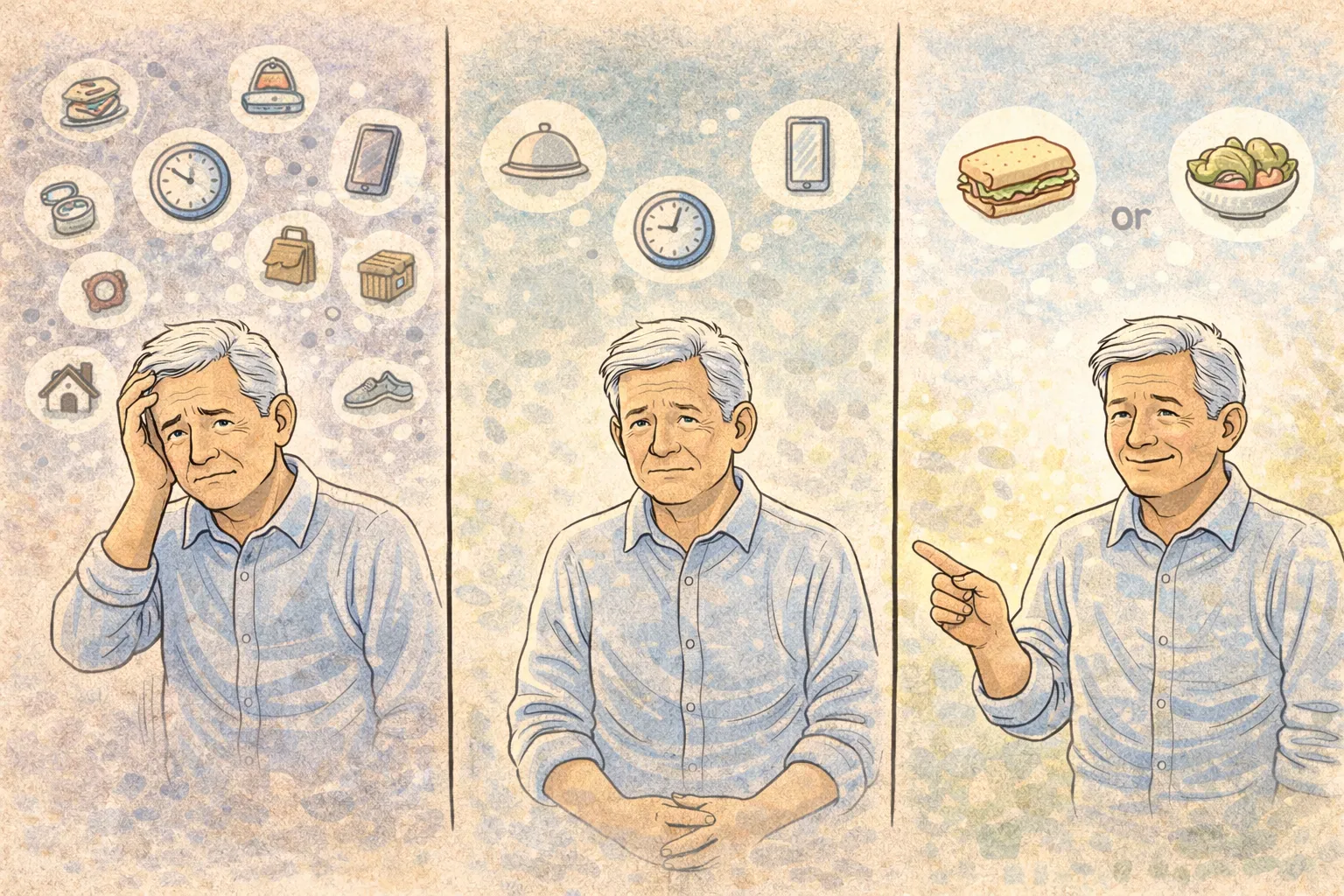
Panoramic comic-style illustration showing a retiree overwhelmed by many choices and then feeling calm after simplifying decisions
“Why is something this small so hard to decide?”
It’s a question many retirees quietly ask themselves.
What to eat. When to go out. Whether to call someone. What to do with the day.
None of these are big decisions.
And yet…
They can feel surprisingly difficult.
1. Why this happens after retirement
Before retirement, many decisions were already made for you.
work schedule
meal timing
daily structure
priorities
Your day had built-in direction.
After retirement, that disappears.
Now, everything becomes a choice.
2. Too much freedom creates friction
It sounds strange, but it’s true:
More freedom → more decisions
And more decisions → more mental effort
When everything is optional:
nothing feels clear
everything feels delayed
small choices feel heavier
3. The brain gets tired from deciding
This is called decision fatigue.
Even small decisions require energy.
When you face many small choices:
your brain slows down
you hesitate more
you delay action
This is why even simple things can feel exhausting.
4. The “no urgency” problem
After retirement, most decisions have no deadline.
You can always say:
“I’ll decide later.”
But that creates a loop:
delay
rethink
delay again
Without urgency, decisions lose momentum.
5. Why small decisions feel bigger than they are
Because they represent something deeper.
When you decide:
“What should I do today?”
You are really deciding:
“What does my life look like now?”
That’s not a small question.
6. The hidden mental load
Every unmade decision stays in your mind.
Even if you’re not actively thinking about it.
This creates:
background stress
mental clutter
low-level tension
7. The mistake most people make
They try to:
think more
analyze more
find the perfect choice
But that makes it worse.
More thinking = more pressure
8. The simple fix: reduce decisions
You don’t need better decisions.
You need fewer decisions.
9. The 2-choice rule
Instead of unlimited options:
Limit yourself to two.
Example:
walk or stay home
call or don’t call
cook or order
Two choices = faster action
10. The “default option” method
Create simple defaults.
breakfast stays the same
morning routine stays the same
certain days follow a pattern
This removes unnecessary decisions.
11. The “decide once” strategy
Some decisions don’t need to be repeated daily.
Decide once, then reuse.
Example:
fixed walk time
regular call day
weekly outing
12. Real-life examples
Nancy, 68:
“I didn’t realize how tiring small choices were.”
She simplified her mornings.
Her days became easier immediately.
Tom, 72:
“I stopped overthinking everything.”
He used the 2-choice rule.
That alone reduced stress.
13. Signs you have decision fatigue
you delay simple choices
you overthink small things
you feel mentally tired early
you keep changing your mind
you avoid deciding altogether
Quick checklist
did I limit my choices today?
did I avoid overthinking?
did I use simple defaults?
If yes, your day will feel easier.
The key insight
It’s not that decisions became harder.
It’s that you have more of them.
Conclusion
Retirement gives you freedom.
But freedom needs structure.
When you reduce decisions:
your mind becomes clearer
your energy improves
your day feels easier
Small changes make a big difference.
Disclaimer
This content is for general educational purposes only and does not consider individual psychological or medical conditions. If decision-making difficulty becomes persistent or distressing, consult a qualified professional.
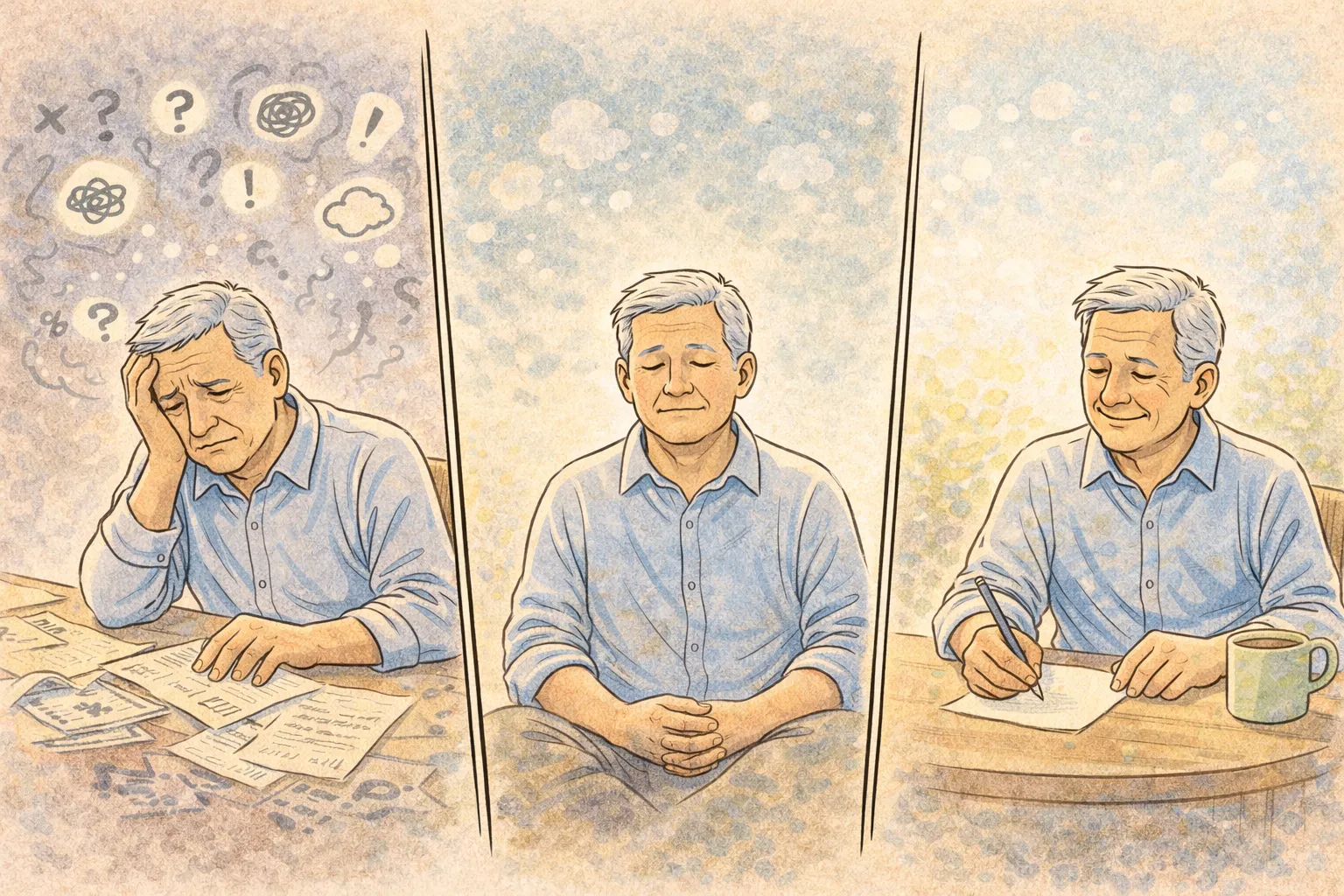
Panoramic comic-style illustration showing a retiree moving from mental clutter to calm clarity through a daily reset habit
“It’s not a big change… but my days feel better.”
That’s how many retirees describe this habit.
It doesn’t require effort.
It doesn’t take much time.
And it doesn’t look impressive from the outside.
But it quietly improves:
your mood
your clarity
your energy
your daily rhythm
All from one simple action.
1. The habit: a daily reset moment
The habit is simple:
Take a few minutes each day to pause, reset, and look at your day clearly.
Not planning everything.
Not overthinking.
Just a short reset.
2. Why this matters more after retirement
During working years, structure resets your day automatically.
schedules
meetings
routines
After retirement, that disappears.
Without a reset point:
days drift
thoughts build up
energy becomes uneven
3. What happens without it
Without a reset moment:
small thoughts pile up
tasks stay unfinished
your mind stays busy
your day feels unclear
Even if nothing is “wrong”
Things don’t feel settled.
4. What a reset actually does
A short reset helps you:
clear mental clutter
reduce background stress
feel more in control
refocus your attention
It’s like cleaning your mind.
5. The 3-minute version
You don’t need a routine.
Start with this:
pause
sit quietly
ask: “What matters for the rest of today?”
That’s it.
6. The 5-minute version (better)
If you want slightly more structure:
write one thought down
choose one small action
let go of everything else
Simple.
Clear.
Effective.
7. The best time to do it
Any time works.
But these are most effective:
morning (sets direction)
midday (resets energy)
evening (clears mind)
Choose one.
Keep it consistent.
8. Why it works so well
Because it does three things:
reduces mental noise
creates direction
gives a sense of completion
These three alone improve how a day feels.
9. Real-life examples
Anna, 70:
“I started writing one sentence each morning.”
That alone made her days feel clearer.
Paul, 73:
“I didn’t need a plan. I needed a pause.”
That pause changed everything.
10. Signs you need this habit
your thoughts feel scattered
your day feels unclear
you feel mentally busy
you delay simple tasks
you don’t feel settled
If this feels familiar, this habit helps.
11. What NOT to do
Avoid turning this into:
a long routine
a strict system
a productivity tool
This is not about doing more.
It’s about thinking less.
12. The long-term effect
Over time, this habit creates:
calmer thinking
clearer days
better decisions
more stable mood
Not instantly.
But consistently.
Quick checklist
did I pause today?
did I clear one thought?
did I choose one direction?
That’s enough.
The key insight
You don’t need to control your whole day.
You just need one moment of clarity.
Conclusion
Retirement doesn’t need complexity.
It needs small, steady habits.
This one habit—
a simple daily reset—
can quietly improve everything.
Disclaimer
This content is for general educational purposes only and does not consider individual psychological or medical conditions. If persistent stress or mental discomfort continues, consult a qualified professional.
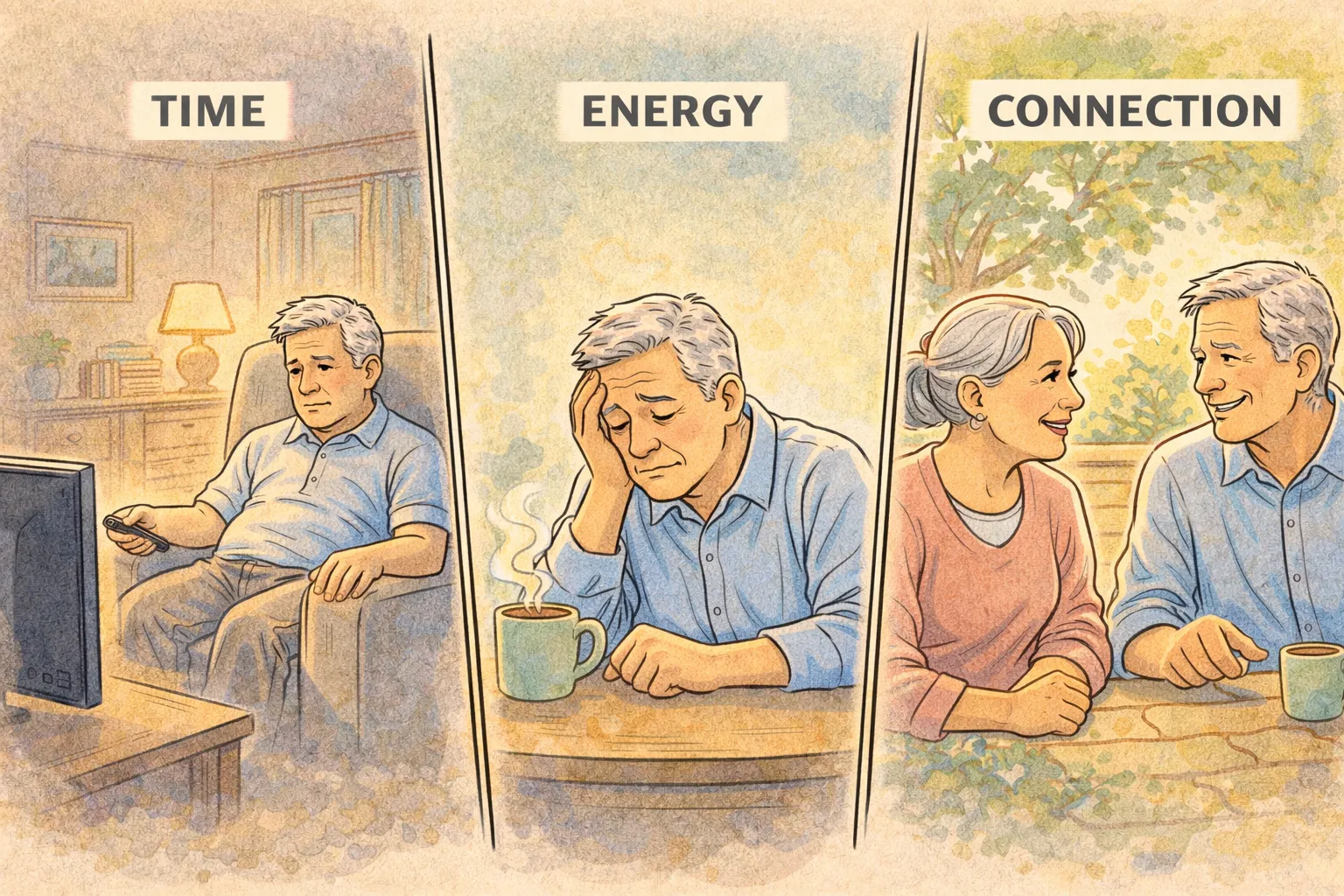
Panoramic comic-style illustration showing three retirement states: poor time use, low energy, and meaningful social connection
Most people think retirement is shaped by money.
But that’s not entirely true.
Money matters.
But what really shapes your retirement is something deeper.
Three decisions.
Not hundreds.
Just three.
And once they are set, everything else follows.
1. Decision #1 — How you use your time
After retirement, time becomes your main resource.
But here’s the challenge:
There’s no default structure anymore.
No one tells you what to do.
No schedule is given to you.
So you must decide:
“What is my day for?”
Why this decision matters
Without a clear answer, days become:
repetitive
unstructured
low-energy
With a clear answer, days become:
intentional
steady
meaningful
Two common patterns
Passive time use:
waiting for something to happen
reacting to the day
filling time randomly
Intentional time use:
choosing small daily anchors
creating rhythm
planning lightly
2. Decision #2 — How you protect your energy
Time is important.
But energy is everything.
You can have time…
And still feel tired, slow, or unmotivated.
That’s because retirement is not about hours.
It’s about how those hours feel.
What drains energy
too much sitting
too much staying at home
too many small decisions
too much availability
low interaction
What protects energy
simple movement
daily structure
limited commitments
mental clarity
recovery time
The key shift
Stop asking:
“How do I fill my day?”
Start asking:
“How do I protect my energy?”
3. Decision #3 — Who you stay connected to
Connection becomes more important after retirement.
Not less.
But it often becomes less automatic.
You no longer have:
coworkers
daily interactions
built-in conversations
So connection becomes a choice.
Without connection
Days can feel:
quiet
isolated
repetitive
With connection
Life feels:
more alive
more balanced
more meaningful
Connection doesn’t have to be big
It can be:
a short call
a quick conversation
a regular weekly visit
Small contact matters.
4. Why these 3 decisions matter more than anything else
Most retirement advice focuses on:
saving money
investing
budgeting
But those don’t shape your daily experience.
These three decisions do:
time
energy
connection
They control how your life feels every day.
5. What happens if you ignore them
Without clear decisions:
time becomes empty
energy becomes low
connection becomes rare
And retirement starts to feel:
slow
unclear
slightly unsatisfying
6. What happens if you get them right
With these decisions in place:
your days have rhythm
your energy improves
your life feels more stable
Not perfect.
But steady.
And that’s what most people actually want.
7. A simple way to apply this
You don’t need a full plan.
Start small.
Each day:
choose one anchor (time)
protect one energy habit
include one connection
That’s enough.
8. Real-life examples
George, 72:
“I thought retirement was about free time. Turns out, I needed structure more than freedom.”
Linda, 69:
“Once I focused on my energy, everything else improved.”
Michael, 74:
“I didn’t realize how important small conversations were until I had fewer of them.”
9. Signs these decisions need attention
your days feel unstructured
you feel low energy often
you have fewer interactions
your routine feels unclear
you feel slightly disconnected
If this sounds familiar, these three decisions are the place to start.
Quick checklist
did I use my time intentionally today?
did I protect my energy?
did I connect with someone?
If yes, your day is working.
The key insight
Retirement is not shaped by one big decision.
It’s shaped by three small ones—repeated daily.
Conclusion
You don’t need to control everything.
You just need to guide:
your time
your energy
your connection
When those are steady,
Retirement becomes not just easier—
But better.
Disclaimer
This content is for general educational purposes only and does not consider individual health, financial, or psychological conditions. For personalized guidance, consult a qualified professional.
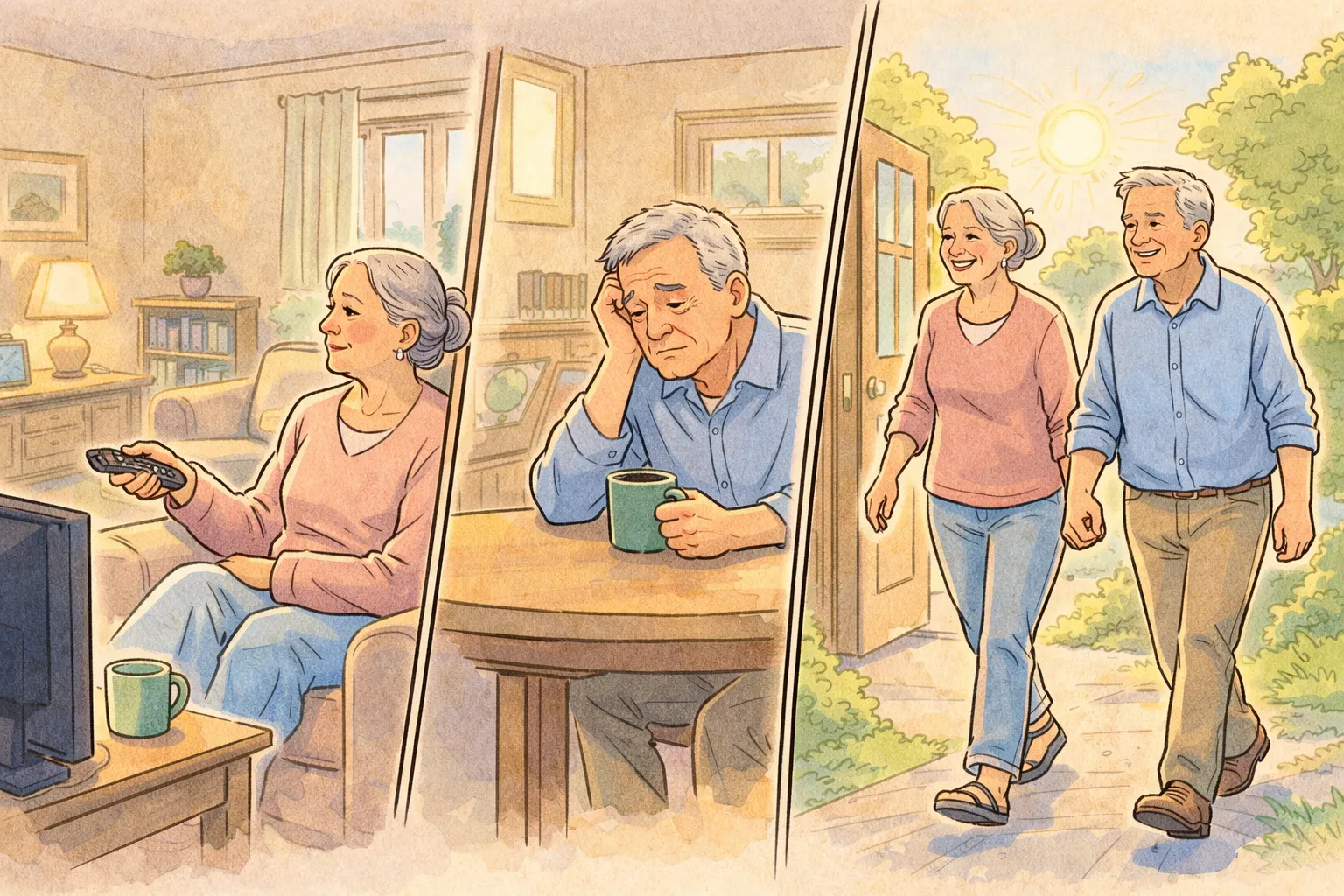
Panoramic comic-style illustration showing retirees staying indoors feeling low energy versus going outside feeling refreshed and active
“I didn’t go anywhere today.”
At first, that feels comfortable.
No traffic.
No pressure.
No schedule.
Just quiet.
But when many days start to look like this…
Something slowly changes.
Not suddenly.
Not dramatically.
But noticeably.
1. Why staying home feels good at first
After retirement, staying home can feel like relief.
no commute
no deadlines
no obligations
Home becomes a safe space.
And that’s a good thing.
2. When comfort turns into pattern
The problem is not staying home.
The problem is staying home too consistently.
When days repeat like this:
wake up
sit
move around the same space
minimal outside interaction
Your world quietly shrinks.
3. Your brain needs variation
The human brain responds to change.
Different places
Different faces
Different small experiences
When everything stays the same:
stimulation drops
alertness drops
energy drops
This is why long periods at home can feel oddly tiring.
4. The “slow blur” effect
Many retirees describe this feeling:
Days start blending together.
Monday feels like Wednesday.
Morning feels like afternoon.
There are fewer markers in the day.
This creates a sense of:
time moving strangely
lack of clarity
reduced motivation
5. Movement becomes minimal
At home, movement is limited.
fewer steps
less walking
less standing
more sitting
Even if you feel “rested,”
Your body slowly loses energy.
6. Social interaction drops quietly
This is one of the biggest changes.
Without realizing it, you may have:
fewer conversations
less eye contact
fewer spontaneous interactions
Even small interactions matter more than we think.
7. Mood becomes flatter
When environment and routine don’t change much:
Mood often becomes:
neutral
low-energy
slightly disconnected
Not depressed.
Just… flat.
8. The key problem is not laziness
This is important.
Staying home too much is not about laziness.
It’s about lack of variation.
Your brain and body are responding exactly as expected.
9. A simple way to fix it
You don’t need a busy life.
You need small changes.
Try:
stepping outside once a day
changing rooms intentionally
short walks
visiting one place weekly
brief social contact
Small changes → big impact
10. The 3-exposure rule
A simple structure:
Each day, include at least:
outside exposure
movement
human interaction
Even small versions count.
11. Real-life example
Carol, 71:
“I didn’t feel bad. Just… dull.”
She started going outside for 10 minutes every morning.
That alone made her feel more awake.
David, 68:
“I didn’t realize how little I was moving.”
He added one short walk after lunch.
His energy improved within a week.
12. Signs you may be staying home too much
days feel repetitive
you feel slightly tired without reason
you delay going outside
your mood feels flat
you move less than before
you have fewer conversations
If this feels familiar, it’s not a problem.
It’s a signal.
Quick checklist
did I go outside today?
did I move my body?
did I talk to someone?
did I change my environment at least once?
If not, tomorrow is a new chance.
The key insight
Home should feel safe.
Not limiting.
Conclusion
Staying home is comfortable.
But too much comfort can quietly reduce energy, clarity, and mood.
You don’t need a full schedule.
You need small variation.
That’s what keeps retirement feeling alive.
Disclaimer
This content is for general educational purposes only and does not consider individual health or psychological conditions. If prolonged low mood or isolation occurs, consult a qualified professional.
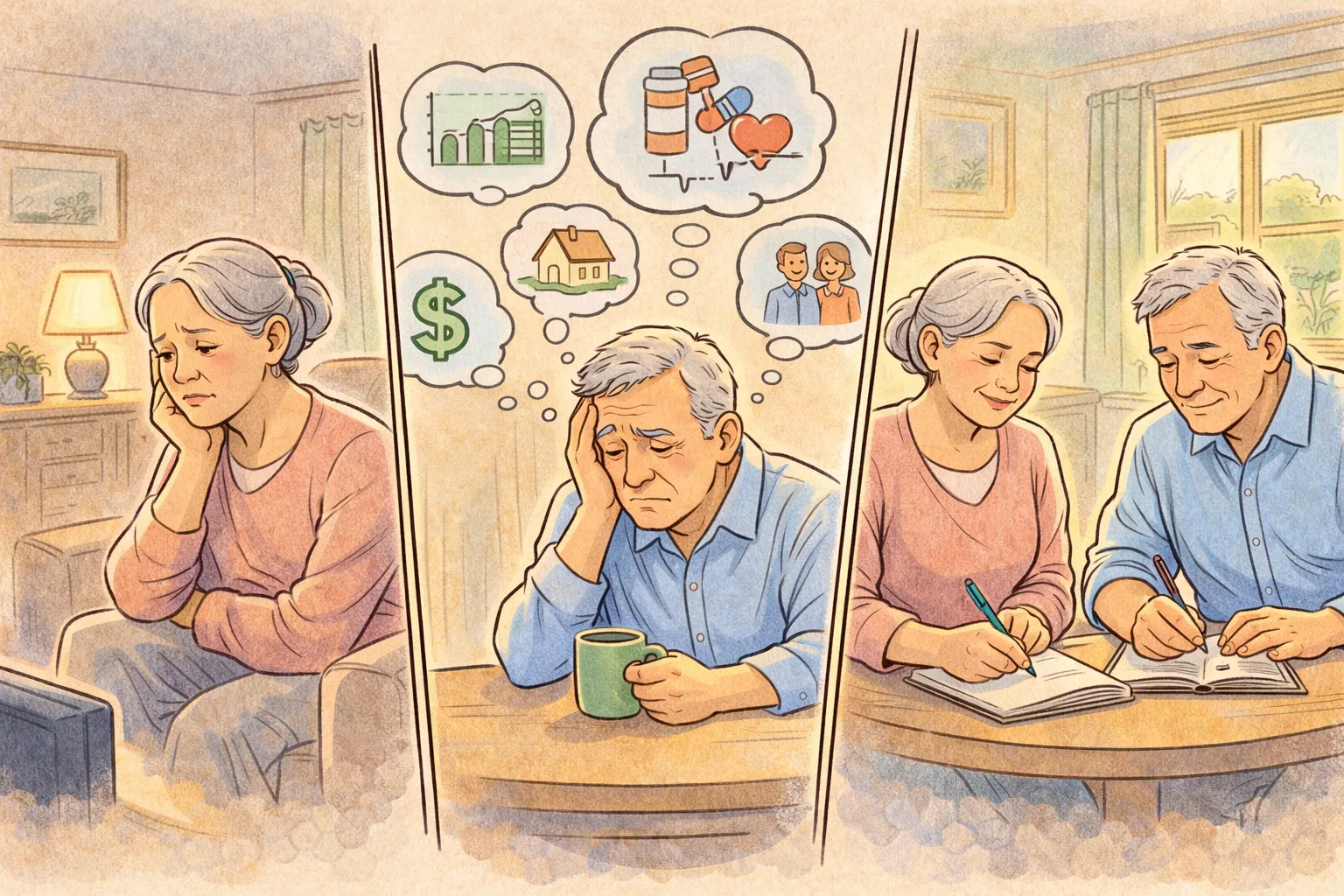
Panoramic comic-style illustration showing seniors experiencing quiet stress with thought bubbles versus finding calm through writing and reflection
“I’m not overwhelmed… but I don’t feel fully at ease either.”
This is a kind of stress many retirees experience.
It’s not loud.
It doesn’t feel urgent.
It doesn’t look serious from the outside.
But it’s there.
Every day.
In small ways.
1. What “quiet stress” really means
Quiet stress is not obvious pressure.
It’s not deadlines. Not emergencies. Not visible problems.
It’s a background feeling.
Something like:
low-level tension
subtle unease
constant thinking
mild restlessness
It’s easy to ignore.
But hard to fully relax with.
2. Why it shows up after retirement
Retirement removes obvious stress.
But it also removes structure.
That creates space.
And in that space, small thoughts grow.
Things like:
“Am I doing enough?”
“Is this how my days should feel?”
“What happens later?”
These are not urgent questions.
But they don’t disappear.
3. It’s not one problem—it’s many small ones
Quiet stress is rarely caused by one big issue.
It usually comes from:
small uncertainties
unfinished thoughts
low-level decisions
subtle worries
Each one is manageable.
Together, they create mental weight.
4. The “always thinking” pattern
Many retirees notice this:
You are not busy…
But your mind is.
Thinking about:
health
money
family
future
small tasks
Not intensely.
Just constantly.
5. Why it’s easy to overlook
Quiet stress doesn’t interrupt your day.
You can still:
eat normally
sleep okay
go about your routine
That’s why it goes unnoticed.
But over time, it can lead to:
mental fatigue
low energy
reduced enjoyment
feeling slightly “off”
6. The emotional impact
Quiet stress often feels like:
you can’t fully relax
you’re slightly on edge
something is unresolved
your mind doesn’t fully settle
It’s subtle.
But persistent.
7. The hidden sources
Common sources include:
financial uncertainty
health awareness
family concerns
lack of daily structure
too much unplanned time
low social interaction
None of these alone feel overwhelming.
But together, they add up.
8. Why “doing more” doesn’t fix it
Many people try to fix this by:
staying busy
adding tasks
filling the day
But quiet stress is not about activity.
It’s about mental clarity.
9. A better way to reduce it
You don’t need a big solution.
You need small mental resets.
Try:
writing down lingering thoughts
limiting overthinking time
creating small daily anchors
having one clear plan for the day
talking things out
Clarity reduces pressure.
10. The “one clear thing” method
Each day, choose:
One thing that matters.
Not ten things.
Not a full list.
Just one.
This gives your mind:
direction
completion
relief
11. Real-life examples
Helen, 72:
“I wasn’t stressed… but I wasn’t relaxed either.”
She started writing down her thoughts each morning.
Her words:
“It cleared my head more than I expected.”
James, 69:
“I kept thinking about small things all day.”
He started choosing one daily focus.
That alone reduced his mental noise.
12. Signs you may have quiet stress
you feel slightly tense without a clear reason
your mind keeps running in the background
you struggle to fully relax
you feel mentally tired without doing much
you feel “off” but can’t explain why
If this feels familiar, you’re not alone.
Quick checklist
did I clear my thoughts today?
did I focus on one thing?
did I reduce mental clutter?
did I pause instead of overthinking?
Small changes matter.
The key insight
Not all stress is loud.
Some of it is quiet.
And quiet stress is often the one that stays the longest.
Conclusion
Retirement removes pressure.
But it doesn’t remove thinking.
And sometimes, thinking becomes the new source of stress.
The solution is not to fill your life with more activity.
It’s to create more mental clarity.
That’s what brings real calm.
Disclaimer
This content is for general educational purposes only and does not address individual psychological or medical conditions. If persistent anxiety, stress, or mood changes occur, consult a qualified pr
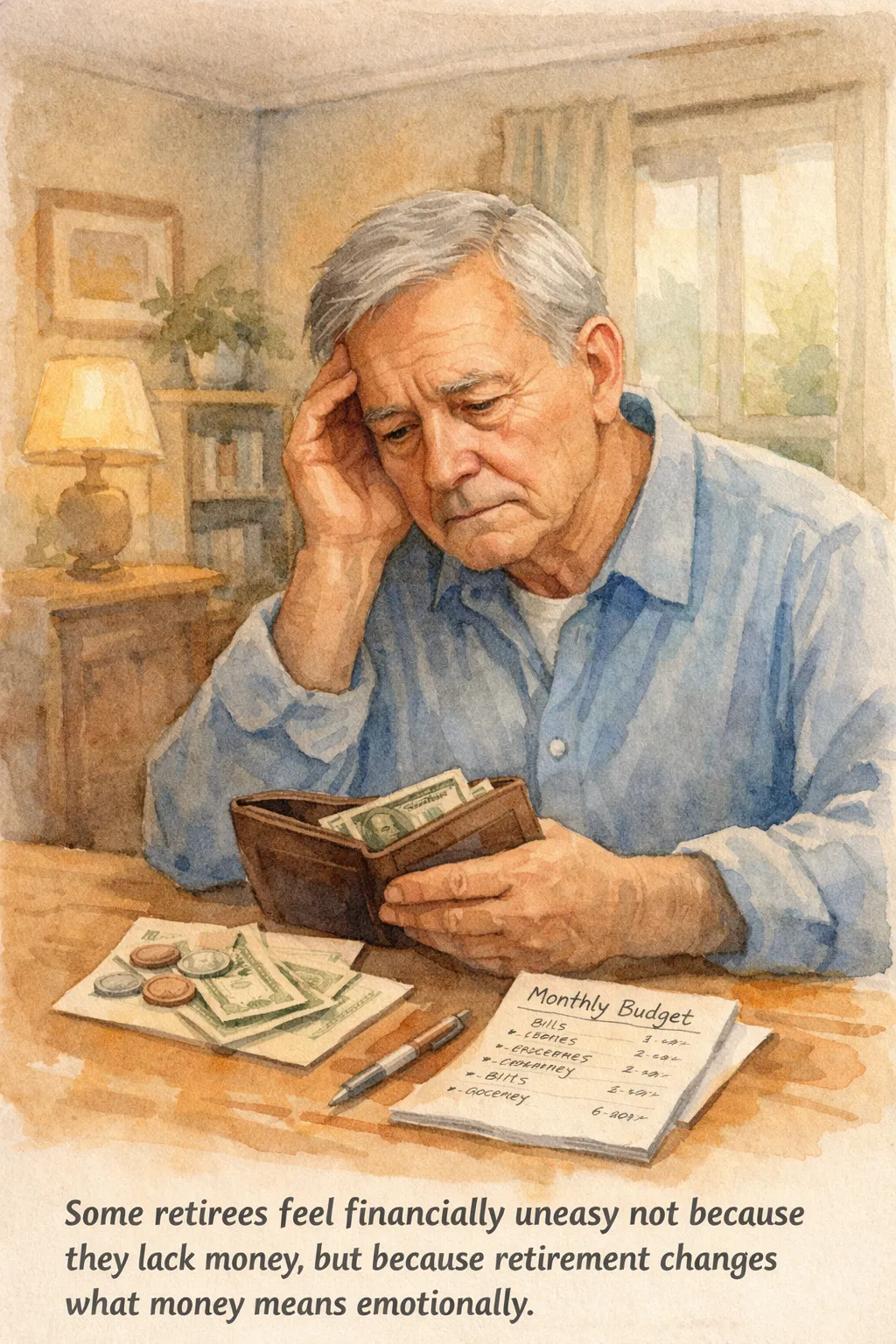
Older adult looking at a wallet with cash and monthly budget notes, appearing financially uneasy despite having money
“I know I’m not broke… so why do I still feel financially uneasy?”
This is more common than people think after retirement.
On paper, things may look okay.
the bills are being paid
savings still exist
there is no immediate crisis
spending is not out of control
And yet, emotionally, something feels tight.
You hesitate before buying small things. You check balances more often than you want to. You feel uneasy spending money even when the spending is reasonable.
This experience can be confusing.
Because it is not always about actual poverty.
Sometimes, it is about the psychology of retirement money.
1. Income feels different when it stops being earned
Before retirement, money often felt connected to effort.
You worked. You got paid. You could recover from a mistake with future income.
After retirement, money feels different.
Now it can feel like:
a fixed pool
a limited runway
something that only goes down
Even when your numbers are stable, your emotional experience of money changes.
That shift alone can make people feel poorer than they actually are.
2. Uncertainty feels expensive
Retirement money is rarely stressful only because of the amount.
It is stressful because of uncertainty.
Questions begin to stack up:
What if prices keep rising?
What if I need more care later?
What if I live longer than expected?
What if one big expense throws everything off?
These questions create a constant background tension.
So even when today is financially manageable, tomorrow feels expensive.
That emotional gap can feel like poverty, even when it is really uncertainty.
3. Spending now can feel like stealing from your future self
This is one of the biggest retirement money shifts.
Before retirement:
spending often felt normal if income continued coming in.
After retirement:
spending can feel like taking something away from the future.
That is why even reasonable purchases can trigger guilt.
You may think:
“Do I really need this?”
“What if I regret spending this later?”
“I should probably save that instead.”
This mindset can become so strong that enjoyment disappears.
4. Past money stress does not disappear just because retirement begins
Many retirees carry old money emotions into a new stage of life.
If you spent decades feeling:
cautious
under pressure
responsible for everyone
worried about bills
afraid of financial mistakes
Those patterns do not vanish automatically at retirement.
Sometimes the old stress remains, even when the current numbers are better.
Your bank account may improve faster than your nervous system.
5. Retirement removes the feeling of “margin”
A lot of retirees do not feel poor.
They feel like they have no margin.
Margin means:
room to absorb surprises.
Without margin, even stable finances can feel fragile.
A person may technically have enough money for monthly life,
but still feel anxious because there is not much extra space for:
repairs
medical changes
family emergencies
travel
inflation
care needs later on
That lack of breathing room is emotionally powerful.
You stop asking:
“Am I safe enough for my actual life?”
And start asking:
“Why am I not as comfortable as them?”
Comparison often creates false scarcity.
7. The word “enough” becomes harder to define
Before retirement, enough may have meant:
paying bills
saving regularly
avoiding debt
After retirement, enough becomes more emotional.
Now it may mean:
safety
predictability
longevity
freedom from fear
That is a much harder target.
And when the target keeps moving, it becomes easy to feel poor even while objectively stable.
Real-life example
Elaine, 70, had no debt, a paid-off home, and enough monthly income to cover her life comfortably.
But she still felt anxious buying new shoes or replacing small household items.
Her words were simple:
“I don’t feel broke. I feel exposed.”
That was the real issue.
Not lack of money.
Lack of emotional safety around money.
Once she created a small monthly “allowed spending” amount for everyday life, her stress dropped.
Nothing about her finances changed dramatically.
But her relationship with money did.
Another example
Martin, 73, kept checking his accounts every few days.
He was not overspending.
He was not in danger.
But he still felt uneasy.
Eventually he realized he was not checking for information.
He was checking for reassurance.
That distinction mattered.
Once he moved to a weekly money check instead of frequent balance checking, he felt steadier.
8. Feeling poor is sometimes really fear of future dependence
This is especially true for older adults living alone or thinking ahead.
Money anxiety is often connected to questions like:
Will I need help later?
Will I become a burden?
Will I be able to choose my care?
Will I lose control?
In this case, “I feel poor” may really mean:
“I’m afraid I won’t have enough control later.”
That fear deserves respect.
But it should be named accurately.
Because once you identify the real fear, you can respond more clearly.
9. What actually helps
The solution is not always “save more.”
Sometimes the real need is:
more clarity
less over-checking
a realistic buffer
a simple spending structure
a better definition of enough
Helpful questions:
What does “enough” mean for my real life?
Which expenses are actually stable?
Which fears are concrete, and which are vague?
What would make me feel more financially steady this month?
These questions calm the nervous system more than constant account checking.
10. A calmer way to think about retirement money
Try separating money into three emotional categories:
1. Safety money
This covers essentials:
housing, food, utilities, insurance, medication
2. Stability money
This covers realistic irregular costs:
repairs, appointments, gifts, seasonal spending
3. Life money
This covers living:
coffee out, hobbies, outings, comfort purchases, small joy
Many retirees feel poor because “life money” disappears emotionally.
Everything starts feeling like it must stay in safety mode.
But a retirement life with no room for enjoyment often feels smaller than it needs to.
11. Signs this is more emotional than mathematical
You may be experiencing retirement money anxiety more than actual shortage if:
you feel guilty spending small amounts
you are financially stable but still feel constantly uneasy
you check balances often for reassurance
you postpone reasonable purchases repeatedly
you struggle to define what “enough” means
you feel safer saving than living
That does not mean the feeling is imaginary.
It means the solution may require emotional clarity, not only arithmetic.
12. A better question than “Am I poor?”
Instead of asking:
“Am I poor?”
Try asking:
“Do I feel unclear, unsafe, or out of control?”
That question is usually more accurate.
And it leads to better next steps.
Because those are not all the same problem.
Quick checklist
I feel guilty spending even small amounts
I often fear future costs more than current ones
I check accounts for comfort, not just information
I rarely feel like I have enough margin
I struggle to enjoy money I can reasonably afford to use
If this feels familiar, the problem may not be lack of money alone.
It may be lack of emotional steadiness around money.
The key insight
Some retirees feel poor even with enough money
because retirement changes what money means.
It is no longer just income.
It becomes safety, time, control, and future security.
That is why the emotional experience can feel much tighter than the numbers suggest.
Conclusion
Feeling financially uneasy in retirement is not always a sign that you are doing something wrong.
Sometimes it means:
you need more clarity
you need a calmer money rhythm
you need permission to define “enough” more realistically
Money peace in retirement is not just about having more.
It is about understanding what the money is carrying emotionally.
Once you see that clearly, the fear often becomes easier to manage.
Disclaimer
This content is for general educational purposes only and does not provide financial, legal, tax, or investment advice. Individual financial situations vary. For personalized guidance, consult a qualified financial professional.
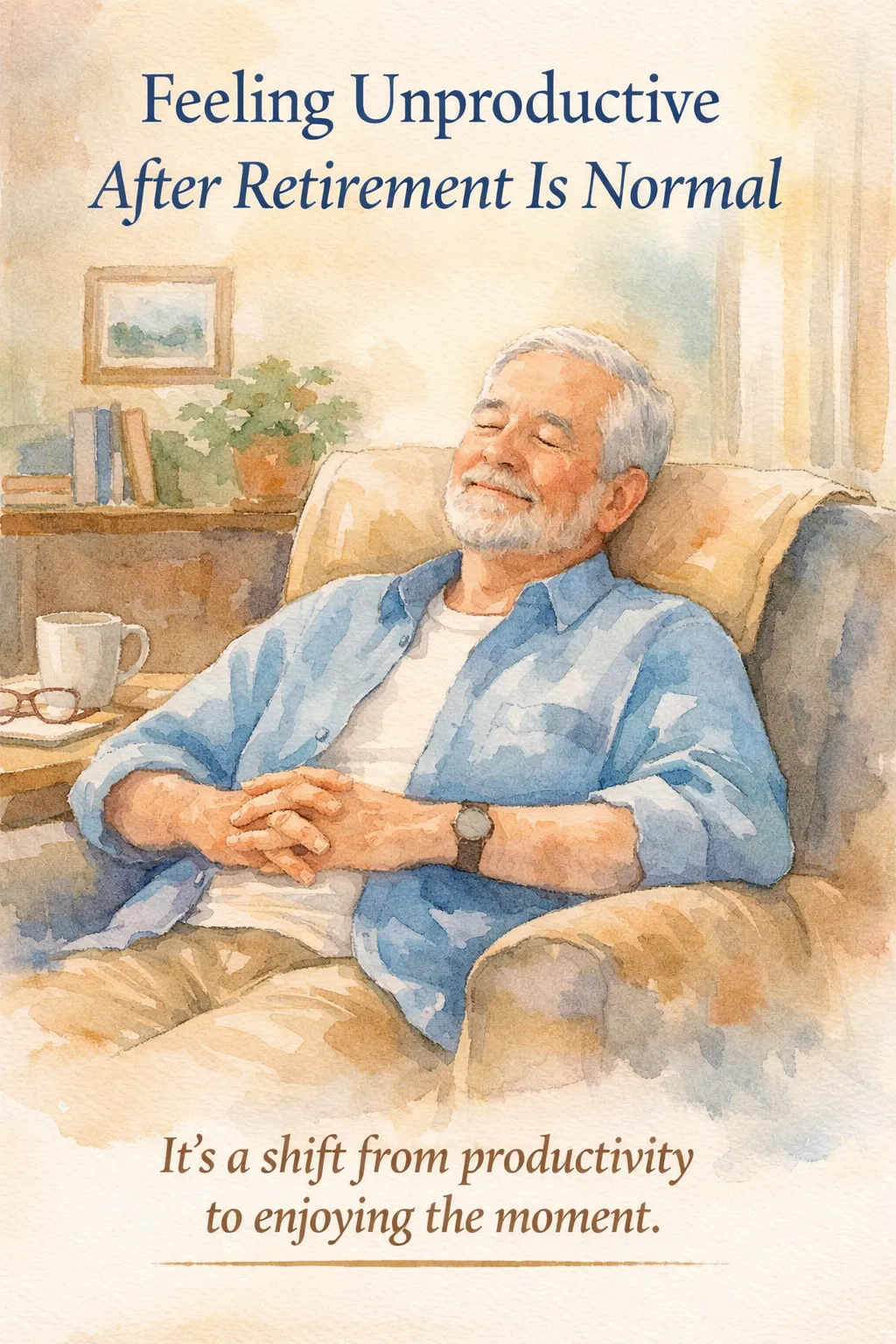
Older adult relaxing comfortably in a chair at home, representing a calm and quiet retirement day without pressure
“I didn’t really do anything today.”
This thought shows up more often than people expect after retirement.
The strange part is this:
You may have had a calm day. Nothing stressful happened. You weren’t overwhelmed.
And yet…
You still feel slightly uncomfortable.
Like something is missing.
Like the day didn’t “count.”
This feeling is very common.
And more importantly—
It’s completely normal.
1. Why productivity used to define your day
For decades, life followed a pattern:
tasks to complete
work to finish
responsibilities to manage
goals to reach
At the end of the day, there was a clear question:
“Did I get things done?”
That question shaped how you felt.
Productivity = satisfaction
2. What changes after retirement
Retirement removes that structure.
There is no longer:
a daily output requirement
a performance expectation
a clear definition of “done”
This creates a gap.
Not in time—
But in meaning.
3. The “invisible day” feeling
Many retirees experience this:
The day passes quietly.
But at the end, it feels like:
nothing important happened
nothing was completed
nothing stands out
This creates the feeling of being unproductive.
Even if the day was peaceful.
4. Why this feeling is uncomfortable
Your brain has been trained for years to measure value through output.
So when output disappears, the brain reacts:
“Was today useful?”
“Did I waste time?”
“Should I have done more?”
This is not a flaw.
It’s conditioning.
5. Rest is not the same as “nothing”
This is the key misunderstanding.
Rest is not empty.
Rest is active recovery.
But when you’re used to productivity, rest can feel like:
laziness
lack of purpose
wasted time
That’s not true.
It just feels unfamiliar.
6. The hidden pressure retirees carry
Even without a job, many retirees feel internal pressure:
“I should be doing something”
“I shouldn’t waste my time”
“I need to stay productive”
This pressure is often invisible.
But it shapes how your day feels.
7. A healthier way to define a “good day”
Instead of asking:
“What did I finish today?”
Try asking:
“Did today feel steady?”
or
“Did I take care of myself today?”
This is a different kind of success.
8. The 3 ways a day can be valuable
A good day in retirement can include:
Maintenance (simple tasks, small routines)
Enjoyment (rest, hobbies, calm moments)
Connection (conversation, interaction)
That’s enough.
9. Real-life examples
Susan, 68:
“I used to feel guilty for relaxing. Now I see it as part of my day—not a failure.”
Robert, 72:
“I stopped measuring my days by output. I started noticing how I felt instead.”
10. Signs you’re judging yourself too harshly
you feel guilty for resting
you compare today to your working years
you feel like you “should have done more”
you struggle to enjoy free time
you measure value only through tasks
If this sounds familiar, you’re not doing retirement wrong.
You’re just using old rules.
11. What to do instead
You don’t need to become more productive.
You need a new definition of enough.
Try:
one small task per day
one enjoyable moment
one form of connection
That’s a full day.
12. The mindset shift
Old mindset:
“I need to earn my rest.”
New mindset:
“Rest is part of a complete day.”
This shift removes pressure.
Quick checklist
did I move a little today?
did I have one calm moment?
did I connect with someone (even briefly)?
did I take care of myself?
If yes, the day counts.
The key insight
Feeling unproductive after retirement is not a problem.
It’s a transition.
You’re moving from a life measured by output…
To a life measured by experience.
Conclusion
Retirement is not about doing nothing.
It’s about doing what matters—at a different pace.
Some days will be quiet.
Some days will feel slow.
That doesn’t make them empty.
It makes them human.
Disclaimer
This content is for general educational purposes only and does not address individual psychological or medical conditions. If feelings of low motivation or mood persist, consult a qualified professional.
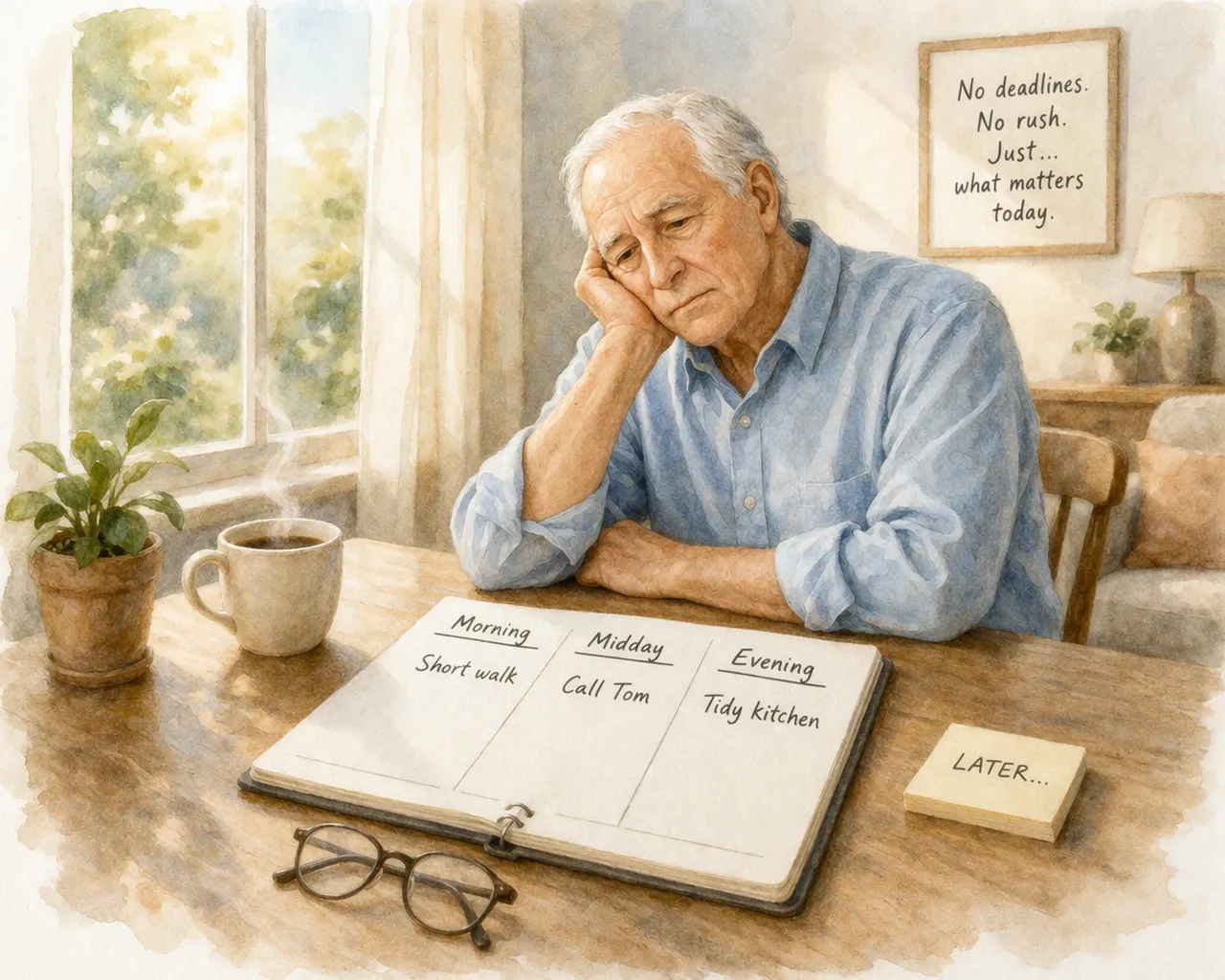
Older adult sitting quietly with a blank planner looking unsure how to start the day
“Nothing really needs to be done today… so why do I feel stuck?”
This is a quiet but very real experience after retirement.
No deadlines. No boss. No urgent emails.
At first, this feels like freedom.
But over time, something strange happens.
You start to feel:
unmotivated
slow to start the day
unsure what matters
mentally stuck
Not because you’re lazy.
But because nothing feels urgent anymore.
1. Why urgency disappears after retirement
During working years, urgency is built into life.
deadlines
meetings
responsibilities
expectations
These create structure automatically.
After retirement, that structure disappears.
And with it, urgency disappears too.
2. Why this creates a problem
You might think:
“No urgency = less stress”
But in reality:
No urgency can lead to:
delayed decisions
endless postponing
low energy
loss of direction
Without urgency, the brain struggles to prioritize.
3. The brain needs signals
Your brain works best when it has:
clear start points
clear reasons to act
small levels of pressure
Without these, everything feels optional.
And when everything is optional…
Nothing gets done.
4. The “I’ll do it later” loop
This is the most common pattern:
“I’ll go for a walk later.” “I’ll organize that tomorrow.” “I’ll call them sometime.”
Later becomes:
next day
next week
never
This creates a quiet mental burden.
Unfinished tasks drain energy.
5. The hidden emotional effect
When nothing feels urgent, you may start feeling:
slightly restless
mentally foggy
oddly tired
unaccomplished
Even if your day was “easy”
That’s because progress—not pressure—creates satisfaction.
6. The simple fix: gentle urgency
You don’t need stress.
You need light structure.
Think of it as “gentle urgency.”
Not pressure.
Just direction.
7. The 3-anchor day method
A simple solution:
Create 3 small anchors each day.
Morning Midday Evening
Each anchor = one small action.
Example:
Morning → short walk Midday → one task (call, errand) Evening → simple reset (tidy, plan)
That’s it.
8. Why this works
This method works because it:
gives your brain direction
creates light momentum
reduces decision fatigue
builds natural rhythm
You’re not forcing productivity.
You’re creating flow.
9. Real-life example
Mark, 70, said:
“I didn’t feel busy—but I also didn’t feel good.”
He started using a simple rule:
“One thing before lunch.”
That alone changed his days.
Linda, 67:
“I stopped waiting to feel like doing things.”
Instead, she picked one small action each morning.
Her words:
“That small start fixed everything.”
10. Signs you need more structure
You delay simple tasks
Days feel long but unproductive
You feel low energy without reason
You keep saying “later”
You don’t feel satisfied at the end of the day
If this feels familiar, you don’t need more discipline.
You need more clarity.
11. What not to do
Avoid:
over-scheduling your day
creating long to-do lists
forcing productivity
comparing yourself to your working years
This is not about doing more.
It’s about starting easier.
12. A better mindset
Instead of asking:
“What do I have to do today?”
Ask:
“What is one thing that will move my day forward?”
That one shift changes everything.
Quick checklist
choose 1 morning action
choose 1 practical task
choose 1 small reset
avoid “later” thinking
keep it simple
The key insight
Retirement doesn’t remove urgency.
It removes external urgency.
You replace it with gentle, internal direction.
Conclusion
When nothing feels urgent, life can feel slow and unclear.
The solution is not pressure.
It’s small structure.
A little direction each day creates:
better energy
clearer thinking
more satisfying days
That’s what makes retirement feel good again.
Disclaimer
This content is for general educational purposes only and does not consider individual mental health or medical conditions. If persistent lack of motivation or fatigue occurs, consult a qualified professional.
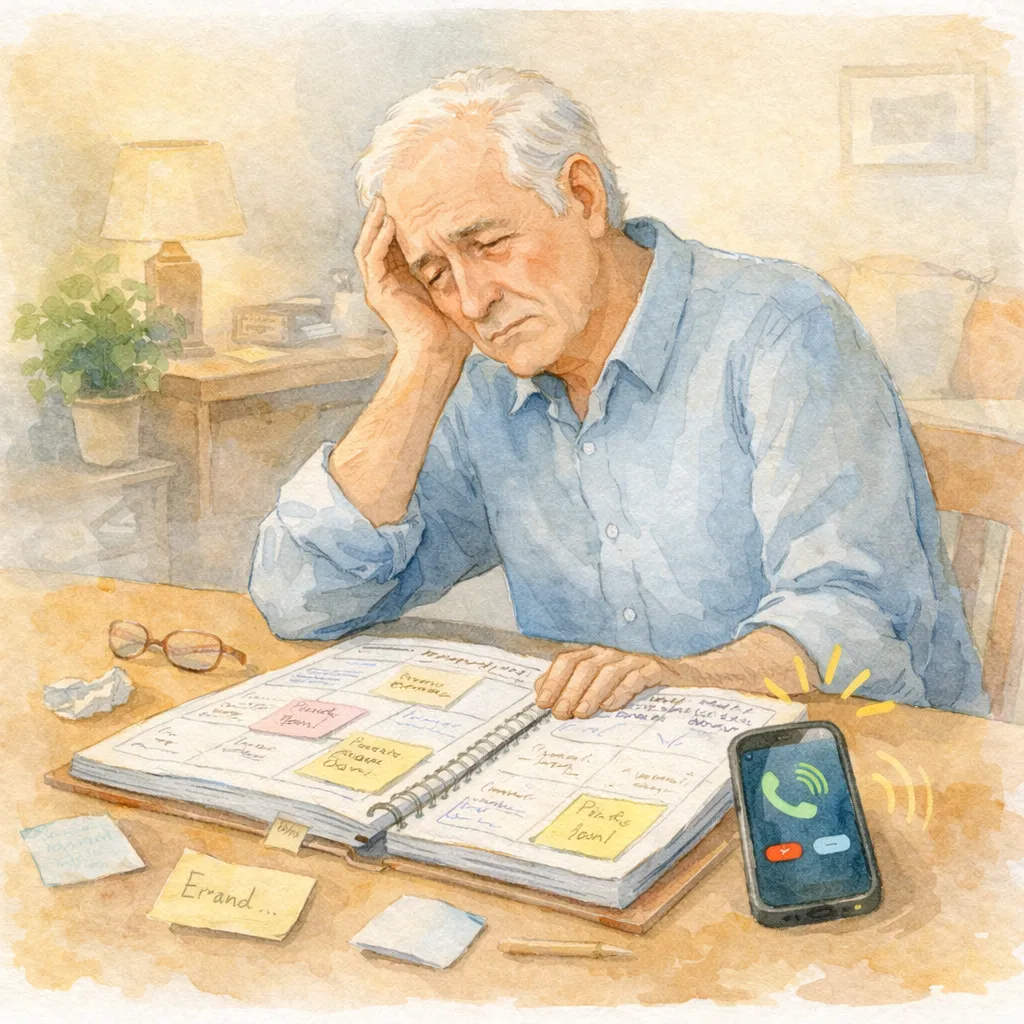
Older adult looking at a crowded weekly planner and phone, appearing tired from too many requests during retirement
Many retirees are kind, dependable, and easy to reach.
That sounds like a strength.
And often, it is.
But after retirement, being “always available” can quietly become expensive.
Not only financially.
Emotionally. Mentally. Physically. Even socially.
A lot of adults over 55 slowly become the person who is always expected to help.
The flexible one. The ride-giver. The babysitter. The problem-solver. The person who says yes because saying no feels uncomfortable.
At first, it feels generous.
Later, it can feel heavy.
This article looks at the hidden cost of being too available in retirement and how to protect your time, energy, and relationships without becoming cold or selfish.
Why this happens after retirement
Retirement changes how other people see your time.
Once you stop working, many people quietly assume:
you have more free time
your schedule is open
your needs are smaller
helping is easy for you
That assumption creates pressure.
Even when nobody says it directly.
You may hear things like:
“You’re retired, so I thought you’d be free.”
“Could you just do this one small thing?”
“You’re better at handling these things than I am.”
One request is usually manageable.
The problem is repetition.
When availability becomes your identity, your life starts filling with other people’s priorities.
The core rule
Being available is generous.
Being endlessly available is costly.
Retirement works better when kindness has limits.
1. The hidden emotional cost
Too much availability creates quiet resentment.
You may still love your family and friends.
But inside, you may start to feel:
taken for granted
overused
mentally crowded
invisible except when needed
That emotional drain is real.
And many retirees feel guilty for even noticing it.
They think:
“I should be grateful to be needed.”
But being needed is not the same as being respected.
If your time is always assumed, not asked for carefully, the relationship begins to tilt out of balance.
2. The hidden physical cost
Being overly available often increases physical strain.
This can look like:
too much driving
lifting things for others
helping with errands when already tired
skipping recovery days
adjusting your sleep around other people’s plans
For adults over 55, even small repeated demands can add up fast.
A favor that looks minor on paper may cost:
energy for the rest of the day
soreness the next morning
missed walking or exercise
reduced patience
worse sleep
The problem is not one busy day.
The problem is a pattern.
3. The hidden money cost
Many retirees underestimate how much “being helpful” costs.
Common examples:
gas and parking for rides
paying for little things and not getting repaid
groceries bought during shared errands
eating out because someone else changed the schedule
gift-like spending that becomes expected
Sometimes the cost is direct.
Sometimes it is indirect.
You may spend more simply because your week keeps getting reorganized around other people.
Table: Common hidden costs of being too available
Situation
Hidden Cost
Driving family members
fuel, parking, time
Last-minute babysitting
energy, meal disruption
Frequent errands for others
your own tasks delayed
Always hosting
groceries, utilities, cleanup
Emotional support without limits
mental fatigue
The money may not look dramatic in one week.
But over a year, it adds up.
4. The hidden schedule cost
Retirement needs rhythm.
Not a packed calendar.
Not total emptiness.
Rhythm.
But if you are too available, your schedule becomes reactive.
Instead of planning your week around:
energy
appointments
movement
meals
rest
You start planning around interruptions.
That creates a strange form of retirement stress.
You are not overworked in the old career sense.
But you are constantly adjusting.
And constant adjusting is tiring.
5. The hidden identity cost
Many retirees become “the reliable one.”
Again, that sounds positive.
But over time, this role can become limiting.
You stop asking:
“What do I want my retirement to feel like?”
And start responding mostly to:
“What does everyone else need from me this week?”
This is where retirement can quietly disappear.
Not through one major mistake.
But through hundreds of small yeses.
Real-life example: Ellen, 69
Ellen retired expecting more quiet mornings and less stress.
Instead, she became the default helper for everyone.
She drove her sister to appointments, picked up groceries for a neighbor, and watched her grandchildren several afternoons a week.
Individually, each request sounded reasonable.
Together, they made her feel constantly behind.
Her words were simple:
“I was busy all the time, but none of it felt like my life.”
When she began limiting favors to two planned help blocks per week, her mood improved almost immediately.
She still helped.
But she stopped feeling swallowed by it.
Real-life example: Daniel, 73
Daniel prided himself on always saying yes.
If anyone needed a ride, a call, a repair, or a favor, he handled it.
After a few years, he started feeling unusually tired and irritable.
He assumed aging was the reason.
But the bigger issue was this: he had no protected time.
Once he began saying, “I can help on Thursday, but not today,” his energy improved.
Nothing dramatic changed.
But his week felt more like his own again.
6. Why saying no feels so hard
For many older adults, saying no feels unnatural.
Common reasons include:
wanting to stay useful
fear of seeming selfish
habit from years of caregiving
worry that relationships will weaken
discomfort with disappointing people
But healthy boundaries do not weaken good relationships.
They clarify them.
The people who care about you can usually adjust.
The people who only valued your availability may resist.
That tells you something important.
7. The difference between generosity and overextension
A helpful question is this:
Did I choose this help calmly, or did I agree from pressure?
That difference matters.
Generosity feels steady.
Overextension feels tight.
Generosity leaves room for recovery.
Overextension leaves you depleted.
Table: Generosity vs. overextension
Generosity
Overextension
chosen freely
agreed from guilt
fits your energy
ignores your limits
occasional or planned
constant or assumed
leaves you steady
leaves you drained
This is one of the most useful retirement distinctions you can learn.
8. Signs you may be too available
You may be too available if:
people assume you will help before asking properly
your week keeps changing at the last minute
you feel irritated by “small” requests
your own routines keep getting delayed
you feel useful but not rested
you rarely have protected quiet time
If several of these feel familiar, the issue is probably not selfishness.
It is lack of limits.
9. A calmer way to help
You do not need to become unavailable.
You need a system.
A few simple rules can change everything.
Try one or two of these:
Help on planned days only
Do not answer every request immediately
Replace instant yes with “Let me check”
Limit driving favors each week
Keep one or two recovery blocks protected
Separate emergencies from convenience requests
This allows you to remain kind without becoming absorbent.
10. Simple scripts that protect your time
You do not need harsh language.
Calm, clear language works better.
Try:
“I can’t do that today, but I could help Thursday.”
“This week is full for me.”
“I’m keeping that day open to rest.”
“I’m not available for that, but I hope you can find another option.”
“I can help sometimes, but I can’t be the regular solution.”
These are not rude.
They are adult boundaries.
11. What healthy availability looks like
Healthy availability means:
people ask instead of assume
you have room to say no
you still protect your health
helping does not erase your own plans
generosity feels chosen, not extracted
This is what sustainable retirement support looks like.
You can be warm, dependable, and caring without becoming permanently on-call.
Quick checklist: Are you too available?
I often say yes before thinking
My schedule gets changed by other people’s needs
I feel guilty protecting rest
I help more than I recover
I feel useful, but not peaceful
My retirement often feels reactive
If this sounds familiar, you do not need to become harder.
You need clearer edges.
The bigger truth
Retirement is not only about having more time.
It is about finally having more say over your time.
That is a major difference.
And it is worth protecting.
When your availability is unlimited, your retirement slowly fills with borrowed priorities.
When your availability is intentional, your life feels calmer, kinder, and more stable.
Conclusion
The hidden cost of being too available in retirement is not just busyness.
It is the gradual loss of your own rhythm.
The fix is not isolation.
It is structure.
A few calm boundaries can protect:
your energy
your money
your mood
your relationships
your sense of ownership over your own life
That is not selfish.
That is wise retirement living.
Disclaimer
This content is for general educational purposes only and does not provide financial, legal, medical, or psychological advice. Individual family dynamics, health conditions, and financial situations vary. Consult qualified professionals when personal guidance is needed.