Tag: Ho CHANG

  • 2026 Bathroom Fall Prevention for Seniors (55+): Small Fixes With Big Safety Payoff

    2026 Bathroom Fall Prevention for Seniors (55+): Small Safety Fixes
    Older adult reviewing a one-page health summary document with medications, allergies, doctor contacts, and pharmacy information.

    Cindy’s Column × Senior AI Money

    Many adults think of the bathroom as a simple daily space.

    But for older adults, it is also the most common place for falls at home.

    Bathrooms combine several risk factors:

    • slippery floors

    • hard surfaces

    • small spaces

    • water and humidity

    • frequent night visits

    The good news is that most bathroom falls are preventable.

    And prevention usually does not require major renovations.

    Often the biggest safety improvements come from small practical changes.

    This guide explains simple adjustments that can significantly reduce fall risk for adults aged 55+.


    Why bathroom falls are common after 55

    As we age, several natural changes occur:

    • balance becomes slightly less stable

    • reaction time slows

    • muscle strength decreases

    • vision in low light weakens

    When these factors meet wet floors and tight spaces, falls become more likely.

    Bathroom falls are also more dangerous because:

    • surfaces are hard

    • there are sharp edges

    • help may not be immediately available

    That is why bathroom safety deserves special attention.


    The Bathroom Safety Rule

    Make every movement in the bathroom stable, dry, and well-lit.

    If the space supports balance and visibility, fall risk drops significantly.


    Table: Most Common Bathroom Fall Risks

    Risk Example
    Wet floors water near sink or shower
    Poor lighting night bathroom visits
    Slippery tubs entering or exiting shower
    No hand support standing from toilet
    Clutter rugs or loose items

    Even small improvements can reduce these risks.


    Part 1: Improve floor safety

    Slippery floors are one of the biggest hazards.

    Helpful solutions include:

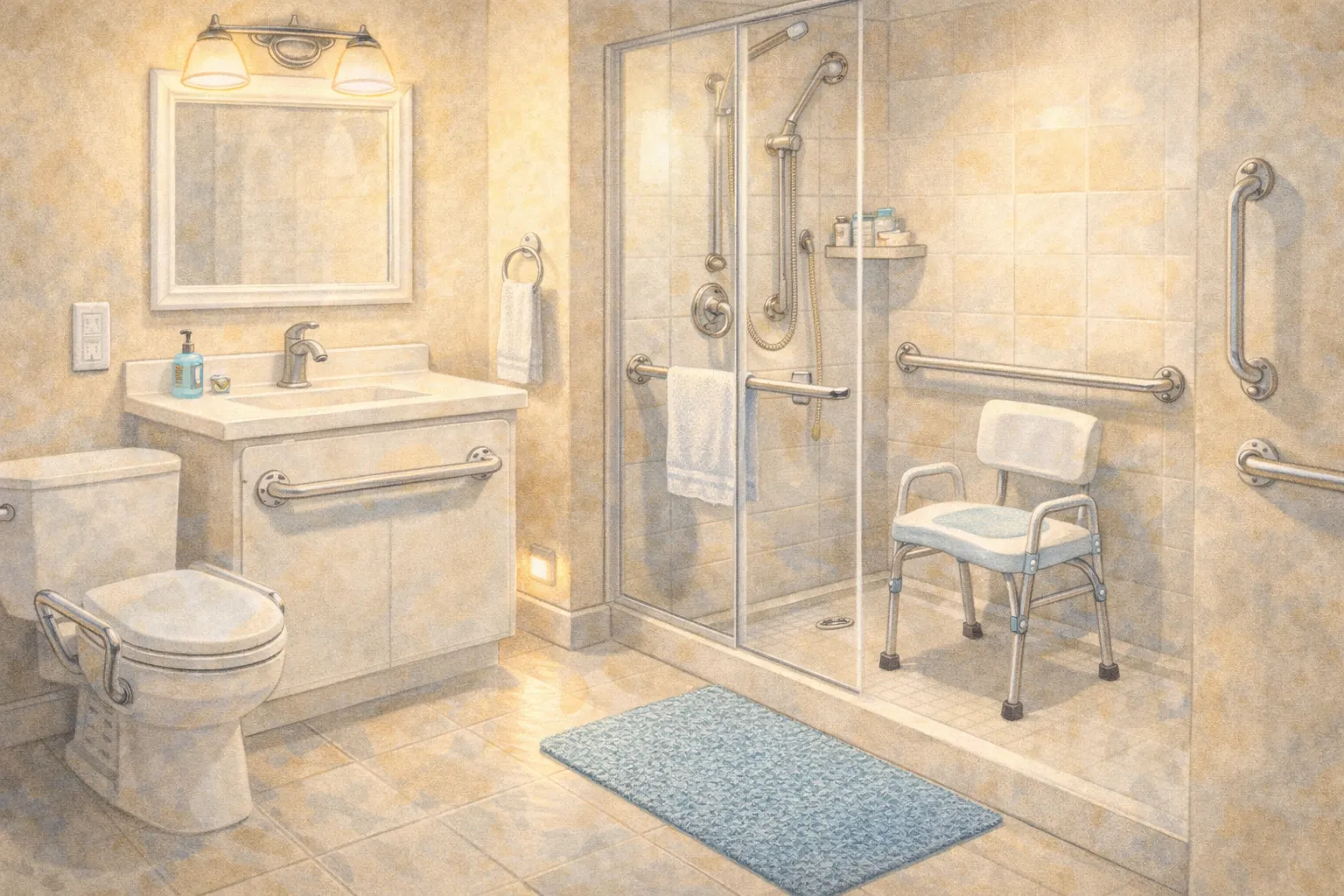
    • non-slip bath mats

    • rubber-backed rugs

    • quick-dry floor mats

    • wiping up water immediately

    Avoid loose rugs that can slide.


    Part 2: Add stable support

    Support points help maintain balance.

    Common solutions:

    • grab bars near the shower

    • grab bars beside the toilet

    • shower chairs

    • raised toilet seats

    These tools reduce strain on knees and hips.


    Table: Bathroom Support Options

    Support Tool Benefit
    Grab bars balance when standing
    Shower chair safer bathing
    Raised toilet seat easier standing
    Handheld shower safer seated washing

    Support tools are simple but powerful.


    Part 3: Improve lighting

    Many bathroom falls happen at night.

    Solutions include:

    • night lights in hallways

    • motion sensor lights

    • brighter bathroom bulbs

    • light switches within easy reach

    Better lighting improves visibility and confidence.


    Part 4: Keep pathways clear

    Bathrooms are often small spaces.

    Clutter increases risk.

    Helpful habits:

    • keep floors clear

    • store items in cabinets

    • avoid extra furniture

    • secure cords or wires

    A clear pathway supports safer movement.


    Part 5: Wear safe footwear

    Walking barefoot on smooth tile increases slip risk.

    Better options include:

    • non-slip slippers

    • rubber-soled footwear

    • supportive house shoes

    Shoes designed for indoor use can improve stability.


    Real-life examples

    Linda, 72

    “I added grab bars in my shower and it immediately felt safer.”


    David, 68

    “A simple night light in the hallway made nighttime trips easier.”


    Maria, 75

    “A shower chair helped reduce knee strain.”


    Printable Bathroom Safety Checklist

    ✔ non-slip bath mat
    ✔ grab bars installed
    ✔ good lighting
    ✔ clear floor space
    ✔ safe indoor footwear

    These small changes create a much safer environment.


    The bigger goal of fall prevention

    Fall prevention is not about limiting independence.

    It is about supporting confident daily movement.

    With simple adjustments, the bathroom can remain a safe and comfortable space.


    Disclaimer

    This article is for general educational purposes only and does not provide medical or safety advice. Individual mobility, health conditions, and home environments vary. Readers should consult appropriate professionals when making home safety modifications.
  • 2026 Medical Paperwork Reset: A One-Page Health Summary That Reduces Stress

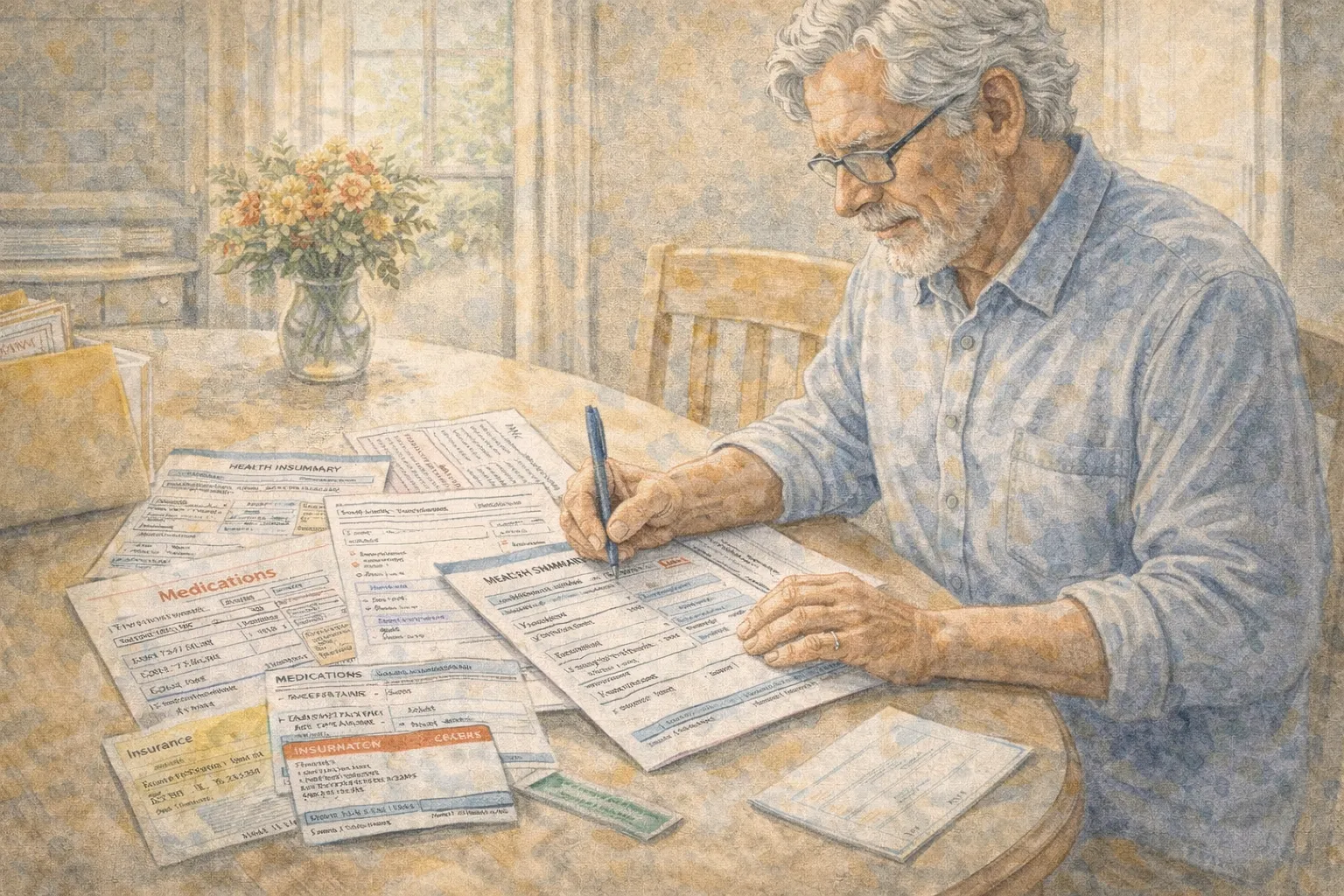
    Older adult organizing medical paperwork and creating a one-page health summary with medication list and emergency contacts.
    A simple one-page health summary helps seniors organize medical information and reduce stress during doctor visits or emergencies.

    Cindy’s Column × Senior AI Money

    Many adults over 55 keep important medical information in many different places.

    Some documents are in drawers.
    Some are in folders.
    Some are on a phone or computer.

    During a calm day this may not feel like a problem.

    But during a stressful moment—
    a doctor visit, an emergency, or a sudden health question—
    finding the right information quickly can become difficult.

    That is why many healthcare professionals recommend something simple:

    A one-page health summary.

    It is not complicated paperwork.

    It is simply a clear snapshot of the most important medical information in one place.


    Why medical paperwork becomes stressful after 55

    Healthcare often becomes more complex with age.

    Adults over 55 may manage:

    • multiple prescriptions

    • several healthcare providers

    • insurance information

    • past medical procedures

    • emergency contacts

    Without a clear system, this information can become scattered.

    A one-page summary helps bring calm and clarity.


    The One-Page Health Summary Rule

    If a doctor or family member needed key health information in one minute, it should all fit on one page.

    This does not replace medical records.

    It simply creates a quick reference document.


    Table: Information to Include in a Health Summary

    Category Example Information
    Basic details Name, birthdate, blood type
    Emergency contacts Family member or trusted friend
    Medications Current prescriptions and doses
    Allergies Medication or food allergies
    Doctors Primary doctor and specialists
    Insurance Provider and policy number

    This small summary can prevent confusion.


    Part 1: Medication list

    Medication errors are one of the most common healthcare issues for older adults.

    Your summary should include:

    • medication name

    • dosage

    • frequency

    • prescribing doctor

    Example:

    Medication Dose Purpose
    Lisinopril 10 mg daily Blood pressure
    Atorvastatin 20 mg nightly Cholesterol

    Keep the list updated.


    Part 2: Emergency contacts

    Include at least two contacts.

    Examples:

    • adult child

    • close friend

    • neighbor

    • caregiver

    This helps healthcare providers reach someone quickly if needed.


    Part 3: Important medical history

    You do not need to list everything.

    Focus on key events such as:

    • surgeries

    • chronic conditions

    • major diagnoses

    • implanted devices

    Clarity is more helpful than detail.


    Table: Example One-Page Health Summary Layout

    Section Information
    Personal Info Name, birthdate
    Emergency Contact Name and phone
    Medications Name and dose
    Allergies Medication allergies
    Doctors Primary care contact
    Insurance Provider and ID

    Keeping everything on one page improves accessibility.


    Part 4: Where to store your summary

    The goal is accessibility.

    Consider placing copies:

    • in a medical folder at home

    • inside your wallet or bag

    • on the refrigerator (common for emergency responders)

    • shared with a trusted family member

    Some seniors also keep a digital copy.


    Part 5: When to update your summary

    Review the document whenever:

    • medication changes

    • a new doctor is added

    • insurance updates occur

    • a medical condition changes

    Many people review it every six months.


    Real-life examples

    Janet, 70

    “My doctor asked for my medication list. Having it on one page made the appointment easier.”


    Robert, 74

    “When I visited urgent care, my summary helped them understand my medications quickly.”


    Ellen, 67

    “I shared my health summary with my daughter so she could help if something happened.”


    Printable Health Summary Checklist

    ✔ basic personal details
    ✔ emergency contacts
    ✔ medication list
    ✔ allergies
    ✔ doctor contacts
    ✔ insurance information

    Keep the document clear and easy to read.


    The goal of a health summary

    A one-page summary does not replace your medical records.

    It simply creates calm organization during stressful moments.

    Prepared information can make healthcare conversations smoother and safer.


    Disclaimer

    This article is for general educational purposes only and does not provide medical, legal, or insurance advice. Health conditions and documentation needs vary. Readers should consult healthcare providers or qualified professionals for guidance related to personal medical records or emergency preparedness.

  • 2026 Senior-Friendly Pantry List: Easy Meals for Low-Energy Days

    Older adult preparing a simple pantry meal with canned beans, soup, rice, and vegetables in a calm kitchen.
    A well-stocked senior pantry makes it easier to prepare simple, nutritious meals even on low-energy days.

    Cindy’s Column × Senior AI Money

    Some days feel energetic.

    Other days feel slower.

    This is completely normal after 55.

    Energy levels naturally fluctuate due to:

    • sleep quality

    • medication schedules

    • weather changes

    • joint discomfort

    • busy days before

    The problem is not low energy.

    The problem is having no simple food ready when those days arrive.

    Many seniors skip meals or rely on unhealthy snacks when cooking feels like too much effort.

    The solution is a senior-friendly pantry system designed for:

    • low-energy days

    • simple cooking

    • low food waste

    • balanced nutrition

    A calm pantry means you can still eat well even on the quietest days.


    Why a senior-friendly pantry matters

    Cooking from scratch every day can become tiring.

    But relying on takeout or processed foods can affect:

    • energy levels

    • blood sugar stability

    • heart health

    • grocery spending

    A well-planned pantry provides easy fallback meals.

    Think of it as a safety net for tired days.


    The Calm Pantry Rule

    Stock ingredients that create meals in under 10 minutes.

    If something requires long preparation, it probably won’t get used on low-energy days.


    Table: Pantry Foods That Work Well for Seniors

    Pantry Item Why It Helps
    Canned beans Protein and fiber
    Canned tuna or salmon Easy protein
    Oatmeal Simple breakfast
    Brown rice cups Quick base for meals
    Whole-grain crackers Light snacks
    Nut butter Protein and healthy fats
    Low-sodium soups Quick comfort meal

    These foods require very little effort.


    Part 1: The “Three Meal Backup” system

    Instead of planning dozens of recipes, choose three easy meals you can always make.

    Example:

    Meal 1
    Soup + crackers

    Meal 2
    Oatmeal + fruit + nuts

    Meal 3
    Rice + canned beans + olive oil

    This system prevents the common question:

    “What should I eat today?”


    Part 2: Easy protein options

    Protein helps maintain muscle and energy after 55.

    Senior-friendly options include:

    • canned fish

    • eggs

    • yogurt

    • beans

    • tofu

    • nut butter

    Protein does not need to be complicated.

    Even simple meals can include it.


    Part 3: Low-effort vegetables

    Fresh vegetables are healthy but sometimes spoil quickly.

    Consider keeping:

    Option Benefit
    Frozen vegetables Long shelf life
    Pre-washed salad greens Ready to eat
    Baby carrots No cutting needed
    Cherry tomatoes Easy snacks

    Convenience helps ensure vegetables are actually eaten.


    Part 4: Pantry meals for very low-energy days

    Sometimes even simple cooking feels difficult.

    These combinations help.

    Meal idea 1
    Greek yogurt + fruit + granola

    Meal idea 2
    Toast + nut butter + banana

    Meal idea 3
    Microwave rice + canned beans + olive oil

    Meal idea 4
    Soup + whole-grain crackers

    Each meal takes 5–10 minutes or less.


    Table: Example Weekly Pantry Meal Plan

    Day Simple Meal
    Monday Oatmeal + fruit
    Tuesday Soup + crackers
    Wednesday Rice + beans
    Thursday Yogurt + granola
    Friday Tuna sandwich
    Saturday Eggs + toast
    Sunday Leftovers

    A simple rotation reduces decision fatigue.


    Part 5: Preventing food waste

    Food waste increases grocery costs.

    Helpful habits include:

    • buying smaller quantities

    • freezing extra portions

    • rotating pantry items

    • checking expiration dates monthly

    A calm pantry means less food thrown away.


    Real-life examples

    Robert, 72

    “I keep oatmeal, eggs, and soup at home. On tired days, I still eat well.”


    Linda, 68

    “Frozen vegetables changed everything. I stopped throwing food away.”


    George, 75

    “My pantry meals take five minutes. That keeps me from ordering takeout.”


    Printable Pantry Checklist

    ✔ canned beans
    ✔ canned tuna or salmon
    ✔ oatmeal
    ✔ microwave rice
    ✔ nut butter
    ✔ frozen vegetables
    ✔ low-sodium soup
    ✔ whole-grain crackers

    These basics support simple, balanced meals anytime.


    The goal of a calm pantry

    Eating well after 55 does not require complicated cooking.

    A thoughtful pantry simply makes good meals easy on low-energy days.

    Small preparation today can prevent stress tomorrow.


    Disclaimer

    This article is for general educational purposes only and does not provide medical or nutritional advice. Individual dietary needs vary based on health conditions, medications, and personal preferences. Readers should consult a qualified healthcare professional or registered dietitian before making significant dietary changes.

  • 2026 Simple Strength at Home: Safe Basics for Older Adults (No Equipment)

    Older adults performing simple strength exercises at home including chair sit-to-stand, wall push-ups, and heel raises in a calm living room.
    Gentle bodyweight exercises at home help seniors maintain strength, balance, and independence without needing gym equipment.

    Cindy’s Column × Senior AI Money

    Many adults over 55 believe strength training requires:

    • a gym membership

    • heavy weights

    • complicated equipment

    • long workouts

    But none of that is necessary.

    In fact, the most effective strength routines for older adults are often the simplest ones.

    Your own body weight is enough.

    A short, safe routine done consistently at home can help maintain:

    • balance

    • mobility

    • bone strength

    • joint stability

    • independence

    This guide shows a simple 2026 home strength routine for adults 55+ that requires no equipment, no gym, and no complicated exercises.

    Just calm, steady movement.


    Why strength matters more after 55

    After age 50, adults naturally lose muscle mass each year.

    This process is called age-related muscle loss.

    Without regular movement, it can lead to:

    • reduced balance

    • slower walking speed

    • difficulty climbing stairs

    • increased fall risk

    • loss of independence

    The good news?

    Even gentle strength training can slow this process significantly.


    The Safe Strength Rule

    Slow movement beats heavy movement.

    Control matters more than intensity.


    Table: What Safe Strength Training Focuses On

    Area Why it matters
    Legs Walking, stairs, balance
    Core Posture, stability
    Hips Fall prevention
    Arms Lifting and carrying
    Balance Injury prevention

    Part 1: Chair Sit-to-Stand

    This is one of the most effective exercises for seniors.

    How to do it:

    1. Sit on a stable chair

    2. Place feet flat on the floor

    3. Stand up slowly

    4. Sit down slowly again

    Start with 5–8 repetitions.

    Benefits:

    • strengthens legs

    • improves balance

    • supports daily movement


    Part 2: Wall Push-Ups

    A gentle upper-body exercise.

    Steps:

    1. Stand facing a wall

    2. Place hands on the wall at chest level

    3. Bend elbows slowly

    4. Push back to standing position

    Start with 6–10 repetitions.

    Benefits:

    • arm strength

    • chest strength

    • shoulder stability


    Part 3: Heel Raises

    Great for balance and ankle strength.

    Steps:

    1. Hold the back of a chair

    2. Slowly raise heels

    3. Pause for 2 seconds

    4. Lower slowly

    Start with 8–10 repetitions.

    Benefits:

    • improves walking stability

    • strengthens calves

    • supports balance


    Part 4: Seated Knee Lifts

    This exercise strengthens the hips.

    Steps:

    1. Sit upright in a chair

    2. Lift one knee slightly

    3. Lower slowly

    4. Alternate legs

    Start with 10 repetitions total.

    Benefits:

    • hip strength

    • walking support

    • improved mobility


    Table: Beginner Weekly Plan

    Day Activity
    Monday Strength routine
    Tuesday Walking
    Wednesday Strength routine
    Thursday Rest or light activity
    Friday Strength routine
    Saturday Walking
    Sunday Rest

    Three short sessions per week is enough.


    Safety Tips

    ✔ Move slowly
    ✔ Use a stable chair
    ✔ Stop if pain appears
    ✔ Wear supportive shoes
    ✔ Keep water nearby

    Strength training should feel challenging but comfortable.


    Real-life examples

    Carol, 69

    “I started with chair stands three times a week. After a month, stairs felt easier.”


    Henry, 73

    “I didn’t want to join a gym. Doing exercises at home made it much easier to stay consistent.”


    Maria, 66

    “The wall push-ups helped my shoulder strength without hurting my joints.”


    Printable Strength Routine Checklist

    ✔ Chair sit-to-stand
    ✔ Wall push-ups
    ✔ Heel raises
    ✔ Seated knee lifts
    ✔ Repeat 2–3 times weekly
    ✔ Move slowly and safely


    The goal of home strength training

    Strength training is not about building big muscles.

    It is about maintaining confidence in movement.

    Small routines done regularly can protect independence for many years.


    Disclaimer

    This article is for general educational purposes only and does not provide medical or physical therapy advice. Individual health conditions, injuries, and mobility levels vary. Readers should consult a qualified healthcare professional before beginning any new exercise routine, especially if they have chronic health conditions or a history of falls.

  • 2026 Calm Calendar Method: Green / Yellow / Red Days for Retirees Who Get Overbooked

    Older couple planning a weekly calendar using green, yellow, and red energy days to balance activities and avoid overbooking in retirement.
    Color-coding calendar days helps retirees balance activities, protect energy, and avoid overbooking during retirement.

    Cindy’s Column × Senior AI Money

    Many retirees expect life to become calmer after leaving work.

    But something unexpected often happens.

    Schedules slowly fill up again.

    Doctor appointments.
    Family visits.
    Volunteer work.
    Errands.
    Social invitations.
    Travel plans.

    Before long, the week begins to feel surprisingly busy again.

    And unlike work schedules, retirement schedules often lack structure.

    This is where a simple system can help.

    Not a complicated planner.
    Not a strict routine.

    Just a color-based calendar method that protects your energy.


    Why retirees get overbooked

    Many adults over 55 experience a new challenge:

    energy management.

    Your time may be flexible, but your daily energy still has limits.

    Common reasons retirees become overbooked:

    • too many appointments in one day

    • saying yes to every invitation

    • underestimating travel or recovery time

    • scheduling multiple errands together

    • not protecting rest days

    The result is often low energy, stress, and rushed days.


    The Calm Calendar Rule

    Protect your energy first. Schedule everything else second.

    This is the foundation of the Green / Yellow / Red system.


    The 3-Color Calendar System

    Instead of filling a calendar randomly, each day receives a color based on energy demand.

    Day Type Meaning Example
    Green Day Light activity Walk, reading, light errands
    Yellow Day Moderate activity One appointment, small outing
    Red Day High activity Travel, multiple appointments

    This system makes it easier to see overload before it happens.


    Part 1: Green Days (Recovery & Quiet Days)

    Green days are essential.

    They are not “empty days.”
    They are recovery days.

    Examples of Green Day activities:

    • reading

    • walking

    • gardening

    • hobbies

    • quiet home tasks

    • light social visits

    Green days restore energy.

    Many retirees function best with 3–4 green days per week.


    Part 2: Yellow Days (Balanced Activity)

    Yellow days include one moderate commitment.

    Examples:

    • a doctor appointment

    • meeting a friend for lunch

    • grocery shopping

    • volunteering

    • attending a class

    The key rule:

    Only one major task.

    Adding a second task can quickly turn a balanced day into a stressful one.


    Part 3: Red Days (High Energy Days)

    Red days are the busiest days.

    Examples include:

    • travel days

    • family events

    • multiple appointments

    • long outings

    • home repairs

    Red days are not bad.

    But they require recovery afterwards.


    Table: Example Weekly Calendar

    Day Color Plan
    Monday Green Walk + reading
    Tuesday Yellow Doctor appointment
    Wednesday Green Gardening
    Thursday Yellow Lunch with friend
    Friday Red Travel day
    Saturday Green Rest
    Sunday Green Family call

    Notice how red days are followed by green days.

    This prevents burnout.


    Part 4: Why visual calendars work better

    Color-coded calendars help the brain recognize patterns quickly.

    Instead of reading every appointment, you see:

    • too many red days

    • too few green days

    • crowded weeks

    Visual planning reduces decision fatigue.


    Part 5: Protecting your “energy budget”

    Just like money, energy works best with limits.

    Think of energy like a weekly budget.

    Example:

    Energy Level Maximum per week
    Red Days 1–2
    Yellow Days 2–3
    Green Days 3–4

    Everyone’s balance is different.

    The goal is predictable energy, not perfect productivity.


    Part 6: How to say no using the calendar

    A calm calendar makes it easier to decline invitations politely.

    Example responses:

    “I’d love to, but that’s already a red day for me.”

    “This week is a bit full. Could we do next week instead?”

    “My schedule is lighter on Wednesday.”

    You are not rejecting people.

    You are protecting your energy balance.


    Real-life examples

    Diane, 67

    “I used to schedule three things in a day. Now I try to keep one yellow activity per day.”


    Paul, 72

    “Travel days exhaust me, so I plan a green day after every trip.”


    Martha, 69

    “The color system helped me realize my weeks were packed with red days.”


    Printable Checklist: Calm Calendar System

    ✔ Mark green, yellow, red days each week
    ✔ Limit red days to 1–2 per week
    ✔ Schedule recovery days after busy days
    ✔ Avoid stacking appointments
    ✔ Protect quiet time
    ✔ Adjust the system to your energy level


    The goal of retirement scheduling

    Retirement is not about filling every day.

    It is about creating a rhythm that supports your energy.

    Sometimes the best schedule includes more green days than anything else.

    And that is not laziness.

    It is balance.


    Disclaimer

    This article is for general educational purposes only and does not provide medical, psychological, or professional advice. Individual health conditions, mobility levels, and lifestyle needs vary. Readers should consult appropriate professionals regarding personal health or scheduling needs.

  • 2026 Budget Travel for Seniors: Take a Great Trip Without Paying Peak Prices

    2026 Budget Travel for Seniors: Take a Great Trip Without Paying Peak Prices
    Older couple planning budget travel on a laptop, walking in a quiet European town in shoulder season, and relaxing at an off-season beach hotel.

    Cindy’s Column × Senior AI Money

    Travel after 55 can be one of the greatest joys of retirement.

    You finally have something many people lacked during their working years:

    time flexibility.

    And that one advantage can save you hundreds—or even thousands—of dollars on travel.

    The problem is that many seniors accidentally book trips the same way busy working families do:

    • peak-season flights

    • expensive weekend travel

    • crowded tourist schedules

    • last-minute bookings

    The result?

    Trips become more stressful and more expensive than necessary.

    This guide shows adults 55+ how to plan comfortable, affordable travel in 2026 without sacrificing the experience.

    Not by cutting corners.

    But by traveling smarter and calmer.


    Why travel costs explode for most people

    Most travel pricing follows predictable patterns.

    Prices increase when:

    • schools are on break

    • holidays approach

    • weekends fill up

    • last-minute bookings happen

    Travel companies expect working travelers to be limited by schedules.

    Retirees have a unique advantage.

    They can avoid the most expensive travel windows.


    The Senior Travel Advantage

    Flexibility is the biggest travel discount available.

    When you can move your trip by even a few days, prices often drop dramatically.


    Table: Typical Price Differences

    Travel Timing Average Cost Level
    Holiday travel Very high
    Summer weekends High
    Midweek summer Moderate
    Shoulder season Low
    Midweek shoulder season Lowest

    Shoulder season usually means spring or fall outside major holidays.


    Part 1: Choose the right travel season

    Many destinations have two good seasons.

    One is popular and crowded.
    The other is calmer and cheaper.

    Examples:

    Destination Peak Season Better Senior Travel Time
    Europe July–August April–June, September
    National Parks Summer May or September
    Beach destinations Holiday winter Late spring
    Cities Summer tourism Early fall

    You still enjoy great weather—but with fewer crowds and lower prices.


    Part 2: Fly midweek whenever possible

    Flights are typically cheaper on:

    • Tuesday

    • Wednesday

    • sometimes Saturday

    Flights are usually most expensive on:

    • Friday

    • Sunday

    The difference can easily be $100–$300 per ticket.

    Midweek flights are also:

    • quieter

    • less crowded

    • less delayed


    Part 3: Book early—but not too early

    A common mistake is booking too late or too far in advance.

    General planning window:

    Trip Type Best Booking Window
    Domestic flights 1–3 months
    International travel 3–6 months
    Hotels 1–3 months
    Tours 2–4 months

    Prices tend to rise again when availability becomes limited.


    Part 4: Pick slower travel itineraries

    Many travelers try to see too much.

    Especially after retirement, slow travel often creates better experiences.

    Instead of:

    ❌ 5 cities in 10 days

    Consider:

    ✅ 2 cities in 10 days

    Benefits:

    • less transportation stress

    • deeper local experiences

    • fewer hotel changes

    • more energy for exploring


    Part 5: Watch the hidden travel costs

    Sometimes the cheapest flight becomes the most expensive trip.

    Watch for:

    • baggage fees

    • resort fees

    • transportation costs

    • airport transfers

    • expensive tourist areas

    A slightly higher airfare to a central airport may save money overall.


    Part 6: Senior discounts still exist

    Many travel providers still offer senior rates, although they are sometimes hidden.

    Examples include:

    • museums

    • train systems

    • national parks

    • tours

    • cultural attractions

    Always ask:

    “Do you offer a senior discount?”


    Part 7: Plan comfortable travel days

    Comfort matters more than squeezing every dollar.

    Consider:

    • shorter travel days

    • fewer connections

    • earlier flights

    • hotels near transportation

    Saving $40 may not be worth a 10-hour airport day.


    Real-life examples

    Patricia, 68

    “I used to travel in July with my family. After retirement I started going in May. Prices were lower and everything was less crowded.”


    Alan, 72

    “I switched from weekend flights to Tuesday flights. My airfare dropped by almost $250.”


    Maria, 66

    “We stopped rushing through cities. Staying longer made the trip much more relaxing.”


    Printable checklist: Calm Senior Travel Planning

    ✔ Travel during shoulder seasons
    ✔ Choose midweek flights
    ✔ Book flights 1–6 months ahead
    ✔ Avoid packed itineraries
    ✔ Watch hidden travel fees
    ✔ Ask about senior discounts
    ✔ Prioritize comfort over speed


    The real goal of retirement travel

    Travel after 55 is not about seeing everything.

    It is about experiencing places with more time, more calm, and less pressure.

    Sometimes the best trips are simply:

    • slower

    • quieter

    • and a little less expensive.


    Disclaimer

    This article is for general educational purposes only and does not provide financial, legal, or travel booking advice. Travel prices, availability, and discount policies vary by provider and location. Readers should confirm details directly with airlines, hotels, or travel professionals before making travel decisions.

  • 2026 Pain-Friendly Morning Routine (55+): A Gentle Start That Reduces Stiffness

    2026 Pain-Friendly Morning Routine (55+): Gentle Steps to Reduce Stiffness
    Older adults performing a gentle 2026 morning routine in bed and beside a chair, including ankle movements, shoulder rolls, and supported standing to reduce stiffness

    Morning stiffness after 55 is common.

    It doesn’t mean you’re fragile.
    It doesn’t mean you’re declining.

    It means your body now prefers preparation.

    Many adults over 55 notice:

    • Tight hips when getting out of bed

    • Stiff fingers

    • Lower back resistance

    • Slow first steps

    • Joint discomfort in cold weather

    The mistake?

    Rushing.

    This 2026 guide offers a gentle, structured morning routine designed to:

    • Reduce stiffness

    • Protect joints

    • Improve balance

    • Preserve energy

    • Lower fall risk

    Not extreme stretching.
    Not pain-pushing exercise.

    Just calm preparation.


    Why Mornings Feel Harder After 55

    Overnight:

    • Joints stiffen

    • Circulation slows

    • Muscles shorten slightly

    • Connective tissue cools

    Sudden movement increases strain.

    A 10–15 minute gentle warm-up changes that.


    The 2026 Core Rule

    Warm first. Move second. Stand third.

    Never reverse the order.


    Step 1 — Stay in Bed (2 Minutes)

    Before sitting up:

    • Wiggle toes

    • Rotate ankles

    • Gently bend and straighten knees

    • Open and close hands

    • Slow neck turns

    Purpose:
    Increase circulation safely.


    Step 2 — Sit Before You Stand (3 Minutes)

    Sit at the edge of the bed.

    Add:

    • Shoulder rolls

    • Gentle spinal twist

    • Seated march (slow)

    • Deep breathing (5 slow breaths)

    Table 1: Why This Matters

    Action Benefit
    Ankle circles Reduces fall risk
    Shoulder rolls Improves posture
    Seated march Activates hips
    Breathing Regulates blood pressure

    Step 3 — Stand With Support (2 Minutes)

    Hold a stable surface.

    Do:

    • Heel raises

    • Mini knee bends

    • Gentle side leg lifts

    Keep range small.

    Pain-free movement only.


    Step 4 — Warmth Matters

    Cold muscles resist movement.

    Options:

    • Warm shower

    • Heating pad (10 min max)

    • Warm socks

    • Light sweater

    Heat improves tissue flexibility.


    Step 5 — Pain Scale Rule

    Use the 0–10 rule.

    Pain Level Meaning
    0–2 Safe discomfort
    3–4 Modify
    5+ Stop

    Never push through sharp pain.


    Step 6 — Joint-Safe Habits for the Rest of the Morning

    ☐ Wear supportive shoes indoors
    ☐ Avoid rushing stairs
    ☐ Use night lighting
    ☐ Hydrate early
    ☐ Avoid sudden bending
    ☐ Keep phone nearby

    Small adjustments prevent falls.


    Real Senior Examples

    Linda, 67
    Added 10-minute bed warm-up.
    Reports less knee stiffness.

    George, 74
    Stopped jumping out of bed.
    Dizziness reduced significantly.

    Maria, 71
    Added warm shower before chores.
    Reports improved mobility.


    What This Routine Is Not

    It is not:

    • Physical therapy

    • Arthritis treatment

    • Medical rehabilitation

    • Strength training

    It is a protective transition.


    When to Consult a Professional

    Seek medical evaluation if you experience:

    • Persistent joint swelling

    • Sharp or worsening pain

    • Frequent morning dizziness

    • Repeated falls

    • Sudden mobility change

    Early evaluation prevents complications.


    Printable Gentle Morning Checklist (55+)

    ☐ Wiggle & warm in bed
    ☐ Sit before standing
    ☐ Light supported movement
    ☐ Warm muscles
    ☐ Hydrate
    ☐ Move slowly first 20 minutes


    Emotional Benefit

    Many seniors report:

    “My day feels steadier.”

    The goal is not flexibility.

    It’s confidence.


    Financial Angle

    Fall-related injuries are one of the most expensive health events for adults over 65.

    Preventive habits protect:

    • Mobility

    • Independence

    • Medical costs

    Gentle routines are a long-term investment.


    Disclaimer

    This article is for general educational purposes only and does not provide medical advice. Individual health conditions, joint disorders, balance issues, and cardiovascular factors vary. Always consult a qualified healthcare professional before beginning any new movement routine, especially if you have chronic conditions, recent injuries, or a history of falls.

  • 2026 Loneliness in Retirement Plan: A Weekly Connection Routine That Feels Natural

    2026 Loneliness in Retirement Plan (55+): Weekly Connection Routine in Action
    A simple weekly rhythm—coffee with a friend, a short walk, and a community gathering—can gently reduce loneliness after retirement.

    Loneliness after retirement is rarely dramatic.

    It’s quiet.

    It shows up as:

    • Longer evenings

    • Fewer spontaneous calls

    • Too much television

    • Hesitation to reach out

    • Feeling “out of the loop”

    Most adults 55+ don’t say:

    “I’m lonely.”

    They say:

    “I don’t want to bother anyone.”

    This guide is not about forcing social life.

    It’s about building a steady weekly rhythm that feels natural — not exhausting.


    Why Loneliness Changes After 55

    Retirement removes:

    • Workplace structure

    • Daily casual interaction

    • Predictable social exposure

    Family often lives:

    • Farther away

    • Busier

    • On different schedules

    Connection must become intentional.

    Not constant.

    Intentional.


    The 2026 Core Rule

    Connection works best when it is scheduled lightly and repeated consistently.

    Not random bursts.

    Not pressure.

    Rhythm.


    Part 1 — The Weekly Connection Framework (3 Layers)

    Instead of “be more social,” use three layers:

    1️⃣ Light Touch
    2️⃣ Meaningful Contact
    3️⃣ Community Exposure

    Each week should include at least one of each.


    Layer 1 — Light Touch (Low Energy)

    Examples:

    • Text one friend

    • Comment in a group

    • Send a photo

    • Short check-in call (5 minutes)

    Table 1: Light Touch Examples

    Action Energy Required Impact
    Send text Low Keeps bond alive
    Share article Low Conversation starter
    Short call Low-medium Warmth boost

    Light touch prevents drift.


    Layer 2 — Meaningful Contact (Moderate Energy)

    Examples:

    • Coffee with one person

    • Long phone conversation

    • Walking partner

    • Shared hobby session

    Key rule:

    Keep it small.

    Two people max.

    Overcrowded gatherings drain energy.


    Layer 3 — Community Exposure (Low Commitment)

    This is often overlooked.

    Examples:

    • Library talk

    • Senior center class

    • Faith service

    • Volunteer hour

    • Walking group

    You do not need deep conversation.

    You need presence.

    Presence reduces isolation.


    The “2–1–1 Weekly Formula”

    Each week aim for:

    2 Light Touches
    1 Meaningful Contact
    1 Community Exposure

    That’s it.

    Not daily events.

    Not packed calendars.


    Table 2: Sustainable Social Rhythm

    Frequency Type Why It Works
    Twice weekly Light touch Prevents drift
    Once weekly Meaningful contact Emotional depth
    Once weekly Community Broad belonging

    When Seniors Avoid Reaching Out

    Common fears:

    • “They’re busy.”

    • “I don’t want to impose.”

    • “I haven’t talked in months.”

    Reality:

    Most people appreciate being remembered.

    Connection rarely burdens.


    Simple Scripts That Feel Natural

    Instead of:

    “Sorry to bother you…”

    Try:

    “Thinking of you this week — want to grab coffee?”

    Instead of:

    “I know you’re busy…”

    Try:

    “Free for a 10-minute call this week?”

    Short. Clear. Calm.


    Real Senior Examples

    Mark, 73
    Started one weekly coffee.
    Says loneliness reduced significantly.

    Janet, 69
    Joined a library group.
    Doesn’t talk much.
    Feels less isolated.

    Robert, 76
    Texts two friends every Sunday evening.
    Built a predictable rhythm.


    Energy-Protecting Social Rules

    ☐ Leave before you’re exhausted
    ☐ Avoid back-to-back events
    ☐ Choose quiet environments
    ☐ Sit near exits (comfort)
    ☐ Schedule recovery time

    Connection should restore.

    Not drain.


    Emotional Check-In

    If you notice:

    • Persistent sadness

    • Loss of interest

    • Sleep disruption

    • Appetite changes

    Consult a healthcare professional for evaluation of mood or depression.

    Loneliness is human.

    Depression requires support.


    Printable Weekly Connection Checklist (55+)

    ☐ 2 light touches
    ☐ 1 meaningful contact
    ☐ 1 community exposure
    ☐ No overbooking
    ☐ Recovery time scheduled


    Technology as a Bridge (Not a Replacement)

    Video calls help.

    But physical presence matters more.

    Use tech to maintain.

    Use in-person to nourish.


    The Long View

    Retirement social life is built slowly.

    Small consistency creates large stability.

    You do not need more people.

    You need steady contact.


    Disclaimer

    This article is for general educational purposes only and does not provide medical or mental health advice. Loneliness and mood changes vary by individual. If you experience persistent sadness, withdrawal, or depressive symptoms, consult qualified healthcare professionals for personalized evaluation and support.

  • 2026 Senior Reset Review: What to Keep, What to Drop, and One Small Next Step

    Older couple reviewing ‘what’s working’ and ‘what’s draining’ lists at a sunlit table during a calm March reset planning session for seniors in 2026
    A gentle March reset helps seniors keep what supports their energy, drop what drains it, and choose one small next step.

    By March, most January plans are either:

    • Working quietly

    • Half-working

    • Or quietly abandoned

    That’s normal.

    Retirement life is not about dramatic reinvention.

    It’s about gentle course correction.

    This 2026 Senior Reset Review is not a productivity audit.

    It’s a clarity reset for adults 55+ who want:

    • Less overwhelm

    • Better energy use

    • Smarter routines

    • Fewer unnecessary commitments

    • One small forward step


    Why March Is the Right Time to Review

    January is optimism.

    February is adjustment.

    March is reality.

    And reality is useful.

    Because now you know:

    • What actually stuck

    • What felt heavy

    • What improved your days

    • What drained you

    Reviewing now prevents silent burnout.


    The 2026 Core Rule

    Keep what supports your energy. Drop what drains it. Add only one small next step.

    Not five.

    One.


    Part 1 — What to Keep

    Ask yourself:

    What made life feel steadier this year?

    Examples:

    • Weekly money check-in

    • One gentle strength routine

    • Grocery planning list

    • Sunday reset habit

    • Early bedtime consistency

    Table 1: “Keep” Evaluation Guide

    Habit Energy After? Keep?
    Weekly budget check Calm Yes
    Daily news scrolling Tense No
    Morning stretch Looser body Yes
    Extra committee work Drained Reconsider

    Keep what stabilizes you.

    Not what impresses others.


    Part 2 — What to Drop

    Retirement often accumulates invisible obligations:

    • Volunteer overload

    • Family financial support beyond comfort

    • Too many social commitments

    • News consumption cycles

    • Unnecessary subscriptions

    Dropping is not failure.

    It is recalibration.


    The 3 Questions Before Dropping

    1. Does this improve my health?

    2. Does this improve my relationships?

    3. Does this improve my stability?

    If the answer is no to all three, reconsider it.


    Part 3 — The “One Small Next Step” Method

    Most seniors stall because they choose large goals:

    • “Get in shape”

    • “Fix my finances”

    • “Travel more”

    • “Declutter everything”

    Instead:

    Choose one 20-minute action.

    Examples:

    • Call to adjust one bill

    • Remove one drawer of clutter

    • Schedule a health check

    • Move automatic payments to calendar review

    • Walk 10 minutes daily

    Table 2: Big Goal vs Small Step

    Big Goal Small Step
    Improve finances Review one recurring charge
    Exercise more 10-minute walk daily
    Declutter home One drawer Saturday
    Sleep better Set fixed bedtime

    Small wins create momentum.


    The Energy Lens Review

    Energy is your most limited retirement asset.

    Each week ask:

    What gave me energy?
    What cost me energy?

    Adjust accordingly.


    Real Senior Examples

    Linda, 68
    Dropped one volunteer board.
    Reports better sleep and less stress.

    George, 74
    Kept weekly 15-minute money review.
    Feels more in control.

    Nina, 71
    Added 10-minute morning stretch.
    Reduced stiffness noticeably.


    Financial Reset Check (Light Touch)

    Review:

    ☐ Recurring subscriptions
    ☐ Utility changes
    ☐ Insurance renewals
    ☐ Large upcoming expenses
    ☐ Travel plans

    Not to panic.

    To anticipate.


    Emotional Reset Check

    ☐ Am I overcommitted?
    ☐ Am I isolating?
    ☐ Am I sleeping well?
    ☐ Am I avoiding something important?

    Gentle awareness prevents sudden stress.


    Printable March Reset Checklist (55+)

    ☐ List 3 habits that are working
    ☐ List 3 that feel draining
    ☐ Drop or reduce 1 draining item
    ☐ Choose 1 small next step
    ☐ Schedule it this week
    ☐ Review energy weekly


    The Quiet Power of Resetting

    Many seniors feel they must “stay consistent.”

    But flexibility is strength.

    A reset is not quitting.

    It is recalibrating.


    When to Seek Professional Guidance

    If your review reveals:

    • Severe financial strain

    • Persistent sleep disruption

    • Ongoing sadness

    • Balance or health changes

    Consult qualified medical or financial professionals for individualized guidance.


    Disclaimer

    This article is for general educational purposes only and does not provide medical, financial, or legal advice. Individual circumstances vary. Consult qualified professionals for personalized recommendations related to health, finances, or legal matters.