Cindy’s Column × Senior AI Money
Many adults think of the bathroom as a simple daily space.
But for older adults, it is also the most common place for falls at home.
Bathrooms combine several risk factors:
-
slippery floors
-
hard surfaces
-
small spaces
-
water and humidity
-
frequent night visits
The good news is that most bathroom falls are preventable.
And prevention usually does not require major renovations.
Often the biggest safety improvements come from small practical changes.
This guide explains simple adjustments that can significantly reduce fall risk for adults aged 55+.
Why bathroom falls are common after 55
As we age, several natural changes occur:
-
balance becomes slightly less stable
-
reaction time slows
-
muscle strength decreases
-
vision in low light weakens
When these factors meet wet floors and tight spaces, falls become more likely.
Bathroom falls are also more dangerous because:
-
surfaces are hard
-
there are sharp edges
-
help may not be immediately available
That is why bathroom safety deserves special attention.
The Bathroom Safety Rule
Make every movement in the bathroom stable, dry, and well-lit.
If the space supports balance and visibility, fall risk drops significantly.
Table: Most Common Bathroom Fall Risks
| Risk | Example |
|---|---|
| Wet floors | water near sink or shower |
| Poor lighting | night bathroom visits |
| Slippery tubs | entering or exiting shower |
| No hand support | standing from toilet |
| Clutter | rugs or loose items |
Even small improvements can reduce these risks.
Part 1: Improve floor safety
Slippery floors are one of the biggest hazards.
Helpful solutions include:
-
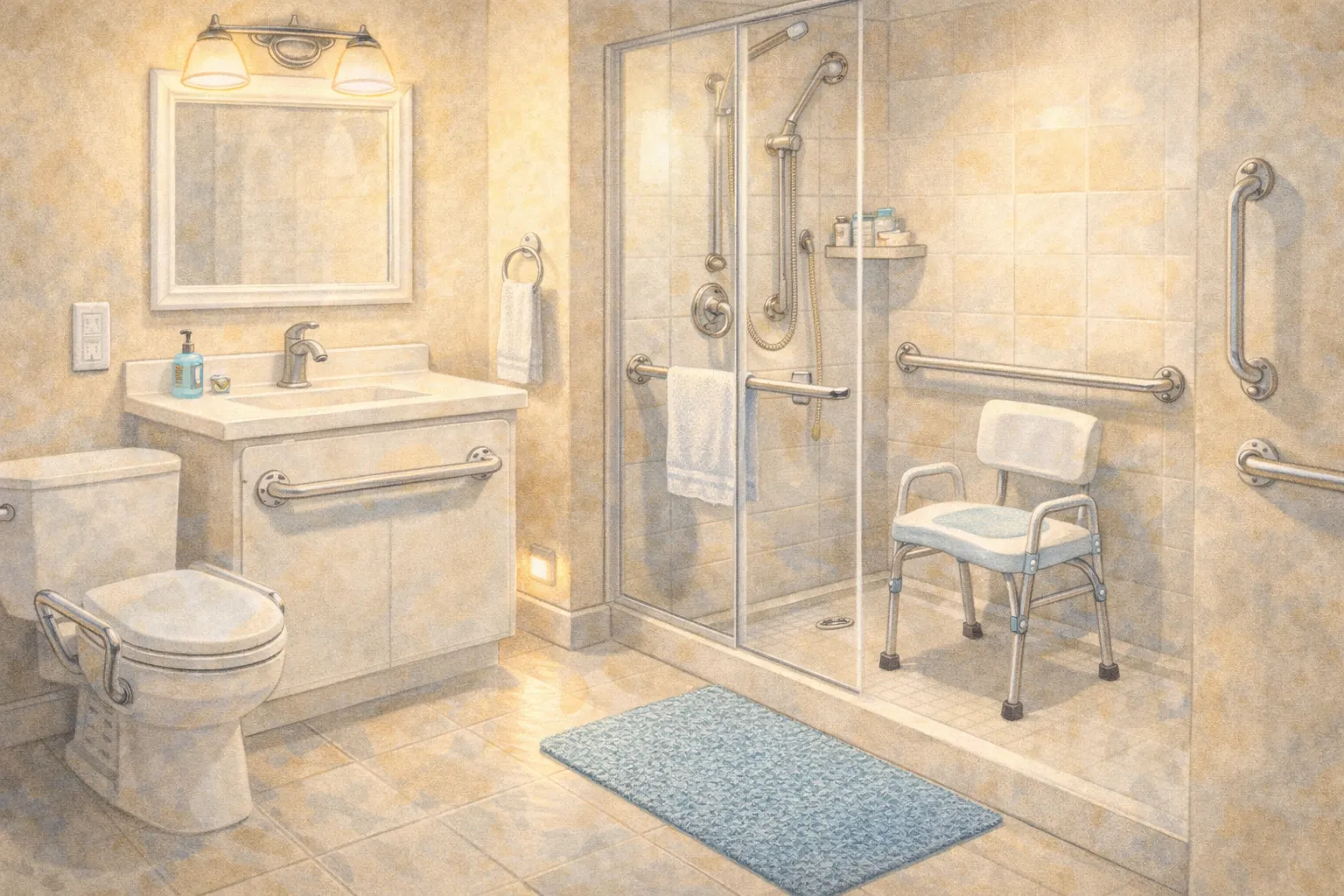
non-slip bath mats
-
rubber-backed rugs
-
quick-dry floor mats
-
wiping up water immediately
Avoid loose rugs that can slide.
Part 2: Add stable support
Support points help maintain balance.
Common solutions:
-
grab bars near the shower
-
grab bars beside the toilet
-
shower chairs
-
raised toilet seats
These tools reduce strain on knees and hips.
Table: Bathroom Support Options
| Support Tool | Benefit |
|---|---|
| Grab bars | balance when standing |
| Shower chair | safer bathing |
| Raised toilet seat | easier standing |
| Handheld shower | safer seated washing |
Support tools are simple but powerful.
Part 3: Improve lighting
Many bathroom falls happen at night.
Solutions include:
-
night lights in hallways
-
motion sensor lights
-
brighter bathroom bulbs
-
light switches within easy reach
Better lighting improves visibility and confidence.
Part 4: Keep pathways clear
Bathrooms are often small spaces.
Clutter increases risk.
Helpful habits:
-
keep floors clear
-
store items in cabinets
-
avoid extra furniture
-
secure cords or wires
A clear pathway supports safer movement.
Part 5: Wear safe footwear
Walking barefoot on smooth tile increases slip risk.
Better options include:
-
non-slip slippers
-
rubber-soled footwear
-
supportive house shoes
Shoes designed for indoor use can improve stability.
Real-life examples
Linda, 72
“I added grab bars in my shower and it immediately felt safer.”
David, 68
“A simple night light in the hallway made nighttime trips easier.”
Maria, 75
“A shower chair helped reduce knee strain.”
Printable Bathroom Safety Checklist
✔ non-slip bath mat
✔ grab bars installed
✔ good lighting
✔ clear floor space
✔ safe indoor footwear
These small changes create a much safer environment.
The bigger goal of fall prevention
Fall prevention is not about limiting independence.
It is about supporting confident daily movement.
With simple adjustments, the bathroom can remain a safe and comfortable space.
Disclaimer
This article is for general educational purposes only and does not provide medical or safety advice. Individual mobility, health conditions, and home environments vary. Readers should consult appropriate professionals when making home safety modifications.