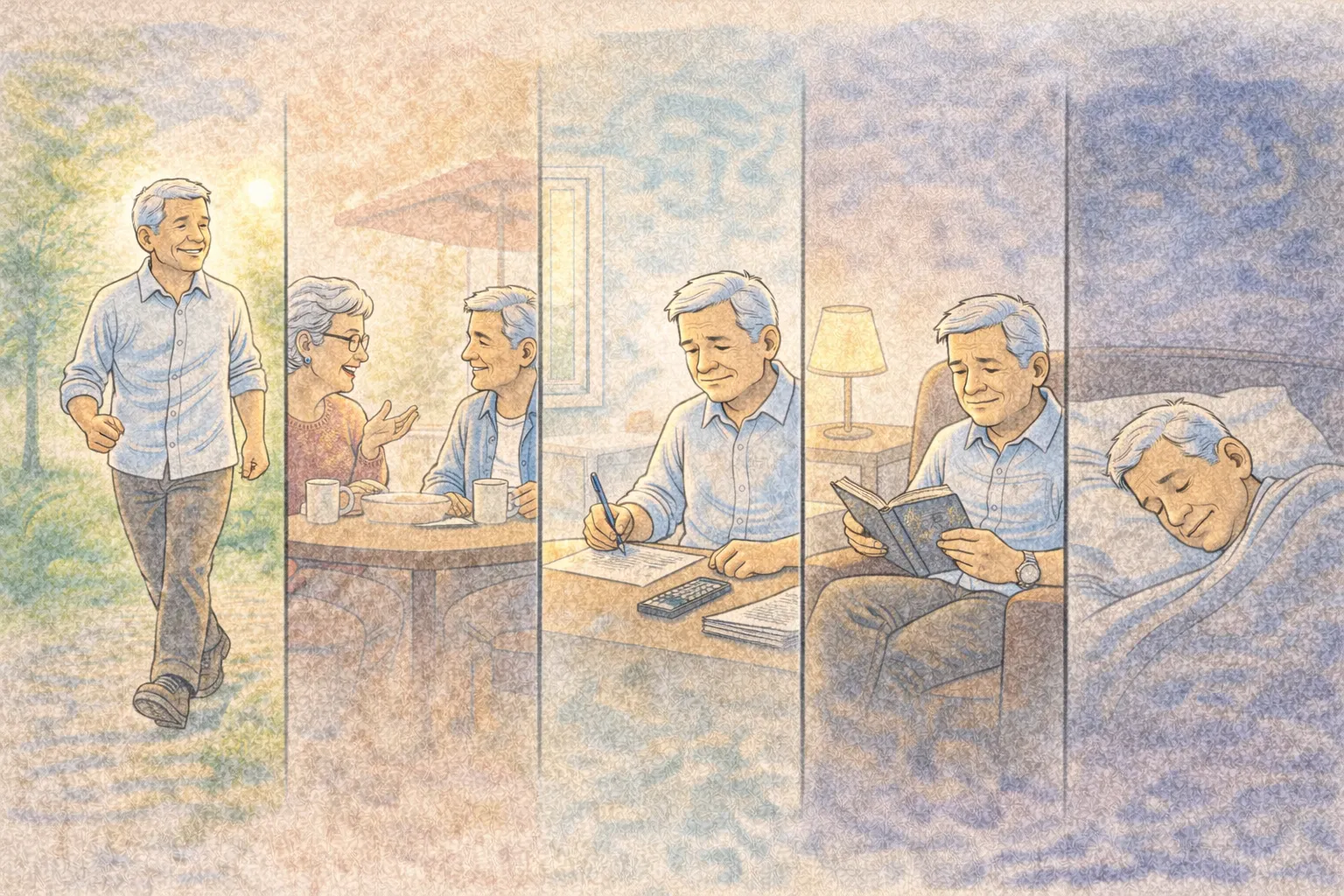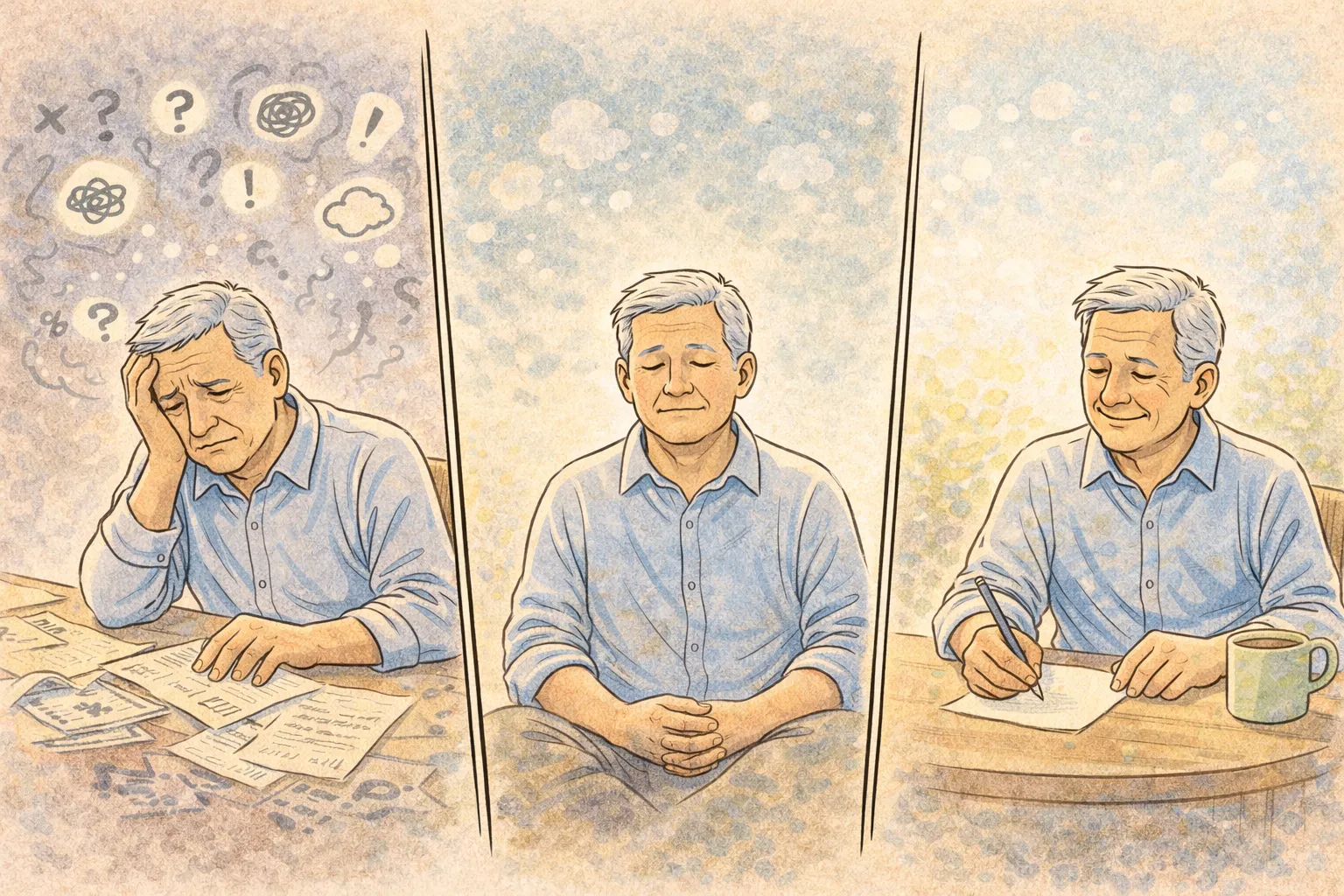
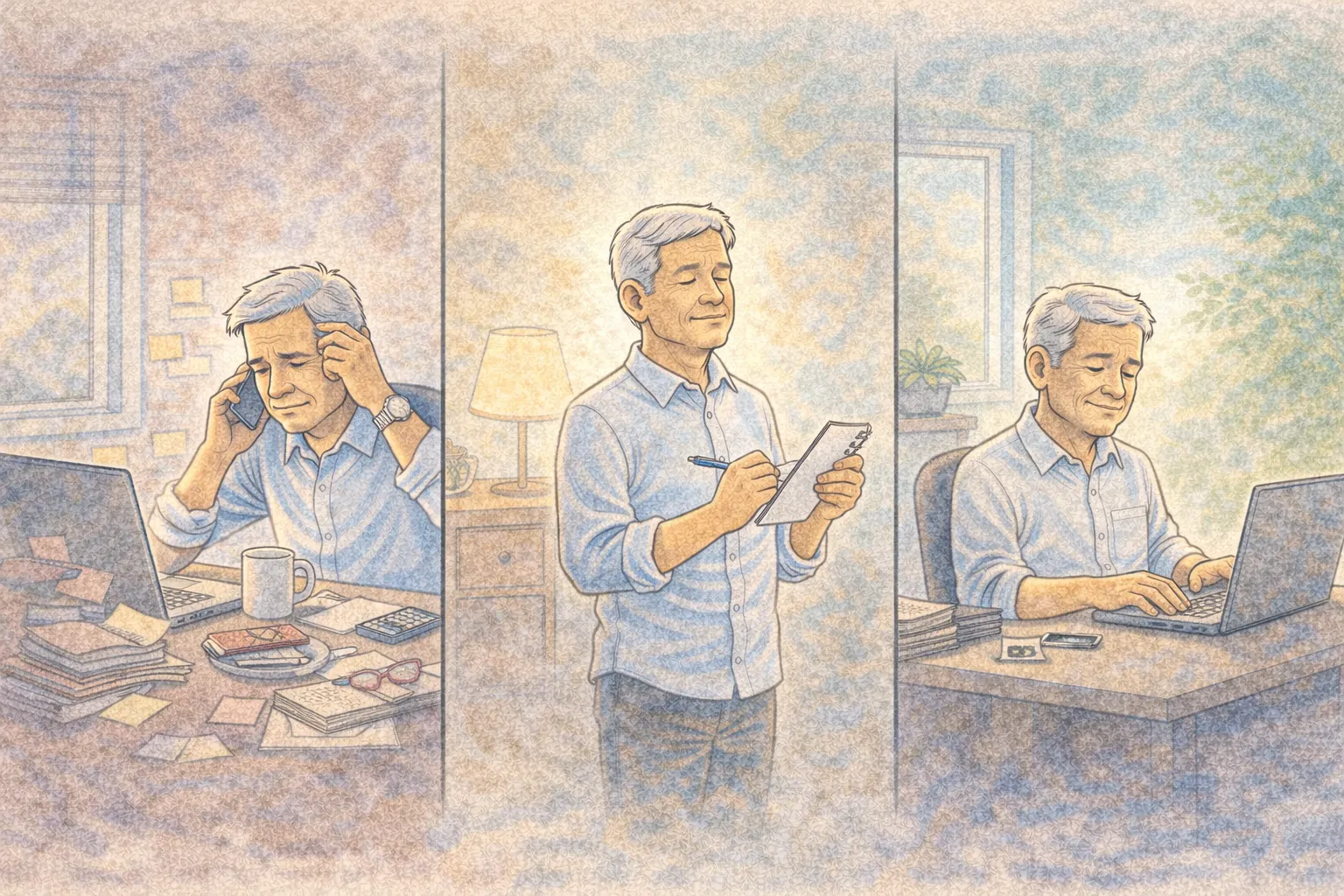
Panoramic comic-style illustration showing a retiree experiencing slow repetitive time versus enjoying an active outdoor moment
“I thought time would fly… but it doesn’t.”
Many retirees are surprised by this.
You finally have time.
No pressure. No deadlines. No rush.
And yet…
Days feel longer. Weeks feel slower. Time feels different.
1. Why time feels different after retirement
Before retirement, your day was structured.
schedules
deadlines
responsibilities
Time was divided.
After retirement, that structure disappears.
And when structure disappears…
Time expands.
2. The brain needs markers
Your brain measures time using events.
meetings
conversations
movement
changes
These are called “time markers.”
Without them:
time feels blurry
days feel longer
nothing stands out
3. The “same day” effect
When days look similar:
your brain groups them together
your memory becomes flat
time feels slow
It’s not that time changed.
It’s that your experience did.
4. Why busy people feel time moves faster
It’s not about stress.
It’s about variation.
More variation = more memory markers More markers = richer experience
That makes time feel fuller and faster.
5. The hidden problem: low variation
Many retirees fall into this pattern:
same environment
same routine
same pace
Comfortable…
But repetitive.
6. Why slow time feels uncomfortable
At first, slow time feels relaxing.
But over time, it can feel:
dull
unclear
slightly empty
Not bad.
Just not satisfying.
7. The solution is not “stay busy”
This is important.
You don’t need to fill your day.
You need to add variation.
8. The 3-variation rule
Each day, include at least:
a different place
a different activity
a different interaction
Even small changes count.
9. Simple examples
walk a different route
sit in a different room
call a different person
try a new small task
Small variation → big difference
10. Why this works
Because it creates:
mental markers
stronger memory
more engagement
And that changes how time feels.
11. Real-life examples
Susan, 70:
“My days felt long and empty.”
She started going outside daily.
Her words:
“Time started to feel normal again.”
Robert, 73:
“I didn’t need more to do. I needed something different.”
That shift changed everything.
12. Signs you’re experiencing this
days feel long
time feels slow
your routine feels repetitive
your memory of days feels unclear
you feel slightly bored
Quick checklist
did I change my environment today?
did I do something slightly different?
did I interact with someone?
If yes, time will feel better.
The key insight
Time doesn’t slow down.
Experience does.
Conclusion
Retirement gives you time.
But time alone is not enough.
You need variation.
That’s what makes time feel alive again.
Disclaimer
This content is for general educational purposes only and does not consider individual psychological or medical conditions. If persistent low mood or disconnection occurs, consult a qualified professional.
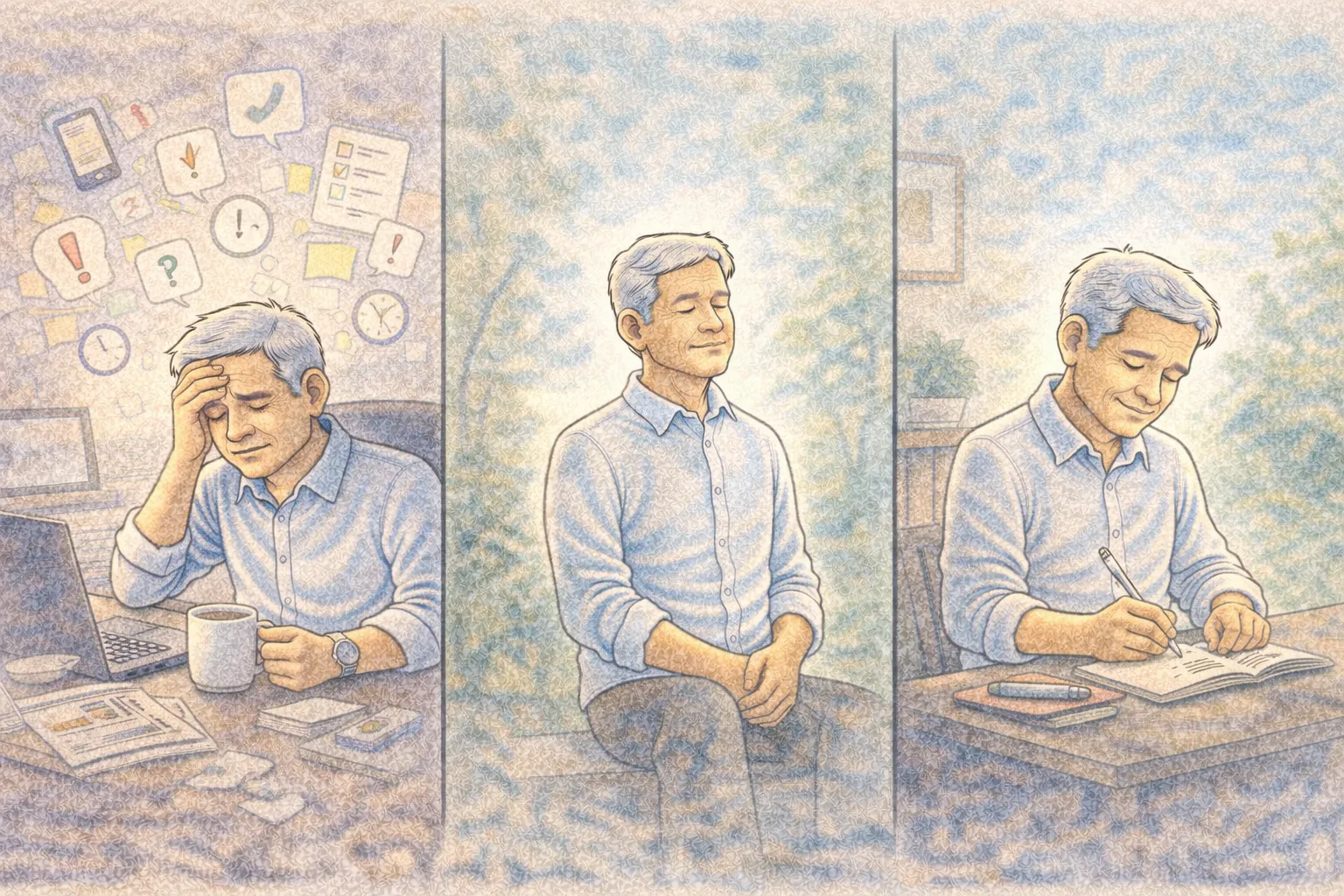
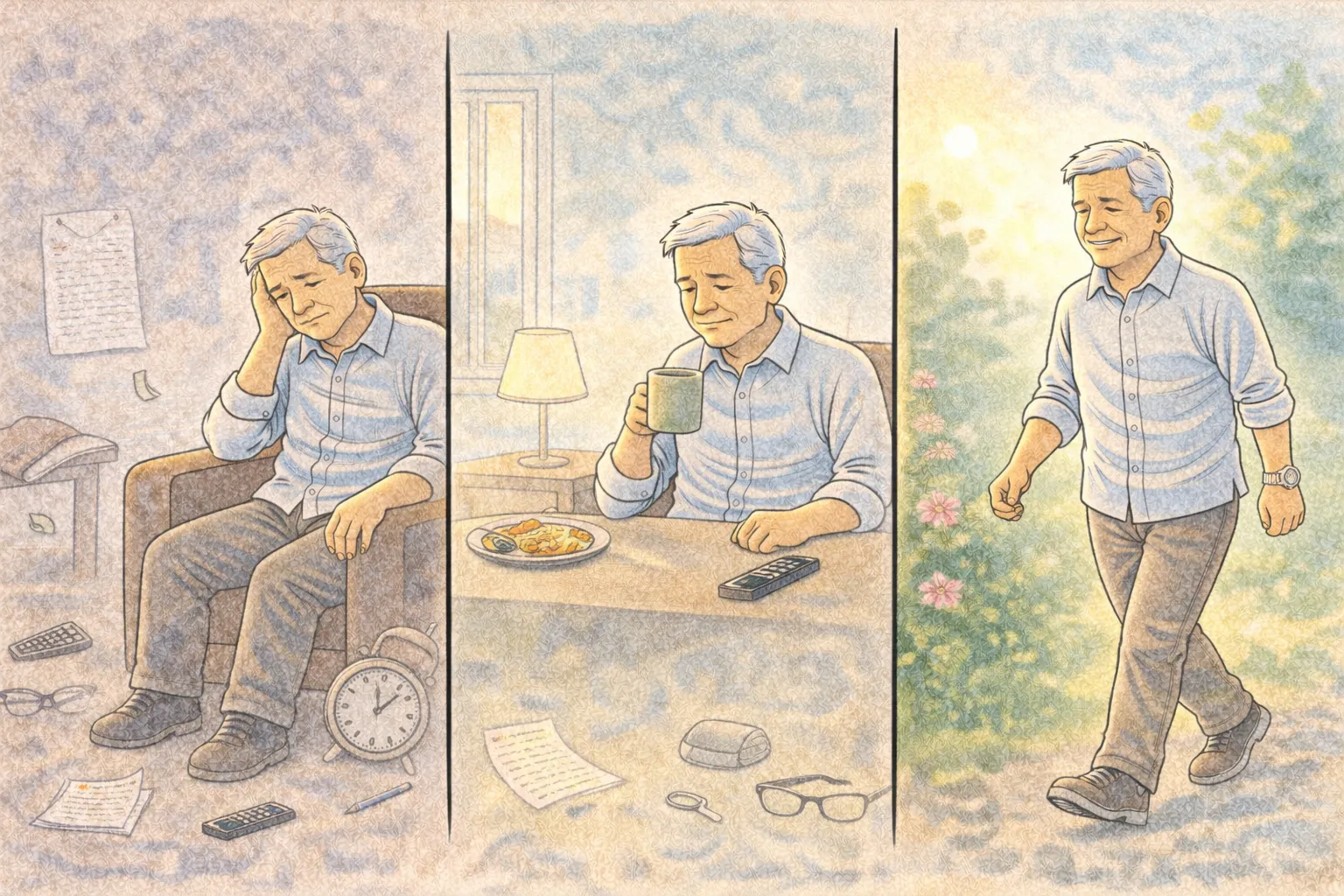
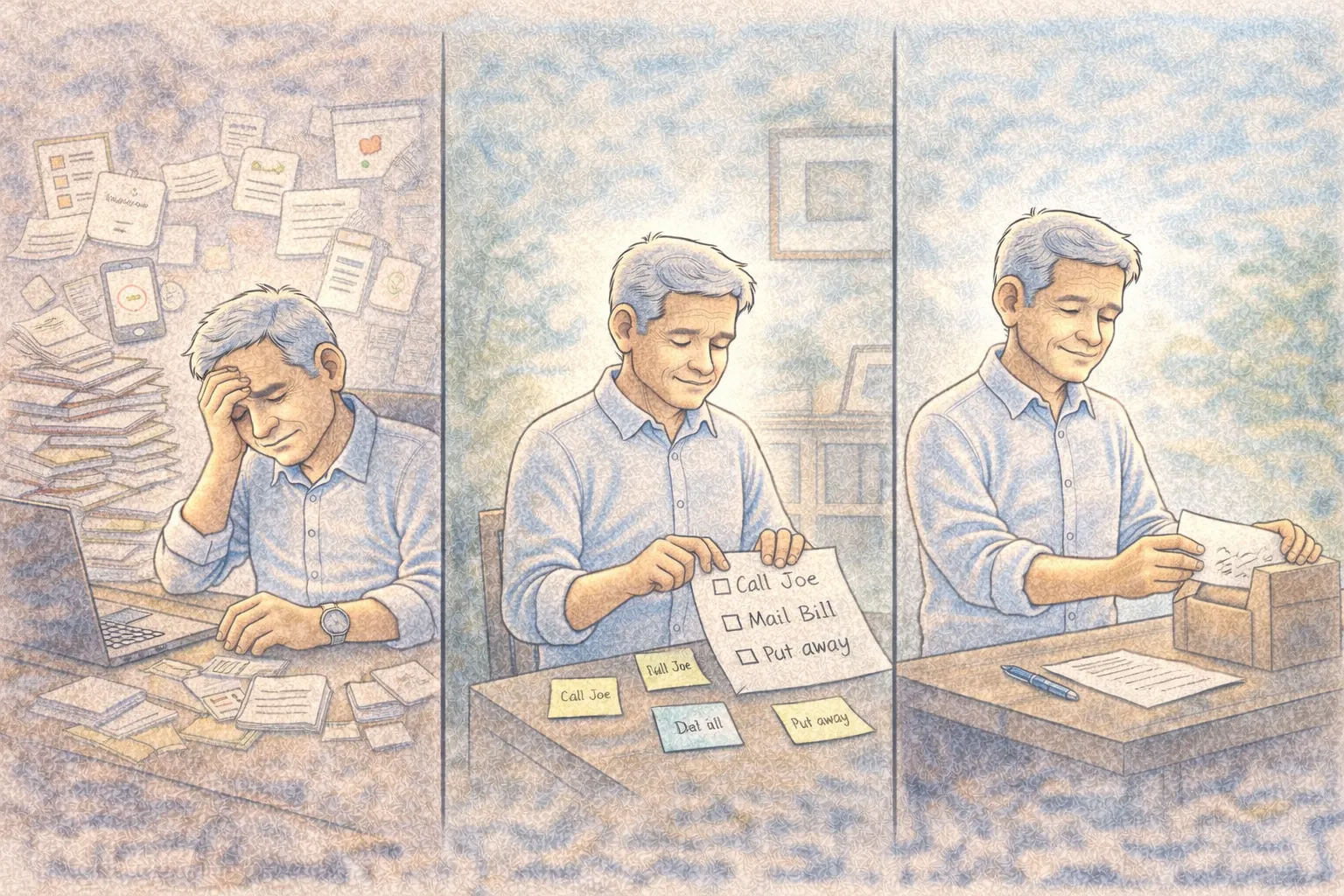
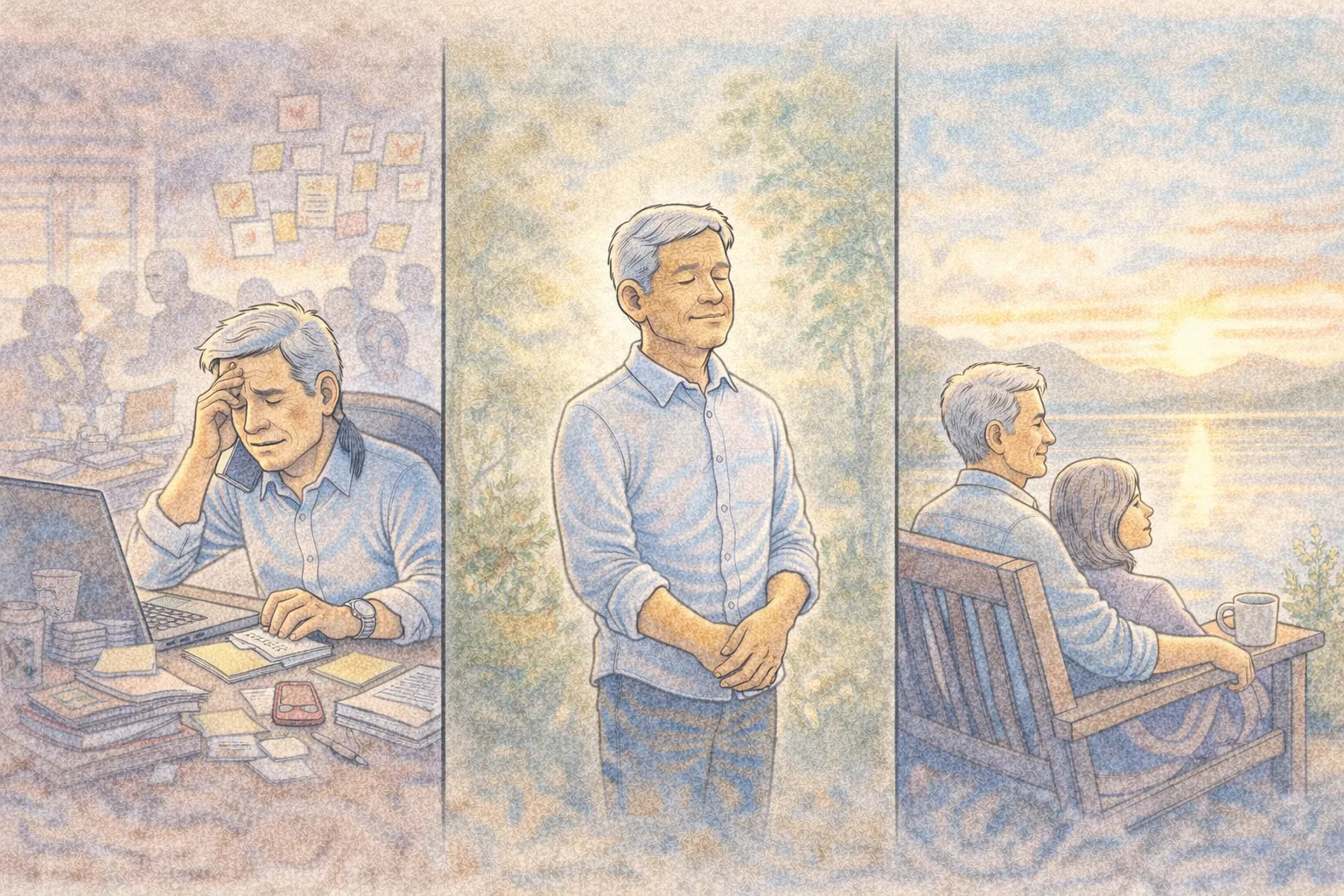
Panoramic comic-style illustration showing a retiree moving from mental clutter to calm clarity through a daily reset habit
“It’s not a big change… but my days feel better.”
That’s how many retirees describe this habit.
It doesn’t require effort.
It doesn’t take much time.
And it doesn’t look impressive from the outside.
But it quietly improves:
your mood
your clarity
your energy
your daily rhythm
All from one simple action.
1. The habit: a daily reset moment
The habit is simple:
Take a few minutes each day to pause, reset, and look at your day clearly.
Not planning everything.
Not overthinking.
Just a short reset.
2. Why this matters more after retirement
During working years, structure resets your day automatically.
schedules
meetings
routines
After retirement, that disappears.
Without a reset point:
days drift
thoughts build up
energy becomes uneven
3. What happens without it
Without a reset moment:
small thoughts pile up
tasks stay unfinished
your mind stays busy
your day feels unclear
Even if nothing is “wrong”
Things don’t feel settled.
4. What a reset actually does
A short reset helps you:
clear mental clutter
reduce background stress
feel more in control
refocus your attention
It’s like cleaning your mind.
5. The 3-minute version
You don’t need a routine.
Start with this:
pause
sit quietly
ask: “What matters for the rest of today?”
That’s it.
6. The 5-minute version (better)
If you want slightly more structure:
write one thought down
choose one small action
let go of everything else
Simple.
Clear.
Effective.
7. The best time to do it
Any time works.
But these are most effective:
morning (sets direction)
midday (resets energy)
evening (clears mind)
Choose one.
Keep it consistent.
8. Why it works so well
Because it does three things:
reduces mental noise
creates direction
gives a sense of completion
These three alone improve how a day feels.
9. Real-life examples
Anna, 70:
“I started writing one sentence each morning.”
That alone made her days feel clearer.
Paul, 73:
“I didn’t need a plan. I needed a pause.”
That pause changed everything.
10. Signs you need this habit
your thoughts feel scattered
your day feels unclear
you feel mentally busy
you delay simple tasks
you don’t feel settled
If this feels familiar, this habit helps.
11. What NOT to do
Avoid turning this into:
a long routine
a strict system
a productivity tool
This is not about doing more.
It’s about thinking less.
12. The long-term effect
Over time, this habit creates:
calmer thinking
clearer days
better decisions
more stable mood
Not instantly.
But consistently.
Quick checklist
did I pause today?
did I clear one thought?
did I choose one direction?
That’s enough.
The key insight
You don’t need to control your whole day.
You just need one moment of clarity.
Conclusion
Retirement doesn’t need complexity.
It needs small, steady habits.
This one habit—
a simple daily reset—
can quietly improve everything.
Disclaimer
This content is for general educational purposes only and does not consider individual psychological or medical conditions. If persistent stress or mental discomfort continues, consult a qualified professional.
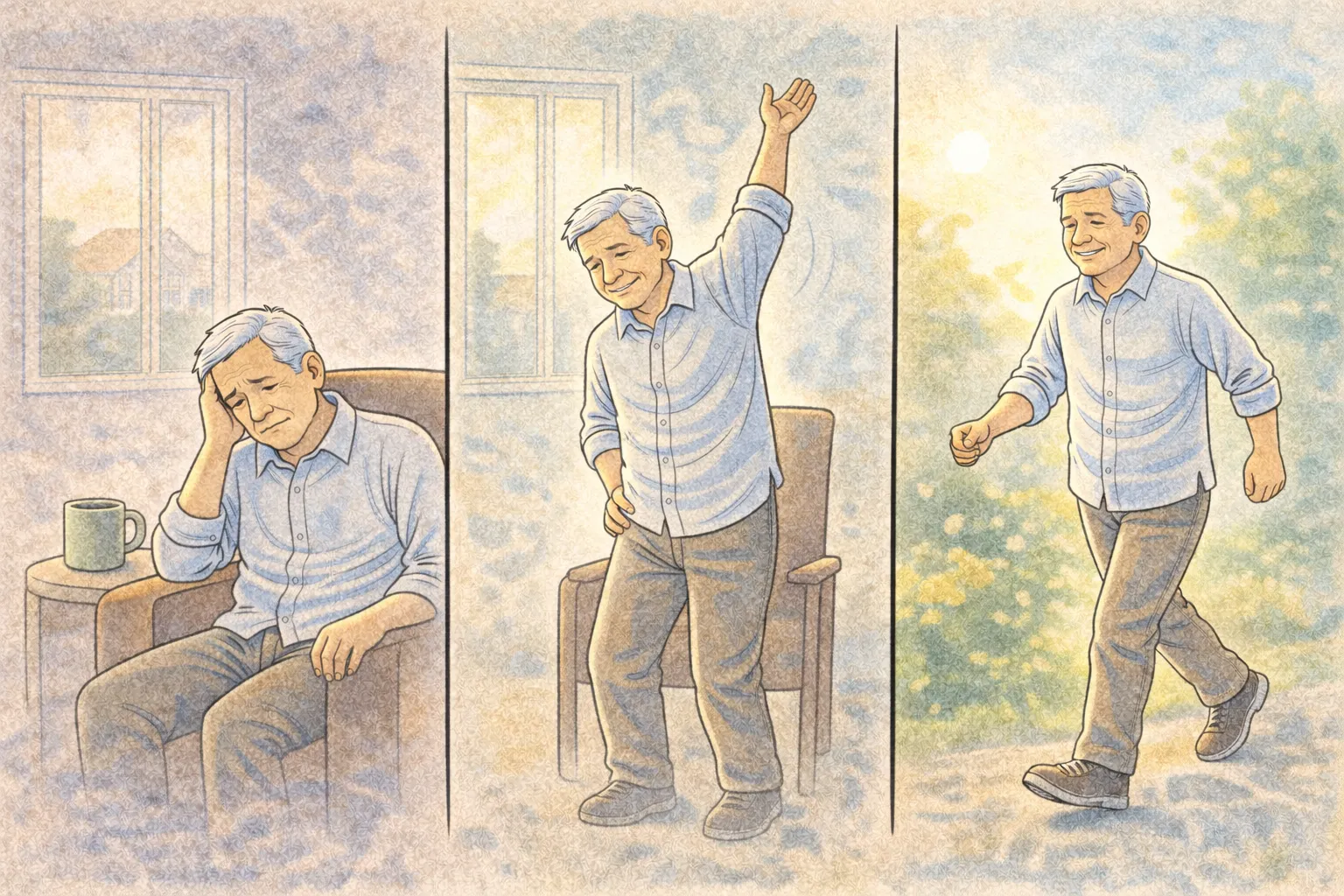
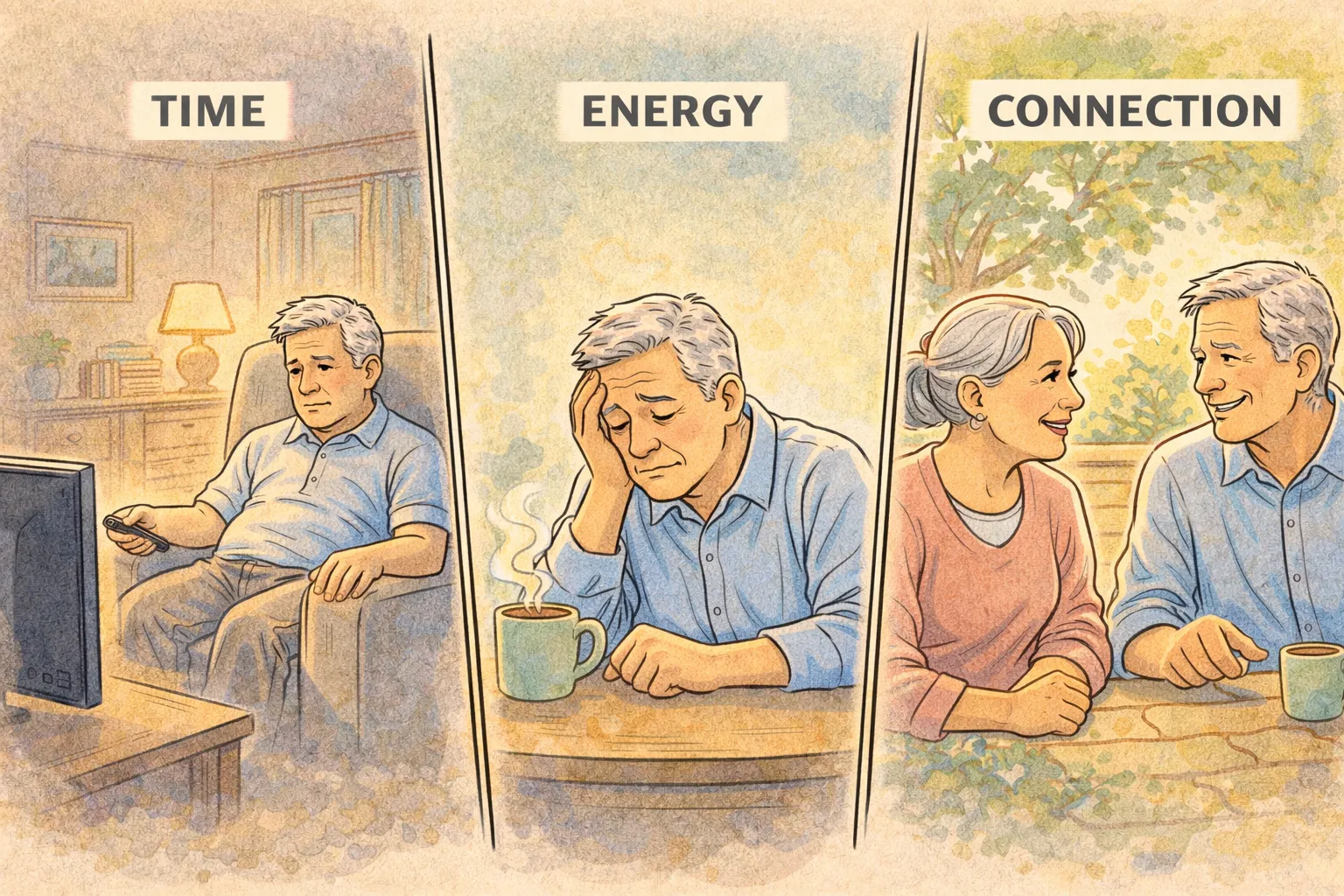
Panoramic comic-style illustration showing three retirement states: poor time use, low energy, and meaningful social connection
Most people think retirement is shaped by money.
But that’s not entirely true.
Money matters.
But what really shapes your retirement is something deeper.
Three decisions.
Not hundreds.
Just three.
And once they are set, everything else follows.
1. Decision #1 — How you use your time
After retirement, time becomes your main resource.
But here’s the challenge:
There’s no default structure anymore.
No one tells you what to do.
No schedule is given to you.
So you must decide:
“What is my day for?”
Why this decision matters
Without a clear answer, days become:
repetitive
unstructured
low-energy
With a clear answer, days become:
intentional
steady
meaningful
Two common patterns
Passive time use:
waiting for something to happen
reacting to the day
filling time randomly
Intentional time use:
choosing small daily anchors
creating rhythm
planning lightly
2. Decision #2 — How you protect your energy
Time is important.
But energy is everything.
You can have time…
And still feel tired, slow, or unmotivated.
That’s because retirement is not about hours.
It’s about how those hours feel.
What drains energy
too much sitting
too much staying at home
too many small decisions
too much availability
low interaction
What protects energy
simple movement
daily structure
limited commitments
mental clarity
recovery time
The key shift
Stop asking:
“How do I fill my day?”
Start asking:
“How do I protect my energy?”
3. Decision #3 — Who you stay connected to
Connection becomes more important after retirement.
Not less.
But it often becomes less automatic.
You no longer have:
coworkers
daily interactions
built-in conversations
So connection becomes a choice.
Without connection
Days can feel:
quiet
isolated
repetitive
With connection
Life feels:
more alive
more balanced
more meaningful
Connection doesn’t have to be big
It can be:
a short call
a quick conversation
a regular weekly visit
Small contact matters.
4. Why these 3 decisions matter more than anything else
Most retirement advice focuses on:
saving money
investing
budgeting
But those don’t shape your daily experience.
These three decisions do:
time
energy
connection
They control how your life feels every day.
5. What happens if you ignore them
Without clear decisions:
time becomes empty
energy becomes low
connection becomes rare
And retirement starts to feel:
slow
unclear
slightly unsatisfying
6. What happens if you get them right
With these decisions in place:
your days have rhythm
your energy improves
your life feels more stable
Not perfect.
But steady.
And that’s what most people actually want.
7. A simple way to apply this
You don’t need a full plan.
Start small.
Each day:
choose one anchor (time)
protect one energy habit
include one connection
That’s enough.
8. Real-life examples
George, 72:
“I thought retirement was about free time. Turns out, I needed structure more than freedom.”
Linda, 69:
“Once I focused on my energy, everything else improved.”
Michael, 74:
“I didn’t realize how important small conversations were until I had fewer of them.”
9. Signs these decisions need attention
your days feel unstructured
you feel low energy often
you have fewer interactions
your routine feels unclear
you feel slightly disconnected
If this sounds familiar, these three decisions are the place to start.
Quick checklist
did I use my time intentionally today?
did I protect my energy?
did I connect with someone?
If yes, your day is working.
The key insight
Retirement is not shaped by one big decision.
It’s shaped by three small ones—repeated daily.
Conclusion
You don’t need to control everything.
You just need to guide:
your time
your energy
your connection
When those are steady,
Retirement becomes not just easier—
But better.
Disclaimer
This content is for general educational purposes only and does not consider individual health, financial, or psychological conditions. For personalized guidance, consult a qualified professional.
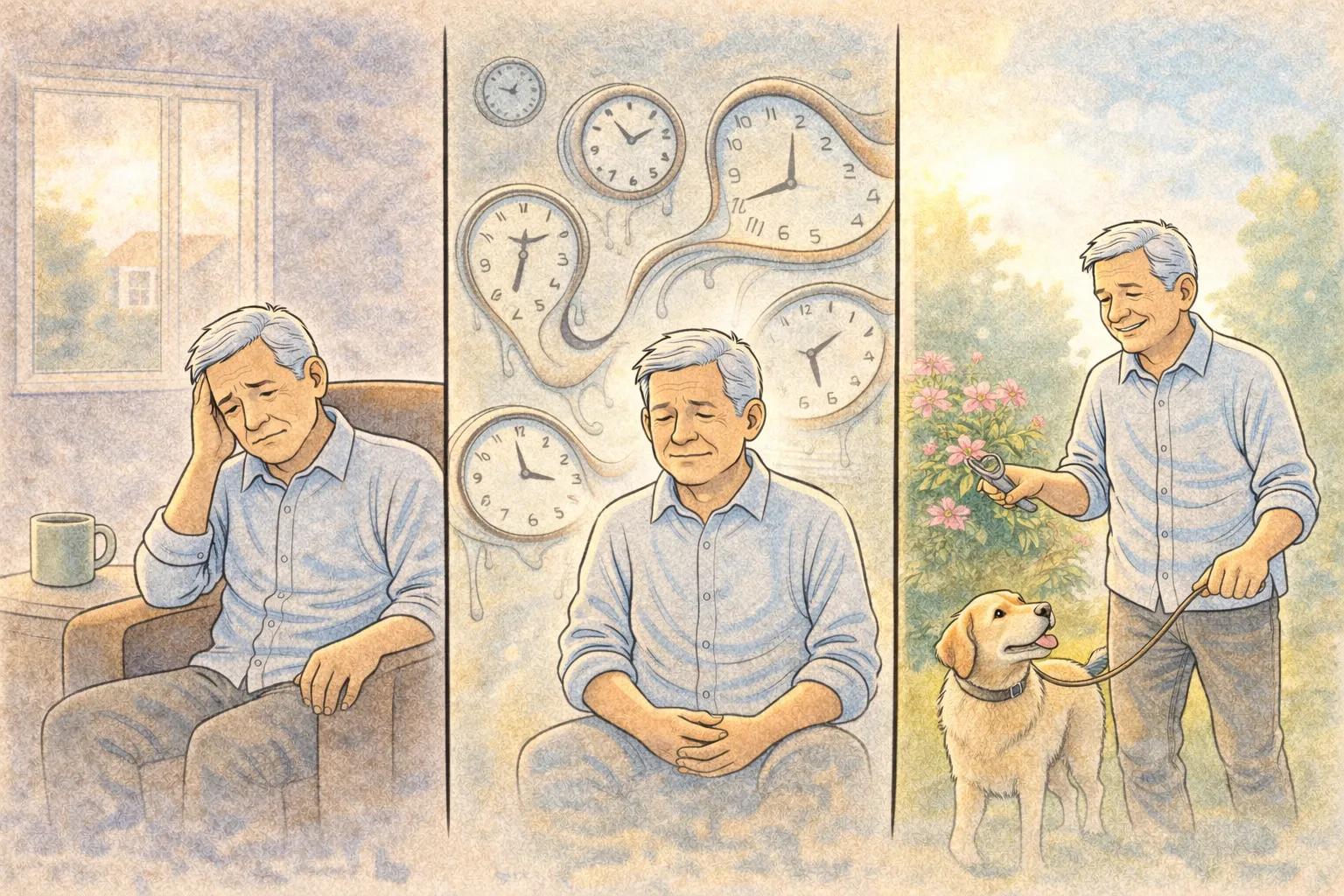
Panoramic comic-style illustration showing retirees staying indoors feeling low energy versus going outside feeling refreshed and active
“I didn’t go anywhere today.”
At first, that feels comfortable.
No traffic.
No pressure.
No schedule.
Just quiet.
But when many days start to look like this…
Something slowly changes.
Not suddenly.
Not dramatically.
But noticeably.
1. Why staying home feels good at first
After retirement, staying home can feel like relief.
no commute
no deadlines
no obligations
Home becomes a safe space.
And that’s a good thing.
2. When comfort turns into pattern
The problem is not staying home.
The problem is staying home too consistently.
When days repeat like this:
wake up
sit
move around the same space
minimal outside interaction
Your world quietly shrinks.
3. Your brain needs variation
The human brain responds to change.
Different places
Different faces
Different small experiences
When everything stays the same:
stimulation drops
alertness drops
energy drops
This is why long periods at home can feel oddly tiring.
4. The “slow blur” effect
Many retirees describe this feeling:
Days start blending together.
Monday feels like Wednesday.
Morning feels like afternoon.
There are fewer markers in the day.
This creates a sense of:
time moving strangely
lack of clarity
reduced motivation
5. Movement becomes minimal
At home, movement is limited.
fewer steps
less walking
less standing
more sitting
Even if you feel “rested,”
Your body slowly loses energy.
6. Social interaction drops quietly
This is one of the biggest changes.
Without realizing it, you may have:
fewer conversations
less eye contact
fewer spontaneous interactions
Even small interactions matter more than we think.
7. Mood becomes flatter
When environment and routine don’t change much:
Mood often becomes:
neutral
low-energy
slightly disconnected
Not depressed.
Just… flat.
8. The key problem is not laziness
This is important.
Staying home too much is not about laziness.
It’s about lack of variation.
Your brain and body are responding exactly as expected.
9. A simple way to fix it
You don’t need a busy life.
You need small changes.
Try:
stepping outside once a day
changing rooms intentionally
short walks
visiting one place weekly
brief social contact
Small changes → big impact
10. The 3-exposure rule
A simple structure:
Each day, include at least:
outside exposure
movement
human interaction
Even small versions count.
11. Real-life example
Carol, 71:
“I didn’t feel bad. Just… dull.”
She started going outside for 10 minutes every morning.
That alone made her feel more awake.
David, 68:
“I didn’t realize how little I was moving.”
He added one short walk after lunch.
His energy improved within a week.
12. Signs you may be staying home too much
days feel repetitive
you feel slightly tired without reason
you delay going outside
your mood feels flat
you move less than before
you have fewer conversations
If this feels familiar, it’s not a problem.
It’s a signal.
Quick checklist
did I go outside today?
did I move my body?
did I talk to someone?
did I change my environment at least once?
If not, tomorrow is a new chance.
The key insight
Home should feel safe.
Not limiting.
Conclusion
Staying home is comfortable.
But too much comfort can quietly reduce energy, clarity, and mood.
You don’t need a full schedule.
You need small variation.
That’s what keeps retirement feeling alive.
Disclaimer
This content is for general educational purposes only and does not consider individual health or psychological conditions. If prolonged low mood or isolation occurs, consult a qualified professional.
Older adult relaxing comfortably in a chair at home, representing a calm and quiet retirement day without pressure
“I didn’t really do anything today.”
This thought shows up more often than people expect after retirement.
The strange part is this:
You may have had a calm day. Nothing stressful happened. You weren’t overwhelmed.
And yet…
You still feel slightly uncomfortable.
Like something is missing.
Like the day didn’t “count.”
This feeling is very common.
And more importantly—
It’s completely normal.
1. Why productivity used to define your day
For decades, life followed a pattern:
tasks to complete
work to finish
responsibilities to manage
goals to reach
At the end of the day, there was a clear question:
“Did I get things done?”
That question shaped how you felt.
Productivity = satisfaction
2. What changes after retirement
Retirement removes that structure.
There is no longer:
a daily output requirement
a performance expectation
a clear definition of “done”
This creates a gap.
Not in time—
But in meaning.
3. The “invisible day” feeling
Many retirees experience this:
The day passes quietly.
But at the end, it feels like:
nothing important happened
nothing was completed
nothing stands out
This creates the feeling of being unproductive.
Even if the day was peaceful.
4. Why this feeling is uncomfortable
Your brain has been trained for years to measure value through output.
So when output disappears, the brain reacts:
“Was today useful?”
“Did I waste time?”
“Should I have done more?”
This is not a flaw.
It’s conditioning.
5. Rest is not the same as “nothing”
This is the key misunderstanding.
Rest is not empty.
Rest is active recovery.
But when you’re used to productivity, rest can feel like:
laziness
lack of purpose
wasted time
That’s not true.
It just feels unfamiliar.
6. The hidden pressure retirees carry
Even without a job, many retirees feel internal pressure:
“I should be doing something”
“I shouldn’t waste my time”
“I need to stay productive”
This pressure is often invisible.
But it shapes how your day feels.
7. A healthier way to define a “good day”
Instead of asking:
“What did I finish today?”
Try asking:
“Did today feel steady?”
or
“Did I take care of myself today?”
This is a different kind of success.
8. The 3 ways a day can be valuable
A good day in retirement can include:
Maintenance (simple tasks, small routines)
Enjoyment (rest, hobbies, calm moments)
Connection (conversation, interaction)
That’s enough.
9. Real-life examples
Susan, 68:
“I used to feel guilty for relaxing. Now I see it as part of my day—not a failure.”
Robert, 72:
“I stopped measuring my days by output. I started noticing how I felt instead.”
10. Signs you’re judging yourself too harshly
you feel guilty for resting
you compare today to your working years
you feel like you “should have done more”
you struggle to enjoy free time
you measure value only through tasks
If this sounds familiar, you’re not doing retirement wrong.
You’re just using old rules.
11. What to do instead
You don’t need to become more productive.
You need a new definition of enough.
Try:
one small task per day
one enjoyable moment
one form of connection
That’s a full day.
12. The mindset shift
Old mindset:
“I need to earn my rest.”
New mindset:
“Rest is part of a complete day.”
This shift removes pressure.
Quick checklist
did I move a little today?
did I have one calm moment?
did I connect with someone (even briefly)?
did I take care of myself?
If yes, the day counts.
The key insight
Feeling unproductive after retirement is not a problem.
It’s a transition.
You’re moving from a life measured by output…
To a life measured by experience.
Conclusion
Retirement is not about doing nothing.
It’s about doing what matters—at a different pace.
Some days will be quiet.
Some days will feel slow.
That doesn’t make them empty.
It makes them human.
Disclaimer
This content is for general educational purposes only and does not address individual psychological or medical conditions. If feelings of low motivation or mood persist, consult a qualified professional.
Older adult sitting quietly with a blank planner looking unsure how to start the day
“Nothing really needs to be done today… so why do I feel stuck?”
This is a quiet but very real experience after retirement.
No deadlines. No boss. No urgent emails.
At first, this feels like freedom.
But over time, something strange happens.
You start to feel:
unmotivated
slow to start the day
unsure what matters
mentally stuck
Not because you’re lazy.
But because nothing feels urgent anymore.
1. Why urgency disappears after retirement
During working years, urgency is built into life.
deadlines
meetings
responsibilities
expectations
These create structure automatically.
After retirement, that structure disappears.
And with it, urgency disappears too.
2. Why this creates a problem
You might think:
“No urgency = less stress”
But in reality:
No urgency can lead to:
delayed decisions
endless postponing
low energy
loss of direction
Without urgency, the brain struggles to prioritize.
3. The brain needs signals
Your brain works best when it has:
clear start points
clear reasons to act
small levels of pressure
Without these, everything feels optional.
And when everything is optional…
Nothing gets done.
4. The “I’ll do it later” loop
This is the most common pattern:
“I’ll go for a walk later.” “I’ll organize that tomorrow.” “I’ll call them sometime.”
Later becomes:
next day
next week
never
This creates a quiet mental burden.
Unfinished tasks drain energy.
5. The hidden emotional effect
When nothing feels urgent, you may start feeling:
slightly restless
mentally foggy
oddly tired
unaccomplished
Even if your day was “easy”
That’s because progress—not pressure—creates satisfaction.
6. The simple fix: gentle urgency
You don’t need stress.
You need light structure.
Think of it as “gentle urgency.”
Not pressure.
Just direction.
7. The 3-anchor day method
A simple solution:
Create 3 small anchors each day.
Morning Midday Evening
Each anchor = one small action.
Example:
Morning → short walk Midday → one task (call, errand) Evening → simple reset (tidy, plan)
That’s it.
8. Why this works
This method works because it:
gives your brain direction
creates light momentum
reduces decision fatigue
builds natural rhythm
You’re not forcing productivity.
You’re creating flow.
9. Real-life example
Mark, 70, said:
“I didn’t feel busy—but I also didn’t feel good.”
He started using a simple rule:
“One thing before lunch.”
That alone changed his days.
Linda, 67:
“I stopped waiting to feel like doing things.”
Instead, she picked one small action each morning.
Her words:
“That small start fixed everything.”
10. Signs you need more structure
You delay simple tasks
Days feel long but unproductive
You feel low energy without reason
You keep saying “later”
You don’t feel satisfied at the end of the day
If this feels familiar, you don’t need more discipline.
You need more clarity.
11. What not to do
Avoid:
over-scheduling your day
creating long to-do lists
forcing productivity
comparing yourself to your working years
This is not about doing more.
It’s about starting easier.
12. A better mindset
Instead of asking:
“What do I have to do today?”
Ask:
“What is one thing that will move my day forward?”
That one shift changes everything.
Quick checklist
choose 1 morning action
choose 1 practical task
choose 1 small reset
avoid “later” thinking
keep it simple
The key insight
Retirement doesn’t remove urgency.
It removes external urgency.
You replace it with gentle, internal direction.
Conclusion
When nothing feels urgent, life can feel slow and unclear.
The solution is not pressure.
It’s small structure.
A little direction each day creates:
better energy
clearer thinking
more satisfying days
That’s what makes retirement feel good again.
Disclaimer
This content is for general educational purposes only and does not consider individual mental health or medical conditions. If persistent lack of motivation or fatigue occurs, consult a qualified professional.
Older adult looking at a crowded weekly planner and phone, appearing tired from too many requests during retirement
Many retirees are kind, dependable, and easy to reach.
That sounds like a strength.
And often, it is.
But after retirement, being “always available” can quietly become expensive.
Not only financially.
Emotionally. Mentally. Physically. Even socially.
A lot of adults over 55 slowly become the person who is always expected to help.
The flexible one. The ride-giver. The babysitter. The problem-solver. The person who says yes because saying no feels uncomfortable.
At first, it feels generous.
Later, it can feel heavy.
This article looks at the hidden cost of being too available in retirement and how to protect your time, energy, and relationships without becoming cold or selfish.
Why this happens after retirement
Retirement changes how other people see your time.
Once you stop working, many people quietly assume:
you have more free time
your schedule is open
your needs are smaller
helping is easy for you
That assumption creates pressure.
Even when nobody says it directly.
You may hear things like:
“You’re retired, so I thought you’d be free.”
“Could you just do this one small thing?”
“You’re better at handling these things than I am.”
One request is usually manageable.
The problem is repetition.
When availability becomes your identity, your life starts filling with other people’s priorities.
The core rule
Being available is generous.
Being endlessly available is costly.
Retirement works better when kindness has limits.
1. The hidden emotional cost
Too much availability creates quiet resentment.
You may still love your family and friends.
But inside, you may start to feel:
taken for granted
overused
mentally crowded
invisible except when needed
That emotional drain is real.
And many retirees feel guilty for even noticing it.
They think:
“I should be grateful to be needed.”
But being needed is not the same as being respected.
If your time is always assumed, not asked for carefully, the relationship begins to tilt out of balance.
2. The hidden physical cost
Being overly available often increases physical strain.
This can look like:
too much driving
lifting things for others
helping with errands when already tired
skipping recovery days
adjusting your sleep around other people’s plans
For adults over 55, even small repeated demands can add up fast.
A favor that looks minor on paper may cost:
energy for the rest of the day
soreness the next morning
missed walking or exercise
reduced patience
worse sleep
The problem is not one busy day.
The problem is a pattern.
3. The hidden money cost
Many retirees underestimate how much “being helpful” costs.
Common examples:
gas and parking for rides
paying for little things and not getting repaid
groceries bought during shared errands
eating out because someone else changed the schedule
gift-like spending that becomes expected
Sometimes the cost is direct.
Sometimes it is indirect.
You may spend more simply because your week keeps getting reorganized around other people.
Table: Common hidden costs of being too available
Situation
Hidden Cost
Driving family members
fuel, parking, time
Last-minute babysitting
energy, meal disruption
Frequent errands for others
your own tasks delayed
Always hosting
groceries, utilities, cleanup
Emotional support without limits
mental fatigue
The money may not look dramatic in one week.
But over a year, it adds up.
4. The hidden schedule cost
Retirement needs rhythm.
Not a packed calendar.
Not total emptiness.
Rhythm.
But if you are too available, your schedule becomes reactive.
Instead of planning your week around:
energy
appointments
movement
meals
rest
You start planning around interruptions.
That creates a strange form of retirement stress.
You are not overworked in the old career sense.
But you are constantly adjusting.
And constant adjusting is tiring.
5. The hidden identity cost
Many retirees become “the reliable one.”
Again, that sounds positive.
But over time, this role can become limiting.
You stop asking:
“What do I want my retirement to feel like?”
And start responding mostly to:
“What does everyone else need from me this week?”
This is where retirement can quietly disappear.
Not through one major mistake.
But through hundreds of small yeses.
Real-life example: Ellen, 69
Ellen retired expecting more quiet mornings and less stress.
Instead, she became the default helper for everyone.
She drove her sister to appointments, picked up groceries for a neighbor, and watched her grandchildren several afternoons a week.
Individually, each request sounded reasonable.
Together, they made her feel constantly behind.
Her words were simple:
“I was busy all the time, but none of it felt like my life.”
When she began limiting favors to two planned help blocks per week, her mood improved almost immediately.
She still helped.
But she stopped feeling swallowed by it.
Real-life example: Daniel, 73
Daniel prided himself on always saying yes.
If anyone needed a ride, a call, a repair, or a favor, he handled it.
After a few years, he started feeling unusually tired and irritable.
He assumed aging was the reason.
But the bigger issue was this: he had no protected time.
Once he began saying, “I can help on Thursday, but not today,” his energy improved.
Nothing dramatic changed.
But his week felt more like his own again.
6. Why saying no feels so hard
For many older adults, saying no feels unnatural.
Common reasons include:
wanting to stay useful
fear of seeming selfish
habit from years of caregiving
worry that relationships will weaken
discomfort with disappointing people
But healthy boundaries do not weaken good relationships.
They clarify them.
The people who care about you can usually adjust.
The people who only valued your availability may resist.
That tells you something important.
7. The difference between generosity and overextension
A helpful question is this:
Did I choose this help calmly, or did I agree from pressure?
That difference matters.
Generosity feels steady.
Overextension feels tight.
Generosity leaves room for recovery.
Overextension leaves you depleted.
Table: Generosity vs. overextension
Generosity
Overextension
chosen freely
agreed from guilt
fits your energy
ignores your limits
occasional or planned
constant or assumed
leaves you steady
leaves you drained
This is one of the most useful retirement distinctions you can learn.
8. Signs you may be too available
You may be too available if:
people assume you will help before asking properly
your week keeps changing at the last minute
you feel irritated by “small” requests
your own routines keep getting delayed
you feel useful but not rested
you rarely have protected quiet time
If several of these feel familiar, the issue is probably not selfishness.
It is lack of limits.
9. A calmer way to help
You do not need to become unavailable.
You need a system.
A few simple rules can change everything.
Try one or two of these:
Help on planned days only
Do not answer every request immediately
Replace instant yes with “Let me check”
Limit driving favors each week
Keep one or two recovery blocks protected
Separate emergencies from convenience requests
This allows you to remain kind without becoming absorbent.
10. Simple scripts that protect your time
You do not need harsh language.
Calm, clear language works better.
Try:
“I can’t do that today, but I could help Thursday.”
“This week is full for me.”
“I’m keeping that day open to rest.”
“I’m not available for that, but I hope you can find another option.”
“I can help sometimes, but I can’t be the regular solution.”
These are not rude.
They are adult boundaries.
11. What healthy availability looks like
Healthy availability means:
people ask instead of assume
you have room to say no
you still protect your health
helping does not erase your own plans
generosity feels chosen, not extracted
This is what sustainable retirement support looks like.
You can be warm, dependable, and caring without becoming permanently on-call.
Quick checklist: Are you too available?
I often say yes before thinking
My schedule gets changed by other people’s needs
I feel guilty protecting rest
I help more than I recover
I feel useful, but not peaceful
My retirement often feels reactive
If this sounds familiar, you do not need to become harder.
You need clearer edges.
The bigger truth
Retirement is not only about having more time.
It is about finally having more say over your time.
That is a major difference.
And it is worth protecting.
When your availability is unlimited, your retirement slowly fills with borrowed priorities.
When your availability is intentional, your life feels calmer, kinder, and more stable.
Conclusion
The hidden cost of being too available in retirement is not just busyness.
It is the gradual loss of your own rhythm.
The fix is not isolation.
It is structure.
A few calm boundaries can protect:
your energy
your money
your mood
your relationships
your sense of ownership over your own life
That is not selfish.
That is wise retirement living.
Disclaimer
This content is for general educational purposes only and does not provide financial, legal, medical, or psychological advice. Individual family dynamics, health conditions, and financial situations vary. Consult qualified professionals when personal guidance is needed.
Older adult sitting quietly at home feeling tired despite a calm day
“I didn’t do much today… so why am I so tired?”
This is one of the most common—and least talked about—experiences after retirement.
Many people expect retirement to feel easier.
Less work More rest More freedom
But something unexpected happens.
You feel tired… even on quiet days.
This is not laziness. And it’s not a personal failure.
It’s usually the result of subtle changes in how your body, mind, and daily life work after retirement.
1. The hidden energy shift after retirement
When you stop working, your energy system changes.
Before retirement:
structured schedule
clear purpose
regular movement
After retirement:
flexible time
more decisions
less automatic activity
This shift alone can lower your energy without you noticing.
2. Decision fatigue increases
Retirement removes structure—but adds decisions.
Every day, you decide:
What should I do today?
When should I go out?
Should I rest or stay active?
These small decisions slowly drain mental energy.
Even if you didn’t “do much,” your brain did.
3. You move less than you think
During working years, movement is automatic.
Walking Standing Going out
After retirement, movement becomes optional.
And when it becomes optional, it often decreases.
Less movement = lower energy Even if you feel “rested”
4. Emotional energy becomes more important
Energy is not just physical.
It’s also emotional.
After retirement, you may have:
fewer conversations
quieter days
less stimulation
This can create a subtle feeling of low energy or heaviness.
5. Sleep patterns quietly change
Many retirees experience:
lighter sleep
waking earlier
more naps
Even small sleep changes affect your energy more than you expect.
6. The “low-pressure paradox”
This is the surprising part.
Less pressure should feel better.
But sometimes it leads to:
lower motivation
slower mornings
less mental engagement
Your brain still needs a certain level of activity to feel energized.
7. A simple way to restore energy
You don’t need a strict routine.
You need a gentle rhythm.
A simple daily structure:
one small morning activity
one movement (even 10 minutes)
one connection (call, chat, interaction)
That’s enough.
Real-life examples
“I thought I was just getting older. But adding a short walk helped my energy a lot.” — John, 71
“Having one small plan in the morning made my whole day feel better.” — Linda, 68
Quick self-check
You may feel tired because of:
lack of structure
too many small decisions
reduced movement
low interaction
irregular sleep
The key insight
Feeling tired in retirement is not about doing too much.
It’s often about not having enough balanced stimulation.
Conclusion
Retirement changes how energy works.
Instead of pushing harder, create a gentle daily rhythm.
That’s what restores energy naturally.
Disclaimer
This content is for educational purposes only and does not consider your personal situation. Persistent fatigue may be related to medical conditions. Please consult a qualified healthcare professional if needed.
Home exercise progress for seniors works best when strength, balance, and gentle movement are built gradually enough to repeat without injury.
Cindy’s Column × Senior AI Money
A lot of home exercise plans fail for the same reason.
They start with enthusiasm and end with soreness, frustration, or a quietly abandoned routine.
One day you do too much because you feel motivated. The next day your knees complain, your back feels tight, or your energy drops. Then you “rest” for several days. Then restarting feels harder than beginning did.
That is why exercise progress after 55 is usually not a motivation problem.
It is a pacing problem.
For older adults, the real goal is not to crush a workout.
It is to build a routine your body can trust.
That matters because official healthy-aging guidance points in the same direction: older adults benefit from a mix of aerobic, muscle-strengthening, and balance activity, and regular movement supports thinking, independence, and fall prevention. CDC’s current guidance for older adults says adults 65+ should aim for at least 150 minutes of moderate aerobic activity each week, plus muscle-strengthening on at least 2 days and balance activities as part of weekly movement. NIA also emphasizes aerobic, strength, and balance work, while WHO recommends varied multicomponent activity that emphasizes functional balance and strength for older adults.
This guide is for adults 55+ who want home exercise to become steadier, safer, and more repeatable.
What progress really means at home
A lot of people define exercise progress too narrowly.
They think progress means:
more reps,
heavier weights,
longer walks,
harder routines,
more sweat,
more soreness.
Sometimes that is true.
But for many older adults, real progress looks like this:
you show up three times this week instead of once you stop needing three recovery days after each workout you finish feeling energized instead of defeated your balance feels steadier getting up from a chair you trust yourself to keep going next week
That counts.
In fact, it counts a lot.
Because the most valuable exercise plan is not the one that looks ambitious.
It is the one that survives ordinary life.
The consistency rule
Build the habit first. Build the challenge second.
That is the rule that keeps people from getting hurt.
A routine that is slightly too easy at first is usually much better than one that is slightly too hard.
NIA specifically notes that activity can be done through many kinds of movement, including structured exercise, chores, errands, walking, or leisure activity, and that older adults should include a combination of aerobic, muscle-strengthening, and balance work each week. NIA also notes that variety can make movement more enjoyable and may reduce overuse injury risk.
That means the best home exercise plan is not a punishment plan.
It is a repeat plan.
Part 1: Start with the three-part foundation
Home exercise goes better when you stop asking one routine to do everything.
A strong weekly plan for seniors usually includes three types of movement:
Aerobic work Walking in place, easy marching, indoor cycling, light stepping, short walking sessions
Strength work Chair stands, wall push-ups, resistance bands, light dumbbells, sit-to-stand practice
Balance work Heel-to-toe standing, one-leg support with a chair nearby, side stepping, standing from a chair with control
This matters because aging well is not only about endurance.
It is also about staying steady, strong, and independent.
NIA states that older adults benefit from aerobic, muscle-strengthening, and balance exercise, and its exercise materials note that balance training can help prevent falls and fall-related injuries. CDC’s older-adult guidance likewise includes aerobic, strength, and balance activity as part of the weekly recommendation.
If you are only walking, you may be missing strength and balance.
If you are only doing light weights, you may be missing endurance.
If you are only stretching, you may be missing enough challenge to build real function.
The answer is not more intensity.
It is better balance across the week.
Table 1. A simple home exercise structure for older adults
Exercise Type
Examples at Home
Main Benefit
Aerobic
Walking, indoor marching, step-touch, stationary bike
Supported single-leg practice, heel-to-toe, side steps
Helps stability and fall prevention
Mobility / flexibility
Gentle range of motion, calf stretch, shoulder circles
Helps movement feel easier
Recovery movement
Easy walk, light stretching, relaxed mobility
Helps you stay consistent
Part 2: Progress by adding small pieces, not giant jumps
One of the biggest injury mistakes is jumping too fast.
People often do this in one of three ways:
they suddenly double the time they add weight too fast they do the same movement too often because they think “more is better”
Usually, better progress looks smaller.
Examples of safe-feeling progress:
10 minutes becomes 12 1 set becomes 2 5 chair stands becomes 7 one balance drill becomes two short balance drills two workouts per week becomes three moderate sessions
That is enough.
Older adults often benefit more from slow, repeatable increases than from dramatic upgrades. CDC’s fall-prevention program materials note that building strength and balance takes time, and NIA’s exercise guidance emphasizes staying active regularly rather than treating exercise as a burst-and-crash effort.
A useful rule is this:
Change only one thing at a time.
Not all three.
So if you add time this week, keep the exercise selection the same.
If you add a little resistance, keep the number of sets stable.
If you add a third workout day, keep the sessions shorter.
That is how progress feels manageable instead of risky.
Part 3: Use the “finish feeling capable” test
A lot of home workouts are judged the wrong way.
People ask:
Did I do enough?
Was that hard enough?
Should I feel more sore?
A better question is:
How did I feel at the end?
For most seniors exercising at home, a good session should end with:
“I could probably do a little more, but stopping here feels smart.”
That is the sweet spot.
If you finish completely drained, your plan may be too aggressive.
If you regularly ache for days, the dose may be too high.
If you dread the next session, the routine may not be sustainable.
NIA’s exercise safety materials encourage older adults to listen to the body, use good form, and build activity in a way they can maintain. Its public guidance repeatedly frames movement as part of healthy aging, not as an all-out performance test.
That is why “finish feeling capable” is such a powerful rule.
It protects tomorrow, not just today.
Part 4: The week matters more than one workout
Many people think of exercise one workout at a time.
A better method is to think in weeks.
Why?
Because the body does not only respond to Tuesday.
It responds to the pattern of Monday through Sunday.
A smart home week for many older adults looks something like this:
2 strength sessions 3 to 5 moderate movement days 2 to 3 short balance sessions 1 or more easier recovery days
This does not mean every session has to be long.
In fact, short sessions often work better.
CDC’s older-adult activity guidance says the weekly goal can be spread across the week and that movement can be accumulated in realistic ways. NIA also emphasizes combining different activity types across the week, not relying on one single form of exercise.
So instead of trying to “make up for” missed exercise with one heroic session, build a week that feels believable.
Believable beats perfect.
Part 5: Pain, soreness, and warning signs are not the same thing
This is where a lot of older adults get confused.
Some exercise discomfort is normal.
Sharp or worsening pain is not.
Mild muscle fatigue after strength work can be expected.
Needing three days to recover every time is a clue something needs adjusting.
A little challenge is useful.
A pattern of flare-ups is not.
NIA’s guidance for exercise with aging and chronic conditions emphasizes adjusting activity to your body and health needs, and public-health guidance for older adults consistently encourages activity while also recognizing that chronic conditions, balance concerns, and other limitations may require modifications.
Practical red flags to respect:
pain that changes the way you move joint pain that gets worse during the session dizziness chest pain shortness of breath beyond expected effort swelling that seems unusual a “bad soreness” pattern that keeps returning
These are not signs to push harder.
They are signs to step back and reassess.
Part 6: The best progress often comes from boring repetition
This may be the least glamorous truth in exercise.
The things that help older adults most are often very ordinary:
chair stands supported balance practice light dumbbell work step-ups at a safe height walking band rows wall push-ups slow marching controlled sit-to-stand movements
These exercises may not look exciting.
But they transfer well to daily life.
They help you stand up, walk better, steady yourself, carry things, and keep confidence in your body.
NIA’s strength and balance guidance highlights exactly these kinds of basic, functional movements as important for healthy aging and fall prevention. WHO’s guidance for older adults similarly emphasizes multicomponent activity with functional balance and strength.
That means your home plan does not need novelty every week.
It needs usefulness.
Table 2. Common home exercise mistakes and better fixes
Common Mistake
What Usually Happens
Better Fix
Starting too hard
Soreness, skipped days, loss of confidence
Start shorter and lighter than your motivation wants
Doing only walking
Endurance improves but strength/balance lag
Add two strength days and short balance practice
Progressing everything at once
Fatigue or pain spikes
Change only one variable at a time
Exercising only when motivated
Inconsistent routine
Use a weekly structure instead of mood
Chasing soreness
Recovery gets harder
Judge success by steadiness and form
Repeating painful movements
Symptoms worsen
Modify, reduce, or stop and reassess
Part 7: Real examples
Elaine, 70
Elaine started a home routine with online videos and quickly did too much. She liked the feeling of “finally getting serious,” but her knees and hips disagreed. She switched to a simpler structure: walking indoors or outside on most days, chair stands twice a week, light dumbbell work twice a week, and short balance practice after brushing her teeth. Three months later, she was doing less per session than before, but much more across the month.
James, 74
James believed that if exercise was not hard, it was not working. So every home session turned into a test. He would do extra reps whenever he felt good, then disappear from exercise for four days. Once he started using the finish-feeling-capable rule, his routine stabilized. He kept each session moderate enough that he could repeat it. That changed everything.
Marsha, 66
Marsha already walked regularly but noticed she still felt unsteady stepping backward or getting up from low chairs. She added brief strength and balance work at home three times a week. Nothing dramatic happened in one week, but six weeks later she felt more confident moving around the house and handling ordinary tasks. Her progress came from targeted consistency, not intensity.
Part 8: A simple weekly model that actually works
Here is a realistic home model many older adults can adapt:
Monday Strength + short walk
Tuesday Easy movement or recovery walk
Wednesday Balance + light aerobic session
Thursday Recovery or mobility day
Friday Strength + short walk
Saturday Longer easy walk, dance, or active chores
Sunday Rest or gentle mobility
This is only a model.
The important part is the rhythm:
challenge,
recovery,
repeat.
Not every day needs to feel productive.
It needs to fit the whole week.
Checklist: Home Exercise Progress Without Injury
✔ Start with a weekly plan, not random workouts ✔ Include aerobic, strength, and balance work ✔ Begin slightly easier than your motivation wants ✔ Progress only one thing at a time ✔ Keep at least one recovery or lighter day in the week ✔ Use chair, wall, or counter support when needed ✔ Stop chasing soreness as proof ✔ Judge workouts by form and repeatability ✔ Keep sessions short enough to finish feeling capable ✔ Respect pain that changes the way you move ✔ Add balance work even if walking already feels fine ✔ Use simple, functional exercises you can repeat ✔ Build around your real energy, not your ideal self ✔ Track consistency first, intensity second ✔ Let steady weeks count as real progress
EEAT note
This article is educational guidance for older adults who want a safer, more repeatable home exercise routine. It does not claim that one routine prevents all injury or replaces individualized medical care. The strongest current public-health guidance supports a mix of aerobic, strengthening, and balance activity, with consistency and gradual progression playing a major role in healthy aging.
Final thought
The best home exercise plan is not the hardest one.
It is the one that keeps you moving next week.
And the week after that.
And the month after that.
Progress after 55 is often quieter than people expect.
Less drama. More rhythm. Less punishment. More trust.
That is how consistency gets built without injury.
Disclaimer
This article is for general educational purposes only and does not provide medical, physical therapy, rehabilitation, or fall-risk advice for any specific person. Exercise choices should reflect your health conditions, pain level, mobility, medications, balance, and medical history. Anyone with chest pain, dizziness, recent injury, worsening joint pain, falls, or significant changes in function should consult a qualified healthcare professional before changing exercise routines.
The best hobbies for brain health often combine hand use, enjoyment, and enough mental challenge to keep older adults engaged.
Cindy’s Column × Senior AI Money
When people talk about “brain health,” they often jump straight to puzzles.
Crosswords. Memory games. Brain apps. Number drills.
Those can be fine.
But for many adults over 55, that advice is too narrow.
A healthier question is not,
“What puzzle should I do?”
It is,
“What kind of hobby helps me stay alert, interested, emotionally engaged, and likely to keep showing up?”
That is where the “Hands + Heart + Head” rule comes in.
The best hobby for brain health is usually not the one that looks the smartest.
It is the one that asks something from your hands, gives something to your heart, and keeps something active in your head.
That idea lines up well with current healthy-aging guidance. The National Institute on Aging says cognitive health is the ability to think, learn, and remember clearly, and it notes that hobbies and social activities may help lower risk for some health problems, including dementia. CDC guidance also says regular physical activity can help keep thinking, learning, and judgment skills sharp as you age, while social well-being and mental stimulation are part of healthy aging. The Alzheimer’s Association similarly recommends mentally challenging activities, learning new skills, and increasing social engagement as ways that may support brain health.
This guide is for older adults who want a hobby that feels useful in real life, not just impressive on paper.
What the “Hands + Heart + Head” rule means
Hands means the hobby involves doing, moving, making, handling, building, arranging, shaping, playing, or physically participating in some way.
Heart means the hobby feels enjoyable, meaningful, calming, social, creative, or emotionally rewarding enough that you actually want to return to it.
Head means the hobby asks for attention, memory, sequencing, learning, judgment, strategy, curiosity, or problem-solving.
When a hobby hits all three, it often becomes much easier to sustain.
And consistency matters more than intensity.
A hobby you enjoy three times a week is usually more helpful than a “perfect” hobby you abandon after ten days.
Why this matters after 55
Later adulthood changes time, energy, and routine.
You may have more freedom, but you may also have less built-in structure.
You may want stimulation, but not chaos.
You may want to keep your mind active, but not feel like every enjoyable thing has been turned into a health assignment.
That is why hobby advice has to be realistic.
The hobby has to fit your actual life:
your hands,
your schedule,
your budget,
your mobility,
your attention span,
your social comfort,
and your energy on an ordinary Tuesday.
The good news is that brain-supportive hobbies do not have to be complicated. NIA, CDC, and the Alzheimer’s Association all point in the same broad direction: brain health is supported by a mix of mental challenge, physical activity, social connection, and healthy routines, not one magic activity. The U.S. POINTER trial also reported improved cognition in older adults at risk of decline when multiple lifestyle factors were addressed together, with stronger benefits in the more structured intervention group.
The hobby rule for retirees and older adults
Do not ask, “Is this hobby good for the brain?”
Ask three better questions:
Does it make me use my hands? Does it give me some emotional lift or meaning? Does it keep me mentally involved enough that I am not running on autopilot?
If the answer is yes to at least two, it is probably worthwhile.
If the answer is yes to all three, it is especially strong.
Part 1: Why “hands” matters
Many adults assume brain hobbies must be seated, quiet, and purely mental.
But “hands” matters because physical participation often improves attention and follow-through.
When your hands are involved, the activity becomes more real.
You are shaping clay.
Shuffling cards.
Planting herbs.
Painting a model.
Practicing chords.
Arranging flowers.
Knitting a pattern.
Handling wood, paper, photos, fabric, or tools.
That combination can make the brain stay present in a different way than passive entertainment.
Physical activity also matters more broadly for brain health. CDC says regular physical activity can help keep thinking, learning, and judgment skills sharp as you age, and can also reduce anxiety, improve sleep, and support emotional balance. NIA likewise says physical activity is essential for healthy aging.
This does not mean you need strenuous exercise.
It means hobbies that involve the body, even gently, often have an advantage.
Good “hands” hobbies include:
gardening knitting or crochet pottery woodworking model building cooking or baking painting birding with walking beginner dance or tai chi classes playing an instrument photography walks
Part 2: Why “heart” matters
A hobby can be technically good for you and still fail if it feels dull, lonely, or joyless.
Heart is what makes you stay.
Heart can mean:
pleasure,
purpose,
beauty,
calm,
connection,
achievement,
nostalgia,
or simply the feeling that the hour was well spent.
NIA says participating in hobbies and other social activities may lower the risk of some health problems and is associated with positive feelings such as happiness, life satisfaction, and sense of purpose. NIA also notes that loneliness and social isolation are associated with higher risks for health problems including cognitive decline.
That matters because people do not continue hobbies just because they are “good for them.”
They continue hobbies because the activity gives something back.
One person feels soothed by gardening.
Another feels alive in a choir.
Another loves the quiet focus of watercolor.
Another enjoys card games because of the social laughter more than the game itself.
Heart keeps the hobby from turning into homework.
Part 3: Why “head” matters
Head means the activity still asks something of your mind.
It does not have to be hard in an academic way.
It simply has to keep you engaged enough that your brain is not asleep at the wheel.
That can include:
learning rules remembering steps trying a new technique making decisions planning ahead solving little problems adapting when something goes wrong paying attention to detail listening and responding noticing patterns
The Alzheimer’s Association specifically recommends doing something new, learning a new skill, trying something artistic, or taking on mentally challenging activities that keep the brain working. It also notes that when an activity becomes too easy, adding something new can increase the challenge.
This is why some hobbies age well with you.
You can keep adjusting them.
If gardening becomes easy, try a new kind of planting plan.
If cards become automatic, learn a new strategy game.
If knitting is familiar, try a new stitch or more complex project.
If music is comfortable, learn a new piece instead of replaying only old favorites.
Table 1. Hobbies that fit the Hands + Heart + Head rule
Hobby
Hands
Heart
Head
Why It Works
Gardening
High
High
Medium
Movement, routine, sensory reward, planning
Knitting / crochet
High
Medium to High
Medium
Pattern memory, hand use, calm focus
Painting / sketching
High
High
Medium
Creativity, attention, emotional expression
Choir / music group
Medium
High
High
Listening, memory, timing, connection
Card or board games
Medium
High
High
Strategy, social contact, novelty
Cooking / baking
High
High
Medium to High
Sequencing, measuring, sensory reward
Photography walks
Medium
High
Medium
Movement, visual attention, exploration
Pottery / crafts
High
High
Medium
Fine motor work, creativity, concentration
Part 4: The best hobby is one you can repeat without resentment
This is where many people go wrong.
They choose the hobby that sounds most healthy rather than the hobby they can actually maintain.
A hobby is more likely to stick when it is:
easy to begin not too expensive close to home or low-friction adaptable to your current energy interesting enough that you want to improve a little
This matters because consistency beats intensity.
A 20-minute hobby done several times a week can have more value than an ambitious class you keep postponing.
So before you start something new, ask:
Can I do this at home or nearby? Can I do it even on a lower-energy day? Do I need a lot of gear? Would I still like a smaller version of this? Can I imagine doing this next month, not just this week?
Part 5: Beware of hobbies that are all “head” and no “heart”
Some older adults choose hobbies they think they should do.
That often sounds like:
I guess I should do memory puzzles. I heard language learning is good for the brain. I should probably use one of those brain apps.
There is nothing wrong with these.
But if the activity feels dutiful and emotionally flat, it often gets dropped.
That is why “heart” matters so much.
A hobby that makes you feel connected, proud, amused, soothed, or curious is often more sustainable than one that merely looks impressive.
You do not need the smartest hobby.
You need the hobby with the best return on attention.
Part 6: Social hobbies deserve more respect
People often treat social hobbies as “just social.”
But social engagement is one of the strongest reasons certain hobbies work so well.
A walking club,
a choir,
a craft group,
a volunteer shift,
a beginner art class,
a church study group,
a card group,
a dance class,
a community garden,
a ukulele circle.
All of these involve more than the activity itself.
You are remembering names.
Showing up on time.
Listening.
Responding.
Following turns.
Sharing interest.
Reading cues.
Telling stories.
Paying attention.
NIA says hobbies and social activities may lower the risk of certain health problems, and it links social connection with healthier aging. CDC also lists social well-being as part of healthy aging.
So if you enjoy people even a little, do not underestimate the brain value of group hobbies.
Part 7: Real examples
Elaine, 68
Elaine thought she needed a “brainier” hobby after retirement, so she bought several puzzle books and downloaded a memory app. She used both for two weeks and got bored. Then her daughter invited her to a beginner pottery class. Elaine loved it. It used her hands, demanded attention, and gave her a satisfying sense of progress. Six months later, she was still going every Thursday because the hobby felt restorative, not corrective.
James, 73
James worried that his world had become too passive: television, news, meals, and sleep. He joined a local birding group because it combined gentle walking with observation and small social contact. He said the hobby helped because it gave him a reason to notice things again. It was not only about birds. It was about being mentally present outdoors.
Marsha, 64
Marsha already knew how to knit, so at first she did not consider it a brain-health hobby. But once she joined a small knitting circle and started learning more complex patterns, the activity changed. It became social, mentally engaging, and emotionally grounding. What had been a quiet hand habit turned into a true Hands + Heart + Head hobby.
Part 8: How to choose your next hobby without overthinking it
Try this simple filter.
Choose hobbies that score well in at least three of these five areas:
easy to begin uses your hands or body somehow feels emotionally rewarding contains novelty or learning can include other people if you want it to
That short list usually points you in the right direction.
Examples of strong candidates:
gardening photography walks watercolor choir ukulele pottery cards or strategy games craft classes birding woodworking cooking projects flower arranging community volunteering with a hands-on task
Table 2. Common hobby problems and better fixes
Problem
What Usually Happens
Better Fix
Hobby feels too solitary
You lose momentum
Add a class, group, or buddy layer
Hobby feels too hard
You avoid starting
Choose a beginner version
Hobby feels too passive
It does not hold attention
Add a skill or goal element
Hobby feels expensive
You quit from guilt
Use library, community center, or starter supplies
Hobby feels too familiar
Brain challenge fades
Learn a new technique or variation
Hobby feels like homework
Motivation drops
Choose something with more heart and less pressure
Checklist: Hobbies for Brain Health
✔ Choose a hobby that uses your hands, body, or senses ✔ Make sure you actually enjoy it ✔ Look for some learning, novelty, or decision-making ✔ Prefer hobbies you can repeat weekly without strain ✔ Keep the startup cost low at first ✔ Pick a beginner version instead of an ideal version ✔ Add a social layer if loneliness is part of the problem ✔ Let the hobby be satisfying, not performative ✔ Increase difficulty only when it starts feeling too easy ✔ Use classes or groups for structure if needed ✔ Protect one or two regular hobby times each week ✔ Do not dismiss low-key hobbies that bring calm and focus ✔ Notice which activities leave you more alert afterward ✔ Drop hobbies that feel all duty and no reward ✔ Aim for consistency, not perfection
EEAT note
This article is practical healthy-aging guidance, not a promise that any single hobby prevents dementia or cognitive decline. The strongest public-health guidance points toward a mix of physical activity, social connection, mental stimulation, and enjoyable routine rather than one miracle activity.
Final thought
The best hobby for brain health is rarely the one that makes you feel virtuous.
It is the one that keeps you engaged enough to come back.
Hands to do. Heart to care. Head to stay awake.
That is a much better rule than chasing the “smartest” hobby in the room.
Disclaimer
This article is for general educational purposes only and does not provide medical, neurological, mental health, or rehabilitation advice. Brain health, memory changes, depression, mobility limits, and cognitive concerns vary widely. Anyone worried about noticeable changes in memory, judgment, mood, or daily functioning should speak with a qualified healthcare professional.