Most people think retirement is shaped by money.
But that’s not entirely true.
Money matters.
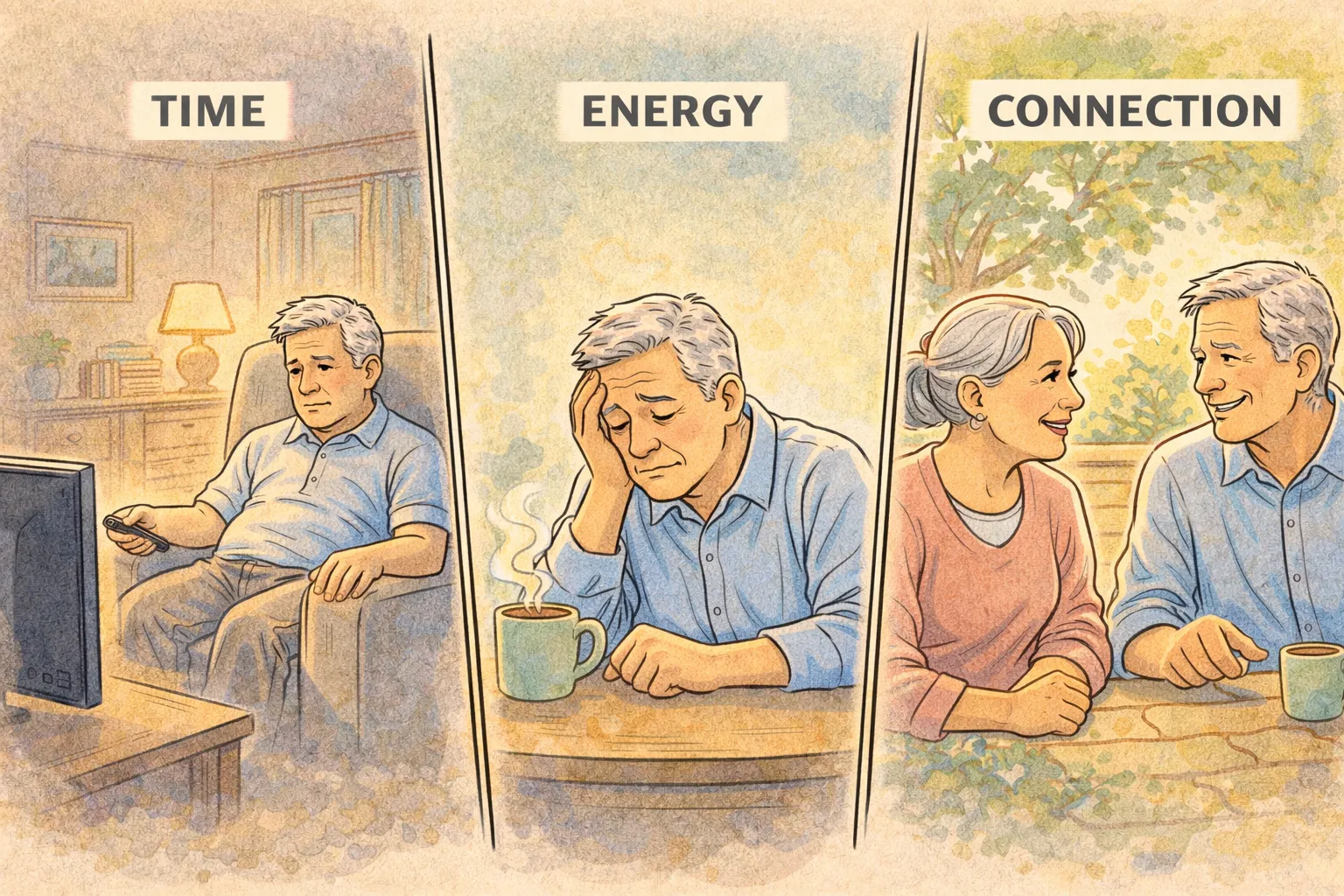
But what really shapes your retirement is something deeper.
Three decisions.
Not hundreds.
Just three.
And once they are set, everything else follows.
1. Decision #1 — How you use your time
After retirement, time becomes your main resource.
But here’s the challenge:
There’s no default structure anymore.
No one tells you what to do.
No schedule is given to you.
So you must decide:
“What is my day for?”
Why this decision matters
Without a clear answer, days become:
- repetitive
- unstructured
- low-energy
With a clear answer, days become:
- intentional
- steady
- meaningful
Two common patterns
Passive time use:
- waiting for something to happen
- reacting to the day
- filling time randomly
Intentional time use:
- choosing small daily anchors
- creating rhythm
- planning lightly
2. Decision #2 — How you protect your energy
Time is important.
But energy is everything.
You can have time…
And still feel tired, slow, or unmotivated.
That’s because retirement is not about hours.
It’s about how those hours feel.
What drains energy
- too much sitting
- too much staying at home
- too many small decisions
- too much availability
- low interaction
What protects energy
- simple movement
- daily structure
- limited commitments
- mental clarity
- recovery time
The key shift
Stop asking:
“How do I fill my day?”
Start asking:
“How do I protect my energy?”
3. Decision #3 — Who you stay connected to
Connection becomes more important after retirement.
Not less.
But it often becomes less automatic.
You no longer have:
- coworkers
- daily interactions
- built-in conversations
So connection becomes a choice.
Without connection
Days can feel:
- quiet
- isolated
- repetitive
With connection
Life feels:
- more alive
- more balanced
- more meaningful
Connection doesn’t have to be big
It can be:
- a short call
- a quick conversation
- a regular weekly visit
Small contact matters.
4. Why these 3 decisions matter more than anything else
Most retirement advice focuses on:
- saving money
- investing
- budgeting
But those don’t shape your daily experience.
These three decisions do:
- time
- energy
- connection
They control how your life feels every day.
5. What happens if you ignore them
Without clear decisions:
- time becomes empty
- energy becomes low
- connection becomes rare
And retirement starts to feel:
- slow
- unclear
- slightly unsatisfying
6. What happens if you get them right
With these decisions in place:
- your days have rhythm
- your energy improves
- your life feels more stable
Not perfect.
But steady.
And that’s what most people actually want.
7. A simple way to apply this
You don’t need a full plan.
Start small.
Each day:
- choose one anchor (time)
- protect one energy habit
- include one connection
That’s enough.
8. Real-life examples
George, 72:
“I thought retirement was about free time. Turns out, I needed structure more than freedom.”
Linda, 69:
“Once I focused on my energy, everything else improved.”
Michael, 74:
“I didn’t realize how important small conversations were until I had fewer of them.”
9. Signs these decisions need attention
- your days feel unstructured
- you feel low energy often
- you have fewer interactions
- your routine feels unclear
- you feel slightly disconnected
If this sounds familiar, these three decisions are the place to start.
Quick checklist
- did I use my time intentionally today?
- did I protect my energy?
- did I connect with someone?
If yes, your day is working.
The key insight
Retirement is not shaped by one big decision.
It’s shaped by three small ones—repeated daily.
Conclusion
You don’t need to control everything.
You just need to guide:
- your time
- your energy
- your connection
When those are steady,
Retirement becomes not just easier—
But better.
Disclaimer
This content is for general educational purposes only and does not consider individual health, financial, or psychological conditions. For personalized guidance, consult a qualified professional.