Tag: Emotional Growth

  • 2026 Why Retirement Feels Slower Than You Expected (And How to Fix It)

    2026 Why Retirement Feels Slower Than You Expected
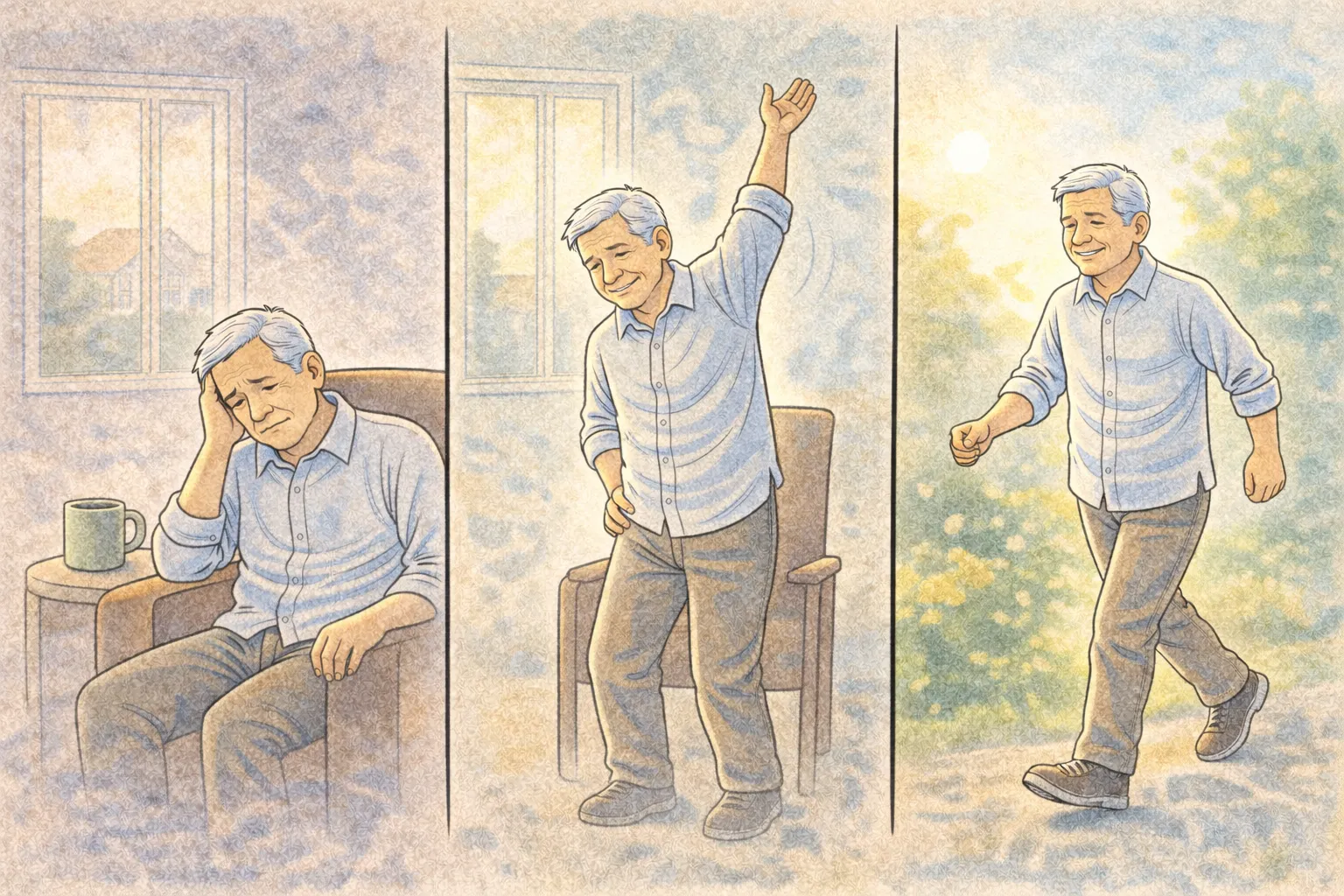
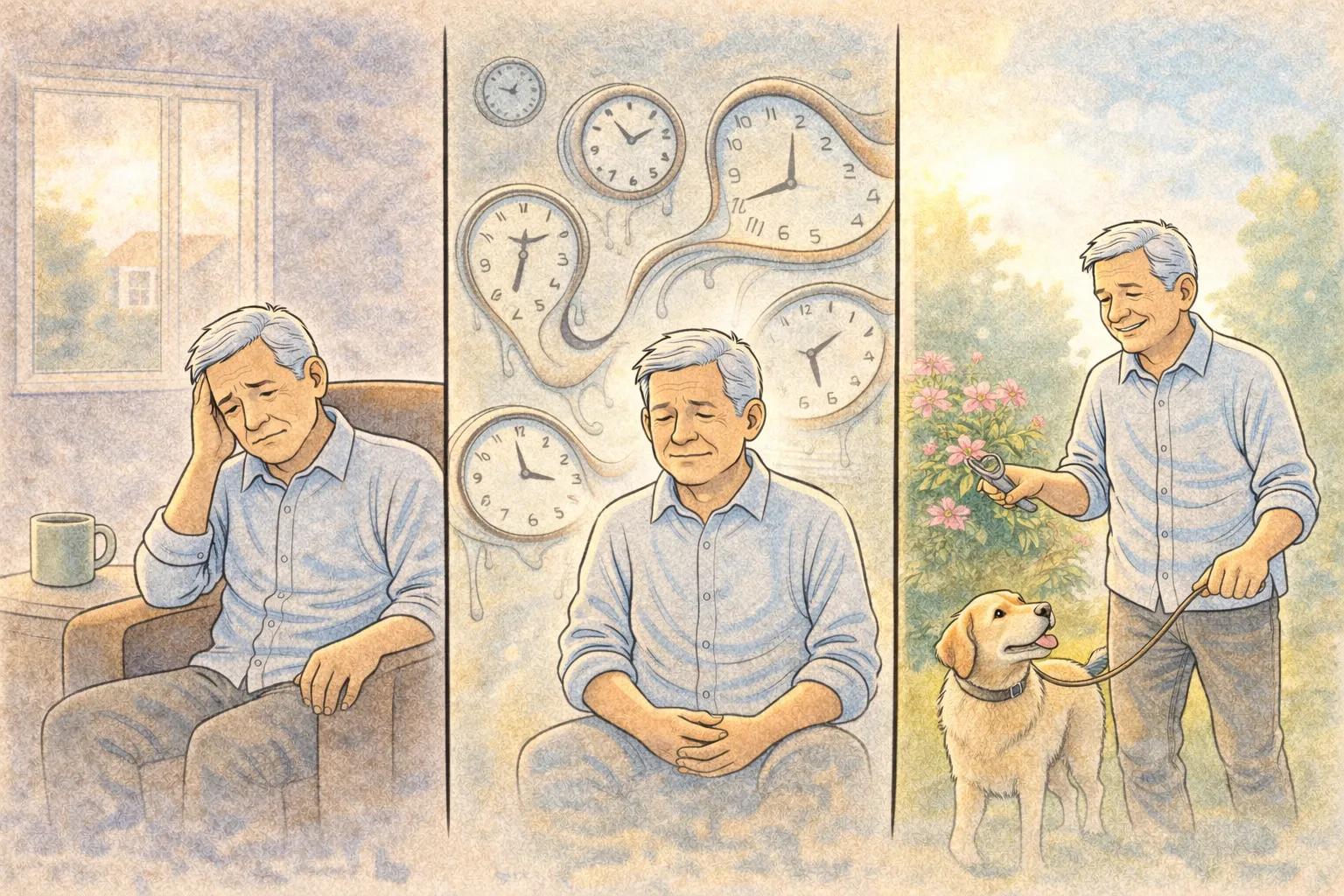
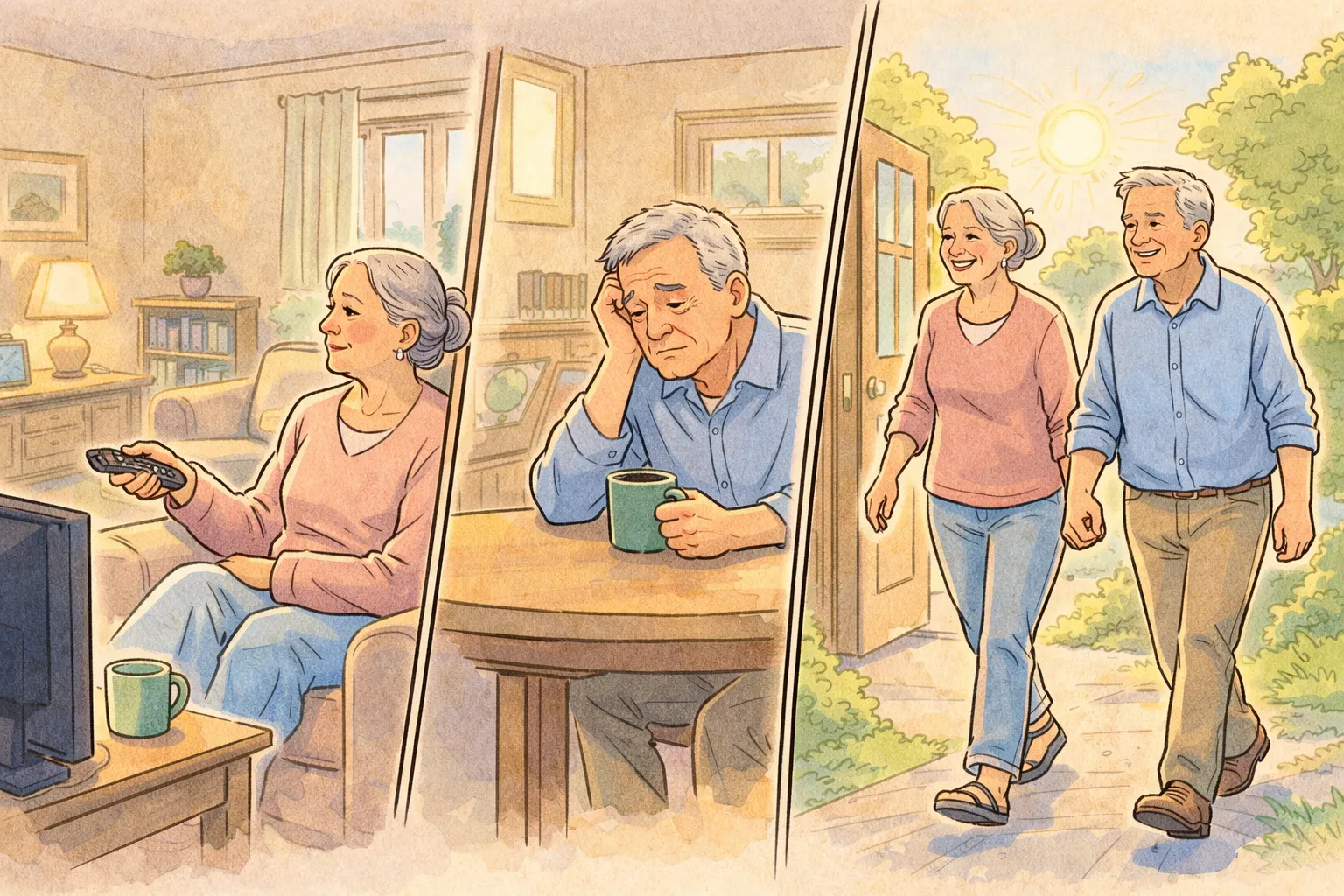
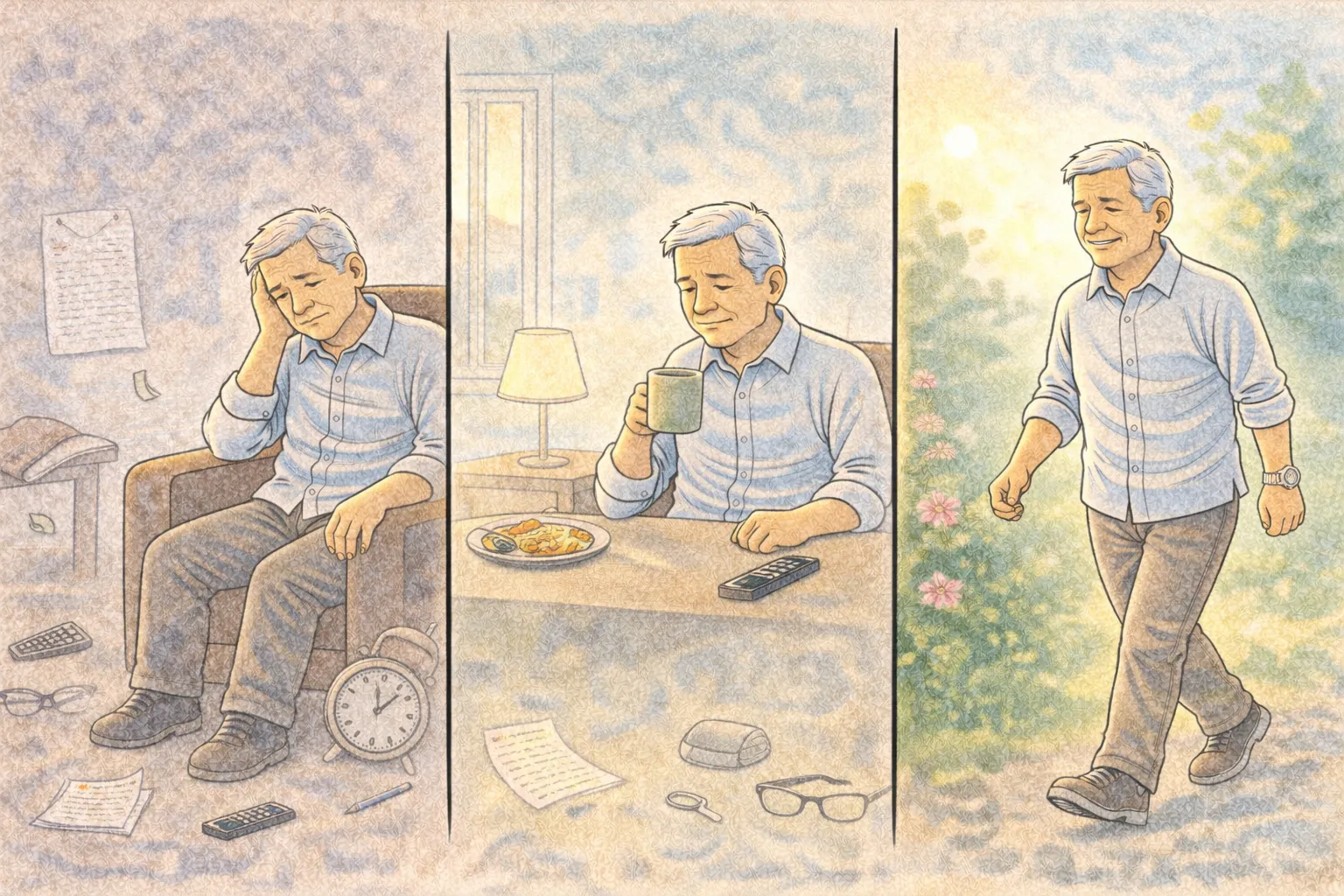
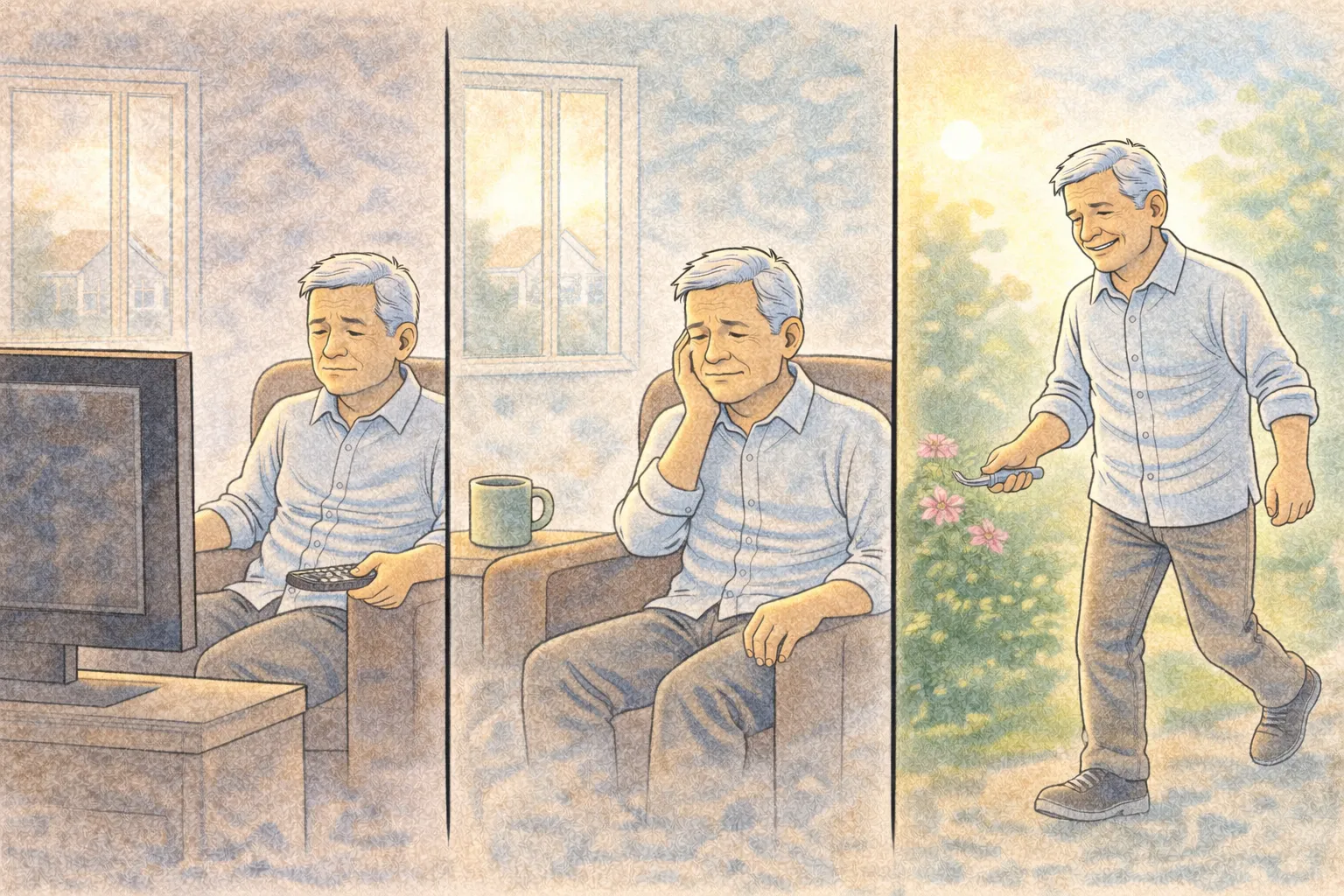
    Panoramic comic-style illustration showing a retiree experiencing slow repetitive time versus enjoying an active outdoor moment

    “I thought time would fly… but it doesn’t.”

    Many retirees are surprised by this.

    You finally have time.

    No pressure.
    No deadlines.
    No rush.

    And yet…

    Days feel longer.
    Weeks feel slower.
    Time feels different.


    1. Why time feels different after retirement

    Before retirement, your day was structured.

    • schedules
    • deadlines
    • responsibilities

    Time was divided.

    After retirement, that structure disappears.

    And when structure disappears…

    Time expands.


    2. The brain needs markers

    Your brain measures time using events.

    • meetings
    • conversations
    • movement
    • changes

    These are called “time markers.”

    Without them:

    • time feels blurry
    • days feel longer
    • nothing stands out

    3. The “same day” effect

    When days look similar:

    • your brain groups them together
    • your memory becomes flat
    • time feels slow

    It’s not that time changed.

    It’s that your experience did.


    4. Why busy people feel time moves faster

    It’s not about stress.

    It’s about variation.

    More variation = more memory markers
    More markers = richer experience

    That makes time feel fuller and faster.


    5. The hidden problem: low variation

    Many retirees fall into this pattern:

    • same environment
    • same routine
    • same pace

    Comfortable…

    But repetitive.


    6. Why slow time feels uncomfortable

    At first, slow time feels relaxing.

    But over time, it can feel:

    • dull
    • unclear
    • slightly empty

    Not bad.

    Just not satisfying.


    7. The solution is not “stay busy”

    This is important.

    You don’t need to fill your day.

    You need to add variation.


    8. The 3-variation rule

    Each day, include at least:

    1. a different place
    2. a different activity
    3. a different interaction

    Even small changes count.


    9. Simple examples

    • walk a different route
    • sit in a different room
    • call a different person
    • try a new small task

    Small variation → big difference


    10. Why this works

    Because it creates:

    • mental markers
    • stronger memory
    • more engagement

    And that changes how time feels.


    11. Real-life examples

    Susan, 70:

    “My days felt long and empty.”

    She started going outside daily.

    Her words:

    “Time started to feel normal again.”


    Robert, 73:

    “I didn’t need more to do. I needed something different.”

    That shift changed everything.


    12. Signs you’re experiencing this

    • days feel long
    • time feels slow
    • your routine feels repetitive
    • your memory of days feels unclear
    • you feel slightly bored

    Quick checklist

    • did I change my environment today?
    • did I do something slightly different?
    • did I interact with someone?

    If yes, time will feel better.


    The key insight

    Time doesn’t slow down.

    Experience does.


    Conclusion

    Retirement gives you time.

    But time alone is not enough.

    You need variation.

    That’s what makes time feel alive again.


    Disclaimer

    This content is for general educational purposes only and does not consider individual psychological or medical conditions. If persistent low mood or disconnection occurs, consult a qualified professional.
  • 2026 The 10-Minute Routine That Prevents a “Wasted Day” Feeling

    2026 The 10-Minute Routine That Prevents a Wasted Day Feeling
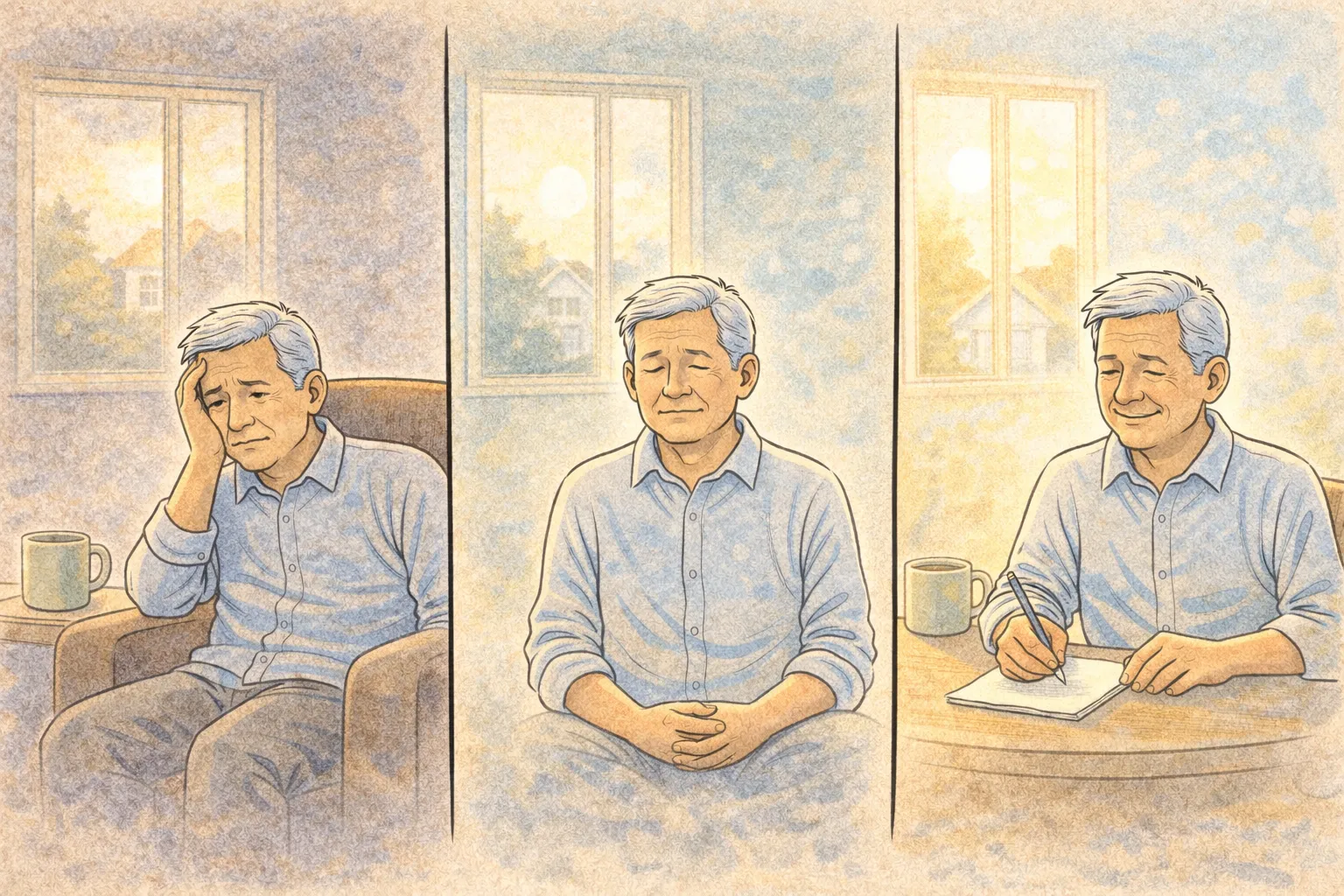
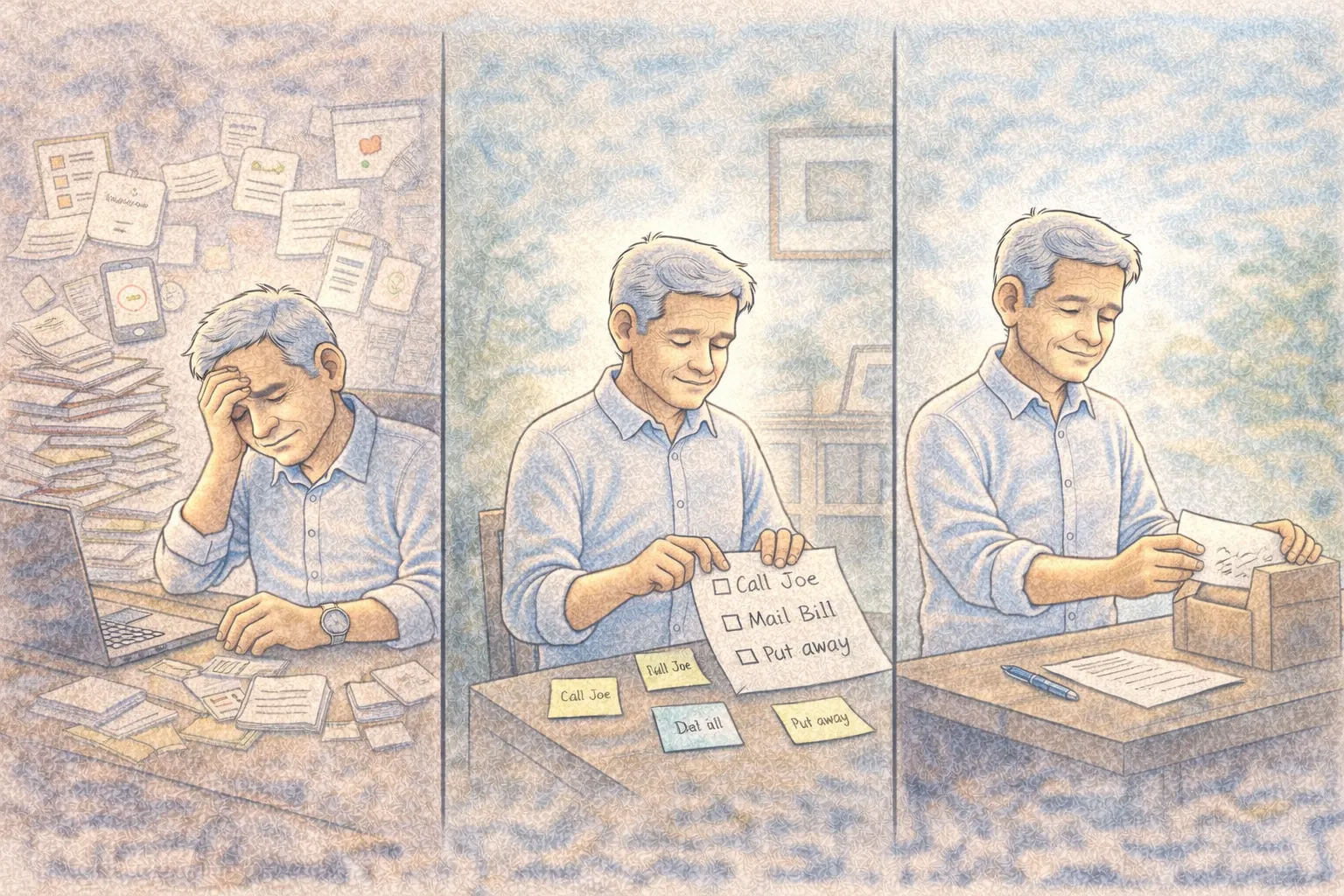
    Panoramic comic-style illustration showing a retiree going from low motivation to calm focus through a simple morning routine

    “I didn’t really do anything today…”

    This feeling shows up more often than expected in retirement.

    The day wasn’t bad.
    Nothing went wrong.
    You weren’t stressed.

    But at the end of the day…

    It feels like it didn’t count.

    That’s the “wasted day” feeling.

    And it has very little to do with how busy you were.


    1. Why this feeling happens

    A day feels “wasted” when it lacks:

    • direction
    • movement
    • completion

    Not productivity.

    Just a sense of progress.


    2. The real problem

    Most retirees don’t need more activity.

    They need a clear starting point.

    Without a starting point:

    • the day drifts
    • small tasks get delayed
    • nothing feels finished

    3. The simple solution: a 10-minute routine

    You don’t need a full plan.

    You need a short reset at the start of your day.

    Just 10 minutes.

    That’s enough to change how your entire day feels.


    4. What this routine does

    This routine gives you:

    • direction
    • clarity
    • momentum

    It turns a passive day into an intentional one.


    5. The 10-minute structure

    Minute 1–3 → Clear your head

    Sit quietly.
    Notice what’s on your mind.


    Minute 4–6 → Choose one thing

    Pick one small action for the day.

    Not five.
    Just one.


    Minute 7–10 → Start it lightly

    Take a small first step.

    That’s enough to break inertia.


    6. Why this works

    Because it solves three problems:

    • no direction → fixed
    • no starting point → fixed
    • no progress → fixed

    All in 10 minutes.


    7. The psychological effect

    Once you start one thing:

    • your brain relaxes
    • your energy increases
    • your day feels “in motion”

    Even if you don’t do much else.


    8. Real-life examples

    Karen, 71:

    “I stopped trying to plan everything.”

    She started her day with one simple action.

    Her words:

    “My days finally felt like they counted.”


    David, 74:

    “I just needed a starting point.”

    10 minutes changed that.


    9. Common mistakes

    Avoid turning this into:

    • a long morning routine
    • a strict schedule
    • a productivity system

    This is not about doing more.

    It’s about starting easier.


    10. When to use this routine

    Best times:

    • morning (most effective)
    • after a slow start
    • when you feel stuck
    • when the day feels unclear

    11. Signs you need this

    • your day feels unstructured
    • you delay starting anything
    • you feel low energy early
    • you end the day feeling unsatisfied

    12. What changes over time

    With this habit:

    • days feel more complete
    • mental clarity improves
    • motivation increases
    • small actions become easier

    Quick checklist

    • did I clear my mind?
    • did I choose one thing?
    • did I take a small step?

    That’s enough for a good day.


    The key insight

    A day doesn’t need to be full to feel meaningful.

    It just needs a beginning.


    Conclusion

    The “wasted day” feeling isn’t about doing too little.

    It’s about never starting.

    This 10-minute routine gives your day:

    • direction
    • movement
    • completion

    And that’s what makes a day feel good.


    Disclaimer

    This content is for general educational purposes only and does not consider individual psychological or medical conditions. If persistent low motivation or mood changes occur, consult a qualified professional.

  • 2026 The One Habit That Quietly Improves Every Day in Retirement

    2026 The One Habit That Quietly Improves Every Day in Retirement
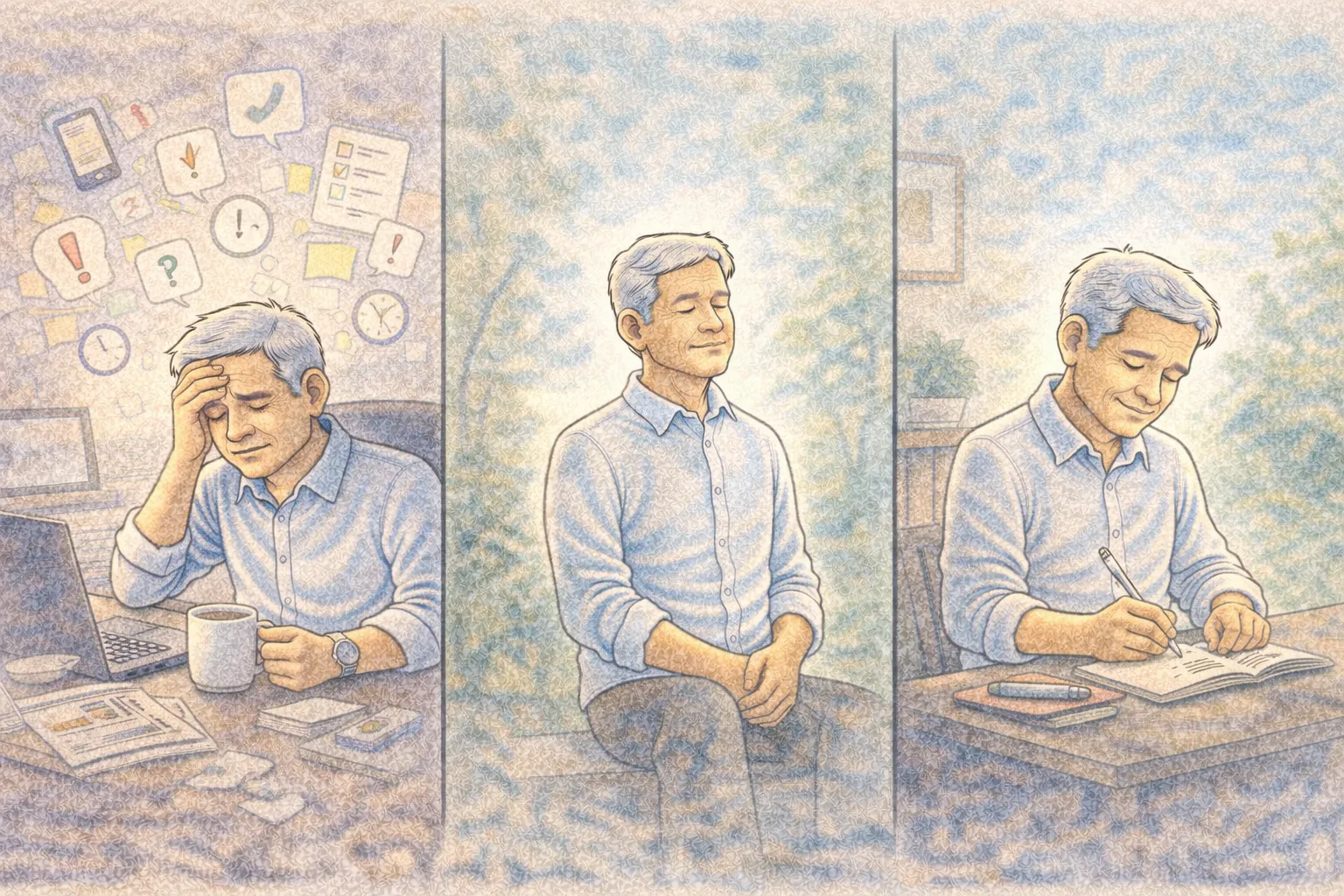
    Panoramic comic-style illustration showing a retiree moving from mental clutter to calm clarity through a daily reset habit

    “It’s not a big change… but my days feel better.”

    That’s how many retirees describe this habit.

    It doesn’t require effort.

    It doesn’t take much time.

    And it doesn’t look impressive from the outside.

    But it quietly improves:

    • your mood
    • your clarity
    • your energy
    • your daily rhythm

    All from one simple action.


    1. The habit: a daily reset moment

    The habit is simple:

    Take a few minutes each day to pause, reset, and look at your day clearly.

    Not planning everything.

    Not overthinking.

    Just a short reset.


    2. Why this matters more after retirement

    During working years, structure resets your day automatically.

    • schedules
    • meetings
    • routines

    After retirement, that disappears.

    Without a reset point:

    • days drift
    • thoughts build up
    • energy becomes uneven

    3. What happens without it

    Without a reset moment:

    • small thoughts pile up
    • tasks stay unfinished
    • your mind stays busy
    • your day feels unclear

    Even if nothing is “wrong”

    Things don’t feel settled.


    4. What a reset actually does

    A short reset helps you:

    • clear mental clutter
    • reduce background stress
    • feel more in control
    • refocus your attention

    It’s like cleaning your mind.


    5. The 3-minute version

    You don’t need a routine.

    Start with this:

    • pause
    • sit quietly
    • ask: “What matters for the rest of today?”

    That’s it.


    6. The 5-minute version (better)

    If you want slightly more structure:

    • write one thought down
    • choose one small action
    • let go of everything else

    Simple.

    Clear.

    Effective.


    7. The best time to do it

    Any time works.

    But these are most effective:

    • morning (sets direction)
    • midday (resets energy)
    • evening (clears mind)

    Choose one.

    Keep it consistent.


    8. Why it works so well

    Because it does three things:

    1. reduces mental noise
    2. creates direction
    3. gives a sense of completion

    These three alone improve how a day feels.


    9. Real-life examples

    Anna, 70:

    “I started writing one sentence each morning.”

    That alone made her days feel clearer.


    Paul, 73:

    “I didn’t need a plan. I needed a pause.”

    That pause changed everything.


    10. Signs you need this habit

    • your thoughts feel scattered
    • your day feels unclear
    • you feel mentally busy
    • you delay simple tasks
    • you don’t feel settled

    If this feels familiar, this habit helps.


    11. What NOT to do

    Avoid turning this into:

    • a long routine
    • a strict system
    • a productivity tool

    This is not about doing more.

    It’s about thinking less.


    12. The long-term effect

    Over time, this habit creates:

    • calmer thinking
    • clearer days
    • better decisions
    • more stable mood

    Not instantly.

    But consistently.


    Quick checklist

    • did I pause today?
    • did I clear one thought?
    • did I choose one direction?

    That’s enough.


    The key insight

    You don’t need to control your whole day.

    You just need one moment of clarity.


    Conclusion

    Retirement doesn’t need complexity.

    It needs small, steady habits.

    This one habit—

    a simple daily reset—

    can quietly improve everything.


    Disclaimer

    This content is for general educational purposes only and does not consider individual psychological or medical conditions. If persistent stress or mental discomfort continues, consult a qualified professional.

  • 2026 The 3 Decisions That Shape Your Entire Retirement Life

    2026 The 3 Decisions That Shape Your Entire Retirement Life
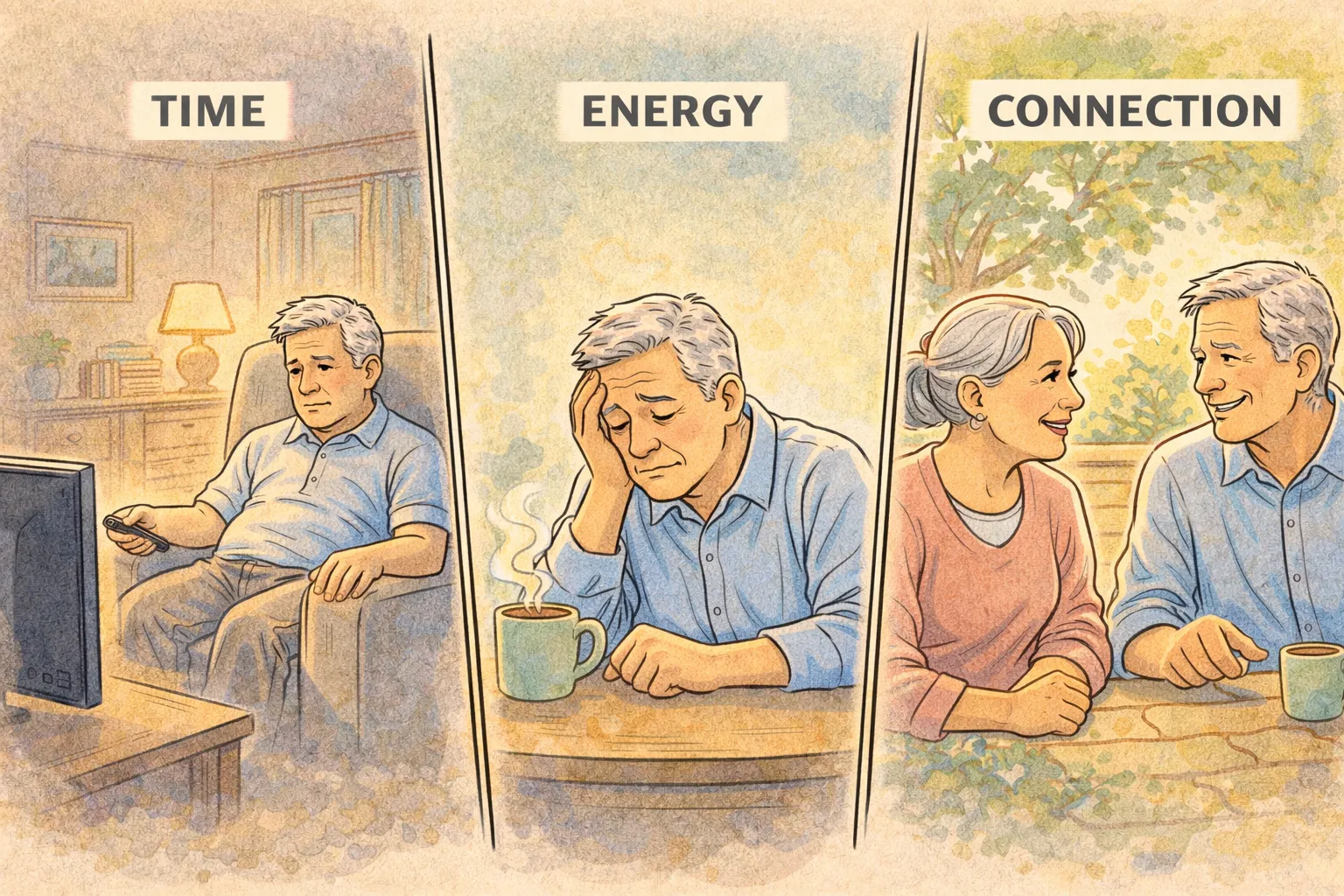
    Panoramic comic-style illustration showing three retirement states: poor time use, low energy, and meaningful social connection

    Most people think retirement is shaped by money.

    But that’s not entirely true.

    Money matters.

    But what really shapes your retirement is something deeper.

    Three decisions.

    Not hundreds.

    Just three.

    And once they are set, everything else follows.


    1. Decision #1 — How you use your time

    After retirement, time becomes your main resource.

    But here’s the challenge:

    There’s no default structure anymore.

    No one tells you what to do.

    No schedule is given to you.

    So you must decide:

    “What is my day for?”


    Why this decision matters

    Without a clear answer, days become:

    • repetitive
    • unstructured
    • low-energy

    With a clear answer, days become:

    • intentional
    • steady
    • meaningful

    Two common patterns

    Passive time use:

    • waiting for something to happen
    • reacting to the day
    • filling time randomly

    Intentional time use:

    • choosing small daily anchors
    • creating rhythm
    • planning lightly

    2. Decision #2 — How you protect your energy

    Time is important.

    But energy is everything.

    You can have time…

    And still feel tired, slow, or unmotivated.

    That’s because retirement is not about hours.

    It’s about how those hours feel.


    What drains energy

    • too much sitting
    • too much staying at home
    • too many small decisions
    • too much availability
    • low interaction

    What protects energy

    • simple movement
    • daily structure
    • limited commitments
    • mental clarity
    • recovery time

    The key shift

    Stop asking:

    “How do I fill my day?”

    Start asking:

    “How do I protect my energy?”


    3. Decision #3 — Who you stay connected to

    Connection becomes more important after retirement.

    Not less.

    But it often becomes less automatic.

    You no longer have:

    • coworkers
    • daily interactions
    • built-in conversations

    So connection becomes a choice.


    Without connection

    Days can feel:

    • quiet
    • isolated
    • repetitive

    With connection

    Life feels:

    • more alive
    • more balanced
    • more meaningful

    Connection doesn’t have to be big

    It can be:

    • a short call
    • a quick conversation
    • a regular weekly visit

    Small contact matters.


    4. Why these 3 decisions matter more than anything else

    Most retirement advice focuses on:

    • saving money
    • investing
    • budgeting

    But those don’t shape your daily experience.

    These three decisions do:

    • time
    • energy
    • connection

    They control how your life feels every day.


    5. What happens if you ignore them

    Without clear decisions:

    • time becomes empty
    • energy becomes low
    • connection becomes rare

    And retirement starts to feel:

    • slow
    • unclear
    • slightly unsatisfying

    6. What happens if you get them right

    With these decisions in place:

    • your days have rhythm
    • your energy improves
    • your life feels more stable

    Not perfect.

    But steady.

    And that’s what most people actually want.


    7. A simple way to apply this

    You don’t need a full plan.

    Start small.

    Each day:

    • choose one anchor (time)
    • protect one energy habit
    • include one connection

    That’s enough.


    8. Real-life examples

    George, 72:

    “I thought retirement was about free time. Turns out, I needed structure more than freedom.”


    Linda, 69:

    “Once I focused on my energy, everything else improved.”


    Michael, 74:

    “I didn’t realize how important small conversations were until I had fewer of them.”


    9. Signs these decisions need attention

    • your days feel unstructured
    • you feel low energy often
    • you have fewer interactions
    • your routine feels unclear
    • you feel slightly disconnected

    If this sounds familiar, these three decisions are the place to start.


    Quick checklist

    • did I use my time intentionally today?
    • did I protect my energy?
    • did I connect with someone?

    If yes, your day is working.


    The key insight

    Retirement is not shaped by one big decision.

    It’s shaped by three small ones—repeated daily.


    Conclusion

    You don’t need to control everything.

    You just need to guide:

    • your time
    • your energy
    • your connection

    When those are steady,

    Retirement becomes not just easier—

    But better.


    Disclaimer

    This content is for general educational purposes only and does not consider individual health, financial, or psychological conditions. For personalized guidance, consult a qualified professional.

  • 2026 The “Home All Day” Effect: How Staying Home Too Much Changes You

    Panoramic comic-style illustration showing retirees staying indoors feeling low energy versus going outside feeling refreshed and active
    Panoramic comic-style illustration showing retirees staying indoors feeling low energy versus going outside feeling refreshed and active

    “I didn’t go anywhere today.”

    At first, that feels comfortable.

    No traffic.
    No pressure.
    No schedule.

    Just quiet.

    But when many days start to look like this…

    Something slowly changes.

    Not suddenly.

    Not dramatically.

    But noticeably.

    1. Why staying home feels good at first

    After retirement, staying home can feel like relief.

    no commute
    no deadlines
    no obligations

    Home becomes a safe space.

    And that’s a good thing.

    2. When comfort turns into pattern

    The problem is not staying home.

    The problem is staying home too consistently.

    When days repeat like this:

    wake up
    sit
    move around the same space
    minimal outside interaction

    Your world quietly shrinks.

    3. Your brain needs variation

    The human brain responds to change.

    Different places
    Different faces
    Different small experiences

    When everything stays the same:

    stimulation drops
    alertness drops
    energy drops

    This is why long periods at home can feel oddly tiring.

    4. The “slow blur” effect

    Many retirees describe this feeling:

    Days start blending together.

    Monday feels like Wednesday.
    Morning feels like afternoon.

    There are fewer markers in the day.

    This creates a sense of:

    time moving strangely
    lack of clarity
    reduced motivation
    5. Movement becomes minimal

    At home, movement is limited.

    fewer steps
    less walking
    less standing
    more sitting

    Even if you feel “rested,”

    Your body slowly loses energy.

    6. Social interaction drops quietly

    This is one of the biggest changes.

    Without realizing it, you may have:

    fewer conversations
    less eye contact
    fewer spontaneous interactions

    Even small interactions matter more than we think.

    7. Mood becomes flatter

    When environment and routine don’t change much:

    Mood often becomes:

    neutral
    low-energy
    slightly disconnected

    Not depressed.

    Just… flat.

    8. The key problem is not laziness

    This is important.

    Staying home too much is not about laziness.

    It’s about lack of variation.

    Your brain and body are responding exactly as expected.

    9. A simple way to fix it

    You don’t need a busy life.

    You need small changes.

    Try:

    stepping outside once a day
    changing rooms intentionally
    short walks
    visiting one place weekly
    brief social contact

    Small changes → big impact

    10. The 3-exposure rule

    A simple structure:

    Each day, include at least:

    outside exposure
    movement
    human interaction

    Even small versions count.

    11. Real-life example

    Carol, 71:

    “I didn’t feel bad. Just… dull.”

    She started going outside for 10 minutes every morning.

    That alone made her feel more awake.

    David, 68:

    “I didn’t realize how little I was moving.”

    He added one short walk after lunch.

    His energy improved within a week.

    12. Signs you may be staying home too much
    days feel repetitive
    you feel slightly tired without reason
    you delay going outside
    your mood feels flat
    you move less than before
    you have fewer conversations

    If this feels familiar, it’s not a problem.

    It’s a signal.

    Quick checklist
    did I go outside today?
    did I move my body?
    did I talk to someone?
    did I change my environment at least once?

    If not, tomorrow is a new chance.

    The key insight

    Home should feel safe.

    Not limiting.

    Conclusion

    Staying home is comfortable.

    But too much comfort can quietly reduce energy, clarity, and mood.

    You don’t need a full schedule.

    You need small variation.

    That’s what keeps retirement feeling alive.

    Disclaimer

    This content is for general educational purposes only and does not consider individual health or psychological conditions. If prolonged low mood or isolation occurs, consult a qualified professional.
  • 2026 The Quiet Stress Seniors Don’t Talk About (But Feel Daily)

    2026 The Quiet Stress Seniors Don’t Talk About
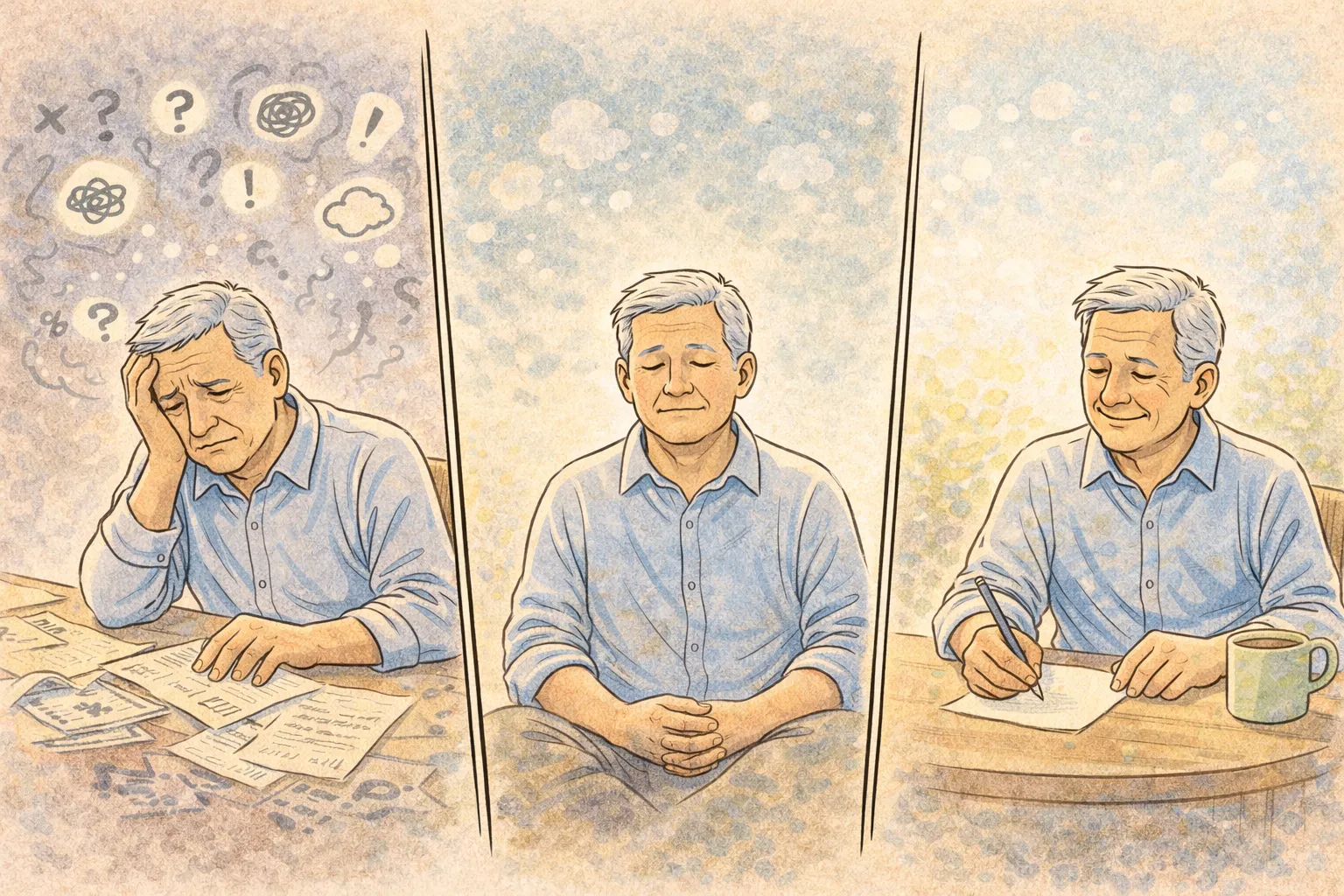
    Panoramic comic-style illustration showing seniors experiencing quiet stress with thought bubbles versus finding calm through writing and reflection

    “I’m not overwhelmed… but I don’t feel fully at ease either.”

    This is a kind of stress many retirees experience.

    It’s not loud.

    It doesn’t feel urgent.

    It doesn’t look serious from the outside.

    But it’s there.

    Every day.

    In small ways.


    1. What “quiet stress” really means

    Quiet stress is not obvious pressure.

    It’s not deadlines.
    Not emergencies.
    Not visible problems.

    It’s a background feeling.

    Something like:

    • low-level tension
    • subtle unease
    • constant thinking
    • mild restlessness

    It’s easy to ignore.

    But hard to fully relax with.


    2. Why it shows up after retirement

    Retirement removes obvious stress.

    But it also removes structure.

    That creates space.

    And in that space, small thoughts grow.

    Things like:

    • “Am I doing enough?”
    • “Is this how my days should feel?”
    • “What happens later?”

    These are not urgent questions.

    But they don’t disappear.


    3. It’s not one problem—it’s many small ones

    Quiet stress is rarely caused by one big issue.

    It usually comes from:

    • small uncertainties
    • unfinished thoughts
    • low-level decisions
    • subtle worries

    Each one is manageable.

    Together, they create mental weight.


    4. The “always thinking” pattern

    Many retirees notice this:

    You are not busy…

    But your mind is.

    Thinking about:

    • health
    • money
    • family
    • future
    • small tasks

    Not intensely.

    Just constantly.


    5. Why it’s easy to overlook

    Quiet stress doesn’t interrupt your day.

    You can still:

    • eat normally
    • sleep okay
    • go about your routine

    That’s why it goes unnoticed.

    But over time, it can lead to:

    • mental fatigue
    • low energy
    • reduced enjoyment
    • feeling slightly “off”

    6. The emotional impact

    Quiet stress often feels like:

    • you can’t fully relax
    • you’re slightly on edge
    • something is unresolved
    • your mind doesn’t fully settle

    It’s subtle.

    But persistent.


    7. The hidden sources

    Common sources include:

    • financial uncertainty
    • health awareness
    • family concerns
    • lack of daily structure
    • too much unplanned time
    • low social interaction

    None of these alone feel overwhelming.

    But together, they add up.


    8. Why “doing more” doesn’t fix it

    Many people try to fix this by:

    • staying busy
    • adding tasks
    • filling the day

    But quiet stress is not about activity.

    It’s about mental clarity.


    9. A better way to reduce it

    You don’t need a big solution.

    You need small mental resets.

    Try:

    • writing down lingering thoughts
    • limiting overthinking time
    • creating small daily anchors
    • having one clear plan for the day
    • talking things out

    Clarity reduces pressure.


    10. The “one clear thing” method

    Each day, choose:

    One thing that matters.

    Not ten things.

    Not a full list.

    Just one.

    This gives your mind:

    • direction
    • completion
    • relief

    11. Real-life examples

    Helen, 72:

    “I wasn’t stressed… but I wasn’t relaxed either.”

    She started writing down her thoughts each morning.

    Her words:

    “It cleared my head more than I expected.”


    James, 69:

    “I kept thinking about small things all day.”

    He started choosing one daily focus.

    That alone reduced his mental noise.


    12. Signs you may have quiet stress

    • you feel slightly tense without a clear reason
    • your mind keeps running in the background
    • you struggle to fully relax
    • you feel mentally tired without doing much
    • you feel “off” but can’t explain why

    If this feels familiar, you’re not alone.


    Quick checklist

    • did I clear my thoughts today?
    • did I focus on one thing?
    • did I reduce mental clutter?
    • did I pause instead of overthinking?

    Small changes matter.


    The key insight

    Not all stress is loud.

    Some of it is quiet.

    And quiet stress is often the one that stays the longest.


    Conclusion

    Retirement removes pressure.

    But it doesn’t remove thinking.

    And sometimes, thinking becomes the new source of stress.

    The solution is not to fill your life with more activity.

    It’s to create more mental clarity.

    That’s what brings real calm.


    Disclaimer

    This content is for general educational purposes only and does not address individual psychological or medical conditions. If persistent anxiety, stress, or mood changes occur, consult a qualified pr

  • 2026 Why Feeling “Unproductive” After Retirement Is Completely Normal

    2026 Feeling Unproductive After Retirement Is Completely Normal
    Older adult relaxing comfortably in a chair at home, representing a calm and quiet retirement day without pressure

    “I didn’t really do anything today.”

    This thought shows up more often than people expect after retirement.

    The strange part is this:

    You may have had a calm day.
    Nothing stressful happened.
    You weren’t overwhelmed.

    And yet…

    You still feel slightly uncomfortable.

    Like something is missing.

    Like the day didn’t “count.”

    This feeling is very common.

    And more importantly—

    It’s completely normal.


    1. Why productivity used to define your day

    For decades, life followed a pattern:

    • tasks to complete
    • work to finish
    • responsibilities to manage
    • goals to reach

    At the end of the day, there was a clear question:

    “Did I get things done?”

    That question shaped how you felt.

    Productivity = satisfaction


    2. What changes after retirement

    Retirement removes that structure.

    There is no longer:

    • a daily output requirement
    • a performance expectation
    • a clear definition of “done”

    This creates a gap.

    Not in time—

    But in meaning.


    3. The “invisible day” feeling

    Many retirees experience this:

    The day passes quietly.

    But at the end, it feels like:

    • nothing important happened
    • nothing was completed
    • nothing stands out

    This creates the feeling of being unproductive.

    Even if the day was peaceful.


    4. Why this feeling is uncomfortable

    Your brain has been trained for years to measure value through output.

    So when output disappears, the brain reacts:

    • “Was today useful?”
    • “Did I waste time?”
    • “Should I have done more?”

    This is not a flaw.

    It’s conditioning.


    5. Rest is not the same as “nothing”

    This is the key misunderstanding.

    Rest is not empty.

    Rest is active recovery.

    But when you’re used to productivity, rest can feel like:

    • laziness
    • lack of purpose
    • wasted time

    That’s not true.

    It just feels unfamiliar.


    6. The hidden pressure retirees carry

    Even without a job, many retirees feel internal pressure:

    • “I should be doing something”
    • “I shouldn’t waste my time”
    • “I need to stay productive”

    This pressure is often invisible.

    But it shapes how your day feels.


    7. A healthier way to define a “good day”

    Instead of asking:

    “What did I finish today?”

    Try asking:

    “Did today feel steady?”

    or

    “Did I take care of myself today?”

    This is a different kind of success.


    8. The 3 ways a day can be valuable

    A good day in retirement can include:

    1. Maintenance
      (simple tasks, small routines)
    2. Enjoyment
      (rest, hobbies, calm moments)
    3. Connection
      (conversation, interaction)

    That’s enough.


    9. Real-life examples

    Susan, 68:

    “I used to feel guilty for relaxing. Now I see it as part of my day—not a failure.”


    Robert, 72:

    “I stopped measuring my days by output. I started noticing how I felt instead.”


    10. Signs you’re judging yourself too harshly

    • you feel guilty for resting
    • you compare today to your working years
    • you feel like you “should have done more”
    • you struggle to enjoy free time
    • you measure value only through tasks

    If this sounds familiar, you’re not doing retirement wrong.

    You’re just using old rules.


    11. What to do instead

    You don’t need to become more productive.

    You need a new definition of enough.

    Try:

    • one small task per day
    • one enjoyable moment
    • one form of connection

    That’s a full day.


    12. The mindset shift

    Old mindset:

    “I need to earn my rest.”

    New mindset:

    “Rest is part of a complete day.”

    This shift removes pressure.


    Quick checklist

    • did I move a little today?
    • did I have one calm moment?
    • did I connect with someone (even briefly)?
    • did I take care of myself?

    If yes, the day counts.


    The key insight

    Feeling unproductive after retirement is not a problem.

    It’s a transition.

    You’re moving from a life measured by output…

    To a life measured by experience.


    Conclusion

    Retirement is not about doing nothing.

    It’s about doing what matters—at a different pace.

    Some days will be quiet.

    Some days will feel slow.

    That doesn’t make them empty.

    It makes them human.


    Disclaimer

    This content is for general educational purposes only and does not address individual psychological or medical conditions. If feelings of low motivation or mood persist, consult a qualified professional.

  • 2026 The “Nothing Feels Urgent” Problem After Retirement (And How to Fix It)

    2026 Nothing Feels Urgent After Retirement
    Older adult sitting quietly with a blank planner looking unsure how to start the day

    “Nothing really needs to be done today… so why do I feel stuck?”

    This is a quiet but very real experience after retirement.

    No deadlines.
    No boss.
    No urgent emails.

    At first, this feels like freedom.

    But over time, something strange happens.

    You start to feel:

    • unmotivated
    • slow to start the day
    • unsure what matters
    • mentally stuck

    Not because you’re lazy.

    But because nothing feels urgent anymore.


    1. Why urgency disappears after retirement

    During working years, urgency is built into life.

    • deadlines
    • meetings
    • responsibilities
    • expectations

    These create structure automatically.

    After retirement, that structure disappears.

    And with it, urgency disappears too.


    2. Why this creates a problem

    You might think:

    “No urgency = less stress”

    But in reality:

    No urgency can lead to:

    • delayed decisions
    • endless postponing
    • low energy
    • loss of direction

    Without urgency, the brain struggles to prioritize.


    3. The brain needs signals

    Your brain works best when it has:

    • clear start points
    • clear reasons to act
    • small levels of pressure

    Without these, everything feels optional.

    And when everything is optional…

    Nothing gets done.


    4. The “I’ll do it later” loop

    This is the most common pattern:

    “I’ll go for a walk later.”
    “I’ll organize that tomorrow.”
    “I’ll call them sometime.”

    Later becomes:

    • next day
    • next week
    • never

    This creates a quiet mental burden.

    Unfinished tasks drain energy.


    5. The hidden emotional effect

    When nothing feels urgent, you may start feeling:

    • slightly restless
    • mentally foggy
    • oddly tired
    • unaccomplished

    Even if your day was “easy”

    That’s because progress—not pressure—creates satisfaction.


    6. The simple fix: gentle urgency

    You don’t need stress.

    You need light structure.

    Think of it as “gentle urgency.”

    Not pressure.

    Just direction.


    7. The 3-anchor day method

    A simple solution:

    Create 3 small anchors each day.

    Morning
    Midday
    Evening

    Each anchor = one small action.

    Example:

    Morning → short walk
    Midday → one task (call, errand)
    Evening → simple reset (tidy, plan)

    That’s it.


    8. Why this works

    This method works because it:

    • gives your brain direction
    • creates light momentum
    • reduces decision fatigue
    • builds natural rhythm

    You’re not forcing productivity.

    You’re creating flow.


    9. Real-life example

    Mark, 70, said:

    “I didn’t feel busy—but I also didn’t feel good.”

    He started using a simple rule:

    “One thing before lunch.”

    That alone changed his days.


    Linda, 67:

    “I stopped waiting to feel like doing things.”

    Instead, she picked one small action each morning.

    Her words:

    “That small start fixed everything.”


    10. Signs you need more structure

    • You delay simple tasks
    • Days feel long but unproductive
    • You feel low energy without reason
    • You keep saying “later”
    • You don’t feel satisfied at the end of the day

    If this feels familiar, you don’t need more discipline.

    You need more clarity.


    11. What not to do

    Avoid:

    • over-scheduling your day
    • creating long to-do lists
    • forcing productivity
    • comparing yourself to your working years

    This is not about doing more.

    It’s about starting easier.


    12. A better mindset

    Instead of asking:

    “What do I have to do today?”

    Ask:

    “What is one thing that will move my day forward?”

    That one shift changes everything.


    Quick checklist

    • choose 1 morning action
    • choose 1 practical task
    • choose 1 small reset
    • avoid “later” thinking
    • keep it simple

    The key insight

    Retirement doesn’t remove urgency.

    It removes external urgency.

    You replace it with gentle, internal direction.


    Conclusion

    When nothing feels urgent, life can feel slow and unclear.

    The solution is not pressure.

    It’s small structure.

    A little direction each day creates:

    • better energy
    • clearer thinking
    • more satisfying days

    That’s what makes retirement feel good again.


    Disclaimer

    This content is for general educational purposes only and does not consider individual mental health or medical conditions. If persistent lack of motivation or fatigue occurs, consult a qualified professional.
  • 2026 Calm Calendar Method: Green / Yellow / Red Days for Retirees Who Get Overbooked

    Weekly calendar for seniors showing green yellow and red energy days used to balance activities and rest.
    Color-coded calendar planning helps retirees balance activities with energy and rest.

    Cindy’s Column × Senior AI Money

    Retirement is supposed to feel freer.

    But many retirees discover something surprising.

    Their calendar slowly fills again.

    Appointments.
    Family requests.
    Volunteer work.
    Medical visits.
    Social events.

    Soon the week feels crowded.

    Not because the activities are bad — but because energy becomes the real limit after 55.

    This is where a simple planning system can help.

    It’s called the Calm Calendar Method.

    Instead of scheduling based only on time, this method schedules based on energy levels.


    Why retirees often feel overbooked

    Many retirees want to stay active.

    That’s healthy.

    But overbooking can create:

    • fatigue

    • missed rest days

    • stress before appointments

    • reduced enjoyment of activities

    The issue is rarely motivation.

    The issue is energy management.

    Energy changes daily after 55.

    Planning with energy in mind creates a more balanced schedule.


    The Calm Calendar Rule

    Every week should contain:

    • Green days
    • Yellow days
    • Red days

    Each type of day has a different purpose.


    Table: The Calm Calendar System

    Color Meaning Example Activities
    Green High-energy day social plans, outings
    Yellow Moderate day errands, appointments
    Red Rest day home time, recovery

    A balanced week includes all three types.


    Part 1: Green days (active days)

    Green days are when energy feels stronger.

    Good activities for these days:

    • meeting friends

    • longer outings

    • travel days

    • social events

    • volunteer work

    Try to limit green days to 2–3 per week.

    Too many active days can create fatigue later.


    Part 2: Yellow days (light activity days)

    Yellow days are practical days.

    Examples include:

    • grocery shopping

    • doctor appointments

    • small errands

    • light household tasks

    These days keep life organized without draining energy.


    Part 3: Red days (recovery days)

    Red days are intentional rest days.

    They are not lazy days.

    They are recovery days.

    Healthy red-day activities:

    • reading

    • light stretching

    • quiet hobbies

    • short walks

    • calling family

    At least 1–2 red days per week can protect long-term energy.


    Table: Example Weekly Energy Calendar

    Day Energy Type Activity
    Monday Yellow errands
    Tuesday Green lunch with friends
    Wednesday Red rest and hobbies
    Thursday Yellow appointments
    Friday Green community event
    Saturday Red relaxed day
    Sunday Yellow family calls

    This rhythm keeps the week balanced.


    Part 4: The “one big thing” rule

    Each day should have only one major activity.

    Examples:

    ✔ doctor visit
    ✔ meeting a friend
    ✔ grocery trip

    Avoid stacking several large tasks in one day.

    Spacing activities protects energy.


    Part 5: How to say “not today”

    Many retirees feel pressure to accept every invitation.

    But it is healthy to respond like this:

    “Thursday doesn’t work for me — how about next week?”

    Or:

    “I’m keeping that day quiet, but another day would be nice.”

    Protecting your schedule protects your wellbeing.


    Real-life examples

    David, 73

    “I started marking my calendar with colors. I realized I had no rest days.”


    Linda, 69

    “Now I keep Wednesdays as red days. I feel much less tired.”


    Robert, 76

    “Spacing appointments changed everything.”


    Printable Calm Calendar Checklist

    ✔ plan 2–3 green days
    ✔ schedule errands on yellow days
    ✔ protect 1–2 red days
    ✔ limit one major activity per day
    ✔ leave space between appointments

    The goal is a calmer weekly rhythm.


    The real benefit of energy planning

    A calm calendar doesn’t reduce activity.

    It improves how activities feel.

    When energy is respected, retirement becomes more enjoyable.


    Disclaimer

    This article is for general educational purposes only and does not provide medical, psychological, or professional advice. Energy levels, health conditions, and lifestyle needs vary among individuals. Readers should consult qualified professionals regarding personal health or scheduling needs.

  • 2026 Calm Calendar Method: Green / Yellow / Red Days for Retirees Who Get Overbooked

    Older couple planning a weekly calendar using green, yellow, and red energy days to balance activities and avoid overbooking in retirement.
    Color-coding calendar days helps retirees balance activities, protect energy, and avoid overbooking during retirement.

    Cindy’s Column × Senior AI Money

    Many retirees expect life to become calmer after leaving work.

    But something unexpected often happens.

    Schedules slowly fill up again.

    Doctor appointments.
    Family visits.
    Volunteer work.
    Errands.
    Social invitations.
    Travel plans.

    Before long, the week begins to feel surprisingly busy again.

    And unlike work schedules, retirement schedules often lack structure.

    This is where a simple system can help.

    Not a complicated planner.
    Not a strict routine.

    Just a color-based calendar method that protects your energy.


    Why retirees get overbooked

    Many adults over 55 experience a new challenge:

    energy management.

    Your time may be flexible, but your daily energy still has limits.

    Common reasons retirees become overbooked:

    • too many appointments in one day

    • saying yes to every invitation

    • underestimating travel or recovery time

    • scheduling multiple errands together

    • not protecting rest days

    The result is often low energy, stress, and rushed days.


    The Calm Calendar Rule

    Protect your energy first. Schedule everything else second.

    This is the foundation of the Green / Yellow / Red system.


    The 3-Color Calendar System

    Instead of filling a calendar randomly, each day receives a color based on energy demand.

    Day Type Meaning Example
    Green Day Light activity Walk, reading, light errands
    Yellow Day Moderate activity One appointment, small outing
    Red Day High activity Travel, multiple appointments

    This system makes it easier to see overload before it happens.


    Part 1: Green Days (Recovery & Quiet Days)

    Green days are essential.

    They are not “empty days.”
    They are recovery days.

    Examples of Green Day activities:

    • reading

    • walking

    • gardening

    • hobbies

    • quiet home tasks

    • light social visits

    Green days restore energy.

    Many retirees function best with 3–4 green days per week.


    Part 2: Yellow Days (Balanced Activity)

    Yellow days include one moderate commitment.

    Examples:

    • a doctor appointment

    • meeting a friend for lunch

    • grocery shopping

    • volunteering

    • attending a class

    The key rule:

    Only one major task.

    Adding a second task can quickly turn a balanced day into a stressful one.


    Part 3: Red Days (High Energy Days)

    Red days are the busiest days.

    Examples include:

    • travel days

    • family events

    • multiple appointments

    • long outings

    • home repairs

    Red days are not bad.

    But they require recovery afterwards.


    Table: Example Weekly Calendar

    Day Color Plan
    Monday Green Walk + reading
    Tuesday Yellow Doctor appointment
    Wednesday Green Gardening
    Thursday Yellow Lunch with friend
    Friday Red Travel day
    Saturday Green Rest
    Sunday Green Family call

    Notice how red days are followed by green days.

    This prevents burnout.


    Part 4: Why visual calendars work better

    Color-coded calendars help the brain recognize patterns quickly.

    Instead of reading every appointment, you see:

    • too many red days

    • too few green days

    • crowded weeks

    Visual planning reduces decision fatigue.


    Part 5: Protecting your “energy budget”

    Just like money, energy works best with limits.

    Think of energy like a weekly budget.

    Example:

    Energy Level Maximum per week
    Red Days 1–2
    Yellow Days 2–3
    Green Days 3–4

    Everyone’s balance is different.

    The goal is predictable energy, not perfect productivity.


    Part 6: How to say no using the calendar

    A calm calendar makes it easier to decline invitations politely.

    Example responses:

    “I’d love to, but that’s already a red day for me.”

    “This week is a bit full. Could we do next week instead?”

    “My schedule is lighter on Wednesday.”

    You are not rejecting people.

    You are protecting your energy balance.


    Real-life examples

    Diane, 67

    “I used to schedule three things in a day. Now I try to keep one yellow activity per day.”


    Paul, 72

    “Travel days exhaust me, so I plan a green day after every trip.”


    Martha, 69

    “The color system helped me realize my weeks were packed with red days.”


    Printable Checklist: Calm Calendar System

    ✔ Mark green, yellow, red days each week
    ✔ Limit red days to 1–2 per week
    ✔ Schedule recovery days after busy days
    ✔ Avoid stacking appointments
    ✔ Protect quiet time
    ✔ Adjust the system to your energy level


    The goal of retirement scheduling

    Retirement is not about filling every day.

    It is about creating a rhythm that supports your energy.

    Sometimes the best schedule includes more green days than anything else.

    And that is not laziness.

    It is balance.


    Disclaimer

    This article is for general educational purposes only and does not provide medical, psychological, or professional advice. Individual health conditions, mobility levels, and lifestyle needs vary. Readers should consult appropriate professionals regarding personal health or scheduling needs.