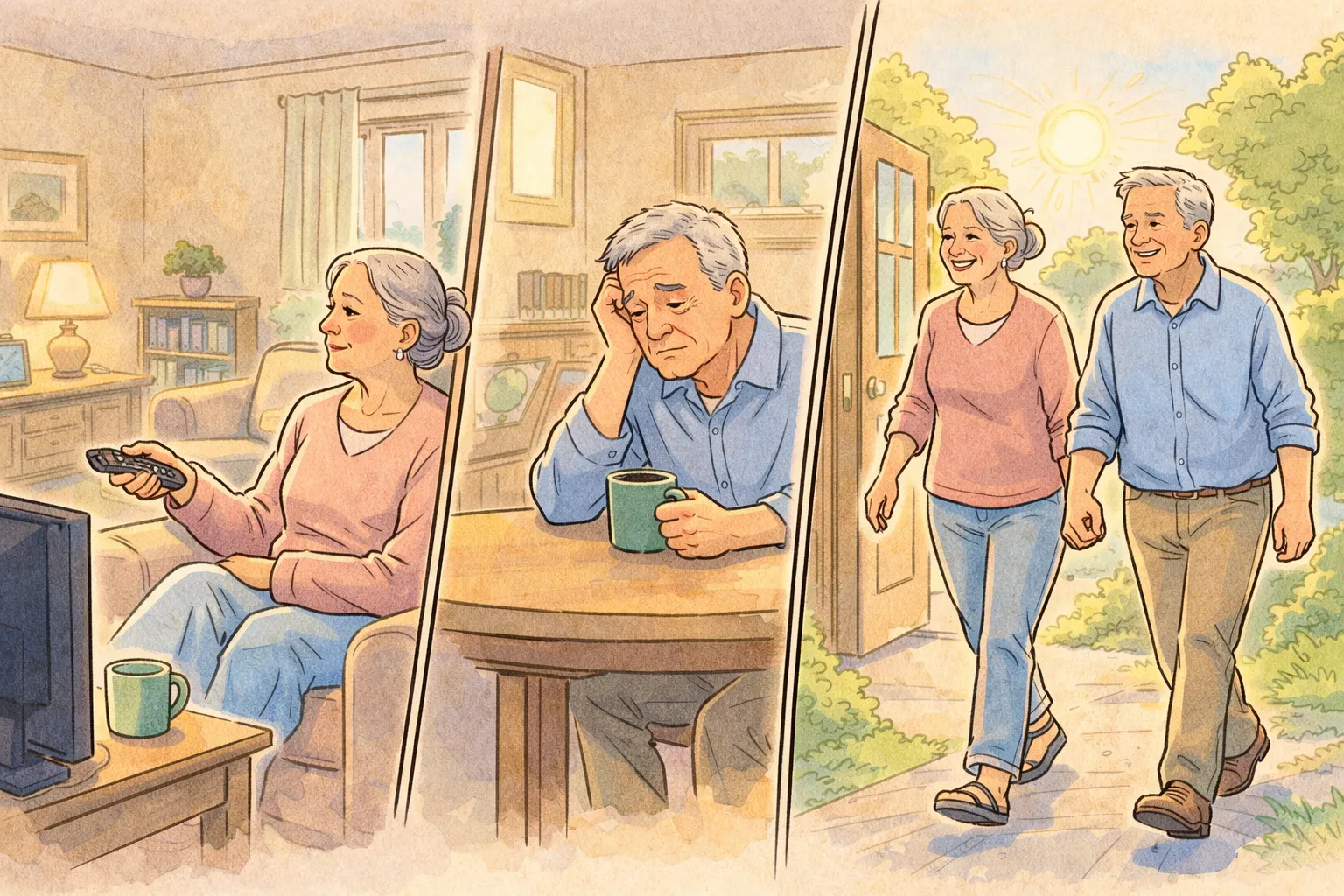
“I didn’t go anywhere today.”
At first, that feels comfortable.
No traffic.
No pressure.
No schedule.
Just quiet.
But when many days start to look like this…
Something slowly changes.
Not suddenly.
Not dramatically.
But noticeably.
1. Why staying home feels good at first
After retirement, staying home can feel like relief.
no commute
no deadlines
no obligations
Home becomes a safe space.
And that’s a good thing.
2. When comfort turns into pattern
The problem is not staying home.
The problem is staying home too consistently.
When days repeat like this:
wake up
sit
move around the same space
minimal outside interaction
Your world quietly shrinks.
3. Your brain needs variation
The human brain responds to change.
Different places
Different faces
Different small experiences
When everything stays the same:
stimulation drops
alertness drops
energy drops
This is why long periods at home can feel oddly tiring.
4. The “slow blur” effect
Many retirees describe this feeling:
Days start blending together.
Monday feels like Wednesday.
Morning feels like afternoon.
There are fewer markers in the day.
This creates a sense of:
time moving strangely
lack of clarity
reduced motivation
5. Movement becomes minimal
At home, movement is limited.
fewer steps
less walking
less standing
more sitting
Even if you feel “rested,”
Your body slowly loses energy.
6. Social interaction drops quietly
This is one of the biggest changes.
Without realizing it, you may have:
fewer conversations
less eye contact
fewer spontaneous interactions
Even small interactions matter more than we think.
7. Mood becomes flatter
When environment and routine don’t change much:
Mood often becomes:
neutral
low-energy
slightly disconnected
Not depressed.
Just… flat.
8. The key problem is not laziness
This is important.
Staying home too much is not about laziness.
It’s about lack of variation.
Your brain and body are responding exactly as expected.
9. A simple way to fix it
You don’t need a busy life.
You need small changes.
Try:
stepping outside once a day
changing rooms intentionally
short walks
visiting one place weekly
brief social contact
Small changes → big impact
10. The 3-exposure rule
A simple structure:
Each day, include at least:
outside exposure
movement
human interaction
Even small versions count.
11. Real-life example
Carol, 71:
“I didn’t feel bad. Just… dull.”
She started going outside for 10 minutes every morning.
That alone made her feel more awake.
David, 68:
“I didn’t realize how little I was moving.”
He added one short walk after lunch.
His energy improved within a week.
12. Signs you may be staying home too much
days feel repetitive
you feel slightly tired without reason
you delay going outside
your mood feels flat
you move less than before
you have fewer conversations
If this feels familiar, it’s not a problem.
It’s a signal.
Quick checklist
did I go outside today?
did I move my body?
did I talk to someone?
did I change my environment at least once?
If not, tomorrow is a new chance.
The key insight
Home should feel safe.
Not limiting.
Conclusion
Staying home is comfortable.
But too much comfort can quietly reduce energy, clarity, and mood.
You don’t need a full schedule.
You need small variation.
That’s what keeps retirement feeling alive.
Disclaimer
This content is for general educational purposes only and does not consider individual health or psychological conditions. If prolonged low mood or isolation occurs, consult a qualified professional.