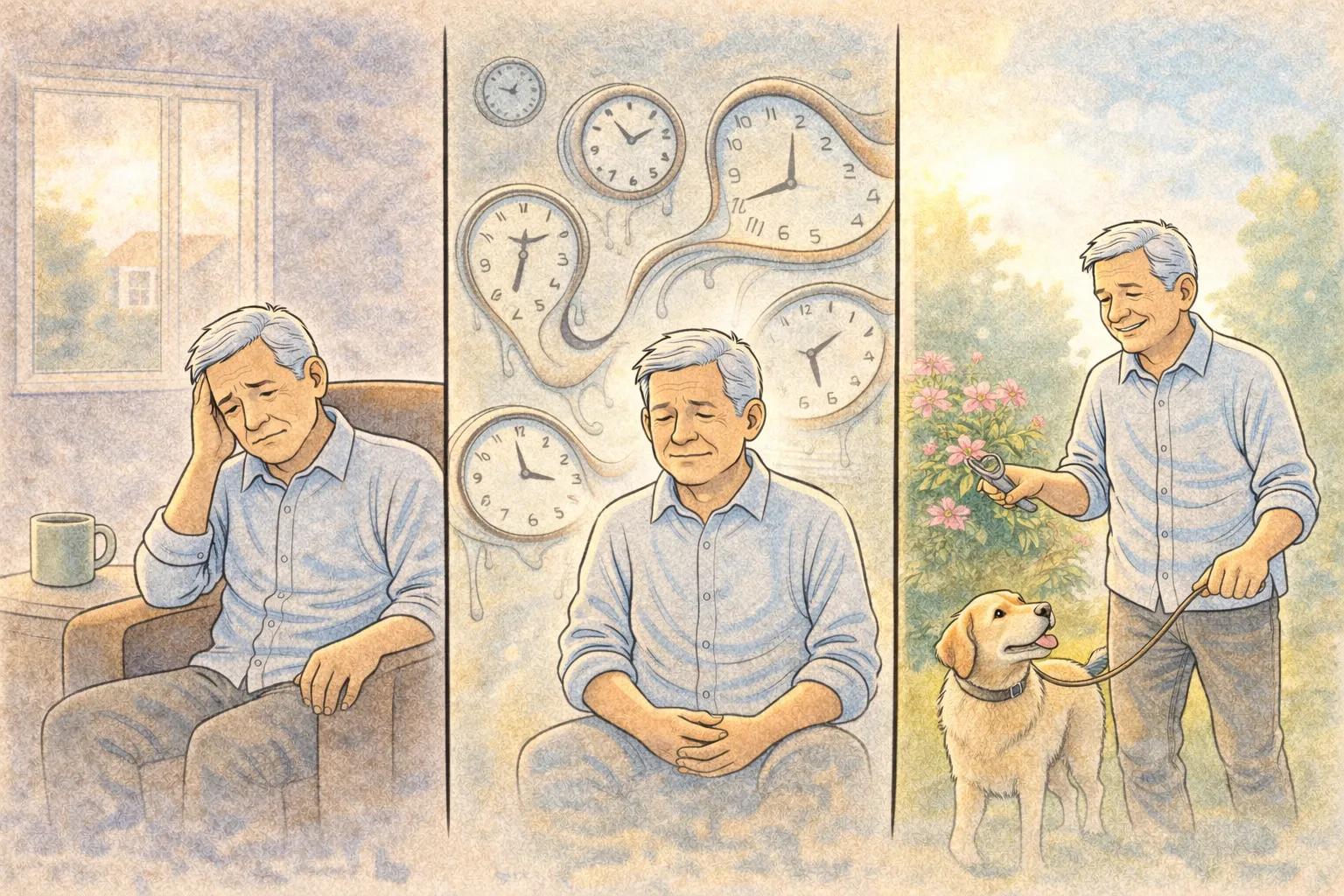
“I thought time would fly… but it doesn’t.”
Many retirees are surprised by this.
You finally have time.
No pressure.
No deadlines.
No rush.
And yet…
Days feel longer.
Weeks feel slower.
Time feels different.
1. Why time feels different after retirement
Before retirement, your day was structured.
- schedules
- deadlines
- responsibilities
Time was divided.
After retirement, that structure disappears.
And when structure disappears…
Time expands.
2. The brain needs markers
Your brain measures time using events.
- meetings
- conversations
- movement
- changes
These are called “time markers.”
Without them:
- time feels blurry
- days feel longer
- nothing stands out
3. The “same day” effect
When days look similar:
- your brain groups them together
- your memory becomes flat
- time feels slow
It’s not that time changed.
It’s that your experience did.
4. Why busy people feel time moves faster
It’s not about stress.
It’s about variation.
More variation = more memory markers
More markers = richer experience
That makes time feel fuller and faster.
5. The hidden problem: low variation
Many retirees fall into this pattern:
- same environment
- same routine
- same pace
Comfortable…
But repetitive.
6. Why slow time feels uncomfortable
At first, slow time feels relaxing.
But over time, it can feel:
- dull
- unclear
- slightly empty
Not bad.
Just not satisfying.
7. The solution is not “stay busy”
This is important.
You don’t need to fill your day.
You need to add variation.
8. The 3-variation rule
Each day, include at least:
- a different place
- a different activity
- a different interaction
Even small changes count.
9. Simple examples
- walk a different route
- sit in a different room
- call a different person
- try a new small task
Small variation → big difference
10. Why this works
Because it creates:
- mental markers
- stronger memory
- more engagement
And that changes how time feels.
11. Real-life examples
Susan, 70:
“My days felt long and empty.”
She started going outside daily.
Her words:
“Time started to feel normal again.”
Robert, 73:
“I didn’t need more to do. I needed something different.”
That shift changed everything.
12. Signs you’re experiencing this
- days feel long
- time feels slow
- your routine feels repetitive
- your memory of days feels unclear
- you feel slightly bored
Quick checklist
- did I change my environment today?
- did I do something slightly different?
- did I interact with someone?
If yes, time will feel better.
The key insight
Time doesn’t slow down.
Experience does.
Conclusion
Retirement gives you time.
But time alone is not enough.
You need variation.
That’s what makes time feel alive again.
Disclaimer
This content is for general educational purposes only and does not consider individual psychological or medical conditions. If persistent low mood or disconnection occurs, consult a qualified professional.