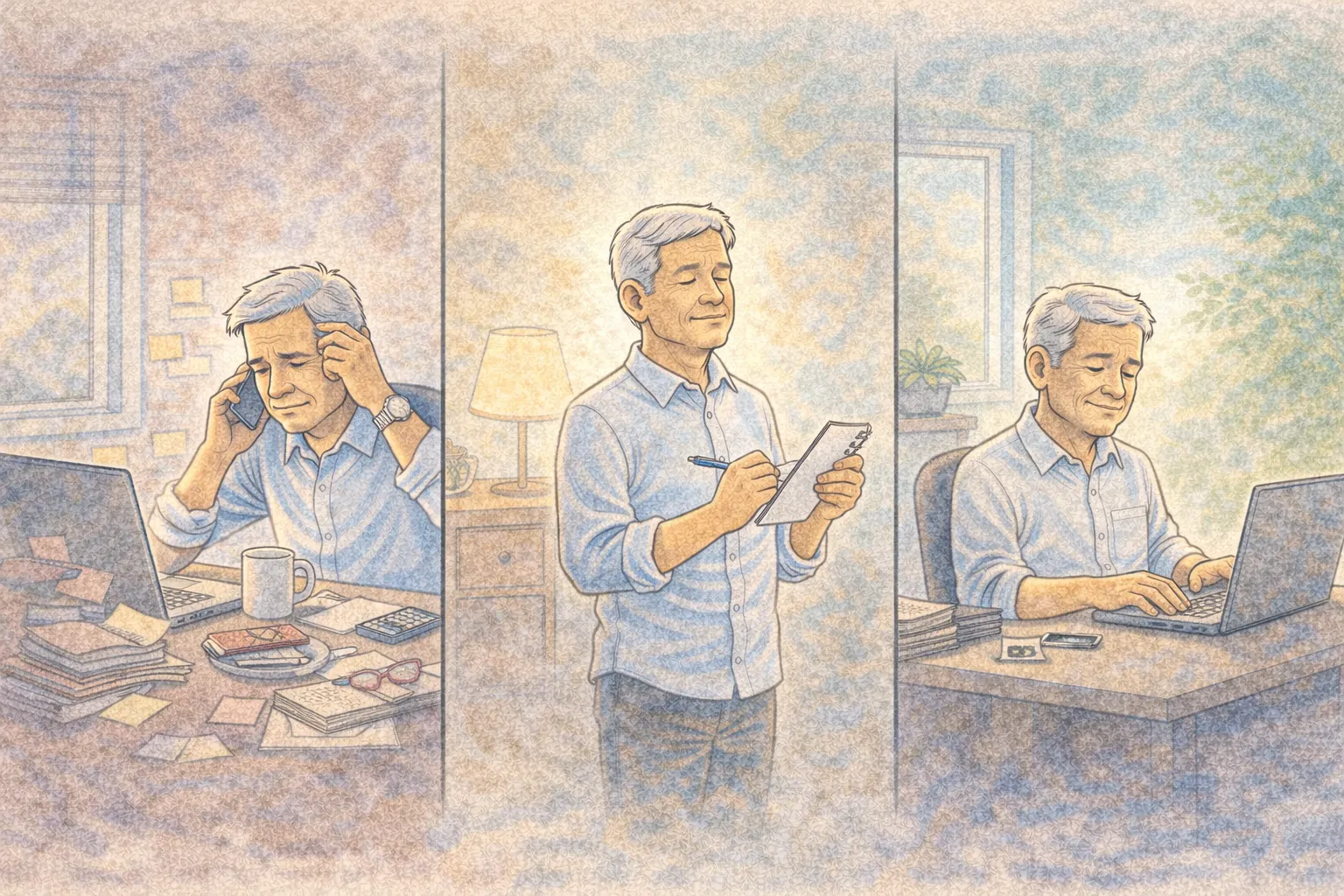
Energy after 50 improves when you shift from multitasking to focused, intentional work
“I didn’t do anything unusual… so why am I already tired?”
If you’ve had this thought recently, you’re not alone.
Many people in their 50s and 60s notice something subtle but important:
Your energy feels… different.
Not gone. Not dramatically worse.
Just different.
1. Why this feels confusing
You’re still active. You’re still working (in many cases). You’re not “old.”
So naturally, you expect:
👉 Same energy = same output
But that’s not how it works anymore.
2. Energy doesn’t decrease—it changes
This is the key point most people miss.
Your energy isn’t simply lower.
👉 It behaves differently.
Before:
energy was steady
recovery was quick
long effort was easier
Now:
energy comes in waves
recovery takes longer
mental fatigue appears faster
3. The biggest shift: mental energy
Physical tiredness is obvious.
But what really changes is:
👉 mental energy
You may notice:
focusing longer feels harder
decision-making drains you faster
switching tasks feels heavier
This is completely normal.
4. Why “doing less” can still feel tiring
This confuses many people.
You’re doing less than before…
But still feel tired.
Why?
Because:
👉 efficiency changes
Your brain now:
uses more effort per task
needs more recovery time
prefers fewer transitions
5. The hidden drain: constant switching
One of the biggest energy drains after 50:
👉 task switching
checking your phone
switching between tasks
reacting constantly
This drains energy faster than actual work.
6. The “flat energy” problem
Instead of highs and lows,
You may feel:
👉 “flat energy”
not exhausted
not energized
Just… low and steady
This is often caused by:
lack of movement
lack of variation
too much sitting
7. Why rest doesn’t always fix it
You might think:
“I just need more rest.”
But often:
👉 rest alone doesn’t restore energy
Because the issue isn’t exhaustion.
It’s:
👉 lack of energy flow
8. The real solution: energy management
After 50, energy is no longer automatic.
👉 It needs to be managed.
Not controlled.
Not forced.
Just guided.
9. The 3 energy rules that change everything
1. Work with your peaks
Do important tasks when energy is naturally higher.
2. Reduce switching
Stay with one task longer.
3. Add movement
Even small movement resets energy.
10. Simple daily example
Instead of:
multitasking
sitting all day
reacting constantly
Try:
1 focused task
short movement break
simple routine
11. Real-life examples
Mark, 56:
“I thought I was just getting tired.”
He reduced multitasking.
His energy improved within a week.
Linda, 61:
“I stopped pushing through low energy.”
She started working with her natural rhythm.
Everything felt easier.
12. Signs your energy is changing
you feel tired faster mentally
you need more breaks
switching tasks feels draining
your energy feels uneven
you feel “off” without reason
Quick checklist
did I reduce multitasking today?
did I move at least a little?
did I follow my energy instead of forcing it?
If yes, you’re already improving.
The key insight
Your energy isn’t worse.
👉 It’s different.
Conclusion
After 50, the goal is not:
👉 doing more
It’s:
👉 using your energy better
When you understand how your energy works now:
your days feel easier
your focus improves
your fatigue decreases
And most importantly—
You stop fighting yourself.
Disclaimer
This content is for general educational purposes only and does not consider individual health conditions. If you experience persistent fatigue or health concerns, consult a qualified healthcare professional.
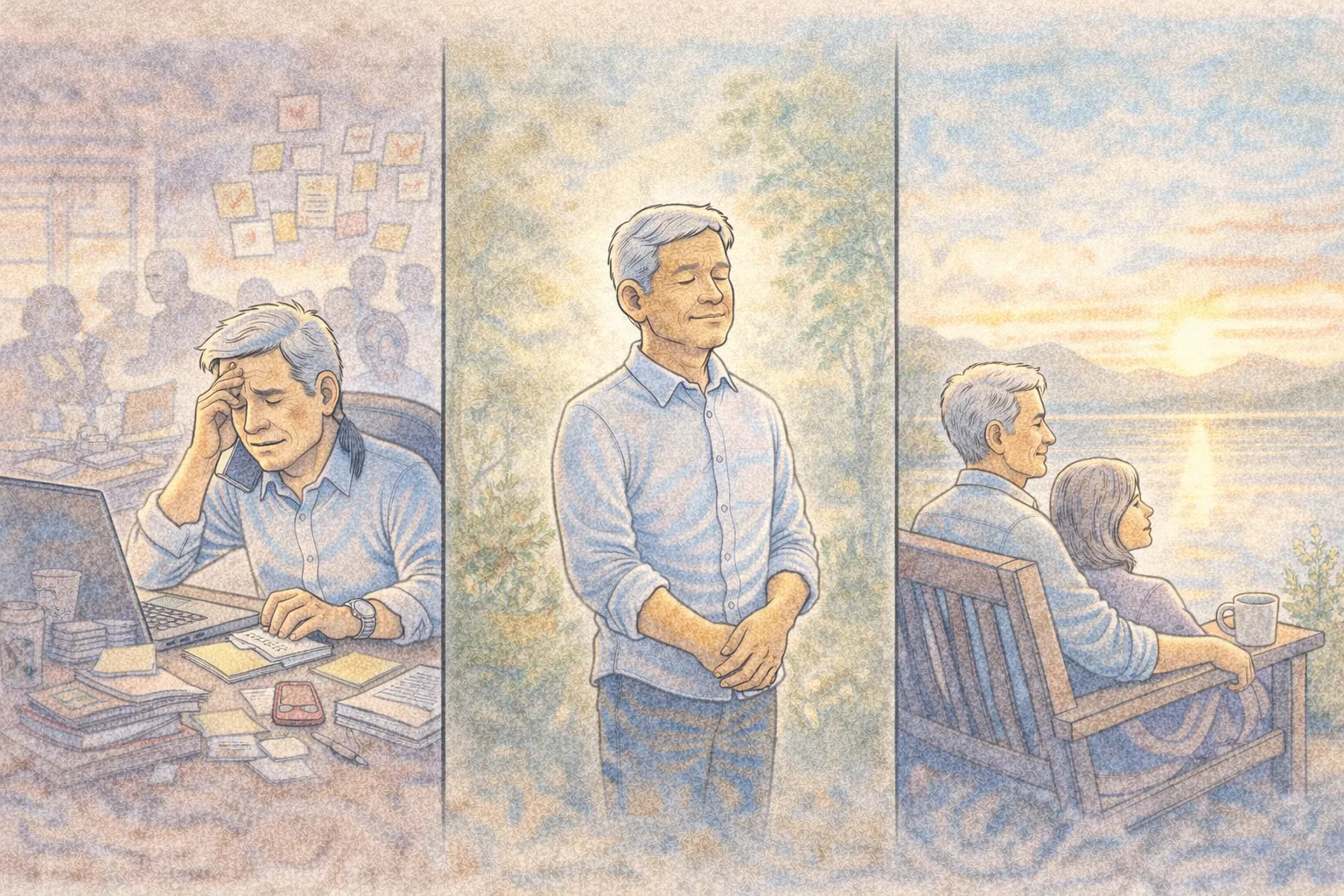
Life in your 50s feels different as priorities shift from busyness to calm and meaningful moments
“Something changed… but I can’t explain what.”
This is one of the most common thoughts people have in their 50s.
Nothing is dramatically wrong.
But everything feels… slightly different.
1. It’s not just you
Many people expect:
physical changes
aging signs
lifestyle adjustments
But what surprises them is:
👉 the feeling of life itself changes
2. The shift is subtle—but real
It’s not one big change.
It’s many small ones:
how you think
how you feel
how you react
Individually small.
Together, noticeable.
3. You start valuing energy differently
In your 30s and 40s:
👉 time was the priority
Now:
👉 energy becomes the priority
You begin to think:
“Is this worth my energy?”
“Do I actually want to do this?”
4. You become more selective
This is not negative.
It’s clarity.
You may notice:
less tolerance for unnecessary stress
less interest in superficial things
more focus on what truly matters
5. Social energy changes
You don’t necessarily want:
👉 more people
You want:
👉 better interactions
smaller groups
deeper conversations
meaningful time
6. Motivation works differently
Before:
👉 pressure created action
Now:
👉 meaning creates action
If something doesn’t feel meaningful:
👉 it feels harder to do
7. You feel time differently
This is a big one.
days can feel long
years feel fast
And this creates a strange awareness:
👉 time feels more valuable
8. You think more about “how you live”
Not just what you achieve.
Questions start to shift:
“Am I enjoying my days?”
“Does this feel right?”
“Is this how I want to spend my time?”
9. Why this can feel uncomfortable
Because no one talks about it.
You might feel:
slightly off
less driven
unsure why things feel different
But this is not a problem.
10. It’s actually an upgrade
This stage brings:
clarity
awareness
better decision-making
You’re no longer reacting.
👉 You’re choosing.
11. Real-life examples
Daniel, 54:
“I stopped chasing things that didn’t matter.”
He felt lighter.
Susan, 60:
“I realized I don’t need more. I need better.”
That changed everything.
12. Signs you’re experiencing this shift
you question how you spend your time
you feel less interested in noise and busyness
you prefer calm over chaos
you value meaning over activity
you feel slightly different but can’t explain it
Quick checklist
am I protecting my energy?
am I choosing what matters?
am I living intentionally?
If yes, you’re on the right path.
The key insight
Life doesn’t get smaller after 50.
👉 It gets clearer.
Conclusion
This stage of life is not about loss.
It’s about:
👉 refinement
You begin to:
focus better
choose better
live better
And once you understand this—
👉 everything starts to make sense again.
Disclaimer
This content is for general educational purposes only and does not consider individual psychological or health conditions. If you experience ongoing emotional discomfort, consider consulting a qualified professional.
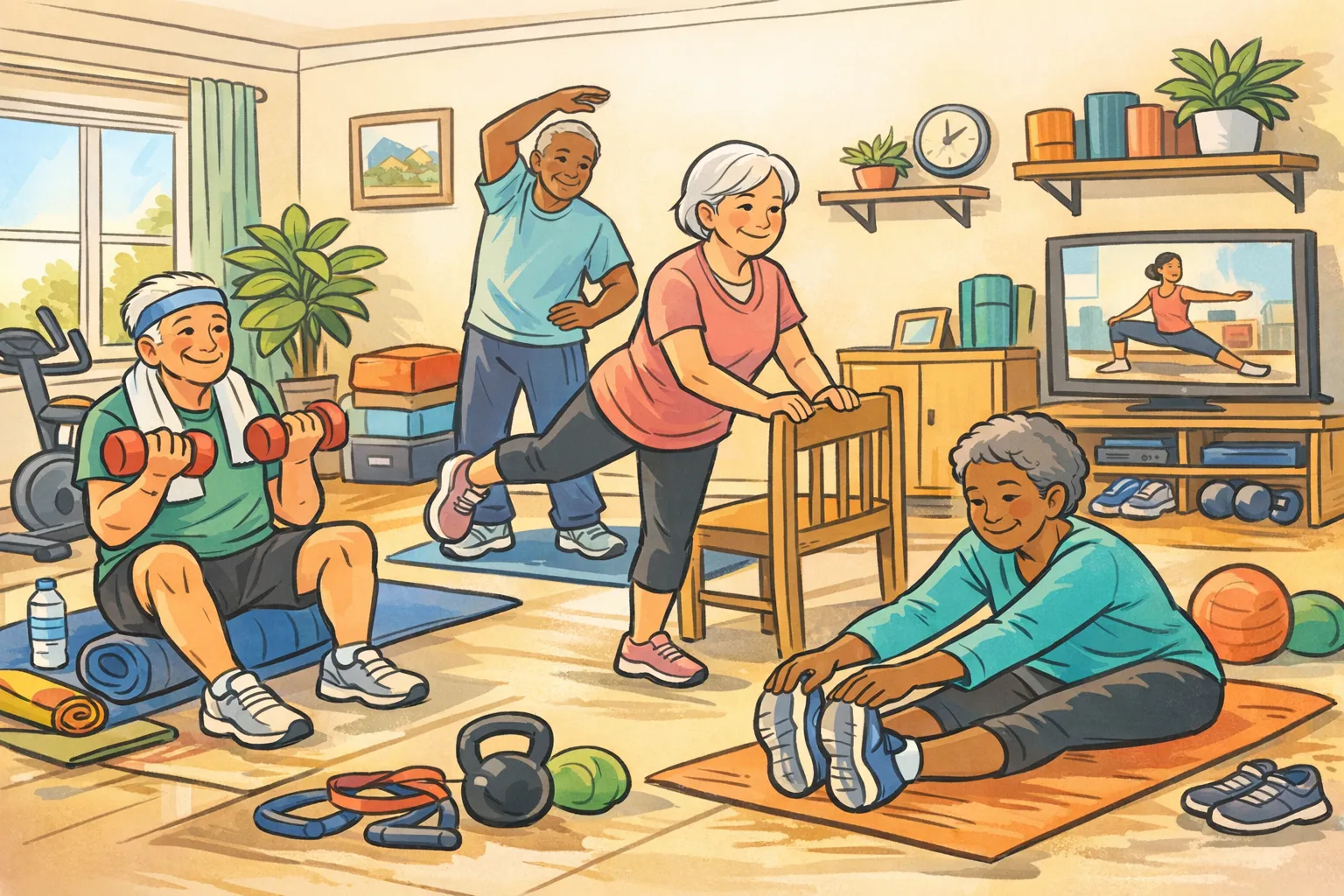
Home exercise progress for seniors works best when strength, balance, and gentle movement are built gradually enough to repeat without injury.
Cindy’s Column × Senior AI Money
A lot of home exercise plans fail for the same reason.
They start with enthusiasm and end with soreness, frustration, or a quietly abandoned routine.
One day you do too much because you feel motivated. The next day your knees complain, your back feels tight, or your energy drops. Then you “rest” for several days. Then restarting feels harder than beginning did.
That is why exercise progress after 55 is usually not a motivation problem.
It is a pacing problem.
For older adults, the real goal is not to crush a workout.
It is to build a routine your body can trust.
That matters because official healthy-aging guidance points in the same direction: older adults benefit from a mix of aerobic, muscle-strengthening, and balance activity, and regular movement supports thinking, independence, and fall prevention. CDC’s current guidance for older adults says adults 65+ should aim for at least 150 minutes of moderate aerobic activity each week, plus muscle-strengthening on at least 2 days and balance activities as part of weekly movement. NIA also emphasizes aerobic, strength, and balance work, while WHO recommends varied multicomponent activity that emphasizes functional balance and strength for older adults.
This guide is for adults 55+ who want home exercise to become steadier, safer, and more repeatable.
What progress really means at home
A lot of people define exercise progress too narrowly.
They think progress means:
more reps,
heavier weights,
longer walks,
harder routines,
more sweat,
more soreness.
Sometimes that is true.
But for many older adults, real progress looks like this:
you show up three times this week instead of once you stop needing three recovery days after each workout you finish feeling energized instead of defeated your balance feels steadier getting up from a chair you trust yourself to keep going next week
That counts.
In fact, it counts a lot.
Because the most valuable exercise plan is not the one that looks ambitious.
It is the one that survives ordinary life.
The consistency rule
Build the habit first. Build the challenge second.
That is the rule that keeps people from getting hurt.
A routine that is slightly too easy at first is usually much better than one that is slightly too hard.
NIA specifically notes that activity can be done through many kinds of movement, including structured exercise, chores, errands, walking, or leisure activity, and that older adults should include a combination of aerobic, muscle-strengthening, and balance work each week. NIA also notes that variety can make movement more enjoyable and may reduce overuse injury risk.
That means the best home exercise plan is not a punishment plan.
It is a repeat plan.
Part 1: Start with the three-part foundation
Home exercise goes better when you stop asking one routine to do everything.
A strong weekly plan for seniors usually includes three types of movement:
Aerobic work Walking in place, easy marching, indoor cycling, light stepping, short walking sessions
Strength work Chair stands, wall push-ups, resistance bands, light dumbbells, sit-to-stand practice
Balance work Heel-to-toe standing, one-leg support with a chair nearby, side stepping, standing from a chair with control
This matters because aging well is not only about endurance.
It is also about staying steady, strong, and independent.
NIA states that older adults benefit from aerobic, muscle-strengthening, and balance exercise, and its exercise materials note that balance training can help prevent falls and fall-related injuries. CDC’s older-adult guidance likewise includes aerobic, strength, and balance activity as part of the weekly recommendation.
If you are only walking, you may be missing strength and balance.
If you are only doing light weights, you may be missing endurance.
If you are only stretching, you may be missing enough challenge to build real function.
The answer is not more intensity.
It is better balance across the week.
Table 1. A simple home exercise structure for older adults
Exercise Type
Examples at Home
Main Benefit
Aerobic
Walking, indoor marching, step-touch, stationary bike
Supported single-leg practice, heel-to-toe, side steps
Helps stability and fall prevention
Mobility / flexibility
Gentle range of motion, calf stretch, shoulder circles
Helps movement feel easier
Recovery movement
Easy walk, light stretching, relaxed mobility
Helps you stay consistent
Part 2: Progress by adding small pieces, not giant jumps
One of the biggest injury mistakes is jumping too fast.
People often do this in one of three ways:
they suddenly double the time they add weight too fast they do the same movement too often because they think “more is better”
Usually, better progress looks smaller.
Examples of safe-feeling progress:
10 minutes becomes 12 1 set becomes 2 5 chair stands becomes 7 one balance drill becomes two short balance drills two workouts per week becomes three moderate sessions
That is enough.
Older adults often benefit more from slow, repeatable increases than from dramatic upgrades. CDC’s fall-prevention program materials note that building strength and balance takes time, and NIA’s exercise guidance emphasizes staying active regularly rather than treating exercise as a burst-and-crash effort.
A useful rule is this:
Change only one thing at a time.
Not all three.
So if you add time this week, keep the exercise selection the same.
If you add a little resistance, keep the number of sets stable.
If you add a third workout day, keep the sessions shorter.
That is how progress feels manageable instead of risky.
Part 3: Use the “finish feeling capable” test
A lot of home workouts are judged the wrong way.
People ask:
Did I do enough?
Was that hard enough?
Should I feel more sore?
A better question is:
How did I feel at the end?
For most seniors exercising at home, a good session should end with:
“I could probably do a little more, but stopping here feels smart.”
That is the sweet spot.
If you finish completely drained, your plan may be too aggressive.
If you regularly ache for days, the dose may be too high.
If you dread the next session, the routine may not be sustainable.
NIA’s exercise safety materials encourage older adults to listen to the body, use good form, and build activity in a way they can maintain. Its public guidance repeatedly frames movement as part of healthy aging, not as an all-out performance test.
That is why “finish feeling capable” is such a powerful rule.
It protects tomorrow, not just today.
Part 4: The week matters more than one workout
Many people think of exercise one workout at a time.
A better method is to think in weeks.
Why?
Because the body does not only respond to Tuesday.
It responds to the pattern of Monday through Sunday.
A smart home week for many older adults looks something like this:
2 strength sessions 3 to 5 moderate movement days 2 to 3 short balance sessions 1 or more easier recovery days
This does not mean every session has to be long.
In fact, short sessions often work better.
CDC’s older-adult activity guidance says the weekly goal can be spread across the week and that movement can be accumulated in realistic ways. NIA also emphasizes combining different activity types across the week, not relying on one single form of exercise.
So instead of trying to “make up for” missed exercise with one heroic session, build a week that feels believable.
Believable beats perfect.
Part 5: Pain, soreness, and warning signs are not the same thing
This is where a lot of older adults get confused.
Some exercise discomfort is normal.
Sharp or worsening pain is not.
Mild muscle fatigue after strength work can be expected.
Needing three days to recover every time is a clue something needs adjusting.
A little challenge is useful.
A pattern of flare-ups is not.
NIA’s guidance for exercise with aging and chronic conditions emphasizes adjusting activity to your body and health needs, and public-health guidance for older adults consistently encourages activity while also recognizing that chronic conditions, balance concerns, and other limitations may require modifications.
Practical red flags to respect:
pain that changes the way you move joint pain that gets worse during the session dizziness chest pain shortness of breath beyond expected effort swelling that seems unusual a “bad soreness” pattern that keeps returning
These are not signs to push harder.
They are signs to step back and reassess.
Part 6: The best progress often comes from boring repetition
This may be the least glamorous truth in exercise.
The things that help older adults most are often very ordinary:
chair stands supported balance practice light dumbbell work step-ups at a safe height walking band rows wall push-ups slow marching controlled sit-to-stand movements
These exercises may not look exciting.
But they transfer well to daily life.
They help you stand up, walk better, steady yourself, carry things, and keep confidence in your body.
NIA’s strength and balance guidance highlights exactly these kinds of basic, functional movements as important for healthy aging and fall prevention. WHO’s guidance for older adults similarly emphasizes multicomponent activity with functional balance and strength.
That means your home plan does not need novelty every week.
It needs usefulness.
Table 2. Common home exercise mistakes and better fixes
Common Mistake
What Usually Happens
Better Fix
Starting too hard
Soreness, skipped days, loss of confidence
Start shorter and lighter than your motivation wants
Doing only walking
Endurance improves but strength/balance lag
Add two strength days and short balance practice
Progressing everything at once
Fatigue or pain spikes
Change only one variable at a time
Exercising only when motivated
Inconsistent routine
Use a weekly structure instead of mood
Chasing soreness
Recovery gets harder
Judge success by steadiness and form
Repeating painful movements
Symptoms worsen
Modify, reduce, or stop and reassess
Part 7: Real examples
Elaine, 70
Elaine started a home routine with online videos and quickly did too much. She liked the feeling of “finally getting serious,” but her knees and hips disagreed. She switched to a simpler structure: walking indoors or outside on most days, chair stands twice a week, light dumbbell work twice a week, and short balance practice after brushing her teeth. Three months later, she was doing less per session than before, but much more across the month.
James, 74
James believed that if exercise was not hard, it was not working. So every home session turned into a test. He would do extra reps whenever he felt good, then disappear from exercise for four days. Once he started using the finish-feeling-capable rule, his routine stabilized. He kept each session moderate enough that he could repeat it. That changed everything.
Marsha, 66
Marsha already walked regularly but noticed she still felt unsteady stepping backward or getting up from low chairs. She added brief strength and balance work at home three times a week. Nothing dramatic happened in one week, but six weeks later she felt more confident moving around the house and handling ordinary tasks. Her progress came from targeted consistency, not intensity.
Part 8: A simple weekly model that actually works
Here is a realistic home model many older adults can adapt:
Monday Strength + short walk
Tuesday Easy movement or recovery walk
Wednesday Balance + light aerobic session
Thursday Recovery or mobility day
Friday Strength + short walk
Saturday Longer easy walk, dance, or active chores
Sunday Rest or gentle mobility
This is only a model.
The important part is the rhythm:
challenge,
recovery,
repeat.
Not every day needs to feel productive.
It needs to fit the whole week.
Checklist: Home Exercise Progress Without Injury
✔ Start with a weekly plan, not random workouts ✔ Include aerobic, strength, and balance work ✔ Begin slightly easier than your motivation wants ✔ Progress only one thing at a time ✔ Keep at least one recovery or lighter day in the week ✔ Use chair, wall, or counter support when needed ✔ Stop chasing soreness as proof ✔ Judge workouts by form and repeatability ✔ Keep sessions short enough to finish feeling capable ✔ Respect pain that changes the way you move ✔ Add balance work even if walking already feels fine ✔ Use simple, functional exercises you can repeat ✔ Build around your real energy, not your ideal self ✔ Track consistency first, intensity second ✔ Let steady weeks count as real progress
EEAT note
This article is educational guidance for older adults who want a safer, more repeatable home exercise routine. It does not claim that one routine prevents all injury or replaces individualized medical care. The strongest current public-health guidance supports a mix of aerobic, strengthening, and balance activity, with consistency and gradual progression playing a major role in healthy aging.
Final thought
The best home exercise plan is not the hardest one.
It is the one that keeps you moving next week.
And the week after that.
And the month after that.
Progress after 55 is often quieter than people expect.
Less drama. More rhythm. Less punishment. More trust.
That is how consistency gets built without injury.
Disclaimer
This article is for general educational purposes only and does not provide medical, physical therapy, rehabilitation, or fall-risk advice for any specific person. Exercise choices should reflect your health conditions, pain level, mobility, medications, balance, and medical history. Anyone with chest pain, dizziness, recent injury, worsening joint pain, falls, or significant changes in function should consult a qualified healthcare professional before changing exercise routines.
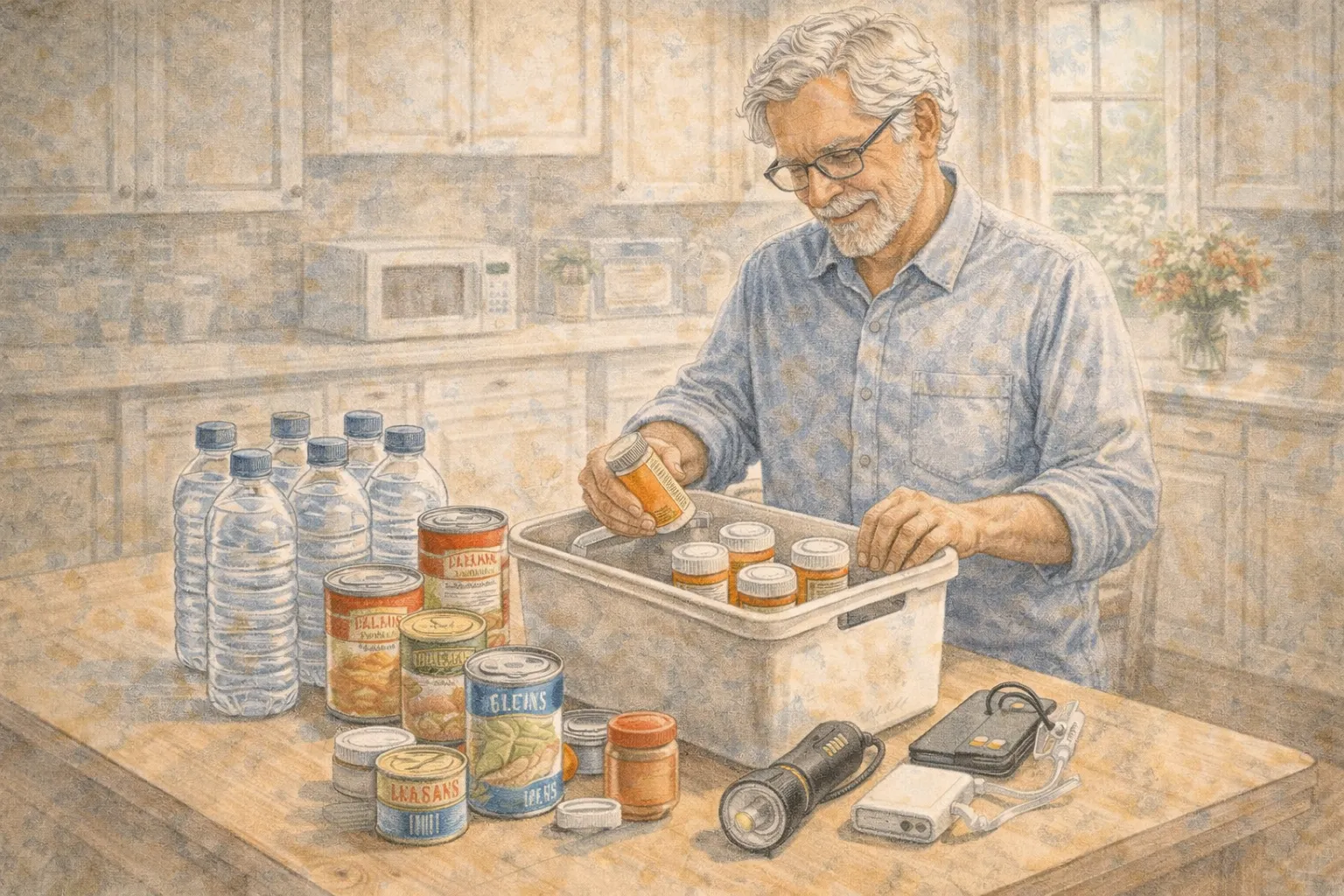
A simple three-day buffer of food, medications, and essentials helps seniors stay prepared without stress.
Cindy’s Column × Senior AI Money
Most emergency advice sounds dramatic.
Large survival kits. Complicated checklists. Dozens of supplies.
But many older adults say the same thing:
“I just want to feel prepared without turning my home into a storage room.”
The good news is that real-life preparedness is often much simpler.
In fact, many emergency planners recommend focusing on one practical goal:
A 3-day buffer.
This means having enough essential items to stay comfortable and safe for about 72 hours.
Why 72 hours?
Because many disruptions — weather events, short power outages, delayed deliveries, or minor illnesses — usually resolve within a few days.
A small buffer can prevent stress during these moments.
Why a 3-day buffer matters after 55
Adults over 55 often rely on consistent routines for:
medication schedules
grocery deliveries
transportation
medical appointments
If a short disruption occurs, even small delays can become stressful.
Examples include:
a snowstorm delaying pharmacy delivery
a short power outage
a few days of illness at home
a temporary transportation problem
A simple buffer makes these situations easier to manage calmly.
The 3-Day Buffer Rule
Store enough essentials for three days of normal living.
Not emergency survival.
Just normal comfort.
Table: Core Items for a 3-Day Buffer
Category
Example Items
Medications
3–7 day supply
Water
Drinking water bottles
Food
Easy pantry meals
Lighting
Flashlight or lamp
Communication
Phone charger
Comfort
Blanket or warm clothing
The goal is simple stability.
Part 1: Medication buffer
Medication continuity is the most important part.
Helpful habits include:
refilling prescriptions early
keeping a written medication list
storing a small backup supply
If you use mail-order pharmacies, allow extra time for delivery delays.
Part 2: Easy food backup
Your food buffer should include meals that require minimal effort.
Examples:
canned soup
oatmeal
rice cups
nut butter
crackers
canned beans
tuna or salmon
These foods can create simple meals quickly.
Part 3: Water and hydration
Hydration is often overlooked.
Keep several small bottles of drinking water available.
Smaller bottles are easier to lift and manage.
Table: Example 3-Day Meal Plan
Meal
Example
Breakfast
Oatmeal + fruit
Lunch
Soup + crackers
Dinner
Rice + beans
Snack
Yogurt or nuts
Simple meals reduce stress during disruptions.
Part 4: Light and communication
Short outages happen more often than large disasters.
Helpful items include:
flashlight with batteries
phone power bank
spare phone charger
small radio (optional)
Lighting alone can make outages feel far less stressful.
Part 5: Comfort items
Comfort helps maintain calm during disruptions.
Consider keeping:
warm blanket
simple first-aid kit
basic hygiene items
extra eyeglasses or hearing aid batteries
These small items improve wellbeing.
Real-life examples
Linda, 71
“When my pharmacy delivery was delayed two days, my backup medication made everything easier.”
Paul, 74
“A snowstorm closed the grocery store for two days. My pantry meals were enough.”
Maria, 67
“My power bank kept my phone working during an overnight outage.”
Printable 3-Day Buffer Checklist
✔ medications (3–7 day supply) ✔ simple pantry meals ✔ bottled water ✔ flashlight ✔ phone charger or power bank ✔ basic comfort items
These basics create calm during short disruptions.
The goal of preparedness
Preparedness does not mean expecting disasters.
It simply means removing small worries from daily life.
A simple 3-day buffer allows you to handle unexpected situations with confidence.
Disclaimer
This article is for general educational purposes only and does not provide medical, safety, or emergency response advice. Individual health conditions, mobility levels, and living situations vary. Readers should consult appropriate professionals regarding personal preparedness planning.
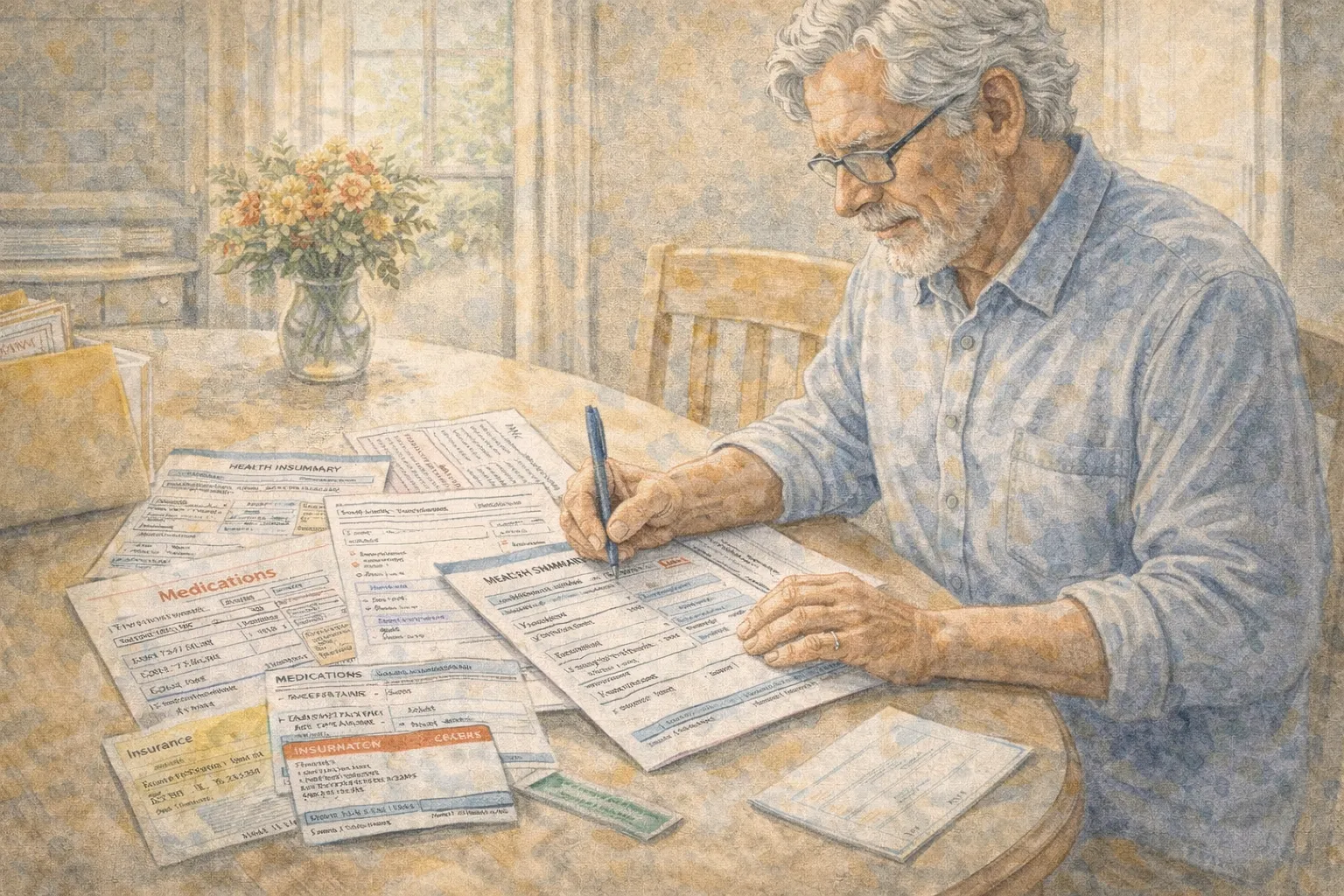
Older adult reviewing a one-page health summary document with medications, allergies, doctor contacts, and pharmacy information.
Cindy’s Column × Senior AI Money
Many adults think of the bathroom as a simple daily space.
But for older adults, it is also the most common place for falls at home.
Bathrooms combine several risk factors:
slippery floors
hard surfaces
small spaces
water and humidity
frequent night visits
The good news is that most bathroom falls are preventable.
And prevention usually does not require major renovations.
Often the biggest safety improvements come from small practical changes.
This guide explains simple adjustments that can significantly reduce fall risk for adults aged 55+.
Why bathroom falls are common after 55
As we age, several natural changes occur:
balance becomes slightly less stable
reaction time slows
muscle strength decreases
vision in low light weakens
When these factors meet wet floors and tight spaces, falls become more likely.
Bathroom falls are also more dangerous because:
surfaces are hard
there are sharp edges
help may not be immediately available
That is why bathroom safety deserves special attention.
The Bathroom Safety Rule
Make every movement in the bathroom stable, dry, and well-lit.
If the space supports balance and visibility, fall risk drops significantly.
Table: Most Common Bathroom Fall Risks
Risk
Example
Wet floors
water near sink or shower
Poor lighting
night bathroom visits
Slippery tubs
entering or exiting shower
No hand support
standing from toilet
Clutter
rugs or loose items
Even small improvements can reduce these risks.
Part 1: Improve floor safety
Slippery floors are one of the biggest hazards.
Helpful solutions include:
non-slip bath mats
rubber-backed rugs
quick-dry floor mats
wiping up water immediately
Avoid loose rugs that can slide.
Part 2: Add stable support
Support points help maintain balance.
Common solutions:
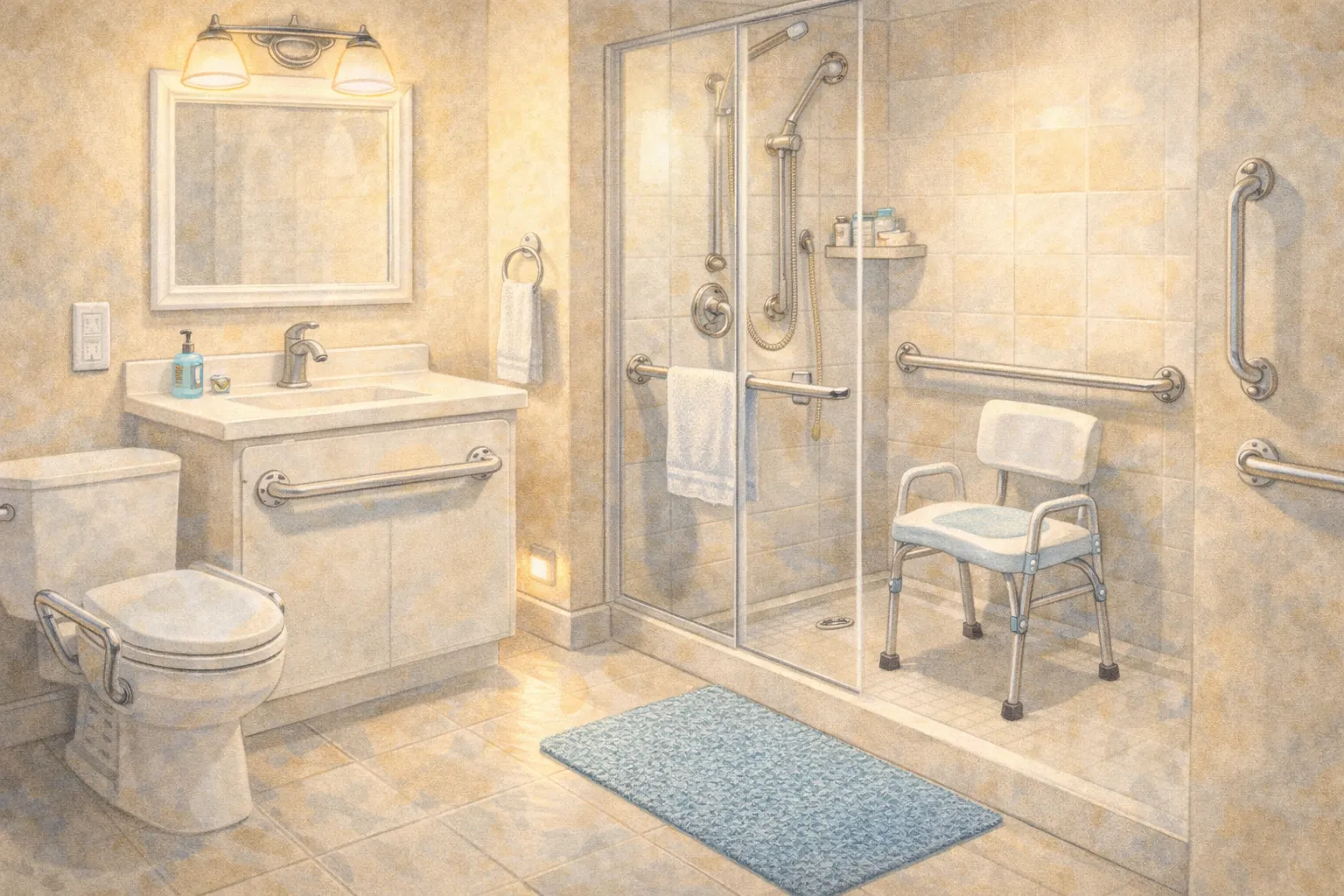
grab bars near the shower
grab bars beside the toilet
shower chairs
raised toilet seats
These tools reduce strain on knees and hips.
Table: Bathroom Support Options
Support Tool
Benefit
Grab bars
balance when standing
Shower chair
safer bathing
Raised toilet seat
easier standing
Handheld shower
safer seated washing
Support tools are simple but powerful.
Part 3: Improve lighting
Many bathroom falls happen at night.
Solutions include:
night lights in hallways
motion sensor lights
brighter bathroom bulbs
light switches within easy reach
Better lighting improves visibility and confidence.
Part 4: Keep pathways clear
Bathrooms are often small spaces.
Clutter increases risk.
Helpful habits:
keep floors clear
store items in cabinets
avoid extra furniture
secure cords or wires
A clear pathway supports safer movement.
Part 5: Wear safe footwear
Walking barefoot on smooth tile increases slip risk.
Better options include:
non-slip slippers
rubber-soled footwear
supportive house shoes
Shoes designed for indoor use can improve stability.
Real-life examples
Linda, 72
“I added grab bars in my shower and it immediately felt safer.”
David, 68
“A simple night light in the hallway made nighttime trips easier.”
Maria, 75
“A shower chair helped reduce knee strain.”
Printable Bathroom Safety Checklist
✔ non-slip bath mat ✔ grab bars installed ✔ good lighting ✔ clear floor space ✔ safe indoor footwear
These small changes create a much safer environment.
The bigger goal of fall prevention
Fall prevention is not about limiting independence.
It is about supporting confident daily movement.
With simple adjustments, the bathroom can remain a safe and comfortable space.
Disclaimer
This article is for general educational purposes only and does not provide medical or safety advice. Individual mobility, health conditions, and home environments vary. Readers should consult appropriate professionals when making home safety modifications.
A simple one-page health summary helps seniors organize medical information and reduce stress during doctor visits or emergencies.
Cindy’s Column × Senior AI Money
Many adults over 55 keep important medical information in many different places.
Some documents are in drawers. Some are in folders. Some are on a phone or computer.
During a calm day this may not feel like a problem.
But during a stressful moment— a doctor visit, an emergency, or a sudden health question— finding the right information quickly can become difficult.
That is why many healthcare professionals recommend something simple:
A one-page health summary.
It is not complicated paperwork.
It is simply a clear snapshot of the most important medical information in one place.
Why medical paperwork becomes stressful after 55
Healthcare often becomes more complex with age.
Adults over 55 may manage:
multiple prescriptions
several healthcare providers
insurance information
past medical procedures
emergency contacts
Without a clear system, this information can become scattered.
A one-page summary helps bring calm and clarity.
The One-Page Health Summary Rule
If a doctor or family member needed key health information in one minute, it should all fit on one page.
This does not replace medical records.
It simply creates a quick reference document.
Table: Information to Include in a Health Summary
Category
Example Information
Basic details
Name, birthdate, blood type
Emergency contacts
Family member or trusted friend
Medications
Current prescriptions and doses
Allergies
Medication or food allergies
Doctors
Primary doctor and specialists
Insurance
Provider and policy number
This small summary can prevent confusion.
Part 1: Medication list
Medication errors are one of the most common healthcare issues for older adults.
Your summary should include:
medication name
dosage
frequency
prescribing doctor
Example:
Medication
Dose
Purpose
Lisinopril
10 mg daily
Blood pressure
Atorvastatin
20 mg nightly
Cholesterol
Keep the list updated.
Part 2: Emergency contacts
Include at least two contacts.
Examples:
adult child
close friend
neighbor
caregiver
This helps healthcare providers reach someone quickly if needed.
Part 3: Important medical history
You do not need to list everything.
Focus on key events such as:
surgeries
chronic conditions
major diagnoses
implanted devices
Clarity is more helpful than detail.
Table: Example One-Page Health Summary Layout
Section
Information
Personal Info
Name, birthdate
Emergency Contact
Name and phone
Medications
Name and dose
Allergies
Medication allergies
Doctors
Primary care contact
Insurance
Provider and ID
Keeping everything on one page improves accessibility.
Part 4: Where to store your summary
The goal is accessibility.
Consider placing copies:
in a medical folder at home
inside your wallet or bag
on the refrigerator (common for emergency responders)
shared with a trusted family member
Some seniors also keep a digital copy.
Part 5: When to update your summary
Review the document whenever:
medication changes
a new doctor is added
insurance updates occur
a medical condition changes
Many people review it every six months.
Real-life examples
Janet, 70
“My doctor asked for my medication list. Having it on one page made the appointment easier.”
Robert, 74
“When I visited urgent care, my summary helped them understand my medications quickly.”
Ellen, 67
“I shared my health summary with my daughter so she could help if something happened.”
Printable Health Summary Checklist
✔ basic personal details ✔ emergency contacts ✔ medication list ✔ allergies ✔ doctor contacts ✔ insurance information
Keep the document clear and easy to read.
The goal of a health summary
A one-page summary does not replace your medical records.
It simply creates calm organization during stressful moments.
Prepared information can make healthcare conversations smoother and safer.
Disclaimer
This article is for general educational purposes only and does not provide medical, legal, or insurance advice. Health conditions and documentation needs vary. Readers should consult healthcare providers or qualified professionals for guidance related to personal medical records or emergency preparedness.
These basics support simple, balanced meals anytime.
The goal of a calm pantry
Eating well after 55 does not require complicated cooking.
A thoughtful pantry simply makes good meals easy on low-energy days.
Small preparation today can prevent stress tomorrow.
Disclaimer
This article is for general educational purposes only and does not provide medical or nutritional advice. Individual dietary needs vary based on health conditions, medications, and personal preferences. Readers should consult a qualified healthcare professional or registered dietitian before making significant dietary changes.
Strength training is not about building big muscles.
It is about maintaining confidence in movement.
Small routines done regularly can protect independence for many years.
Disclaimer
This article is for general educational purposes only and does not provide medical or physical therapy advice. Individual health conditions, injuries, and mobility levels vary. Readers should consult a qualified healthcare professional before beginning any new exercise routine, especially if they have chronic health conditions or a history of falls.
Michael, 75 Moved kitchen items lower. Eliminated ladder use.
Spring Footwear Matters
Switching from boots to lighter shoes changes balance.
Choose:
Closed-back shoes
Non-slip sole
Supportive arch
Proper fit
Avoid:
Backless slippers
Smooth soles
Worn-out sneakers
Printable Spring Safety Checklist (55+)
☐ Clear all walking paths ☐ Remove loose rugs ☐ Secure bathroom mats ☐ Install grab bar if needed ☐ Improve lighting ☐ Move items to mid-level shelves ☐ Wear non-slip footwear ☐ Check outdoor railings ☐ Keep phone accessible
The Emotional Side of Fall Prevention
Many seniors avoid changes because:
“I’ve always had this rug.”
“I don’t want my home to look medical.”
Safety does not remove dignity.
It preserves independence.
When to Consider Professional Input
If you experience:
Frequent near-falls
Balance changes
Dizziness
Medication shifts
Consult a healthcare professional for individualized guidance.
Disclaimer
This article is for general educational purposes only and does not provide medical, safety, or clinical advice. Individual mobility levels, medical conditions, and living environments vary. Consult qualified healthcare professionals or occupational therapists for personalized fall prevention recommendations.
A calm, intentional grocery plan helps retirees cut costs without cutting joy. Fresh food, simple lists, and predictable habits reduce stress.
After retirement, grocery shopping feels different.
You notice prices more. You shop more often. You hesitate more.
And yet food is not just fuel.
It is comfort. Routine. Pleasure. Health.
The goal in 2026 is not extreme frugality.
It is stability without deprivation.
This guide is for adults 55+ who want to:
Lower grocery bills
Avoid impulse spending
Reduce food waste
Protect nutrition
Keep meals enjoyable
Without feeling restricted.
Why Grocery Costs Feel Heavier After 60
After retirement:
Income becomes fixed
Inflation feels personal
Medical expenses increase
Waste feels irresponsible
Food spending becomes emotional.
But reacting emotionally often increases cost.
The 2026 Core Rule
Reduce waste first. Reduce spending second.
Most grocery overspending comes from:
Buying too much
Forgetting what you have
Shopping without a meal plan
Emotional purchases
Not from buying “nice food.”
The 5-Step Calm Grocery System (55+)
Step 1 — The 5-Minute Fridge Reset
Before shopping:
Check produce drawer
Check leftovers
Check freezer
Check expiration dates
Do NOT:
Judge yourself
Panic about waste
Just observe.
Step 2 — The 3-Category List
Instead of writing random items:
Divide your list into:
Essentials (must-have)
Flexible meals (easy swaps)
Joy items (intentional treats)
Table 1: Balanced Grocery Framework
Category
Example
Purpose
Essentials
Eggs, yogurt, oats
Nutrition stability
Flexible
Chicken OR beans
Budget flexibility
Joy
Dark chocolate, good cheese
Emotional satisfaction
This prevents binge spending.
Step 3 — The “One Extra” Rule
Instead of bulk shopping:
Buy one extra of only:
Shelf-stable staple
Frequently used item
Avoid:
Perishable bulk
Large novelty packs
This reduces spoilage.
Step 4 — The 72-Hour Produce Rule
Fresh produce plan:
Buy for 3–4 days only
Replenish midweek if needed
Waste drops dramatically.
Step 5 — The Receipt Review (2 Minutes)
After shopping:
Look at receipt calmly.
Ask:
Was anything impulse?
Did I forget something?
What surprised me?
No guilt.
Just awareness.
Table 2: Where Seniors Commonly Overspend
Pattern
Why It Happens
Fix
Overbuying produce
Optimism bias
72-hour rule
Bulk meat purchases
“Good deal” thinking
Freeze same day
Snack drift
Emotional fatigue
Pre-choose joy item
Duplicate pantry items
Poor visibility
Pantry reset monthly
Shopping hungry
Blood sugar drop
Eat before store
Real Senior Examples
Arthur, 70 Reduced waste by half using 3-category list. Savings: ~$85/month.
Maria, 73 Stopped bulk produce buying. Savings: ~$60/month.
Evelyn, 68 Keeps 2 “joy items.” No longer binge-spends on snacks.
Monthly Grocery Reset Checklist (Printable)
☐ Clear fridge weekly ☐ Write 3-category list ☐ Buy produce for 3 days ☐ Choose 2 joy items ☐ Avoid shopping hungry ☐ Freeze meat same day ☐ Review receipt calmly ☐ Do pantry visibility check monthly
Food stress often reflects broader budget tension.
Disclaimer
This article is for general educational purposes only and does not constitute financial, medical, or dietary advice. Nutritional needs vary by individual health condition. Consult a qualified healthcare provider or registered dietitian for personalized dietary guidance. Financial situations vary; consult licensed professionals for individualized financial planning.