Cindy’s Column × Senior AI Money
Most emergency advice sounds dramatic.
Large survival kits.
Complicated checklists.
Dozens of supplies.
But many older adults say the same thing:
“I just want to feel prepared without turning my home into a storage room.”
The good news is that real-life preparedness is often much simpler.
In fact, many emergency planners recommend focusing on one practical goal:
A 3-day buffer.
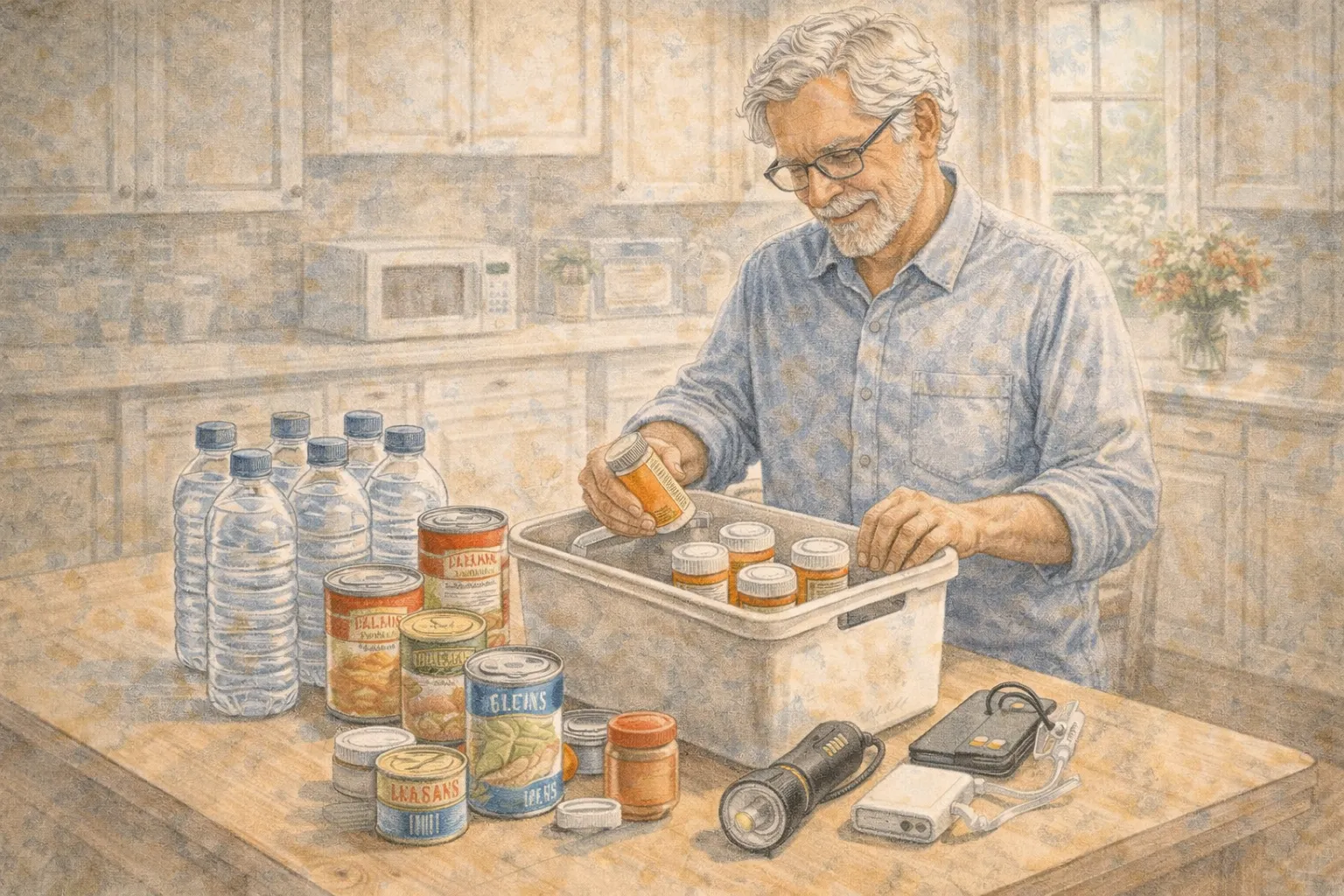
This means having enough essential items to stay comfortable and safe for about 72 hours.
Why 72 hours?
Because many disruptions — weather events, short power outages, delayed deliveries, or minor illnesses — usually resolve within a few days.
A small buffer can prevent stress during these moments.
Why a 3-day buffer matters after 55
Adults over 55 often rely on consistent routines for:
-
medication schedules
-
grocery deliveries
-
transportation
-
medical appointments
If a short disruption occurs, even small delays can become stressful.
Examples include:
-
a snowstorm delaying pharmacy delivery
-
a short power outage
-
a few days of illness at home
-
a temporary transportation problem
A simple buffer makes these situations easier to manage calmly.
The 3-Day Buffer Rule
Store enough essentials for three days of normal living.
Not emergency survival.
Just normal comfort.
Table: Core Items for a 3-Day Buffer
| Category | Example Items |
|---|---|
| Medications | 3–7 day supply |
| Water | Drinking water bottles |
| Food | Easy pantry meals |
| Lighting | Flashlight or lamp |
| Communication | Phone charger |
| Comfort | Blanket or warm clothing |
The goal is simple stability.
Part 1: Medication buffer
Medication continuity is the most important part.
Helpful habits include:
-
refilling prescriptions early
-
keeping a written medication list
-
storing a small backup supply
If you use mail-order pharmacies, allow extra time for delivery delays.
Part 2: Easy food backup
Your food buffer should include meals that require minimal effort.
Examples:
-
canned soup
-
oatmeal
-
rice cups
-
nut butter
-
crackers
-
canned beans
-
tuna or salmon
These foods can create simple meals quickly.
Part 3: Water and hydration
Hydration is often overlooked.
Keep several small bottles of drinking water available.
Smaller bottles are easier to lift and manage.
Table: Example 3-Day Meal Plan
| Meal | Example |
|---|---|
| Breakfast | Oatmeal + fruit |
| Lunch | Soup + crackers |
| Dinner | Rice + beans |
| Snack | Yogurt or nuts |
Simple meals reduce stress during disruptions.
Part 4: Light and communication
Short outages happen more often than large disasters.
Helpful items include:
-
flashlight with batteries
-
phone power bank
-
spare phone charger
-
small radio (optional)
Lighting alone can make outages feel far less stressful.
Part 5: Comfort items
Comfort helps maintain calm during disruptions.
Consider keeping:
-
warm blanket
-
simple first-aid kit
-
basic hygiene items
-
extra eyeglasses or hearing aid batteries
These small items improve wellbeing.
Real-life examples
Linda, 71
“When my pharmacy delivery was delayed two days, my backup medication made everything easier.”
Paul, 74
“A snowstorm closed the grocery store for two days. My pantry meals were enough.”
Maria, 67
“My power bank kept my phone working during an overnight outage.”
Printable 3-Day Buffer Checklist
✔ medications (3–7 day supply)
✔ simple pantry meals
✔ bottled water
✔ flashlight
✔ phone charger or power bank
✔ basic comfort items
These basics create calm during short disruptions.
The goal of preparedness
Preparedness does not mean expecting disasters.
It simply means removing small worries from daily life.
A simple 3-day buffer allows you to handle unexpected situations with confidence.
Disclaimer
This article is for general educational purposes only and does not provide medical, safety, or emergency response advice. Individual health conditions, mobility levels, and living situations vary. Readers should consult appropriate professionals regarding personal preparedness planning.