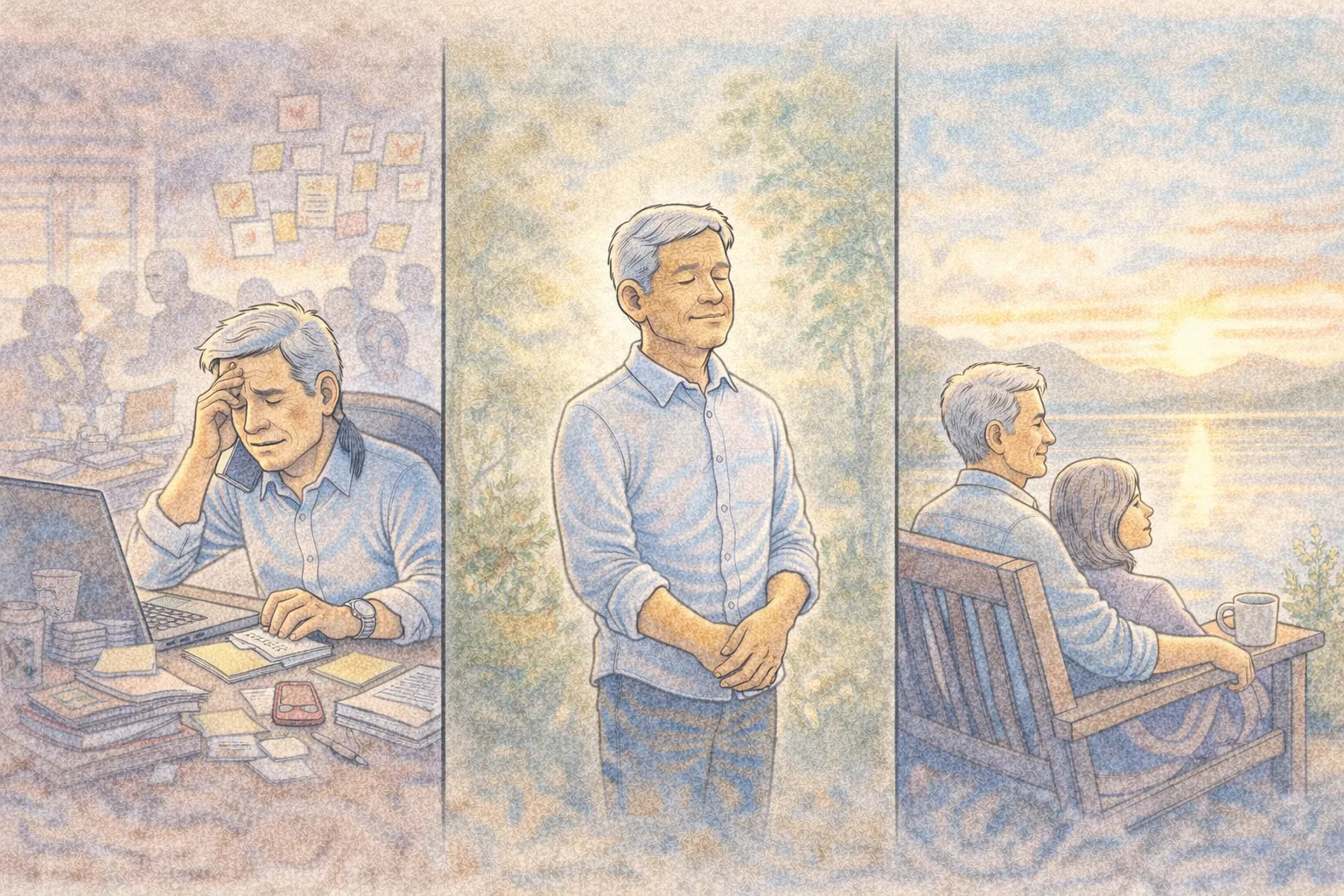
Life in your 50s feels different as priorities shift from busyness to calm and meaningful moments
“Something changed… but I can’t explain what.”
This is one of the most common thoughts people have in their 50s.
Nothing is dramatically wrong.
But everything feels… slightly different.
1. It’s not just you
Many people expect:
physical changes
aging signs
lifestyle adjustments
But what surprises them is:
👉 the feeling of life itself changes
2. The shift is subtle—but real
It’s not one big change.
It’s many small ones:
how you think
how you feel
how you react
Individually small.
Together, noticeable.
3. You start valuing energy differently
In your 30s and 40s:
👉 time was the priority
Now:
👉 energy becomes the priority
You begin to think:
“Is this worth my energy?”
“Do I actually want to do this?”
4. You become more selective
This is not negative.
It’s clarity.
You may notice:
less tolerance for unnecessary stress
less interest in superficial things
more focus on what truly matters
5. Social energy changes
You don’t necessarily want:
👉 more people
You want:
👉 better interactions
smaller groups
deeper conversations
meaningful time
6. Motivation works differently
Before:
👉 pressure created action
Now:
👉 meaning creates action
If something doesn’t feel meaningful:
👉 it feels harder to do
7. You feel time differently
This is a big one.
days can feel long
years feel fast
And this creates a strange awareness:
👉 time feels more valuable
8. You think more about “how you live”
Not just what you achieve.
Questions start to shift:
“Am I enjoying my days?”
“Does this feel right?”
“Is this how I want to spend my time?”
9. Why this can feel uncomfortable
Because no one talks about it.
You might feel:
slightly off
less driven
unsure why things feel different
But this is not a problem.
10. It’s actually an upgrade
This stage brings:
clarity
awareness
better decision-making
You’re no longer reacting.
👉 You’re choosing.
11. Real-life examples
Daniel, 54:
“I stopped chasing things that didn’t matter.”
He felt lighter.
Susan, 60:
“I realized I don’t need more. I need better.”
That changed everything.
12. Signs you’re experiencing this shift
you question how you spend your time
you feel less interested in noise and busyness
you prefer calm over chaos
you value meaning over activity
you feel slightly different but can’t explain it
Quick checklist
am I protecting my energy?
am I choosing what matters?
am I living intentionally?
If yes, you’re on the right path.
The key insight
Life doesn’t get smaller after 50.
👉 It gets clearer.
Conclusion
This stage of life is not about loss.
It’s about:
👉 refinement
You begin to:
focus better
choose better
live better
And once you understand this—
👉 everything starts to make sense again.
Disclaimer
This content is for general educational purposes only and does not consider individual psychological or health conditions. If you experience ongoing emotional discomfort, consider consulting a qualified professional.
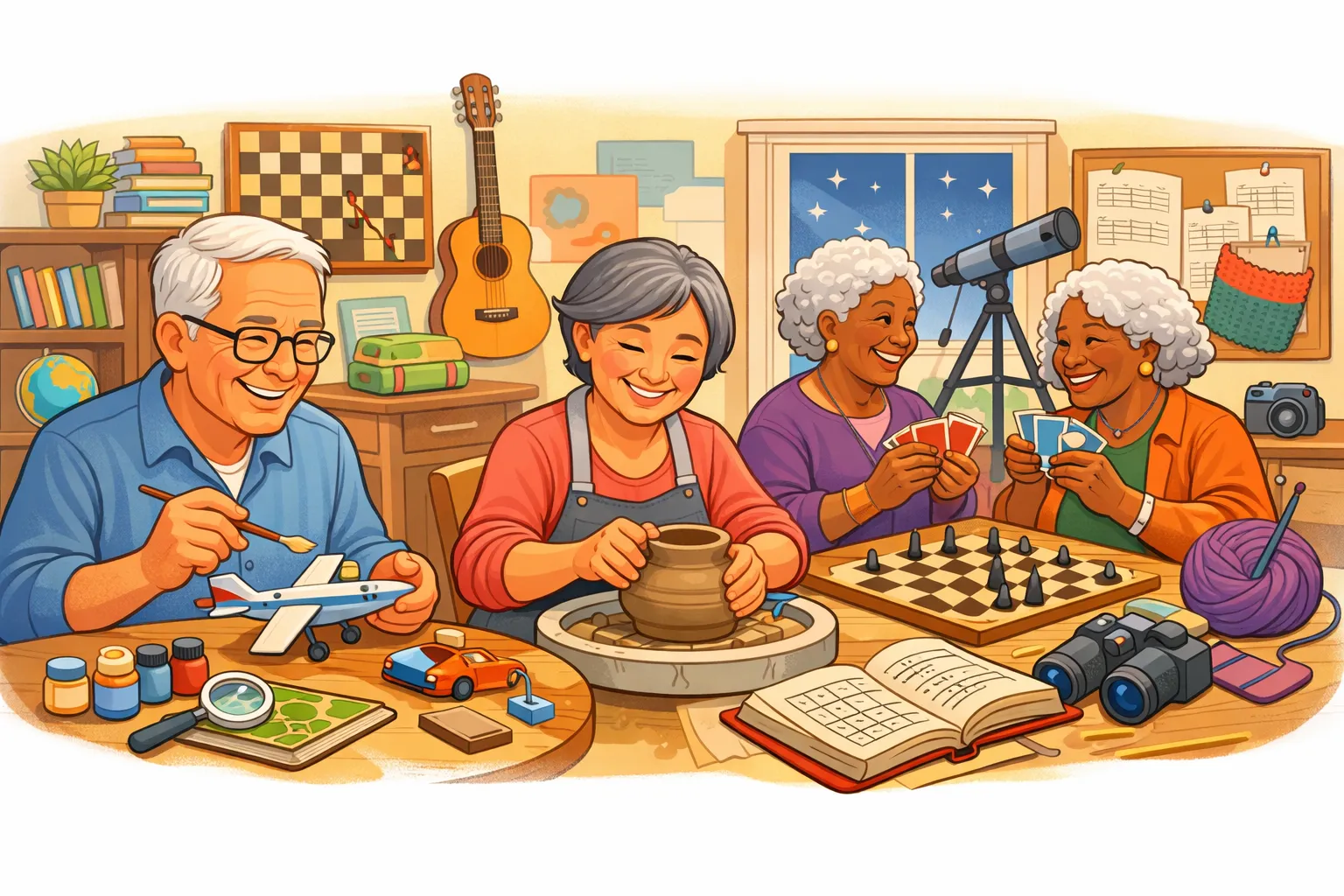
The best hobbies for brain health often combine hand use, enjoyment, and enough mental challenge to keep older adults engaged.
Cindy’s Column × Senior AI Money
When people talk about “brain health,” they often jump straight to puzzles.
Crosswords. Memory games. Brain apps. Number drills.
Those can be fine.
But for many adults over 55, that advice is too narrow.
A healthier question is not,
“What puzzle should I do?”
It is,
“What kind of hobby helps me stay alert, interested, emotionally engaged, and likely to keep showing up?”
That is where the “Hands + Heart + Head” rule comes in.
The best hobby for brain health is usually not the one that looks the smartest.
It is the one that asks something from your hands, gives something to your heart, and keeps something active in your head.
That idea lines up well with current healthy-aging guidance. The National Institute on Aging says cognitive health is the ability to think, learn, and remember clearly, and it notes that hobbies and social activities may help lower risk for some health problems, including dementia. CDC guidance also says regular physical activity can help keep thinking, learning, and judgment skills sharp as you age, while social well-being and mental stimulation are part of healthy aging. The Alzheimer’s Association similarly recommends mentally challenging activities, learning new skills, and increasing social engagement as ways that may support brain health.
This guide is for older adults who want a hobby that feels useful in real life, not just impressive on paper.
What the “Hands + Heart + Head” rule means
Hands means the hobby involves doing, moving, making, handling, building, arranging, shaping, playing, or physically participating in some way.
Heart means the hobby feels enjoyable, meaningful, calming, social, creative, or emotionally rewarding enough that you actually want to return to it.
Head means the hobby asks for attention, memory, sequencing, learning, judgment, strategy, curiosity, or problem-solving.
When a hobby hits all three, it often becomes much easier to sustain.
And consistency matters more than intensity.
A hobby you enjoy three times a week is usually more helpful than a “perfect” hobby you abandon after ten days.
Why this matters after 55
Later adulthood changes time, energy, and routine.
You may have more freedom, but you may also have less built-in structure.
You may want stimulation, but not chaos.
You may want to keep your mind active, but not feel like every enjoyable thing has been turned into a health assignment.
That is why hobby advice has to be realistic.
The hobby has to fit your actual life:
your hands,
your schedule,
your budget,
your mobility,
your attention span,
your social comfort,
and your energy on an ordinary Tuesday.
The good news is that brain-supportive hobbies do not have to be complicated. NIA, CDC, and the Alzheimer’s Association all point in the same broad direction: brain health is supported by a mix of mental challenge, physical activity, social connection, and healthy routines, not one magic activity. The U.S. POINTER trial also reported improved cognition in older adults at risk of decline when multiple lifestyle factors were addressed together, with stronger benefits in the more structured intervention group.
The hobby rule for retirees and older adults
Do not ask, “Is this hobby good for the brain?”
Ask three better questions:
Does it make me use my hands? Does it give me some emotional lift or meaning? Does it keep me mentally involved enough that I am not running on autopilot?
If the answer is yes to at least two, it is probably worthwhile.
If the answer is yes to all three, it is especially strong.
Part 1: Why “hands” matters
Many adults assume brain hobbies must be seated, quiet, and purely mental.
But “hands” matters because physical participation often improves attention and follow-through.
When your hands are involved, the activity becomes more real.
You are shaping clay.
Shuffling cards.
Planting herbs.
Painting a model.
Practicing chords.
Arranging flowers.
Knitting a pattern.
Handling wood, paper, photos, fabric, or tools.
That combination can make the brain stay present in a different way than passive entertainment.
Physical activity also matters more broadly for brain health. CDC says regular physical activity can help keep thinking, learning, and judgment skills sharp as you age, and can also reduce anxiety, improve sleep, and support emotional balance. NIA likewise says physical activity is essential for healthy aging.
This does not mean you need strenuous exercise.
It means hobbies that involve the body, even gently, often have an advantage.
Good “hands” hobbies include:
gardening knitting or crochet pottery woodworking model building cooking or baking painting birding with walking beginner dance or tai chi classes playing an instrument photography walks
Part 2: Why “heart” matters
A hobby can be technically good for you and still fail if it feels dull, lonely, or joyless.
Heart is what makes you stay.
Heart can mean:
pleasure,
purpose,
beauty,
calm,
connection,
achievement,
nostalgia,
or simply the feeling that the hour was well spent.
NIA says participating in hobbies and other social activities may lower the risk of some health problems and is associated with positive feelings such as happiness, life satisfaction, and sense of purpose. NIA also notes that loneliness and social isolation are associated with higher risks for health problems including cognitive decline.
That matters because people do not continue hobbies just because they are “good for them.”
They continue hobbies because the activity gives something back.
One person feels soothed by gardening.
Another feels alive in a choir.
Another loves the quiet focus of watercolor.
Another enjoys card games because of the social laughter more than the game itself.
Heart keeps the hobby from turning into homework.
Part 3: Why “head” matters
Head means the activity still asks something of your mind.
It does not have to be hard in an academic way.
It simply has to keep you engaged enough that your brain is not asleep at the wheel.
That can include:
learning rules remembering steps trying a new technique making decisions planning ahead solving little problems adapting when something goes wrong paying attention to detail listening and responding noticing patterns
The Alzheimer’s Association specifically recommends doing something new, learning a new skill, trying something artistic, or taking on mentally challenging activities that keep the brain working. It also notes that when an activity becomes too easy, adding something new can increase the challenge.
This is why some hobbies age well with you.
You can keep adjusting them.
If gardening becomes easy, try a new kind of planting plan.
If cards become automatic, learn a new strategy game.
If knitting is familiar, try a new stitch or more complex project.
If music is comfortable, learn a new piece instead of replaying only old favorites.
Table 1. Hobbies that fit the Hands + Heart + Head rule
Hobby
Hands
Heart
Head
Why It Works
Gardening
High
High
Medium
Movement, routine, sensory reward, planning
Knitting / crochet
High
Medium to High
Medium
Pattern memory, hand use, calm focus
Painting / sketching
High
High
Medium
Creativity, attention, emotional expression
Choir / music group
Medium
High
High
Listening, memory, timing, connection
Card or board games
Medium
High
High
Strategy, social contact, novelty
Cooking / baking
High
High
Medium to High
Sequencing, measuring, sensory reward
Photography walks
Medium
High
Medium
Movement, visual attention, exploration
Pottery / crafts
High
High
Medium
Fine motor work, creativity, concentration
Part 4: The best hobby is one you can repeat without resentment
This is where many people go wrong.
They choose the hobby that sounds most healthy rather than the hobby they can actually maintain.
A hobby is more likely to stick when it is:
easy to begin not too expensive close to home or low-friction adaptable to your current energy interesting enough that you want to improve a little
This matters because consistency beats intensity.
A 20-minute hobby done several times a week can have more value than an ambitious class you keep postponing.
So before you start something new, ask:
Can I do this at home or nearby? Can I do it even on a lower-energy day? Do I need a lot of gear? Would I still like a smaller version of this? Can I imagine doing this next month, not just this week?
Part 5: Beware of hobbies that are all “head” and no “heart”
Some older adults choose hobbies they think they should do.
That often sounds like:
I guess I should do memory puzzles. I heard language learning is good for the brain. I should probably use one of those brain apps.
There is nothing wrong with these.
But if the activity feels dutiful and emotionally flat, it often gets dropped.
That is why “heart” matters so much.
A hobby that makes you feel connected, proud, amused, soothed, or curious is often more sustainable than one that merely looks impressive.
You do not need the smartest hobby.
You need the hobby with the best return on attention.
Part 6: Social hobbies deserve more respect
People often treat social hobbies as “just social.”
But social engagement is one of the strongest reasons certain hobbies work so well.
A walking club,
a choir,
a craft group,
a volunteer shift,
a beginner art class,
a church study group,
a card group,
a dance class,
a community garden,
a ukulele circle.
All of these involve more than the activity itself.
You are remembering names.
Showing up on time.
Listening.
Responding.
Following turns.
Sharing interest.
Reading cues.
Telling stories.
Paying attention.
NIA says hobbies and social activities may lower the risk of certain health problems, and it links social connection with healthier aging. CDC also lists social well-being as part of healthy aging.
So if you enjoy people even a little, do not underestimate the brain value of group hobbies.
Part 7: Real examples
Elaine, 68
Elaine thought she needed a “brainier” hobby after retirement, so she bought several puzzle books and downloaded a memory app. She used both for two weeks and got bored. Then her daughter invited her to a beginner pottery class. Elaine loved it. It used her hands, demanded attention, and gave her a satisfying sense of progress. Six months later, she was still going every Thursday because the hobby felt restorative, not corrective.
James, 73
James worried that his world had become too passive: television, news, meals, and sleep. He joined a local birding group because it combined gentle walking with observation and small social contact. He said the hobby helped because it gave him a reason to notice things again. It was not only about birds. It was about being mentally present outdoors.
Marsha, 64
Marsha already knew how to knit, so at first she did not consider it a brain-health hobby. But once she joined a small knitting circle and started learning more complex patterns, the activity changed. It became social, mentally engaging, and emotionally grounding. What had been a quiet hand habit turned into a true Hands + Heart + Head hobby.
Part 8: How to choose your next hobby without overthinking it
Try this simple filter.
Choose hobbies that score well in at least three of these five areas:
easy to begin uses your hands or body somehow feels emotionally rewarding contains novelty or learning can include other people if you want it to
That short list usually points you in the right direction.
Examples of strong candidates:
gardening photography walks watercolor choir ukulele pottery cards or strategy games craft classes birding woodworking cooking projects flower arranging community volunteering with a hands-on task
Table 2. Common hobby problems and better fixes
Problem
What Usually Happens
Better Fix
Hobby feels too solitary
You lose momentum
Add a class, group, or buddy layer
Hobby feels too hard
You avoid starting
Choose a beginner version
Hobby feels too passive
It does not hold attention
Add a skill or goal element
Hobby feels expensive
You quit from guilt
Use library, community center, or starter supplies
Hobby feels too familiar
Brain challenge fades
Learn a new technique or variation
Hobby feels like homework
Motivation drops
Choose something with more heart and less pressure
Checklist: Hobbies for Brain Health
✔ Choose a hobby that uses your hands, body, or senses ✔ Make sure you actually enjoy it ✔ Look for some learning, novelty, or decision-making ✔ Prefer hobbies you can repeat weekly without strain ✔ Keep the startup cost low at first ✔ Pick a beginner version instead of an ideal version ✔ Add a social layer if loneliness is part of the problem ✔ Let the hobby be satisfying, not performative ✔ Increase difficulty only when it starts feeling too easy ✔ Use classes or groups for structure if needed ✔ Protect one or two regular hobby times each week ✔ Do not dismiss low-key hobbies that bring calm and focus ✔ Notice which activities leave you more alert afterward ✔ Drop hobbies that feel all duty and no reward ✔ Aim for consistency, not perfection
EEAT note
This article is practical healthy-aging guidance, not a promise that any single hobby prevents dementia or cognitive decline. The strongest public-health guidance points toward a mix of physical activity, social connection, mental stimulation, and enjoyable routine rather than one miracle activity.
Final thought
The best hobby for brain health is rarely the one that makes you feel virtuous.
It is the one that keeps you engaged enough to come back.
Hands to do. Heart to care. Head to stay awake.
That is a much better rule than chasing the “smartest” hobby in the room.
Disclaimer
This article is for general educational purposes only and does not provide medical, neurological, mental health, or rehabilitation advice. Brain health, memory changes, depression, mobility limits, and cognitive concerns vary widely. Anyone worried about noticeable changes in memory, judgment, mood, or daily functioning should speak with a qualified healthcare professional.
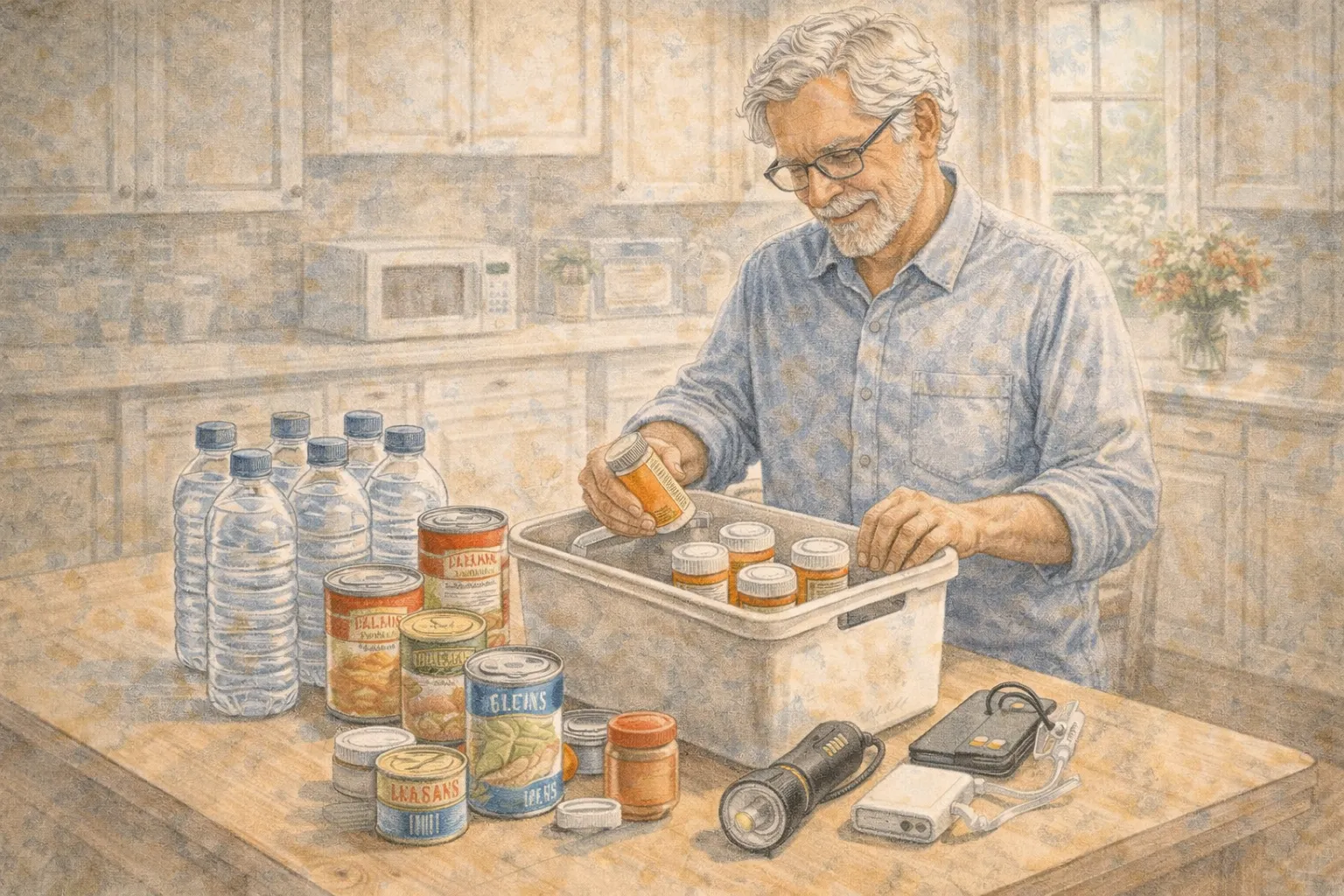
A simple three-day buffer of food, medications, and essentials helps seniors stay prepared without stress.
Cindy’s Column × Senior AI Money
Most emergency advice sounds dramatic.
Large survival kits. Complicated checklists. Dozens of supplies.
But many older adults say the same thing:
“I just want to feel prepared without turning my home into a storage room.”
The good news is that real-life preparedness is often much simpler.
In fact, many emergency planners recommend focusing on one practical goal:
A 3-day buffer.
This means having enough essential items to stay comfortable and safe for about 72 hours.
Why 72 hours?
Because many disruptions — weather events, short power outages, delayed deliveries, or minor illnesses — usually resolve within a few days.
A small buffer can prevent stress during these moments.
Why a 3-day buffer matters after 55
Adults over 55 often rely on consistent routines for:
medication schedules
grocery deliveries
transportation
medical appointments
If a short disruption occurs, even small delays can become stressful.
Examples include:
a snowstorm delaying pharmacy delivery
a short power outage
a few days of illness at home
a temporary transportation problem
A simple buffer makes these situations easier to manage calmly.
The 3-Day Buffer Rule
Store enough essentials for three days of normal living.
Not emergency survival.
Just normal comfort.
Table: Core Items for a 3-Day Buffer
Category
Example Items
Medications
3–7 day supply
Water
Drinking water bottles
Food
Easy pantry meals
Lighting
Flashlight or lamp
Communication
Phone charger
Comfort
Blanket or warm clothing
The goal is simple stability.
Part 1: Medication buffer
Medication continuity is the most important part.
Helpful habits include:
refilling prescriptions early
keeping a written medication list
storing a small backup supply
If you use mail-order pharmacies, allow extra time for delivery delays.
Part 2: Easy food backup
Your food buffer should include meals that require minimal effort.
Examples:
canned soup
oatmeal
rice cups
nut butter
crackers
canned beans
tuna or salmon
These foods can create simple meals quickly.
Part 3: Water and hydration
Hydration is often overlooked.
Keep several small bottles of drinking water available.
Smaller bottles are easier to lift and manage.
Table: Example 3-Day Meal Plan
Meal
Example
Breakfast
Oatmeal + fruit
Lunch
Soup + crackers
Dinner
Rice + beans
Snack
Yogurt or nuts
Simple meals reduce stress during disruptions.
Part 4: Light and communication
Short outages happen more often than large disasters.
Helpful items include:
flashlight with batteries
phone power bank
spare phone charger
small radio (optional)
Lighting alone can make outages feel far less stressful.
Part 5: Comfort items
Comfort helps maintain calm during disruptions.
Consider keeping:
warm blanket
simple first-aid kit
basic hygiene items
extra eyeglasses or hearing aid batteries
These small items improve wellbeing.
Real-life examples
Linda, 71
“When my pharmacy delivery was delayed two days, my backup medication made everything easier.”
Paul, 74
“A snowstorm closed the grocery store for two days. My pantry meals were enough.”
Maria, 67
“My power bank kept my phone working during an overnight outage.”
Printable 3-Day Buffer Checklist
✔ medications (3–7 day supply) ✔ simple pantry meals ✔ bottled water ✔ flashlight ✔ phone charger or power bank ✔ basic comfort items
These basics create calm during short disruptions.
The goal of preparedness
Preparedness does not mean expecting disasters.
It simply means removing small worries from daily life.
A simple 3-day buffer allows you to handle unexpected situations with confidence.
Disclaimer
This article is for general educational purposes only and does not provide medical, safety, or emergency response advice. Individual health conditions, mobility levels, and living situations vary. Readers should consult appropriate professionals regarding personal preparedness planning.
Older adult reviewing a one-page health summary document with medications, allergies, doctor contacts, and pharmacy information.
Cindy’s Column × Senior AI Money
Many adults think of the bathroom as a simple daily space.
But for older adults, it is also the most common place for falls at home.
Bathrooms combine several risk factors:
slippery floors
hard surfaces
small spaces
water and humidity
frequent night visits
The good news is that most bathroom falls are preventable.
And prevention usually does not require major renovations.
Often the biggest safety improvements come from small practical changes.
This guide explains simple adjustments that can significantly reduce fall risk for adults aged 55+.
Why bathroom falls are common after 55
As we age, several natural changes occur:
balance becomes slightly less stable
reaction time slows
muscle strength decreases
vision in low light weakens
When these factors meet wet floors and tight spaces, falls become more likely.
Bathroom falls are also more dangerous because:
surfaces are hard
there are sharp edges
help may not be immediately available
That is why bathroom safety deserves special attention.
The Bathroom Safety Rule
Make every movement in the bathroom stable, dry, and well-lit.
If the space supports balance and visibility, fall risk drops significantly.
Table: Most Common Bathroom Fall Risks
Risk
Example
Wet floors
water near sink or shower
Poor lighting
night bathroom visits
Slippery tubs
entering or exiting shower
No hand support
standing from toilet
Clutter
rugs or loose items
Even small improvements can reduce these risks.
Part 1: Improve floor safety
Slippery floors are one of the biggest hazards.
Helpful solutions include:
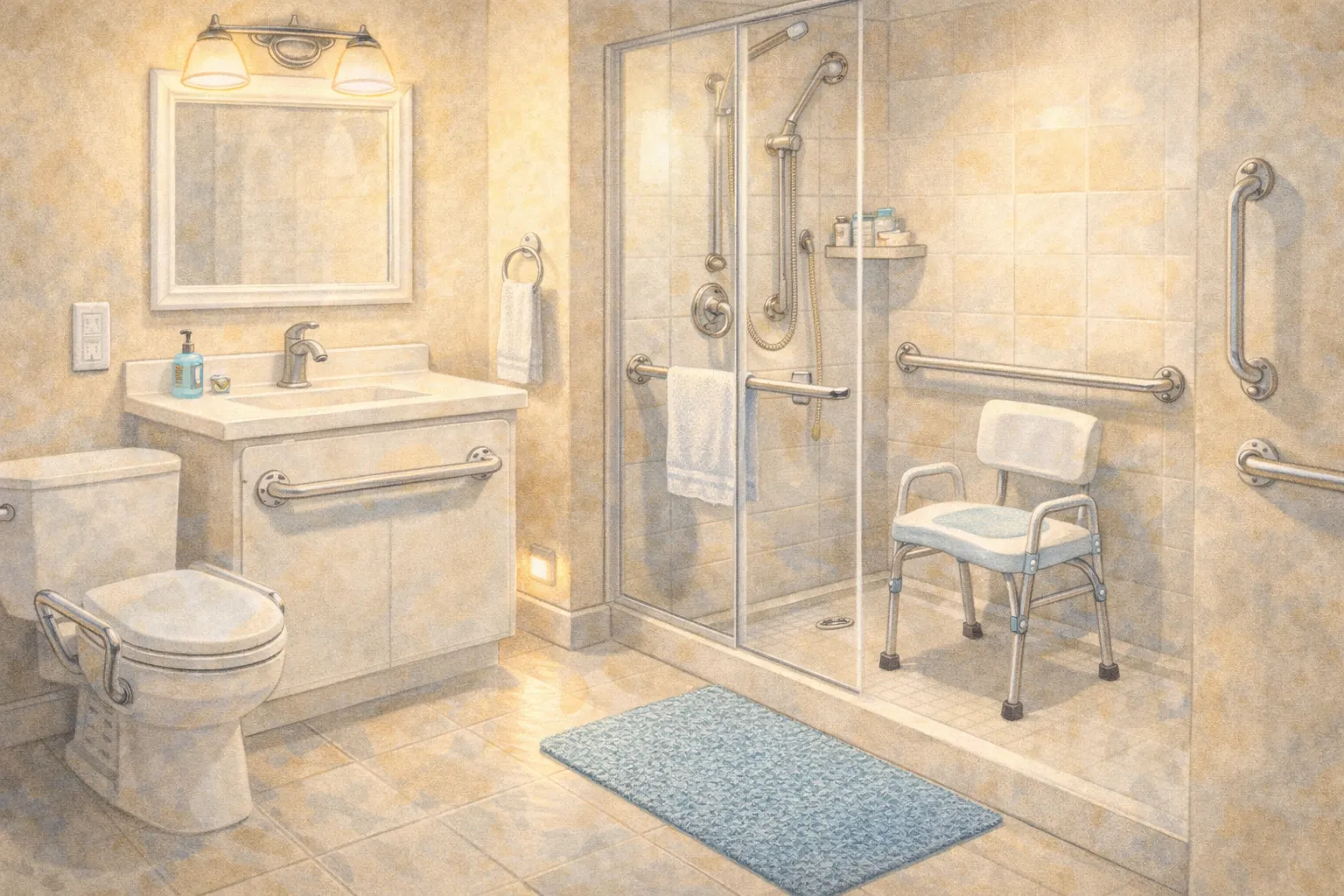
non-slip bath mats
rubber-backed rugs
quick-dry floor mats
wiping up water immediately
Avoid loose rugs that can slide.
Part 2: Add stable support
Support points help maintain balance.
Common solutions:
grab bars near the shower
grab bars beside the toilet
shower chairs
raised toilet seats
These tools reduce strain on knees and hips.
Table: Bathroom Support Options
Support Tool
Benefit
Grab bars
balance when standing
Shower chair
safer bathing
Raised toilet seat
easier standing
Handheld shower
safer seated washing
Support tools are simple but powerful.
Part 3: Improve lighting
Many bathroom falls happen at night.
Solutions include:
night lights in hallways
motion sensor lights
brighter bathroom bulbs
light switches within easy reach
Better lighting improves visibility and confidence.
Part 4: Keep pathways clear
Bathrooms are often small spaces.
Clutter increases risk.
Helpful habits:
keep floors clear
store items in cabinets
avoid extra furniture
secure cords or wires
A clear pathway supports safer movement.
Part 5: Wear safe footwear
Walking barefoot on smooth tile increases slip risk.
Better options include:
non-slip slippers
rubber-soled footwear
supportive house shoes
Shoes designed for indoor use can improve stability.
Real-life examples
Linda, 72
“I added grab bars in my shower and it immediately felt safer.”
David, 68
“A simple night light in the hallway made nighttime trips easier.”
Maria, 75
“A shower chair helped reduce knee strain.”
Printable Bathroom Safety Checklist
✔ non-slip bath mat ✔ grab bars installed ✔ good lighting ✔ clear floor space ✔ safe indoor footwear
These small changes create a much safer environment.
The bigger goal of fall prevention
Fall prevention is not about limiting independence.
It is about supporting confident daily movement.
With simple adjustments, the bathroom can remain a safe and comfortable space.
Disclaimer
This article is for general educational purposes only and does not provide medical or safety advice. Individual mobility, health conditions, and home environments vary. Readers should consult appropriate professionals when making home safety modifications.
These basics support simple, balanced meals anytime.
The goal of a calm pantry
Eating well after 55 does not require complicated cooking.
A thoughtful pantry simply makes good meals easy on low-energy days.
Small preparation today can prevent stress tomorrow.
Disclaimer
This article is for general educational purposes only and does not provide medical or nutritional advice. Individual dietary needs vary based on health conditions, medications, and personal preferences. Readers should consult a qualified healthcare professional or registered dietitian before making significant dietary changes.
Strength training is not about building big muscles.
It is about maintaining confidence in movement.
Small routines done regularly can protect independence for many years.
Disclaimer
This article is for general educational purposes only and does not provide medical or physical therapy advice. Individual health conditions, injuries, and mobility levels vary. Readers should consult a qualified healthcare professional before beginning any new exercise routine, especially if they have chronic health conditions or a history of falls.
Older adults performing a gentle 2026 morning routine in bed and beside a chair, including ankle movements, shoulder rolls, and supported standing to reduce stiffness
Morning stiffness after 55 is common.
It doesn’t mean you’re fragile. It doesn’t mean you’re declining.
It means your body now prefers preparation.
Many adults over 55 notice:
Tight hips when getting out of bed
Stiff fingers
Lower back resistance
Slow first steps
Joint discomfort in cold weather
The mistake?
Rushing.
This 2026 guide offers a gentle, structured morning routine designed to:
Reduce stiffness
Protect joints
Improve balance
Preserve energy
Lower fall risk
Not extreme stretching. Not pain-pushing exercise.
Just calm preparation.
Why Mornings Feel Harder After 55
Overnight:
Joints stiffen
Circulation slows
Muscles shorten slightly
Connective tissue cools
Sudden movement increases strain.
A 10–15 minute gentle warm-up changes that.
The 2026 Core Rule
Warm first. Move second. Stand third.
Never reverse the order.
Step 1 — Stay in Bed (2 Minutes)
Before sitting up:
Wiggle toes
Rotate ankles
Gently bend and straighten knees
Open and close hands
Slow neck turns
Purpose: Increase circulation safely.
Step 2 — Sit Before You Stand (3 Minutes)
Sit at the edge of the bed.
Add:
Shoulder rolls
Gentle spinal twist
Seated march (slow)
Deep breathing (5 slow breaths)
Table 1: Why This Matters
Action
Benefit
Ankle circles
Reduces fall risk
Shoulder rolls
Improves posture
Seated march
Activates hips
Breathing
Regulates blood pressure
Step 3 — Stand With Support (2 Minutes)
Hold a stable surface.
Do:
Heel raises
Mini knee bends
Gentle side leg lifts
Keep range small.
Pain-free movement only.
Step 4 — Warmth Matters
Cold muscles resist movement.
Options:
Warm shower
Heating pad (10 min max)
Warm socks
Light sweater
Heat improves tissue flexibility.
Step 5 — Pain Scale Rule
Use the 0–10 rule.
Pain Level
Meaning
0–2
Safe discomfort
3–4
Modify
5+
Stop
Never push through sharp pain.
Step 6 — Joint-Safe Habits for the Rest of the Morning
☐ Wear supportive shoes indoors ☐ Avoid rushing stairs ☐ Use night lighting ☐ Hydrate early ☐ Avoid sudden bending ☐ Keep phone nearby
Small adjustments prevent falls.
Real Senior Examples
Linda, 67 Added 10-minute bed warm-up. Reports less knee stiffness.
George, 74 Stopped jumping out of bed. Dizziness reduced significantly.
Maria, 71 Added warm shower before chores. Reports improved mobility.
What This Routine Is Not
It is not:
Physical therapy
Arthritis treatment
Medical rehabilitation
Strength training
It is a protective transition.
When to Consult a Professional
Seek medical evaluation if you experience:
Persistent joint swelling
Sharp or worsening pain
Frequent morning dizziness
Repeated falls
Sudden mobility change
Early evaluation prevents complications.
Printable Gentle Morning Checklist (55+)
☐ Wiggle & warm in bed ☐ Sit before standing ☐ Light supported movement ☐ Warm muscles ☐ Hydrate ☐ Move slowly first 20 minutes
Emotional Benefit
Many seniors report:
“My day feels steadier.”
The goal is not flexibility.
It’s confidence.
Financial Angle
Fall-related injuries are one of the most expensive health events for adults over 65.
Preventive habits protect:
Mobility
Independence
Medical costs
Gentle routines are a long-term investment.
Disclaimer
This article is for general educational purposes only and does not provide medical advice. Individual health conditions, joint disorders, balance issues, and cardiovascular factors vary. Always consult a qualified healthcare professional before beginning any new movement routine, especially if you have chronic conditions, recent injuries, or a history of falls.
Michael, 75 Moved kitchen items lower. Eliminated ladder use.
Spring Footwear Matters
Switching from boots to lighter shoes changes balance.
Choose:
Closed-back shoes
Non-slip sole
Supportive arch
Proper fit
Avoid:
Backless slippers
Smooth soles
Worn-out sneakers
Printable Spring Safety Checklist (55+)
☐ Clear all walking paths ☐ Remove loose rugs ☐ Secure bathroom mats ☐ Install grab bar if needed ☐ Improve lighting ☐ Move items to mid-level shelves ☐ Wear non-slip footwear ☐ Check outdoor railings ☐ Keep phone accessible
The Emotional Side of Fall Prevention
Many seniors avoid changes because:
“I’ve always had this rug.”
“I don’t want my home to look medical.”
Safety does not remove dignity.
It preserves independence.
When to Consider Professional Input
If you experience:
Frequent near-falls
Balance changes
Dizziness
Medication shifts
Consult a healthcare professional for individualized guidance.
Disclaimer
This article is for general educational purposes only and does not provide medical, safety, or clinical advice. Individual mobility levels, medical conditions, and living environments vary. Consult qualified healthcare professionals or occupational therapists for personalized fall prevention recommendations.
A calm, intentional grocery plan helps retirees cut costs without cutting joy. Fresh food, simple lists, and predictable habits reduce stress.
After retirement, grocery shopping feels different.
You notice prices more. You shop more often. You hesitate more.
And yet food is not just fuel.
It is comfort. Routine. Pleasure. Health.
The goal in 2026 is not extreme frugality.
It is stability without deprivation.
This guide is for adults 55+ who want to:
Lower grocery bills
Avoid impulse spending
Reduce food waste
Protect nutrition
Keep meals enjoyable
Without feeling restricted.
Why Grocery Costs Feel Heavier After 60
After retirement:
Income becomes fixed
Inflation feels personal
Medical expenses increase
Waste feels irresponsible
Food spending becomes emotional.
But reacting emotionally often increases cost.
The 2026 Core Rule
Reduce waste first. Reduce spending second.
Most grocery overspending comes from:
Buying too much
Forgetting what you have
Shopping without a meal plan
Emotional purchases
Not from buying “nice food.”
The 5-Step Calm Grocery System (55+)
Step 1 — The 5-Minute Fridge Reset
Before shopping:
Check produce drawer
Check leftovers
Check freezer
Check expiration dates
Do NOT:
Judge yourself
Panic about waste
Just observe.
Step 2 — The 3-Category List
Instead of writing random items:
Divide your list into:
Essentials (must-have)
Flexible meals (easy swaps)
Joy items (intentional treats)
Table 1: Balanced Grocery Framework
Category
Example
Purpose
Essentials
Eggs, yogurt, oats
Nutrition stability
Flexible
Chicken OR beans
Budget flexibility
Joy
Dark chocolate, good cheese
Emotional satisfaction
This prevents binge spending.
Step 3 — The “One Extra” Rule
Instead of bulk shopping:
Buy one extra of only:
Shelf-stable staple
Frequently used item
Avoid:
Perishable bulk
Large novelty packs
This reduces spoilage.
Step 4 — The 72-Hour Produce Rule
Fresh produce plan:
Buy for 3–4 days only
Replenish midweek if needed
Waste drops dramatically.
Step 5 — The Receipt Review (2 Minutes)
After shopping:
Look at receipt calmly.
Ask:
Was anything impulse?
Did I forget something?
What surprised me?
No guilt.
Just awareness.
Table 2: Where Seniors Commonly Overspend
Pattern
Why It Happens
Fix
Overbuying produce
Optimism bias
72-hour rule
Bulk meat purchases
“Good deal” thinking
Freeze same day
Snack drift
Emotional fatigue
Pre-choose joy item
Duplicate pantry items
Poor visibility
Pantry reset monthly
Shopping hungry
Blood sugar drop
Eat before store
Real Senior Examples
Arthur, 70 Reduced waste by half using 3-category list. Savings: ~$85/month.
Maria, 73 Stopped bulk produce buying. Savings: ~$60/month.
Evelyn, 68 Keeps 2 “joy items.” No longer binge-spends on snacks.
Monthly Grocery Reset Checklist (Printable)
☐ Clear fridge weekly ☐ Write 3-category list ☐ Buy produce for 3 days ☐ Choose 2 joy items ☐ Avoid shopping hungry ☐ Freeze meat same day ☐ Review receipt calmly ☐ Do pantry visibility check monthly
Food stress often reflects broader budget tension.
Disclaimer
This article is for general educational purposes only and does not constitute financial, medical, or dietary advice. Nutritional needs vary by individual health condition. Consult a qualified healthcare provider or registered dietitian for personalized dietary guidance. Financial situations vary; consult licensed professionals for individualized financial planning.
This article is for general educational purposes only and does not provide medical advice. Exercise programs should be adapted to individual health conditions, mobility levels, and physician recommendations. Consult a qualified healthcare professional before beginning a new exercise routine.


![2026 Home Exercise Progress for Seniors (55+): Build Consistency Without Injury or BurnoutCindy’s Column × Senior AI Money “Progress after 55 isn’t about pushing harder. It’s about repeating safely.” Many adults 55+ start the year with good intentions: “I should exercise more.” “I need to build strength.” “I don’t want to lose mobility.” And then one of three things happens: You overdo it and feel sore for days. You get discouraged and stop. You try something trendy that doesn’t fit your body. This guide is not about intensity. It’s about sustainable progress at home — without equipment, without pressure, and without injury. WHY PROGRESS FEELS DIFFERENT AFTER 60 After 60, the body responds differently: Recovery takes longer Joints need more care Balance requires attention Sleep affects energy more But here’s the truth: Muscle still grows. Balance still improves. Strength still increases. The difference is pacing. THE 2026 RULE Consistency beats intensity. Three safe sessions per week Beat one “hero workout” every time. PART 1: WHAT “PROGRESS” REALLY MEANS AFTER 55 Progress does not mean: Sweating heavily Lifting heavy weights Feeling exhausted Progress means: Standing from a chair more easily Carrying groceries without strain Climbing stairs steadily Feeling stable in the shower Getting up from the floor with confidence Functional strength is the goal. PART 2: THE 3-PILLAR SYSTEM Every safe home program should include: Strength Balance Mobility Miss one, and injury risk increases. Pillar 1: Strength (2–3x per week) Simple exercises: Sit-to-stand from chair Wall push-ups Heel raises Light resistance band rows Step-ups on low step Start with: 8–10 repetitions 1–2 sets Stop before pain. Pillar 2: Balance (daily micro-practice) Examples: Stand on one foot near counter Heel-to-toe walking Slow side steps Turning in a small circle safely Balance improves with short, frequent practice. Even 2 minutes daily helps. Pillar 3: Mobility (gentle daily) Focus areas: Ankles Hips Shoulders Upper back Simple movements: Shoulder rolls Ankle circles Seated spinal twists Gentle hip openers Mobility reduces stiffness and protects joints. TABLE 1: Weekly Structure Example Day Focus Time Monday Strength + Mobility 15–20 min Tuesday Balance + Light Walk 10–15 min Wednesday Rest or Stretch 5–10 min Thursday Strength + Mobility 15–20 min Friday Balance Practice 10 min Weekend Optional Light Activity Flexible Short. Repeatable. Calm. PART 3: HOW TO TRACK PROGRESS SAFELY Avoid scale-based tracking. Track function instead. Examples: Chair stand feels easier Less knee discomfort More steady walking outdoors Faster recovery after activity Table 2: Functional Progress Indicators Area What to Notice Leg strength Easier stairs Core stability Less wobble Grip strength Opening jars easier Endurance Less breathless on short walks Functional gains are real gains. PART 4: INJURY PREVENTION RULES Never exercise through sharp pain. Avoid: Sudden twisting Deep knee bends if painful Jerky movements Rapid floor transitions without support Warm up 3–5 minutes first: March in place Arm circles Gentle torso turns Cool down slowly. REAL-LIFE EXAMPLES Example 1: Harold, 73 Before: Did random YouTube workouts. Felt sore and stopped. After: Followed 3-day strength structure. Result: “Two months later, stairs feel easier.” Example 2: Maria, 69 Before: Avoided exercise after mild knee pain. After: Focused on balance + mobility daily. Result: “I feel steadier in the kitchen.” Example 3: Denise, 76 Before: Walked daily but no strength work. After: Added sit-to-stand twice weekly. Result: “Standing up feels effortless.” PRINTABLE: Weekly Exercise Consistency Checklist Strength (2–3x weekly) [ ] Sit-to-stand [ ] Wall push-ups [ ] Heel raises Balance (daily) [ ] One-foot stand [ ] Slow side steps Mobility (daily) [ ] Shoulder mobility [ ] Hip mobility [ ] Ankle mobility Recovery [ ] One full rest day [ ] Slept 7+ hours Small repetition builds confidence. WHY THIS MATTERS FINANCIALLY TOO Physical strength protects: medical costs fall risk mobility independence long-term care expenses Falls are expensive. Prevention is quiet savings. WHAT NOT TO DO IN 2026 Sign up for high-intensity programs too quickly Compare yourself to younger adults Exercise only when motivated Quit after one sore week Routine > motivation. A SIMPLE START PLAN (THIS WEEK) Pick: 2 strength days 2 balance days Daily mobility Write it on your calendar. Keep it boring. Boring builds strength. DISCLAIMER This article is for general educational purposes only and does not provide medical advice. Exercise programs should be adapted to individual health conditions, mobility levels, and physician recommendations. Consult a qualified healthcare professional before beginning a new exercise routine.](https://senioraimoney.com/wp-content/uploads/2026/02/home-exercise-for-seniors.webp)