Cindy’s Column × Senior AI Money
Retirement is supposed to feel freer.
But many retirees discover something surprising.
Their calendar slowly fills again.
Appointments.
Family requests.
Volunteer work.
Medical visits.
Social events.
Soon the week feels crowded.
Not because the activities are bad — but because energy becomes the real limit after 55.
This is where a simple planning system can help.
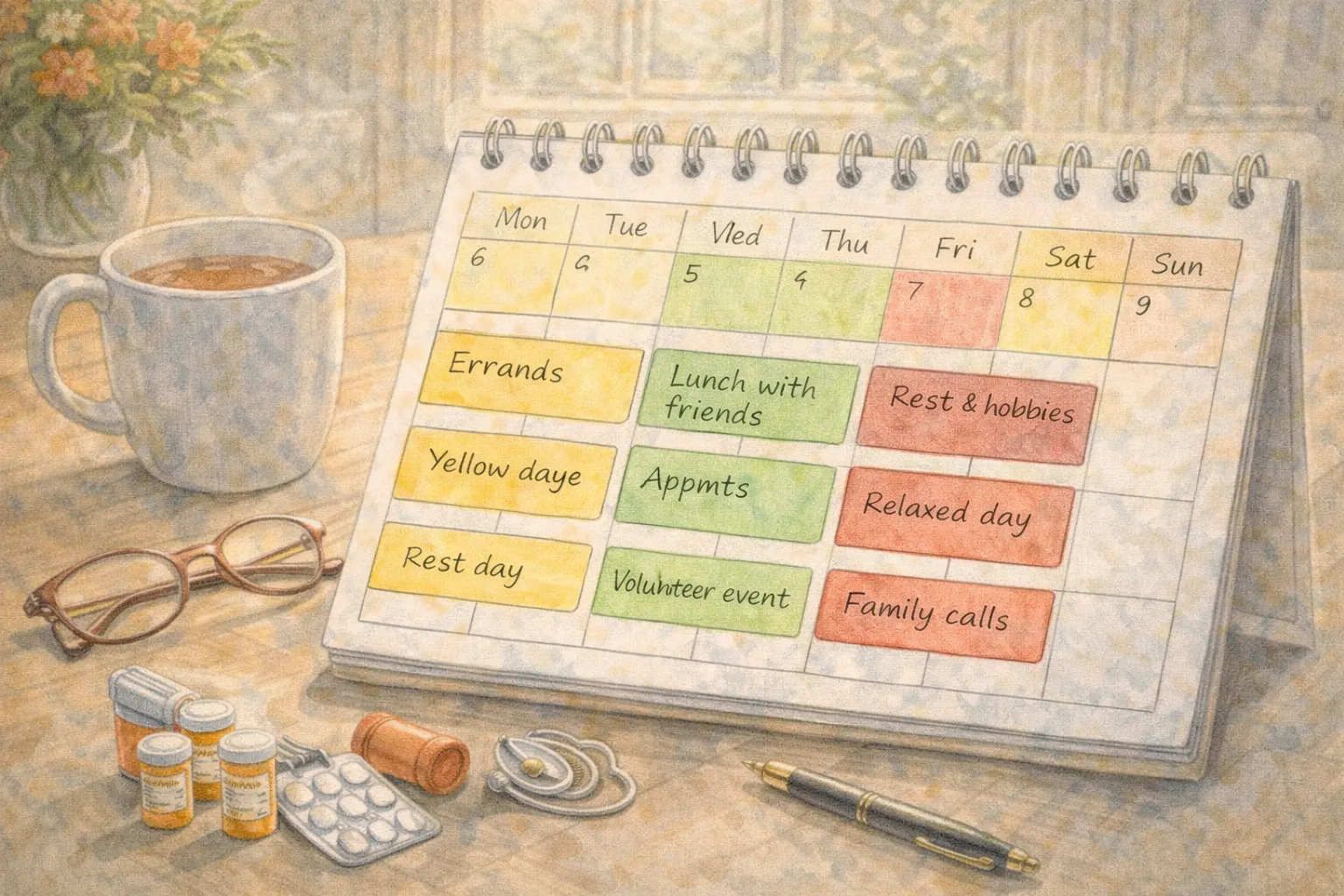
It’s called the Calm Calendar Method.
Instead of scheduling based only on time, this method schedules based on energy levels.
Why retirees often feel overbooked
Many retirees want to stay active.
That’s healthy.
But overbooking can create:
-
fatigue
-
missed rest days
-
stress before appointments
-
reduced enjoyment of activities
The issue is rarely motivation.
The issue is energy management.
Energy changes daily after 55.
Planning with energy in mind creates a more balanced schedule.
The Calm Calendar Rule
Every week should contain:
• Green days
• Yellow days
• Red days
Each type of day has a different purpose.
Table: The Calm Calendar System
| Color | Meaning | Example Activities |
|---|---|---|
| Green | High-energy day | social plans, outings |
| Yellow | Moderate day | errands, appointments |
| Red | Rest day | home time, recovery |
A balanced week includes all three types.
Part 1: Green days (active days)
Green days are when energy feels stronger.
Good activities for these days:
-
meeting friends
-
longer outings
-
travel days
-
social events
-
volunteer work
Try to limit green days to 2–3 per week.
Too many active days can create fatigue later.
Part 2: Yellow days (light activity days)
Yellow days are practical days.
Examples include:
-
grocery shopping
-
doctor appointments
-
small errands
-
light household tasks
These days keep life organized without draining energy.
Part 3: Red days (recovery days)
Red days are intentional rest days.
They are not lazy days.
They are recovery days.
Healthy red-day activities:
-
reading
-
light stretching
-
quiet hobbies
-
short walks
-
calling family
At least 1–2 red days per week can protect long-term energy.
Table: Example Weekly Energy Calendar
| Day | Energy Type | Activity |
|---|---|---|
| Monday | Yellow | errands |
| Tuesday | Green | lunch with friends |
| Wednesday | Red | rest and hobbies |
| Thursday | Yellow | appointments |
| Friday | Green | community event |
| Saturday | Red | relaxed day |
| Sunday | Yellow | family calls |
This rhythm keeps the week balanced.
Part 4: The “one big thing” rule
Each day should have only one major activity.
Examples:
✔ doctor visit
✔ meeting a friend
✔ grocery trip
Avoid stacking several large tasks in one day.
Spacing activities protects energy.
Part 5: How to say “not today”
Many retirees feel pressure to accept every invitation.
But it is healthy to respond like this:
“Thursday doesn’t work for me — how about next week?”
Or:
“I’m keeping that day quiet, but another day would be nice.”
Protecting your schedule protects your wellbeing.
Real-life examples
David, 73
“I started marking my calendar with colors. I realized I had no rest days.”
Linda, 69
“Now I keep Wednesdays as red days. I feel much less tired.”
Robert, 76
“Spacing appointments changed everything.”
Printable Calm Calendar Checklist
✔ plan 2–3 green days
✔ schedule errands on yellow days
✔ protect 1–2 red days
✔ limit one major activity per day
✔ leave space between appointments
The goal is a calmer weekly rhythm.
The real benefit of energy planning
A calm calendar doesn’t reduce activity.
It improves how activities feel.
When energy is respected, retirement becomes more enjoyable.
Disclaimer
This article is for general educational purposes only and does not provide medical, psychological, or professional advice. Energy levels, health conditions, and lifestyle needs vary among individuals. Readers should consult qualified professionals regarding personal health or scheduling needs.