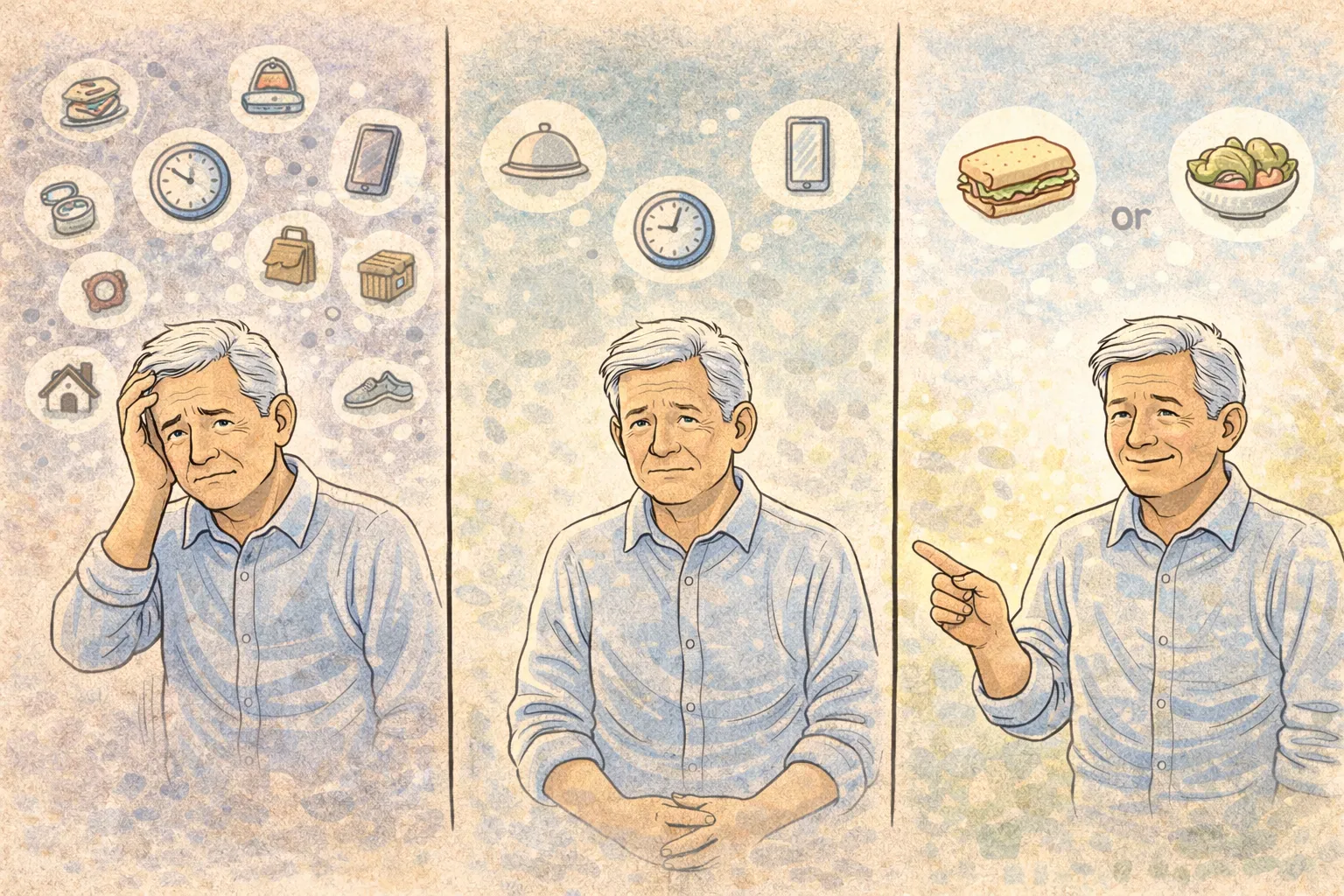
“Why is something this small so hard to decide?”
It’s a question many retirees quietly ask themselves.
What to eat.
When to go out.
Whether to call someone.
What to do with the day.
None of these are big decisions.
And yet…
They can feel surprisingly difficult.
1. Why this happens after retirement
Before retirement, many decisions were already made for you.
- work schedule
- meal timing
- daily structure
- priorities
Your day had built-in direction.
After retirement, that disappears.
Now, everything becomes a choice.
2. Too much freedom creates friction
It sounds strange, but it’s true:
More freedom → more decisions
And more decisions → more mental effort
When everything is optional:
- nothing feels clear
- everything feels delayed
- small choices feel heavier
3. The brain gets tired from deciding
This is called decision fatigue.
Even small decisions require energy.
When you face many small choices:
- your brain slows down
- you hesitate more
- you delay action
This is why even simple things can feel exhausting.
4. The “no urgency” problem
After retirement, most decisions have no deadline.
You can always say:
“I’ll decide later.”
But that creates a loop:
- delay
- rethink
- delay again
Without urgency, decisions lose momentum.
5. Why small decisions feel bigger than they are
Because they represent something deeper.
When you decide:
“What should I do today?”
You are really deciding:
“What does my life look like now?”
That’s not a small question.
6. The hidden mental load
Every unmade decision stays in your mind.
Even if you’re not actively thinking about it.
This creates:
- background stress
- mental clutter
- low-level tension
7. The mistake most people make
They try to:
- think more
- analyze more
- find the perfect choice
But that makes it worse.
More thinking = more pressure
8. The simple fix: reduce decisions
You don’t need better decisions.
You need fewer decisions.
9. The 2-choice rule
Instead of unlimited options:
Limit yourself to two.
Example:
- walk or stay home
- call or don’t call
- cook or order
Two choices = faster action
10. The “default option” method
Create simple defaults.
- breakfast stays the same
- morning routine stays the same
- certain days follow a pattern
This removes unnecessary decisions.
11. The “decide once” strategy
Some decisions don’t need to be repeated daily.
Decide once, then reuse.
Example:
- fixed walk time
- regular call day
- weekly outing
12. Real-life examples
Nancy, 68:
“I didn’t realize how tiring small choices were.”
She simplified her mornings.
Her days became easier immediately.
Tom, 72:
“I stopped overthinking everything.”
He used the 2-choice rule.
That alone reduced stress.
13. Signs you have decision fatigue
- you delay simple choices
- you overthink small things
- you feel mentally tired early
- you keep changing your mind
- you avoid deciding altogether
Quick checklist
- did I limit my choices today?
- did I avoid overthinking?
- did I use simple defaults?
If yes, your day will feel easier.
The key insight
It’s not that decisions became harder.
It’s that you have more of them.
Conclusion
Retirement gives you freedom.
But freedom needs structure.
When you reduce decisions:
- your mind becomes clearer
- your energy improves
- your day feels easier
Small changes make a big difference.
Disclaimer
This content is for general educational purposes only and does not consider individual psychological or medical conditions. If decision-making difficulty becomes persistent or distressing, consult a qualified professional.