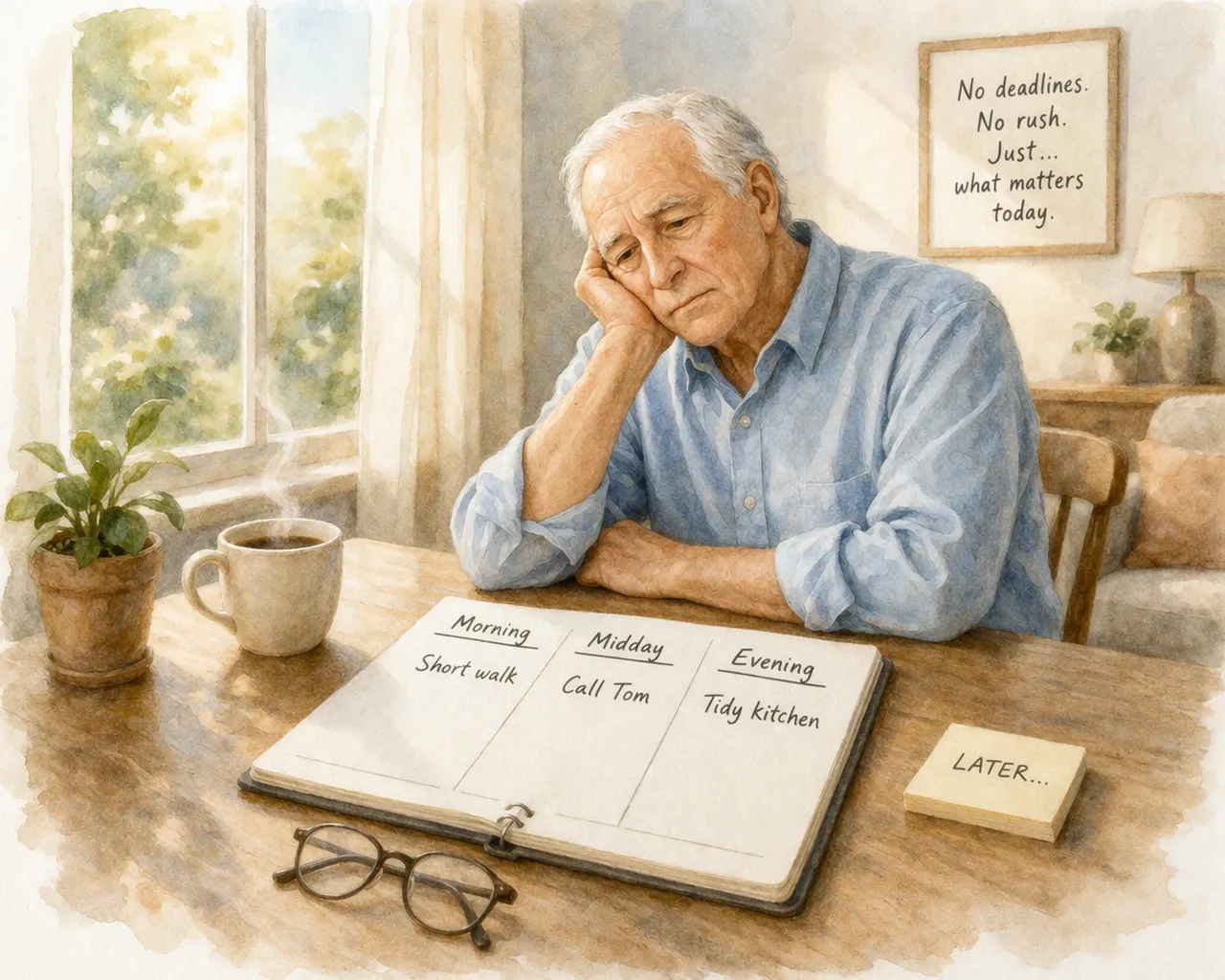
“Nothing really needs to be done today… so why do I feel stuck?”
This is a quiet but very real experience after retirement.
No deadlines.
No boss.
No urgent emails.
At first, this feels like freedom.
But over time, something strange happens.
You start to feel:
- unmotivated
- slow to start the day
- unsure what matters
- mentally stuck
Not because you’re lazy.
But because nothing feels urgent anymore.
1. Why urgency disappears after retirement
During working years, urgency is built into life.
- deadlines
- meetings
- responsibilities
- expectations
These create structure automatically.
After retirement, that structure disappears.
And with it, urgency disappears too.
2. Why this creates a problem
You might think:
“No urgency = less stress”
But in reality:
No urgency can lead to:
- delayed decisions
- endless postponing
- low energy
- loss of direction
Without urgency, the brain struggles to prioritize.
3. The brain needs signals
Your brain works best when it has:
- clear start points
- clear reasons to act
- small levels of pressure
Without these, everything feels optional.
And when everything is optional…
Nothing gets done.
4. The “I’ll do it later” loop
This is the most common pattern:
“I’ll go for a walk later.”
“I’ll organize that tomorrow.”
“I’ll call them sometime.”
Later becomes:
- next day
- next week
- never
This creates a quiet mental burden.
Unfinished tasks drain energy.
5. The hidden emotional effect
When nothing feels urgent, you may start feeling:
- slightly restless
- mentally foggy
- oddly tired
- unaccomplished
Even if your day was “easy”
That’s because progress—not pressure—creates satisfaction.
6. The simple fix: gentle urgency
You don’t need stress.
You need light structure.
Think of it as “gentle urgency.”
Not pressure.
Just direction.
7. The 3-anchor day method
A simple solution:
Create 3 small anchors each day.
Morning
Midday
Evening
Each anchor = one small action.
Example:
Morning → short walk
Midday → one task (call, errand)
Evening → simple reset (tidy, plan)
That’s it.
8. Why this works
This method works because it:
- gives your brain direction
- creates light momentum
- reduces decision fatigue
- builds natural rhythm
You’re not forcing productivity.
You’re creating flow.
9. Real-life example
Mark, 70, said:
“I didn’t feel busy—but I also didn’t feel good.”
He started using a simple rule:
“One thing before lunch.”
That alone changed his days.
Linda, 67:
“I stopped waiting to feel like doing things.”
Instead, she picked one small action each morning.
Her words:
“That small start fixed everything.”
10. Signs you need more structure
- You delay simple tasks
- Days feel long but unproductive
- You feel low energy without reason
- You keep saying “later”
- You don’t feel satisfied at the end of the day
If this feels familiar, you don’t need more discipline.
You need more clarity.
11. What not to do
Avoid:
- over-scheduling your day
- creating long to-do lists
- forcing productivity
- comparing yourself to your working years
This is not about doing more.
It’s about starting easier.
12. A better mindset
Instead of asking:
“What do I have to do today?”
Ask:
“What is one thing that will move my day forward?”
That one shift changes everything.
Quick checklist
- choose 1 morning action
- choose 1 practical task
- choose 1 small reset
- avoid “later” thinking
- keep it simple
The key insight
Retirement doesn’t remove urgency.
It removes external urgency.
You replace it with gentle, internal direction.
Conclusion
When nothing feels urgent, life can feel slow and unclear.
The solution is not pressure.
It’s small structure.
A little direction each day creates:
- better energy
- clearer thinking
- more satisfying days
That’s what makes retirement feel good again.
Disclaimer
This content is for general educational purposes only and does not consider individual mental health or medical conditions. If persistent lack of motivation or fatigue occurs, consult a qualified professional.