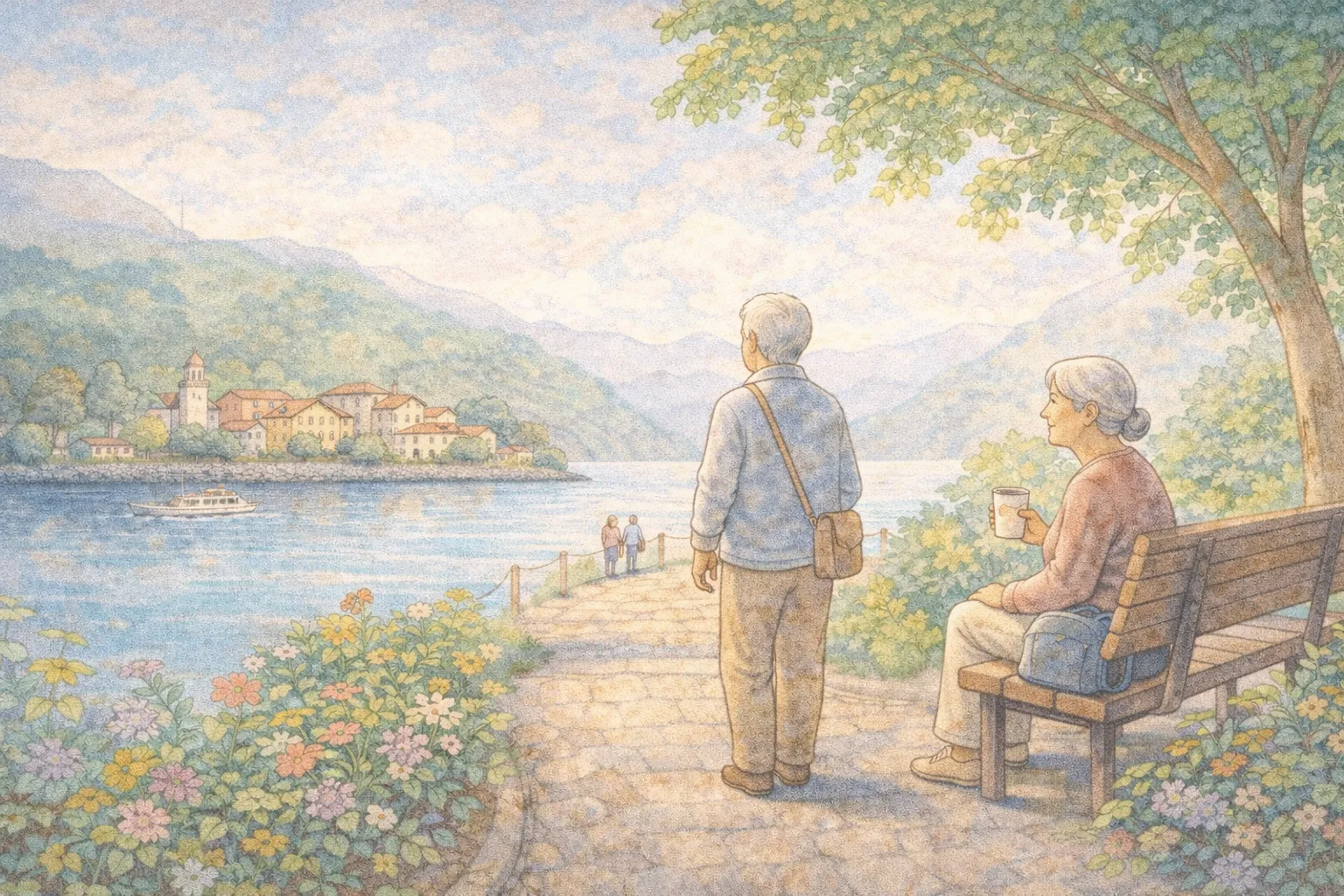
Cindy’s Column × Senior AI Money
“A successful day trip isn’t the one with the most sights. It’s the one where you come home tired-but-happy—not wiped out for three days.”
If you’re 55+ and the idea of a “fun day out” secretly makes you nervous, you’re not alone.
Many older adults tell me:
-
“I love the idea of day trips, but the reality leaves me exhausted.”
-
“The walking, the rushing, the noise—I need three days to recover.”
-
“My family plans like we’re all still 30. I don’t want to be the one slowing everyone down.”
This 2026 guide is for adults 55+ who want:
-
one calm, repeatable structure for day trips
-
less pain, less rushing, and fewer “why did I say yes?” days
-
realistic pacing that respects joints, energy, and bathroom breaks
-
a simple checklist you can glance at every time you plan a trip
No tour-bus schedule. No military timeline.
Just one great day that feels good while it’s happening and the day after.
WHY DAY TRIPS FEEL DIFFERENT AFTER 55
In your 20s or 30s, a “day trip” might have looked like:
-
early-morning departure
-
several sights or neighborhoods
-
lots of walking, stairs, and standing
-
late return with “we can rest tomorrow” plans
After 55—especially with changing joints, stamina, or medications—your body quietly changes the rules:
-
standing in lines costs more
-
stairs and steep ramps matter more
-
hot, cold, or humid weather hits harder
-
recovery time isn’t instant anymore
A rushed day that used to mean “fun adventure” can now mean:
-
pain flare-up
-
poor sleep that night
-
low energy for days afterward
Good news: with one calm structure, day trips can shift from “test of endurance” to “gentle highlight of the month.”
THE 2026 DAY TRIP RULE
One Core Rule: Plan for half the distance, double the buffer.
That means:
-
fewer locations
-
more sitting breaks
-
more margin for bathrooms, meals, and surprises
If an itinerary looks “slightly slow” on paper, it will probably feel just right to your body in real life.
PART 1: START WITH YOUR REAL ENERGY, NOT THE BROCHURE
Before you pick a destination, check in with your body.
Ask yourself:
-
How long can I comfortably be out of the house?
-
4–5 hours?
-
6–8 hours with a real rest in the middle?
-
-
How much continuous walking feels okay?
-
10 minutes at a time?
-
20–30 minutes with breaks?
-
-
What time of day is my best energy window?
-
Morning? Late morning? Early afternoon?
-
Table 1: Energy Snapshot → Day Trip Shape
| Your energy pattern | Better trip structure | Avoid if possible |
|---|---|---|
| “Morning person, fades by late afternoon” | Leave earlier, plan main activity before 2 p.m., gentle end to the day | Late dinners, long drives home in the dark |
| “Slow starter, stronger mid-day” | Leave mid-morning, main activity between 11–3, earlier return | Very early departures |
| “Energy in short bursts” | Short walks with planned sitting and café stops, small area | Huge museums, long city routes without rest |
| “Unpredictable energy, chronic pain” | Flexible plan with clear “opt-out” options and nearby seating | Tight schedules, non-refundable timed tickets packed together |
You’re not being “difficult” by planning around your body.
You’re being realistic—and kind to your future self.
PART 2: CHOOSE ONE MAIN THING (NOT FIVE)
Many exhausting trips happen because we try to “get our money’s worth” by doing too much.
For 2026, try this:
One great day trip = one main activity + one backup option.
Examples of main activities:
-
a small historic town to wander
-
a botanical garden with lots of benches
-
a single museum or exhibition
-
a scenic drive with one or two carefully chosen stops
-
a quiet lakeside or park for picnicking and strolling
Backup options:
-
a café with comfortable seating
-
a shaded park bench area
-
a short indoor activity (small gallery, visitor center, bookstore)
Table 2: Too Much vs Just Right (Day Trip Plans)
| Overloaded plan | Calmer version |
|---|---|
| Two museums + old town + shopping + river cruise | One museum + long café break + optional short stroll in old town |
| Morning hike + city tour + dinner with friends | Short, flat walk + relaxed lunch + optional early evening visit |
| Multiple towns in one day | One town with time to sit, watch, and enjoy |
If you end the day thinking, “I could have done a little more,” that’s a win—not a waste.
PART 3: PLAN THE PACE: SITTING, EATING, BATHROOMS
A day trip is just a series of segments.
The simplest way to keep it gentle is to design those segments ahead of time.
Think in 60–90 minute blocks:
-
60–90 minutes of activity (includes walking, looking, light exploring)
-
then 20–30 minutes of sitting, snacking, or quiet time
Build your day as:
Travel → Activity → Rest → Activity or Return → Quiet evening
Key questions before you go:
-
Where are the bathrooms along the way?
-
Where can you sit comfortably (with back support)?
-
Where can you eat without rushing?
Even one planned, unhurried meal or café stop can keep the whole day from becoming a blur.
PART 4: TRANSPORT CHOICES THAT REDUCE FOGGY FATIGUE
How you get there often matters more than where you go.
Questions to ask while planning:
-
How long is the total travel time (there and back)?
-
Are there many stairs, transfers, or tight connections?
-
Who is driving, and how do they handle longer days?
Simple travel guidelines after 55:
-
For drives longer than 90 minutes, plan at least one stretch stop.
-
For public transport, favor routes with fewer transfers, even if slightly longer.
-
If possible, avoid late-night returns; dusk or dark driving can be tiring and harder on vision.
If friends or family are planning to “squeeze in one more stop,” remember the core rule:
Half the distance, double the buffer.
It’s okay to say:
“I’d love to do one or two things fully, not five things half-tired.”
PART 5: A GENTLE PACKING LIST THAT PREVENTS MELTDOWNS
You don’t need a suitcase, but a well-packed day bag can make or break the day.
Aim for light but complete:
Essentials:
-
small wallet with ID, card, and some cash
-
phone, fully charged + small power bank if you use it a lot
-
any medications needed during the day (plus a small list of what you take)
-
water bottle that’s easy to carry and refill
-
light snack in case meals are delayed
Comfort items:
-
light scarf or layer (AC or evening chill)
-
small pack of tissues, hand wipes, and any personal care items
-
hat or sunglasses for sun
-
small notebook or notepad if you like jotting things down
Safety/health extras:
-
list of emergency contacts
-
simple printed card with health notes (allergies, major conditions)
-
if needed: walking aid, brace, or support device
Everything should fit in:
-
one small backpack, or
-
a crossbody bag that leaves hands free
If your bag makes your shoulder or back ache before you leave the house, it’s too heavy.
PART 6: REAL-LIFE DAY TRIP EXAMPLES (CALM VERSION)
Example 1: “Short town visit, big enjoyment” – Elaine, 72
Before:
Elaine tried to see a whole coastal region in one day. She came home with swollen ankles and needed two days on the couch.
2026 plan:
-
chose one seaside town within a 75-minute drive
-
planned to arrive at 11 a.m. and leave at 4 p.m.
-
mapped one short harbor walk, one café lunch, and one optional small museum
How it felt:
“I saw less, but I remembered more. And I was okay to meet a friend the next day instead of cancelling.”
Example 2: “Museum without meltdown” – Carlos, 68
Before:
He loved museums but always overdid it—three floors, every exhibit, then total exhaustion.
2026 plan:
-
chose a smaller museum and a single special exhibition
-
limited himself to two hours inside with sitting breaks
-
planned a 45-minute café rest after the visit, not “if we have time”
How it felt:
“I walked less, sat more, and enjoyed the art instead of stubbornly checking every room.”
Example 3: “Family day at my speed” – Margaret, 76
Before:
When her adult children visited, they packed the day with activities. She went along, then collapsed afterwards.
2026 plan:
-
discussed the One Great Day Trip Rule with them ahead of time
-
chose one family destination (a park with a café and easy paths)
-
planned an early return and gave herself permission to sit on benches while others explored a bit more
How it felt:
“I was present for the moments that mattered, not pushing through the parts that didn’t.”
PART 7: CALM SCRIPTS FOR SAYING WHAT YOU NEED
Sometimes the hardest part isn’t planning—it’s speaking up.
Here are gentle sentences you can borrow:
When friends or family overfill the schedule:
-
“I’d rather do one or two things fully and enjoy them, instead of rushing from place to place.”
-
“I have more fun when there’s time to sit and talk. Could we build in an extra break or two?”
When you need a rest:
-
“I’m going to sit for a bit and enjoy the view. Please go ahead and I’ll meet you back here.”
-
“My joints are talking to me—mind if we find a bench for a few minutes?”
When you want to leave earlier than others:
-
“This has been lovely. My body is telling me it’s time to head home so I can still feel good tomorrow.”
When someone offers to change the plan:
-
“Thank you—that means a lot. Slow and steady really helps me enjoy the whole day.”
Remember: you’re not spoiling the fun.
You’re protecting your ability to keep showing up for future days.
PRINTABLE CHECKLIST: 2026 One Great Day Trip Plan (Seniors 55+)
You can copy, print, and keep this near your calendar.
Before you choose a destination
-
I checked my energy pattern (best time of day, total hours I can be comfortably out).
-
I chose one main activity for the trip, plus one simple backup option.
Planning the pace
-
I built the day in 60–90 minute blocks with sitting breaks.
-
I identified where we can sit comfortably (benches, cafés, quiet spots).
-
I know where the main bathrooms are at or near the destination.
Travel
-
Total travel time (round trip) feels realistic for my body.
-
If driving, we planned at least one stretch stop on longer routes.
-
We avoided late-night return times if those are hard for me.
Packing
-
I packed a small, light bag I can carry without strain.
-
I included medications needed during the day and a basic health information card.
-
I have water, a small snack, and one extra layer (scarf, sweater, or jacket).
-
My phone is charged, and I have important numbers saved or written down.
During the day
-
I notice when my body needs a pause and take sitting breaks without guilt.
-
I use gentle sentences to ask for a slower pace if needed.
-
I give myself permission to do less and enjoy more.
After the trip
-
I check in with my body the next day: How do I feel?
-
I note what worked and what was too much, so the next trip can be even kinder.
If most of these boxes are ticked, you’ve planned a day that’s about joy, not survival.
DISCLAIMER
This article is for general educational purposes only and does not provide medical, physical therapy, mobility, or travel insurance advice. Energy levels, mobility, health conditions, and safety needs vary widely between individuals. Before changing your activity level, using mobility aids, or planning trips that may affect your health, consult with your healthcare provider or other qualified professionals. Always follow local laws, safety rules, and accessibility guidance when traveling, and review the terms and coverage of any tickets, reservations, or insurance policies.
Read More Post at artanibranding.com