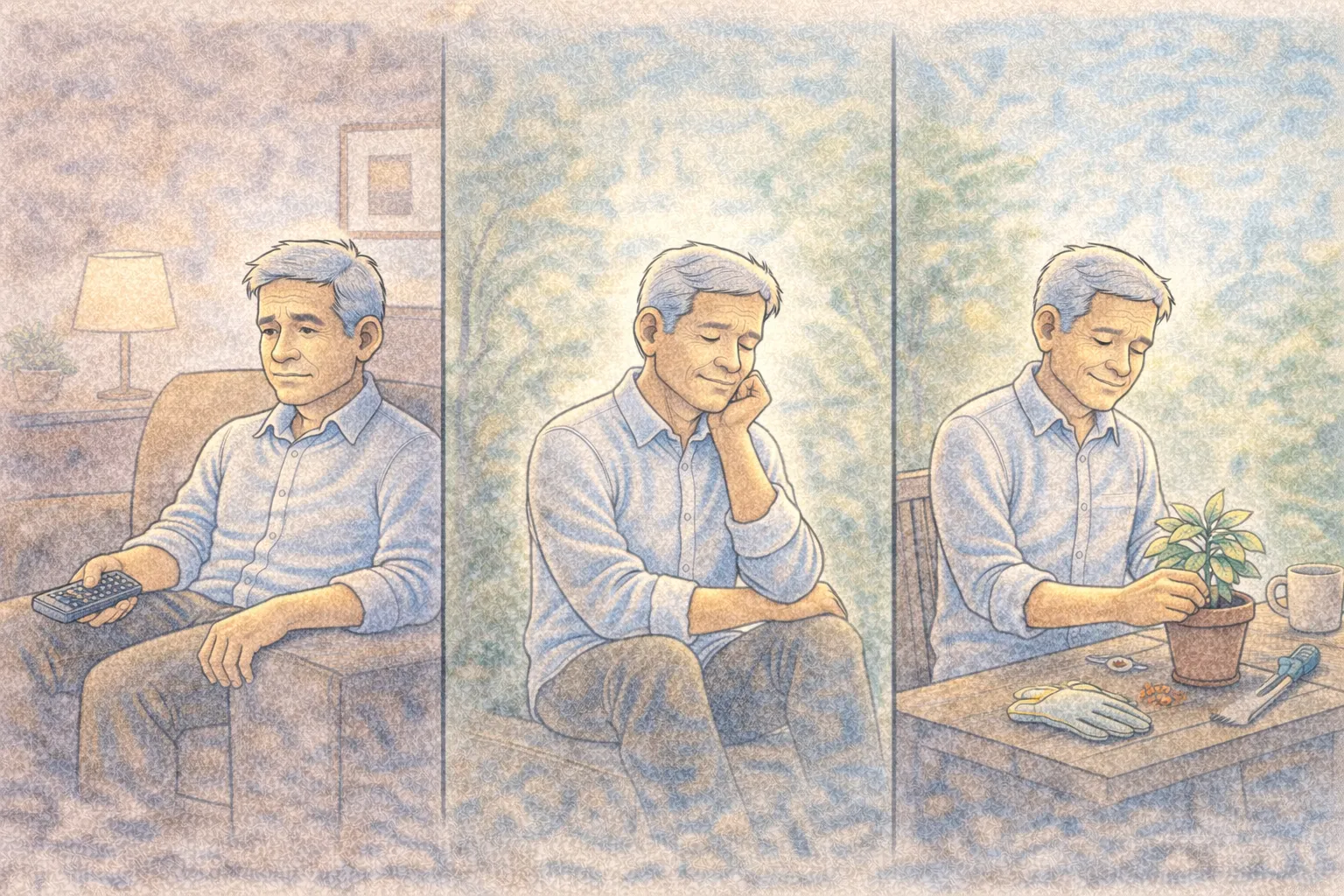
“I thought I’d feel happier by now.”
This thought is more common than people admit.
You’ve done what you were supposed to do.
You’ve worked, built, managed, handled life.
And now…
👉 things are stable
But happiness?
It’s… not quite what you expected.
1. The expectation gap
Most people carry an unspoken belief:
👉 “At some point, I’ll feel happier”
After:
- career progress
- financial stability
- fewer responsibilities
But reality feels different.
2. Nothing is wrong—and that’s the problem
There’s no crisis.
No major issue.
No obvious stress.
And yet:
👉 happiness doesn’t feel strong
This creates confusion.
3. The hidden cause: passive living
This is the quiet reason.
👉 life becomes passive
Not bad.
Not negative.
Just…
👉 less intentional
4. What passive living looks like
- reacting instead of choosing
- filling time instead of using it
- staying comfortable instead of engaged
It feels easy.
But also…
👉 less meaningful
5. Why comfort doesn’t create happiness
Comfort removes stress.
But it doesn’t create:
- excitement
- engagement
- satisfaction
Happiness needs:
👉 participation
6. The “no contrast” problem
Before, life had:
- pressure
- challenges
- urgency
Now:
👉 everything is smoother
But without contrast:
👉 positive feelings feel weaker
7. Why this happens more after 50
Because life becomes:
- more stable
- more predictable
- more comfortable
Which sounds ideal…
But reduces emotional intensity.
8. The biggest misconception
“I should feel happier because things are easier.”
But happiness doesn’t come from ease.
👉 it comes from engagement
9. The simple shift that changes everything
You don’t need more.
You need:
👉 more intentional moments
10. What intentional living looks like
- choosing how you spend your time
- deciding what matters today
- actively engaging in small actions
Not big changes.
Small ones.
11. Real-life examples
Paul, 57:
“I had everything I needed, but nothing felt exciting.”
He started choosing one intentional activity daily.
His mood changed quickly.
Emily, 62:
“I wasn’t unhappy. I was just not engaged.”
That insight made all the difference.
12. Signs this applies to you
- you feel okay, but not truly happy
- your days feel repetitive
- nothing feels particularly exciting
- you feel slightly unfulfilled
- life feels “fine”… but flat
Quick checklist
- did I choose something today?
- did I engage with my day?
- did I do something intentionally?
If yes, happiness increases.
The key insight
You don’t feel less happy because something is missing.
👉 You feel less happy because you’re less engaged.
Conclusion
After 50, life often becomes stable.
But stability alone doesn’t create happiness.
👉 engagement does
You don’t need to change your life.
You just need to:
👉 participate in it more
And when you do—
Happiness doesn’t feel distant anymore.
Disclaimer
This content is for general educational purposes only and does not consider individual psychological conditions. If you experience persistent low mood or emotional distress, consult a qualified professional.