Category: Lifestyle

  • 2026 Paper System for Seniors Who Hate Apps: A Calm, Simple Setup You’ll Actually Use (55+)

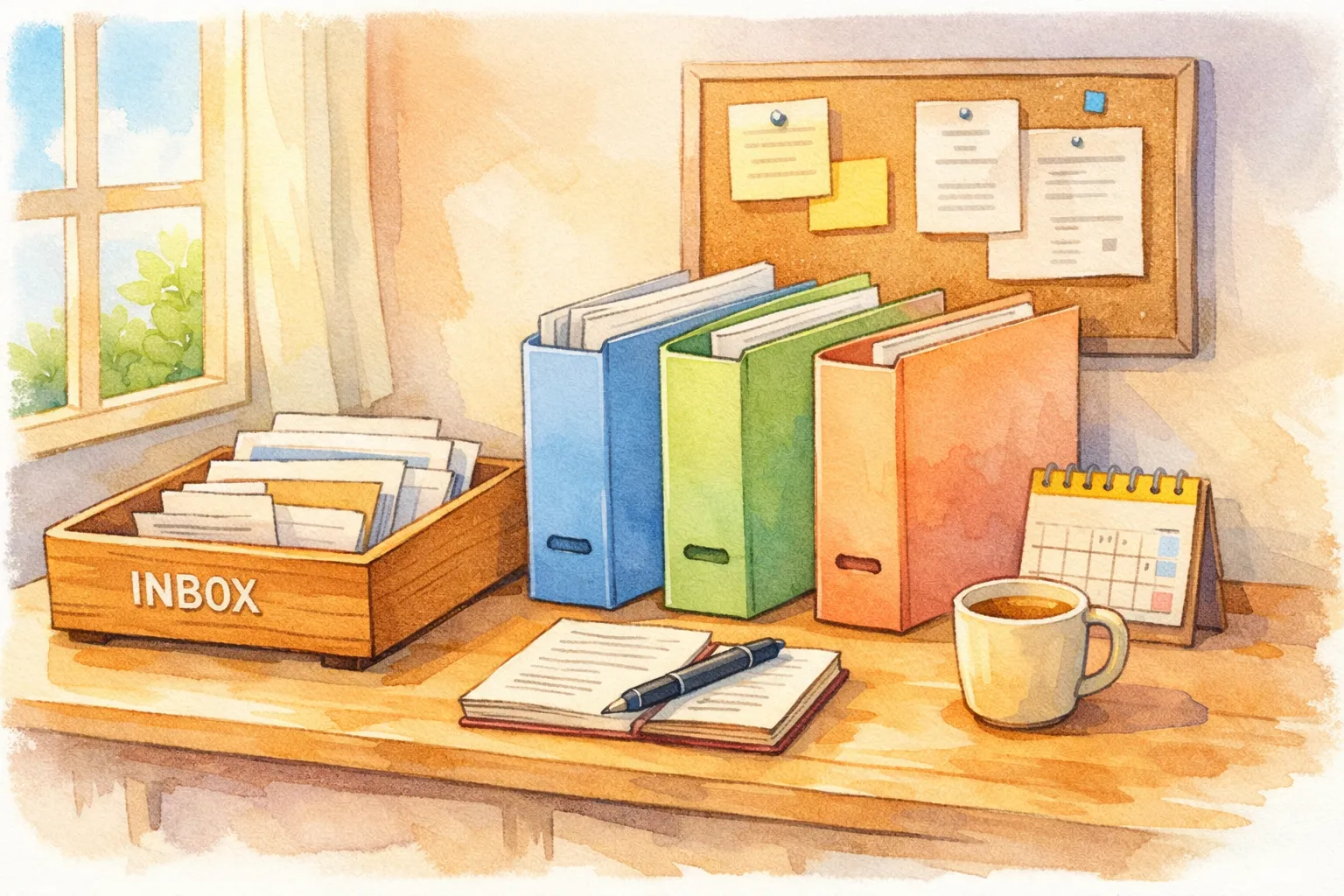
    “Calm paper organization system for seniors who hate apps with an inbox tray and three folders for to-do, file, and shred”
    “A calm paper system isn’t fancy—it’s predictable. One inbox, three folders, and a 10-minute weekly reset.”

    Cindy’s Column × Senior AI Money

    Prepared doesn’t mean complicated. It means steady.

    If you’ve ever tried an app “to get organized” and felt more stressed than before, you’re not alone. Many adults 55+ tell me the same things:

    • “I don’t want more passwords.”

    • “I don’t want notifications.”

    • “I just want to know where my paperwork is.”

    • “I’m tired of searching for things when I need them.”

    This 2026 guide is for seniors who want a paper system that feels calm, practical, and easy to maintain—without turning your home into a filing cabinet.

    This is not about being perfect.
    It’s about building a small system that keeps important things findable—especially when you’re tired, sick, or in a hurry.


    Why a paper system still works (especially after 55)

    Paper has a few quiet advantages:

    • It doesn’t need charging.

    • It doesn’t update or change layouts.

    • It doesn’t lock you out.

    • It works during internet outages.

    • It’s faster than searching through “where did I save that?”

    For many seniors, the real goal isn’t “organization.”
    It’s reducing stress, avoiding missed bills or appointments, and making it easy for your future self.


    The 2026 Paper Rule

    One Core Rule: Paper only does three jobs—Capture, Decide, Store.

    That’s it.

    • Capture: papers enter one place, not many places

    • Decide: you make one small decision about what happens next

    • Store: important papers live in predictable homes

    If a paper system tries to do more than that, it usually collapses under its own weight.


    Part 1: The only supplies you actually need

    You don’t need a printer, label maker, or fancy binders.

    Start with:

    1. One “INBOX” tray or basket (for incoming papers)

    2. Three folders (or three thin file pockets)

    3. One small notebook OR one single page “weekly plan”

    4. A pen you like

    Optional (only if helpful):

    • a zip pouch for medical cards / copies

    • a 12-pocket file organizer (for simple monthly sorting)

    The calm goal is: fewer tools, fewer decisions.


    Part 2: The simple 3-folder method (works in almost any home)

    Name your three folders:

    1. TO DO (things that need action)

    2. TO FILE (things you’re keeping, but not urgent)

    3. TO SHRED / RECYCLE (things leaving your life)

    That’s the whole sorting system.

    Most paper clutter isn’t “hard.”
    It’s just undecided.

    A folder system gives paper a place to land while you stay calm.


    Table 1: The Calm Paper System in One Page (2026)

    Section What goes here When you touch it Time needed
    INBOX tray mail, forms, receipts, notices once a week 10 minutes
    TO DO folder bills, calls, appointments, renewals 1–2 times/week 5–15 minutes
    TO FILE folder statements you keep, medical summaries, home docs once a week 5 minutes
    TO SHRED/RECYCLE junk mail, duplicates, expired papers once a week 3 minutes
    Home File (Archive) truly important long-term papers once a month 10 minutes

    If you can keep the INBOX small, your system stays light.


    Part 3: The “mail moment” that prevents piles

    Many seniors don’t struggle with paperwork because they’re disorganized.
    They struggle because mail arrives daily and life is already full.

    Try one calm rule:

    Mail gets opened near a trash can. Immediately.

    Then do this:

    • Toss obvious junk right away

    • Put “action items” into TO DO

    • Put “keep but not urgent” into TO FILE

    • Put anything uncertain into the INBOX (not the kitchen counter)

    You’re not finishing tasks in this moment.
    You’re simply keeping paper from spreading.


    Part 4: How to file without turning it into a project

    This is where many systems fail: people try to “file perfectly.”

    A calmer approach is a small archive with a few broad categories:

    • Medical

    • Home (lease, repairs, insurance, manuals)

    • Money (tax, banking, retirement, benefits)

    • Identity (ID copies, important records)

    • Car / Travel (if relevant)

    Inside each category, you can keep things in a simple stack.
    Perfect labeling is optional. Calm is the priority.

    If you have to make 20 decisions to file one paper, you won’t file it.
    If you have to make 2 decisions, you probably will.


    Part 5: The “10-minute weekly paper reset” (the part that makes it sustainable)

    A paper system survives when it has a weekly rhythm.

    Pick one day—many people like Friday or Sunday.

    Set a timer for 10 minutes:

    1. Empty your INBOX (not perfectly—just move papers into the three folders)

    2. Pull the TO DO folder and choose the next 1–3 actions

    3. Put everything else back where it belongs

    That’s it.

    You’re not solving your entire life in one sitting.
    You’re keeping your system from overflowing.


    Table 2: Weekly Paper Reset (10 Minutes) — a realistic rhythm

    Minute What you do Why it works
    0–2 Gather papers into INBOX stops the “paper spread”
    2–6 Sort into TO DO / TO FILE / TO SHRED reduces decisions later
    6–9 Choose 1–3 actions only prevents overwhelm
    9–10 Put folders back in place system stays visible and usable

    If you only do the first 6 minutes, you still win.
    Because the pile shrinks.


    Part 6: What goes in “TO DO” (and what doesn’t)

    Your TO DO folder should contain only papers that lead to a clear action.

    Good examples:

    • a bill you need to pay

    • an appointment reminder that needs scheduling

    • a renewal notice

    • a medical form that needs filling out

    • a letter that requires a call

    Not good for TO DO:

    • statements you’re simply keeping

    • catalogs

    • “maybe someday” papers

    If you put “maybe someday” into TO DO, your brain starts avoiding the folder.


    Part 7: A calm system for medical paperwork (the one most seniors care about)

    Medical paperwork causes stress because it can feel high-stakes.

    Try a very simple medical mini-system:

    • One Medical Folder (Active): recent visit summaries, referral notes, current test results

    • One Medication List Page (one sheet, updated when needed)

    • One Insurance/Benefits Folder (cards copies, letters, approvals)

    That’s enough for most people.

    The calm goal is: when a clinic asks a question, you can find the answer within 2 minutes—not 20.


    Part 8: Real senior examples (what “calm paper” looks like)

    Elaine, 69 (lives alone, hates apps)
    Elaine used to keep mail in three places: a kitchen pile, a side table pile, and a “I’ll deal with it later” bag. She switched to one INBOX basket and the 3-folder method.
    After 3 weeks, she told me the biggest change wasn’t organization—it was mood.
    “I don’t feel chased by paper anymore.”
    Her weekly reset took 9 minutes most weeks. She paid two bills on time that month without last-minute stress.

    Dennis, 76 (caregiver stress + paperwork overload)
    Dennis was managing paperwork for himself and occasionally helping a sibling. He didn’t want more systems.
    He used one TO DO folder and a rule: “Only 3 actions per week.”
    His stress dropped because he stopped trying to do everything at once.
    Within 6 weeks, he reduced his “paper panic” episodes from about 3 times a week to about once every two weeks—simply because the pile stopped growing.

    Maria, 66 (medical-heavy year)
    Maria had frequent appointments and was overwhelmed by test results. She created a “Medical Active” folder and kept only the last 90 days there, moving older items to archive monthly.
    She told me the biggest benefit was not having to re-read old paperwork every time she opened the folder.


    Printable Checklist: 2026 Calm Paper System (Seniors 55+)

    Copy/paste or print this checklist:

    • I have one INBOX tray/basket for all incoming paper

    • I have three folders: TO DO / TO FILE / TO SHRED

    • Mail gets opened near a trash can (junk removed immediately)

    • Action papers go into TO DO (not on counters)

    • I chose one weekly “paper reset” day (10 minutes)

    • During the reset, I pick only 1–3 actions to do next

    • Important categories have simple homes (Medical / Home / Money / Identity)

    • I keep a one-page medication list updated when needed

    • I do a monthly 10-minute archive tidy (optional, but helpful)

    Small note: A calm paper system is one you can repeat even on tired weeks.


    Common sticking points (and gentle solutions)

    “I don’t know what to keep.”
    If it feels unclear, place it in TO FILE temporarily. Decide later during your weekly reset.

    “I’m behind. I have piles.”
    Start with today forward. Then do one small “catch-up scoop” per week (only 10 minutes). The pile didn’t form in one day; it doesn’t need to disappear in one day.

    “I feel guilty throwing things out.”
    You’re not throwing out “responsibility.” You’re removing noise. Keep what supports your life now.


    Disclaimer (important)

    This article is for general educational purposes only and does not provide medical, financial, legal, or professional organizing advice. Individual health conditions, cognitive needs, mobility levels, and household situations vary. For personalized guidance, consider speaking with qualified professionals.


    Read More Post at artanibranding.com 

    Facing Fears by Ho Chang

  • 2026 Retirement “Calm Month” Plan (55+): A Simple Routine to Lower Bills, Reduce Stress, and Make Life Feel Lighter

    Two-panel pastel cartoon illustration showing a calm month plan for seniors in 2026, contrasting a cluttered, stressful month with a simplified, organized routine that reduces bills and daily stress.
    A 2026 Calm Month Plan for seniors: fewer surprises, simpler routines, and a month that feels lighter and more manageable.

    Cindy’s Column × Senior AI Money
    Calm systems for real life after 55.

    Some months feel like they swallow you.

    Bills come in waves.
    Appointments stack up.
    One “small” problem turns into five phone calls.
    And even if nothing terrible happens, you still feel… behind.

    A lot of seniors assume this is just how life is now.

    But often, it’s not age—it’s the lack of a calm monthly rhythm.

    This 2026 guide is for adults 55+ who want to:

    • lower day-to-day stress without becoming “disciplined”

    • reduce recurring costs without living in deprivation

    • avoid surprise bills and late fees

    • protect energy and independence

    • feel like life has more space in it

    This is a Calm Month Plan: a simple, repeatable routine you can run every month—paper-first, app-optional, and gentle.


    Why a “calm month” matters more than a “perfect budget”

    Many retirement money systems fail because they require:

    • tracking every purchase

    • constant attention

    • ongoing decisions

    • complicated categories

    That’s exhausting. And exhaustion creates expensive mistakes.

    A calm month approach does something different:

    • it reduces friction

    • it prevents surprises

    • it builds trust with yourself

    • it makes money feel less like a threat

    You’re not trying to control every dollar.
    You’re trying to stop money from stealing your peace.


    The 2026 Calm Month Principle

    Stability first. Optimization later.

    When your month is stable, everything gets easier:

    • decisions

    • health follow-through

    • relationships

    • spending

    • sleep


    Part 1: What causes a “messy month” after 55?

    Most messy months come from a few predictable patterns:

    Pattern A: Bills are scattered

    Different due dates. Different logins. Different payment methods.

    Pattern B: Small renewals pile up

    Subscriptions, insurance changes, price creep.

    Pattern C: Fatigue drives spending

    Takeout because cooking feels hard. Delivery because errands feel heavy.

    Pattern D: Too many commitments

    Appointments + errands + family needs = no recovery time.

    A calm month reduces these patterns with simple structure.


    Part 2: The 5-Part Calm Month Routine (done in short blocks)

    You’ll do five things during the month—each one is small.

    1. Calm Week 1: Money orientation

    2. Calm Week 2: Bills & renewals

    3. Calm Week 3: Home & health stability

    4. Calm Week 4: Joy planning (yes, intentionally)

    5. A 10-minute “month close”

    This is not a bootcamp.
    It’s maintenance that protects your life.


    Table 1: Calm Month Overview (copy/paste friendly)

    Week Focus Time Needed Outcome
    Week 1 Orientation 15–25 min You know where you stand
    Week 2 Bills & renewals 20–40 min Fewer surprises & leaks
    Week 3 Stability 20–45 min Less friction at home/health
    Week 4 Joy planning 15–30 min Less deprivation & impulse spending
    Month close Reset 10 min A clean start next month

    Part 3: Week 1 — Money orientation (no spreadsheet)

    This is the “am I okay?” check.

    Do these 3 steps

    1. Look at your main account balance

    2. List income sources coming this month

    3. Write top 5 essentials you must cover (housing, utilities, food, meds, transport)

    That’s enough to reduce background anxiety.

    The one sentence that matters:

    “My essentials are covered, or I need an adjustment plan.”

    If you need an adjustment plan, you still won—because you know early.


    Part 4: Week 2 — Bills & renewals (where most calm comes from)

    This week prevents late fees and silent leaks.

    Step A: Make a “Bills Page” (one page only)

    • bill name

    • due window

    • how it’s paid (autopay/manual)

    • where you access it (paper statement / portal / phone)

    Step B: Find one leak and fix it

    Leaks are usually:

    • unused subscriptions

    • insurance creep

    • duplicate charges

    • “convenience fees”

    • forgotten memberships

    Fix one leak per month and you’ll feel real progress.


    Table 2: Common Retirement Leaks (and gentle fixes)

    Leak How it shows up Gentle fix
    Subscription creep “I don’t remember this charge” Cancel 1 per month
    Delivery fatigue Fees + tips add up Keep 2 backup meals at home
    Insurance creep Premium increased quietly Review annually; ask about options
    Bank fees Overdraft/late fees Alerts + calendar reminders
    Duplicate services Multiple protection plans Keep one, remove extras

    The goal is not “cut everything.”
    The goal is “remove what doesn’t help.”


    Part 5: Week 3 — Stability (home + health + energy)

    You can’t have a calm month if daily life is full of friction.

    Pick one stability project:

    • clear one surface that creates stress (counter, bedside, entryway)

    • refill or organize medications for the week

    • schedule one important appointment

    • improve one safety point (lighting, cords, tripping hazards)

    Small stability wins reduce fatigue spending and help you follow through.

    Simple rule:

    Fix what makes you sigh every day.

    That sigh is your data.


    Part 6: Week 4 — Joy planning (this prevents impulse spending)

    Here’s the truth:
    Many overspending patterns happen because people feel deprived.

    So we plan joy on purpose.

    Choose 2 “low-cost joys” for the next month

    Examples:

    • one coffee outing

    • one library trip

    • one small hobby purchase (capped amount)

    • one visit with a friend

    • one scenic walk

    • one matinee movie

    Planned joy reduces:

    • impulse shopping

    • emotional spending

    • “I deserve it” splurges that lead to regret


    Table 3: Joy Planning Menu (low-cost, senior-friendly)

    Joy Type Example Cost Range
    Social coffee with a friend $5–$15
    Outdoors park walk + bench time $0
    Comfort cozy meal at home $5–$12
    Curiosity library + new book $0
    Creativity small craft project $5–$25
    Calm guided breathing / music $0–$5

    Joy doesn’t need to be expensive to be real.


    Part 7: The 10-minute “Month Close” (the magic step)

    At the end of the month, do this:

    1. Look at your balance and notice: surprising or expected?

    2. Write down one thing that worked

    3. Write down one friction point you want to reduce next month

    4. Choose one leak to fix next month

    5. Choose one joy you want to plan

    That’s it.

    This creates a calm loop:

    • awareness → small action → relief → repeat


    Table 4: Month Close Prompt (paste into a notes app)

    Prompt Your answer
    One thing that worked
    One thing that drained me
    One leak to fix next month
    One stability project
    Two planned joys

    Part 8: If you’re overwhelmed, start with the “minimum calm month”

    If your energy is low, do only these:

    • Week 1: essentials list

    • Week 2: one leak fix

    • Week 4: one planned joy

    • Month close: one sentence (“This month felt ____ because ____.”)

    Even the minimum version helps.


    Real-life examples (quiet wins)

    Diane, 67
    Did one leak fix: canceled a forgotten subscription at $12.99/month.
    But her biggest win was emotional:

    “I stopped feeling like money was sneaking up on me.”

    Ron, 74
    Chose one stability project: cleared the entryway and added a place for keys.

    “I didn’t realize how much that daily searching drained me.”

    Helen, 70
    Planned joy: two low-cost outings per month.

    “When joy was planned, I stopped ‘treating myself’ out of stress.”

    No miracles—just less friction.


    Printable checklist: 2026 Calm Month Plan

    • Week 1: “Am I okay?” essentials orientation

    • Week 2: Bills page + fix one leak

    • Week 3: One stability project

    • Week 4: Plan 2 low-cost joys

    • Month close: 10-minute reset


    Disclaimer

    This article is for general educational purposes only and does not provide financial, legal, tax, or investment advice. Individual circumstances vary. For guidance tailored to your situation—especially regarding debts, benefits, or retirement withdrawals—consult a qualified professional.


    Read More Post at artanibranding.com

    Facing Fears by Ho Chang


  • 2026 Simple Weekly Routine for Seniors (55+): A Calm Structure That Keeps Life from Feeling Overwhelming

    Watercolor-style illustration showing a calm weekly routine for seniors in 2026, with a simple planner, gentle daily activities, and balanced rest and errands creating a sense of structure without pressure.
    A simple weekly routine for seniors in 2026: gentle structure that keeps life organized without feeling rushed or overwhelming.

    Cindy’s Column × Senior AI Money
    When life feels steadier, everything else becomes easier.

    Many seniors don’t feel overwhelmed because life is dramatic.
    They feel overwhelmed because nothing has a clear rhythm anymore.

    Days blend together.
    Errands pop up randomly.
    Appointments interrupt rest.
    Tasks float around in your head instead of landing somewhere solid.

    This 2026 guide is for adults 55+ who want to:

    • stop feeling scattered during the week

    • reduce mental load without rigid schedules

    • keep up with life tasks without constant reminders

    • protect energy and mood

    • feel a sense of “I’m on top of things” again

    This is not a productivity system.
    It’s a gentle weekly structure that supports real life.


    Why weekly routines matter more after 55

    After midlife:

    • recovery time matters more

    • memory load feels heavier

    • too many open tasks increase anxiety

    • irregular days drain energy

    • motivation drops when nothing feels anchored

    A weekly routine doesn’t restrict freedom.
    It creates a soft container that makes freedom easier.


    The 2026 Weekly Routine Rule

    Anchor your week with just a few predictable moments. Leave the rest open.

    You don’t need full schedules—just reliable touchpoints.


    Part 1: What a weekly routine is (and is not)

    A weekly routine IS:

    • light structure

    • predictable check-ins

    • flexible timing

    • easy to restart if you miss a day

    A weekly routine is NOT:

    • hourly schedules

    • strict productivity plans

    • digital task managers

    • “discipline” systems

    If it feels tight or guilt-producing, it’s too much.


    Part 2: The 5 anchors that calm most weeks

    Most seniors do best with five simple anchors.

    Anchor 1: One planning moment

    • 10–15 minutes

    • glance at the week ahead

    • note appointments and one priority

    Anchor 2: One errand day

    • group outside tasks

    • avoid scattering errands across the week

    Anchor 3: One home-care moment

    • light cleaning

    • organizing

    • catching up on papers

    Anchor 4: One social or connection moment

    • phone call

    • coffee

    • short visit

    • online group

    Anchor 5: One rest-first day

    • no major plans

    • recovery-focused

    These anchors replace chaos with rhythm.


    Table 1: Example Weekly Anchors

    Anchor Purpose Time Needed
    Planning Orientation 15 min
    Errands Efficiency 1–2 hrs
    Home care Stability 30–60 min
    Connection Emotional health Flexible
    Rest day Recovery All day

    You can shift days—anchors stay.


    Part 3: What to do on “in-between” days

    Not every day needs a theme.

    On in-between days:

    • keep plans light

    • leave space for rest

    • allow flexibility

    • do optional tasks only

    This prevents overloading.


    Part 4: The “one focus per day” guideline

    Multitasking drains seniors faster than it used to.

    Try this:

    One main focus per day. Everything else is optional.

    Examples:

    • appointment day

    • paperwork day

    • social day

    • rest-focused day

    This reduces decision fatigue.


    Table 2: Focused Day vs Scattered Day

    Type How it feels Outcome
    Focused Calm, steady Energy remains
    Scattered Rushed, foggy Exhaustion

    The difference is structure, not effort.


    Part 5: Weekly routines without apps or reminders

    You don’t need technology.

    Simple tools:

    • wall calendar

    • notebook page per week

    • index card with anchors

    • printed checklist

    The calmer the tool, the better the routine sticks.


    Part 6: When routines break (and they will)

    Life happens.

    When your routine breaks:

    • don’t “catch up”

    • don’t restart everything

    • return to one anchor only

    One anchor brings the week back.


    Part 7: Weekly routines for low-energy weeks

    On harder weeks:

    • keep planning anchor

    • keep rest day

    • let others go

    Minimum structure is still structure.


    Real-life examples

    Elaine, 71
    Chose Tuesday as errand day.

    “My brain stopped juggling all week.”

    Tom, 76
    Added one rest-first day.

    “I stopped feeling behind.”

    Marsha, 68
    Did weekly planning on Sundays.

    “The week felt friendlier.”


    Printable checklist: Simple Weekly Routine (2026)

    • One weekly planning moment

    • One errand day

    • One home-care session

    • One connection moment

    • One rest-first day

    • One main focus per day


    Disclaimer

    This article is for general educational purposes only and does not provide medical, psychological, or financial advice. Individual abilities, schedules, and health conditions vary. Adjust routines at a pace that feels safe and supportive for you.


    Read More Post at artanibranding.com 

    Facing Fears by Ho Chang


  • 2026 Low-Stress Grocery Shopping for Seniors (55+): Save Money, Avoid Impulse Buys, and Come Home With Energy

    Cindy’s Column × Senior AI Money
    Simple routines that protect your budget, your body, and your peace.

    Grocery shopping should be simple.
    But after 55, many people tell me it feels like a full-body project:

    • the store is louder than it used to be

    • prices feel unpredictable

    • carrying bags hurts more

    • you buy “extras” when you’re tired

    • you come home drained—and still don’t know what to cook

    This 2026 guide is for adults 55+ who want to:

    • spend less without feeling deprived

    • stop impulse buys that happen from fatigue

    • reduce food waste

    • shop with less walking, less stress, and fewer trips

    • come home with energy left for the rest of your day

    No apps required. No complicated meal planning.
    Just a calmer system that works in real life.


    Why grocery shopping gets harder after 55

    It’s not just “getting older.” It’s friction:

    • Decision fatigue: thousands of small choices in one building

    • Sensory overload: bright lights, noise, crowds, music

    • Physical load: pushing a cart, reaching, lifting, carrying

    • Price stress: inflation and shrinkflation make planning feel useless

    • Energy timing: shopping at the wrong time of day costs more (in money and stamina)

    The goal is not to become a “better shopper.”
    The goal is to shop in a way that respects your energy.


    The 2026 Grocery Rule

    Shop with a plan that is shorter than your willpower.

    If your plan requires heroic discipline, it won’t last.
    We’re building something easy.


    Part 1: The two lists that change everything

    Most people use one list.
    In 2026, use two:

    1) The “Always List” (your core foods)

    These are the items you buy regularly and actually use.

    Examples:

    • eggs, yogurt, oatmeal

    • frozen vegetables

    • fruit (one or two kinds)

    • chicken or fish

    • rice, potatoes, or pasta

    • soup/broth

    • bread or tortillas

    2) The “This Week List” (only what’s needed right now)

    This list is short—10–18 items for most seniors living alone or as a couple.

    Why it works:

    • less wandering

    • fewer impulse buys

    • less waste

    • fewer “what should I cook?” moments later


    Table 1: Always List vs This Week List

    List Type Purpose Length When to Update
    Always List Stability + basics 15–25 items Every 2–3 months
    This Week List Specific needs 10–18 items Weekly

    If you don’t know what to write, start with the “Always List.”
    That’s the foundation.


    Part 2: The “one protein, two vegetables” shopping method

    Overbuying happens when you try to buy for many different meals.

    Instead, buy for simple combinations:

    • One main protein (chicken, fish, beans, turkey, etc.)

    • Two vegetables (fresh or frozen)

    • One flexible carb (rice, potatoes, pasta, bread)

    • Two easy breakfasts (oatmeal + yogurt, eggs + toast, etc.)

    • One comfort backup (soup, frozen meal, rotisserie chicken)

    This creates 6–10 easy meals with very little thinking.


    Table 2: Low-Stress Cart Blueprint (example)

    Category Pick Why
    Protein Chicken OR salmon One decision, many meals
    Vegetables Frozen mixed veg + salad kit Low prep, low waste
    Carb Rice OR potatoes Flexible base
    Breakfast Oatmeal + yogurt Easy, repeatable
    Backup Soup + bread “Too tired to cook” solution

    The backup item is not laziness.
    It’s protection against fatigue spending.


    Part 3: The “shop when you’re strongest” timing trick

    Many seniors shop when they’re available (late afternoon).
    But energy is often better earlier.

    If possible, try:

    • mid-morning on weekdays

    • right after a light snack

    • not after a medical appointment

    • not when you’re hungry or rushed

    Hunger + fatigue = the most expensive shopper on earth.


    Part 4: A simple store strategy that reduces walking

    Use this order (most stores are similar):

    1. Produce

    2. Protein

    3. Dairy

    4. Pantry

    5. Frozen

    6. Checkout

    Why it helps:

    • fewer loops

    • fewer “just browsing” moments

    • less time in the most tempting aisles

    If walking is hard, don’t be proud—be smart:

    • park near cart returns

    • use a smaller cart if it helps you move

    • ask for carry-out assistance if offered

    • choose fewer trips with a tighter list


    Part 5: The impulse-buy shield (works even when you’re tired)

    Impulse buys are usually emotional or sensory:

    • bright endcaps

    • “limited time” signs

    • hunger

    • exhaustion

    • “I deserve it” thinking

    Use a calm shield:

    The 30-second pause rule

    When you want something not on the list:

    1. Put it in the cart

    2. Keep shopping

    3. Decide at the end if it still matters

    Most “wants” fade by checkout.


    Table 3: Common impulse triggers and gentle fixes

    Trigger What it feels like Gentle fix
    Hungry “Everything looks good” Snack before shopping
    Tired “I need a treat” Keep a planned small treat at home
    Overwhelmed “I’ll buy random stuff” Short list + store order
    Lonely “Food will comfort me” Plan one small joy outing instead

    This is not about shame.
    It’s about noticing the pattern.


    Part 6: The “home landing” routine (prevents waste)

    Most food waste happens after the store:

    • groceries get shoved into random places

    • produce disappears behind containers

    • you forget what you bought

    Try this 5-minute landing routine:

    1. Put protein where you’ll see it

    2. Put produce in the front (not buried)

    3. Put backup meal in a visible spot

    4. Write 3 quick meal ideas on a sticky note:

      • “Chicken + veg + rice”

      • “Soup + toast”

      • “Eggs + salad”

    That sticky note saves money.


    Part 7: If you live alone, shop even simpler

    Shopping for one is where waste can get expensive.

    Best practices for one-person homes:

    • frozen vegetables over big fresh bundles

    • half-loaves or freeze bread slices

    • two fruits max per week

    • one “fresh treat” item (berries, bakery, etc.)—not five

    You can still eat well.
    You just don’t need variety in every aisle.


    Part 8: The “minimum grocery trip” for low-energy weeks

    Some weeks, you just need food—fast.

    Minimum list (example):

    • eggs

    • yogurt

    • oatmeal

    • frozen vegetables

    • protein (rotisserie chicken or frozen fish)

    • soup

    • fruit

    • bread

    That’s enough to get through a week without spending extra.


    Printable checklist: 2026 Low-Stress Grocery Routine

    • Always List (core foods)

    • This Week List (10–18 items)

    • One protein + two vegetables method

    • Shop when you’re strongest

    • Store order to reduce walking

    • 30-second pause rule for impulses

    • 5-minute home landing routine


    Disclaimer

    This article is for general educational purposes only and does not provide medical, nutritional, or financial advice. Individual health conditions, dietary needs, and budgets vary. Consult qualified professionals for guidance tailored to your situation.


    Read More Post at artanibranding.com 

    Facing Fears by Ho Chang


  • 2026 Simple Meal Planning for Seniors Living Alone (55+): Eat Well, Spend Less, and Waste Almost Nothing

    Pastel cartoon illustration showing simple meal planning for seniors living alone in 2026, with a calm kitchen table, small portions, and easy-to-prepare foods arranged neatly to reduce waste and effort.
    Simple meal planning for seniors living alone in 2026: eating well, spending less, and wasting almost nothing without daily cooking pressure.

    Cindy’s Column × Senior AI Money
    Calm, practical living after 55—without pressure.

    Living alone has its freedoms.
    It also creates quiet challenges—especially around food.

    Many seniors living alone say things like:

    • “Cooking feels like too much effort for just me.”

    • “I buy food with good intentions and throw half of it away.”

    • “Eating out is easier, but it’s getting expensive.”

    • “I don’t want to live on frozen dinners.”

    This 2026 guide is for adults 55+ who live alone and want to:

    • eat simply without boredom

    • reduce grocery costs

    • waste far less food

    • avoid daily cooking pressure

    • feel nourished without overthinking meals

    This is simple meal planning, not dieting, not batch-cooking marathons, and not perfection.


    Why meal planning feels harder when you live alone

    When you cook for one:

    • portions don’t match package sizes

    • motivation drops

    • leftovers feel repetitive

    • food spoils faster

    • decision fatigue hits every day

    So many seniors don’t struggle with cooking.
    They struggle with planning and pacing.

    The goal in 2026 is not “three perfect meals a day.”
    It’s steady nourishment with minimal effort.


    The 2026 Meal Planning Rule

    Cook once. Eat twice (or three times). Stop there.

    If a plan creates dread, it won’t last.


    Part 1: The “core foods” approach (simpler than meal plans)

    Instead of planning meals, plan core foods.

    Core foods are:

    • flexible

    • easy to combine

    • familiar

    • used across multiple meals

    Examples of core foods

    • eggs

    • yogurt

    • oatmeal

    • chicken or fish

    • rice or potatoes

    • frozen vegetables

    • soup or broth

    • fruit

    With 8–10 core foods, dozens of meals appear naturally.


    Table 1: Core Foods vs Traditional Meal Planning

    Traditional Planning Core Foods
    Fixed recipes Mix-and-match
    Specific days Flexible timing
    High pressure Low effort
    More waste Less waste

    You’re building options, not commitments.


    Part 2: The “two-meal + one flexible” day

    Many seniors don’t need three full meals.

    A gentle structure:

    • One main cooked meal

    • One easy repeat meal

    • One flexible option (snack, soup, leftovers)

    Example day

    • Breakfast: oatmeal or yogurt

    • Main meal: chicken + vegetables

    • Evening: soup, toast, or leftovers

    This reduces decisions and costs.


    Part 3: Grocery shopping for one (without waste)

    The biggest money loss comes from:

    • buying variety instead of volume

    • buying aspirational food

    • buying like you’re cooking for two

    Smarter shopping rules

    • Buy fewer items, slightly better quality

    • Choose frozen when possible

    • Avoid “family size” unless it freezes well

    • Shop weekly, not biweekly


    Table 2: Waste-Reducing Grocery Choices

    Item Better Choice Why
    Fresh vegetables Frozen vegetables Use only what you need
    Big bread loaf Half loaf or freeze slices Less mold
    Multiple proteins One main protein Easier planning
    Bulk snacks Small packages Fewer leftovers

    Food waste is invisible spending.


    Part 4: Leftovers without boredom

    Leftovers fail when they look the same.

    Simple ways to change leftovers

    • add soup or broth

    • change seasoning

    • turn into sandwiches or wraps

    • combine with eggs or rice

    You’re not “eating leftovers.”
    You’re creating the next meal.


    Part 5: The “cook once” rhythm that actually works

    Many seniors do best with:

    • 2 cooking days per week

    • simple recipes

    • repeating favorites

    Example rhythm:

    • Sunday: cook main protein

    • Wednesday: cook second simple dish

    Everything else assembles itself.


    Part 6: Eating well without daily cooking

    No one should cook every day.

    Zero-cook meal ideas

    • yogurt + fruit + nuts

    • soup + toast

    • eggs and toast

    • rotisserie chicken + salad

    • oatmeal with additions

    Convenience is not failure—it’s strategy.


    Table 3: Low-Effort Meals for One

    Meal Effort Cost
    Yogurt bowl Very low Low
    Soup + bread Low Low
    Eggs & toast Low Low
    Chicken salad Medium Medium
    Frozen meal + veg Low Medium

    Part 7: Eating alone without loneliness

    Food is emotional.

    Some seniors skip meals because:

    • eating alone feels sad

    • meals feel pointless

    Gentle fixes:

    • eat near a window

    • use a nice plate

    • add music or radio

    • eat one meal out weekly

    • share meals occasionally with friends

    Eating alone doesn’t mean eating joylessly.


    Real stories (quiet improvements)

    Janet, 72
    Stopped buying for a full week.

    “I finally stopped throwing food away.”

    Michael, 68
    Chose 8 core foods.

    “Meals stopped feeling like work.”

    Rose, 79
    Added soup nights.

    “It felt comforting, not lazy.”


    Printable checklist: Simple Meal Planning for One (2026)

    • Choose 8–10 core foods

    • One main cooked meal per day

    • Two cooking days per week

    • Frozen foods for flexibility

    • Simple repeat breakfasts

    • Zero-cook backup meals


    Disclaimer

    This article is for general educational purposes only and does not provide medical, nutritional, or dietary advice. Individual health conditions, medications, and nutritional needs vary. Consult a qualified healthcare professional or registered dietitian for personalized guidance.


    Read More Post at artanibranding.com

    Facing Fears by Ho Chang


  • 2026 6-Line Retirement Budget: A No-Spreadsheet Method That Feels Calm (Even With Rising Costs)

    Pastel cartoon panorama showing a 2026 six-line retirement budget: simple categories, leak checks, and two calm money days per month.
    A 2026 no-spreadsheet retirement budget: six lines, two money days, and a calm cushion that reduces worry.

    Cindy’s Column × Senior AI Money
    Practical, senior-friendly guides for a calmer, safer life.

    If you’re 55+ and tired of budgeting advice that feels like homework, this is for you.

    A lot of “retirement budgeting” content assumes you want to track every coffee, every receipt, every category, every month—forever. But many older adults don’t need a perfect spreadsheet. They need something simpler:

    • “Am I okay?”

    • “Can I pay my essentials without dread?”

    • “Do I have a cushion for surprises?”

    • “Where is my money quietly leaking?”

    • “How do I feel less anxious about the month?”

    This 2026 method uses six lines—not fifty. It’s designed to be done with paper, a notes app, or a single page you keep in your bills folder.

    It’s not about control. It’s about peace.


    Why this works better than complicated budgets (especially after 55)

    Most money stress in retirement isn’t caused by lack of intelligence. It’s caused by:

    • too many moving parts (bills, renewals, medical costs, gifts, travel)

    • unpredictable expenses (utilities, car repairs, copays)

    • emotional pressure (helping family, fear of “running out”)

    • decision fatigue (making 30 tiny spending decisions every day)

    A six-line budget reduces stress by giving you one clear answer each month:

    “Do I have enough for essentials, and am I protecting future me?”

    You don’t need perfect tracking. You need a reliable rhythm.


    The 2026 “6-Line Budget” (the whole system)

    You’re going to write six lines. That’s it.

    Line 1: Monthly income (after taxes)

    Examples: Social Security, pension, annuity payout, part-time work, regular withdrawals you choose.

    Line 2: Fixed essentials (mostly predictable)

    Rent/mortgage, HOA, insurance premiums, basic phone/internet, minimum debt payments (if any).

    Line 3: Flexible essentials (changes month to month)

    Groceries, utilities, gas/transportation, household basics.

    Line 4: Health & care

    Medications, copays, dental/vision, therapy, home help, mobility aids—anything health-related.

    Line 5: Joy & life

    Gifts, hobbies, dining out, travel saving, memberships, entertainment—what makes life feel worth living.

    Line 6: Cushion & future

    Emergency cushion, sinking funds (car repairs, home repairs), extra savings, or planned retirement withdrawals.

    Your goal is not to squeeze joy out of life. Your goal is to keep joy sustainable.


    Table 1: The 6-Line Budget Template (copy this)

    Line Category Your Monthly Number Notes
    1 Income (after taxes) Social Security + pension + withdrawals
    2 Fixed essentials housing, insurance, phone, internet
    3 Flexible essentials groceries, utilities, transport
    4 Health & care meds, copays, dental, support
    5 Joy & life eating out, gifts, hobbies, travel
    6 Cushion & future emergency/sinking funds, savings

    The only math you need:

    Income (Line 1) – (Lines 2+3+4+5+6) = “Monthly breathing room”

    Breathing room can be positive, zero, or negative.
    None of those makes you a good or bad person. It just gives you truth.


    Step 1: Decide your “calm number” first (this is the secret)

    Before you start adjusting spending, you choose one number:

    Your Calm Number = the cash cushion you want in your account after bills clear.

    Examples:

    • $500

    • $1,000

    • one month of essentials

    • “enough so I don’t panic”

    This number is personal. If you’re on a tight income, even $300 can still be meaningful.

    The calm number helps you stop the daily worry cycle:

    • If your balance is above your calm number → you’re okay

    • If it’s below → you slow down spending and review

    It turns money into a simple signal, not a constant fear.


    Step 2: Fill out the six lines (without overthinking)

    You don’t need exact precision. You need useful accuracy.

    How to estimate each line quickly

    Line 1 (Income):
    Look at one month of deposits, or use your benefit statements and known payouts.

    Line 2 (Fixed essentials):
    These are mostly predictable. List them once and you’re done.

    Line 3 (Flexible essentials):
    Look at the last 2–3 months and average it.

    Line 4 (Health & care):
    If this varies, use your “usual month” number and keep a small buffer.

    Line 5 (Joy & life):
    This is where many seniors either overspend out of pressure or underspend out of fear. We’ll handle this kindly.

    Line 6 (Cushion & future):
    This isn’t “extra” if it keeps your life stable. This is your safety and your future.


    Step 3: Use the 2026 “Guardrail Percentages” (optional, not strict)

    Some people like guardrails. If you do, use these gentle targets:

    • Fixed essentials: often 35–55% of income

    • Flexible essentials + health: often 25–45% of income

    • Joy & life: often 5–15% of income

    • Cushion & future: often 5–20% of income

    These ranges are not rules. They’re just a way to notice pressure points.

    If fixed essentials take too much, you don’t need shame. You need strategy.


    Table 2: A Realistic Example (Single Retiree)

    Here’s a realistic example for a retiree living on $2,850/month after taxes.

    Line Category Monthly Number
    1 Income $2,850
    2 Fixed essentials $1,350
    3 Flexible essentials $550
    4 Health & care $280
    5 Joy & life $220
    6 Cushion & future $250
    Total spending $2,650
    Breathing room $200

    This person isn’t “rich,” but the system gives them clarity:

    • If groceries jump, they know where it comes from (joy, cushion, or temporary buffer)

    • If health costs rise, they can adjust intentionally

    • If they want to travel later, they can increase Line 5 or 6 with a plan


    Step 4: Turn “surprises” into sinking funds (so they stop feeling like emergencies)

    A sinking fund is money you set aside for predictable-but-not-monthly costs.

    Common sinking funds for 55+:

    • car repairs/maintenance

    • home repairs

    • annual insurance premiums (if not monthly)

    • travel/visits

    • gifts/holidays

    • dental work

    • glasses/hearing needs

    • pet care

    You don’t need ten sinking funds. Start with one.

    The simplest sinking fund:

    Line 6: “Surprises Fund”
    Even $25–$50/month reduces fear over time.


    Table 3: Sinking Fund Examples (Simple Monthly Targets)

    Fund Annual Cost Example Monthly Set-Aside
    Car repairs/tires $600 $50
    Gifts/holidays $360 $30
    Dental/vision $240 $20
    Home fixes $480 $40
    Travel buffer $300 $25

    If you can’t afford these right now, that’s not a failure. Start with one tiny fund—because the habit matters.


    Step 5: Make “Joy & Life” spending feel safe (instead of guilty)

    Many older adults swing between:

    • “I shouldn’t spend anything—what if I run out?”
      and

    • “I’m tired of saying no—so I’ll just do it.”

    The six-line system fixes this by giving joy a place.

    Two simple joy rules for 2026:

    Rule A: Plan one comfort item per week
    A café visit, a bookstore, a dessert, a small meal out—something that feels human.

    Rule B: Put joy inside a boundary
    Example:

    • “$50/week for joy”
      or

    • “$200/month for joy”
      or

    • “two meals out per month”

    Planned joy prevents impulse spending and prevents deprivation rebounds.


    Step 6: The “Leak Check” (10 minutes, once a month)

    Most budgets fail because leaks are invisible.

    Do this once per month:

    • Look at your last month’s bank/card activity

    • Circle anything that was:

      • unused subscription

      • duplicate charge

      • “I don’t even remember buying this”

      • fees (late fees, overdraft, random service fees)

    Then choose one leak to fix.

    That’s it. One leak per month is powerful over a year.

    Common retirement leaks:

    • subscriptions you forgot

    • insurance premium creep

    • eating out due to fatigue (not enjoyment)

    • shipping fees from frequent small orders

    • auto-renewals for things you no longer use

    Fixing leaks is calmer than cutting groceries.


    Table 4: Leak Fixes That Don’t Feel Miserable

    Leak Type Gentle Fix Why it works
    Subscriptions cancel 1 per month steady savings without suffering
    Fatigue takeout keep 2 backup meals at home cheaper and easier than willpower
    Insurance creep review annually often big savings opportunity
    Bank fees alerts + calm number prevents expensive mistakes
    Impulse shopping “wait 48 hours” rule urges fade, money stays

    The 2026 “Two-Day Money Rhythm” (so it doesn’t take over your life)

    You don’t need to think about money every day.

    Pick two money days each month:

    • Money Day 1 (early month): pay or confirm bills, update your 6 lines

    • Money Day 2 (mid-month): leak check + adjust if needed

    Total time: 30–45 minutes each day.

    This keeps you informed without living inside financial anxiety.


    Case stories (real seniors, real numbers)

    Case 1: “I was scared to look” (Janet, 69)

    Janet avoided her accounts because it made her anxious. She tried the 6-line system with a calm number of $800.

    In month one, she found two leaks:

    • an unused subscription: $14.99/month

    • a “protection plan” on a retail account: $11.50/month

    That’s $26.49/month, or about $318/year—without cutting a single grocery item.

    Her biggest change wasn’t the money. It was the feeling:
    “I can look without spiraling.”

    Case 2: “My health costs were unpredictable” (Miguel, 74)

    Miguel’s copays varied and he felt like every appointment ruined the budget. He set Line 4 (Health & care) to a slightly higher average and created a small “Health buffer” in Line 6: $40/month.

    After three months:

    • fewer panic moments

    • fewer “I can’t go to the doctor” thoughts

    • clearer decisions about what he could comfortably afford

    Case 3: “I wanted joy without guilt” (Elaine, 63)

    Elaine felt guilty spending on anything “fun,” then occasionally splurged. She set Line 5 to $180/month and made it visible.

    She used it for:

    • one meal out per week OR

    • two outings + one small hobby item

    Result:

    • less impulse spending

    • more enjoyment

    • less guilt

    When joy has a line, it becomes safer.


    If your budget comes out negative (what to do, calmly)

    If your breathing room is negative, do not panic. The 6-line method still helps because it shows you which lever actually matters.

    Try this order:

    1) Fix leaks first (lowest pain)

    Subscriptions, fees, unused services.

    2) Reduce “fatigue spending” (replace, don’t restrict)

    Backup meals at home, planned errands, fewer last-minute purchases.

    3) Adjust joy gently (not to zero)

    Even a small joy line prevents burnout.

    4) Explore support options

    Depending on your situation, this might include:

    • benefits reviews

    • medical cost review with a pharmacist/clinic billing department

    • housing decisions

    • financial counseling or a trusted advisor

    A negative month isn’t a moral failure. It’s a signal that the plan needs support.


    A printable one-page checklist (paste into your post)

    • Write your Calm Number (cash cushion target)

    • Fill in the 6 lines (income, fixed, flexible, health, joy, cushion)

    • Calculate breathing room (Line 1 minus Lines 2–6)

    • Choose two money days each month (early + mid-month)

    • Do one leak fix per month

    • Add one sinking fund (even small)

    • Keep joy inside a boundary (so it stays safe)

    • Re-check quarterly and adjust


    Disclaimer

    This article is for general educational purposes only and does not provide financial, legal, tax, or investment advice. Individual circumstances vary. For guidance tailored to your situation—especially regarding retirement withdrawals, benefits, debt, taxes, or major financial decisions—consult a qualified professional.


    Read More Post at artanibranding.com 

    Facing Fears by Ho Chang


  • 2026 Sleep Reset After 60: A Simple Evening Routine That Actually Sticks (Real Life Version)

    Pastel cartoon panorama showing a 2026 sleep reset routine after 60: phone away, calm breathing, and a safe night setup.
    A simple 2026 evening routine after 60—less scrolling, calmer nights, and safer bathroom trips.

    Cindy’s Column × Senior AI Money
    Practical, senior-friendly guides for a calmer, safer life.

    Sleep advice can feel strangely unrealistic after 60.

    It often assumes you have no pain, no bathroom trips, no stress, no medications that affect your body, no caregiving responsibilities, no grief, no racing thoughts, and no stiff joints that wake you up at 3:17 a.m. for no apparent reason.

    In real life, sleep changes as we age. That doesn’t mean you’re “doing it wrong.” It means your routine has to be built around what actually happens—fatigue, nighttime waking, changing schedules, and a nervous system that sometimes gets stuck in “alert” mode.

    This 2026 sleep reset is not about becoming a perfect sleeper. It’s about creating an evening rhythm that:

    • lowers nighttime stress

    • makes it easier to fall asleep

    • reduces “revenge scrolling” and late-night snacking

    • helps you get back to sleep faster after waking

    • supports safer nights (fewer falls, fewer “where did I put that?” moments)

    No complicated tracking. No strict rules that cause guilt. Just a repeatable routine that still works when you’re tired.


    The goal (and why most sleep plans fail)

    Most plans fail because they demand too much willpower at the end of the day.

    At 9 p.m., your brain doesn’t want a lifestyle overhaul.
    It wants comfort, habit, and the path of least resistance.

    So this routine is built on two principles:

    1. Make the good choice easier than the bad choice.

    2. Keep it short enough to repeat.

    In 2026, the best sleep routine is the one you can keep on your most ordinary days.


    What “success” looks like after 60

    Let’s define success in a realistic way:

    • Falling asleep faster most nights

    • Waking up and returning to sleep with less panic

    • Fewer nights of “I guess I live awake now”

    • Feeling steadier the next morning—physically and emotionally

    If you still wake up at night sometimes, that’s normal. The win is reducing the stress around it.


    The 2026 Evening Routine (20–35 minutes total)

    This is the complete routine. You can also do the “short version” later in this article.

    Step 1 (2 minutes): The “Tomorrow Brain Dump”

    On paper (not your phone), write:

    • 3 things you don’t want to forget

    • 1 small task for tomorrow morning

    • 1 worry you’re parking overnight (“Not now. Tomorrow.”)

    This stops the brain from trying to hold everything at once—one of the biggest sleep disruptors for older adults.

    Step 2 (5 minutes): Light + Screen Shift

    Choose one:

    • Dim overhead lights; use a lamp

    • Turn down screen brightness and set “night mode”

    • Or (best): put the phone on a charger across the room

    This isn’t about being perfect. It’s about signaling “wind down” to your body.

    Step 3 (5–8 minutes): Gentle body release

    Pick just ONE:

    • slow calf stretch at the wall

    • seated hamstring stretch

    • shoulder rolls + neck relaxation

    • a warm shower (even short)

    • or a heating pad on the area that aches

    If pain or stiffness keeps you awake, a small “release ritual” helps your body settle.

    Step 4 (3 minutes): Bathroom + Safety Set-Up

    This is a sleep-and-safety combo step:

    • do your last bathroom trip

    • place a nightlight on (or motion sensor)

    • make sure the path is clear (no cords, no loose rugs)

    • keep water and glasses within reach

    This lowers nighttime fall risk and reduces the “I’m awake and annoyed” spiral.

    Step 5 (7–15 minutes): The “Soft Landing” activity

    Choose one relaxing activity that doesn’t wake your brain up:

    • paper book (easy reading, not intense)

    • calm music

    • a simple puzzle book

    • light journaling (gratitude or a single prompt)

    • guided breathing (no strict meditation required)

    Avoid: news, heated conversations, stressful TV, intense mystery/thriller content right before bed (some people love it, but it backfires for many).


    The Short Version (5 minutes) for low-energy nights

    Some nights you’re exhausted and still wired. Or you’ve had a long day. Or your body is flaring up.

    On those nights do this:

    1. Write one worry down (30 seconds)

    2. Turn off bright lights/screens (1 minute)

    3. Gentle breathing: inhale 4, exhale 6 (2 minutes)

    4. Safety set-up (1 minute)

    That’s it. Keeping the habit alive is more important than doing the full routine.


    Why you wake up at 2–4 a.m. (and what to do that actually helps)

    Night waking is common after 60. The mistake is treating it as an emergency.

    Instead, treat it like weather: “Oh. This is happening.” Then use a script.

    The “No Panic” Script

    • “My body is awake. I am still resting.”

    • “I’m not required to solve life tonight.”

    • “I’ll do the next calm step.”

    What to do if you’re awake more than ~20 minutes

    Pick ONE:

    • get up and sit in dim light, read something easy

    • sip water if you’re thirsty

    • do gentle breathing

    • return to bed when sleepy

    The key is: don’t turn night waking into phone time. Phones are excellent at waking your brain fully.


    A simple 7-day “Sleep Reset Week” (no perfection required)

    Here’s a gentle plan you can start tonight.

    Table 1: 7-Day Sleep Reset (After 60)

    Day One Focus What to do (10 minutes or less)
    Day 1 Make it easy Put phone on charger across the room
    Day 2 Light shift Dim lights 60 minutes before bed
    Day 3 Body comfort Add 5 minutes of gentle stretching or heat
    Day 4 Brain dump Write 3 bullets for tomorrow, then stop
    Day 5 Night safety Nightlight + clear path to bathroom
    Day 6 Wake-up plan Choose your “if awake” activity (book/puzzle)
    Day 7 Repeat what worked Keep the best 2 steps and drop the rest

    This is how routines stick: one change at a time.


    What to eat/drink in the evening (without turning it into diet culture)

    You don’t need strict rules. Just a few senior-friendly guidelines:

    • Try not to go to bed hungry (hunger wakes you up)

    • Try not to go to bed overfull (discomfort wakes you up)

    • If you wake up hungry at night, a small snack can help

    Senior-friendly “calm snacks” (if needed):

    • yogurt

    • toast with peanut butter

    • banana

    • warm milk or caffeine-free tea

    • a few crackers + cheese

    Caffeine note: some people are sensitive even to afternoon coffee. If you suspect caffeine, test a simple change for one week rather than guessing forever.


    Bathroom trips: the most common sleep disruptor nobody talks about politely

    If you’re waking up to use the bathroom, you’re not alone. The practical goal is to make it safe and un-dramatic.

    Table 2: Nighttime Bathroom Trips—Reduce the Disruption

    Problem Why it breaks sleep Gentle fix
    Bright lights Fully wakes the brain Use a low nightlight only
    Cold floor Shocks body awake Keep slippers nearby
    Searching for glasses Frustration spike Keep them in one place
    Tripping hazards Injury risk + fear Clear path, remove loose rugs
    Returning to bed worried Stress blocks sleep Use the “No Panic” script

    If frequent nighttime urination is new or worsening, it’s worth discussing with a clinician—especially if it’s paired with pain, burning, swelling, or unusual thirst.


    Medications and sleep: a calm way to think about it

    Many adults 60+ take medications that can affect sleep, energy, or nighttime waking. The safest approach is not to self-adjust medications based on internet advice.

    A practical, safe step:

    • Keep a short note: “What time did I take my meds? What time did I fall asleep? How many times did I wake up?” for 3–5 nights.

    • Bring that to your clinician or pharmacist if sleep is becoming a major problem.

    This turns vague frustration into useful information.


    The “sleep friction” checklist (make sleep easier than scrolling)

    These are small changes that stop your environment from working against you.

    Checklist: Make Sleep the Easy Default

    • Put phone on charger across the room

    • Keep a paper book by the bed

    • Use a lamp (not overhead lighting) after dinner

    • Set thermostat to comfortable sleep temp

    • Keep a nightlight for safe bathroom trips

    • Keep water + glasses in the same place

    • Use a simple bedtime alarm (“start wind-down now”)

    • Reduce bedroom clutter (less visual stress)

    • Keep a light blanket option (temperature swings are common)

    • If you nap, keep naps earlier and shorter (if naps affect your nighttime sleep)

    You don’t need to do all of these. Pick 2–3.


    Real-life examples (with numbers, not perfection)

    Example 1: Elaine, 67 (retired teacher)

    Elaine noticed she was falling asleep around 1:30 a.m. after “just checking her phone.” She tried two changes for one week:

    • phone charged in the kitchen after 9 p.m.

    • a 2-minute brain dump + one paper novel by the bed

    Result after 7 days:

    • average bedtime shifted from 1:30 a.m. to 12:10 a.m.

    • nighttime “panic spiral” decreased from “most nights” to 1–2 nights/week

    • she described mornings as “less foggy, less fragile”

    Example 2: Mark, 72 (mild knee pain + frequent waking)

    Mark woke up 2–3 times nightly and felt tense returning to bed. He tried:

    • nightlight + slippers (safety + comfort)

    • a heating pad on knee for 8 minutes before bed

    • a calm “if awake” rule: sit in dim light and read 10 minutes, then return

    Result after 2 weeks:

    • fewer “fully awake” nights

    • returning to sleep felt easier

    • more confidence walking to the bathroom at night

    These are not miracle stories. They’re routine stories—small changes that add up.


    When sleep problems may need medical attention

    This isn’t to scare you—just to keep you safe.

    Consider medical guidance if you have:

    • loud snoring + daytime sleepiness (possible sleep apnea)

    • chest pain, severe shortness of breath at night

    • restless legs that feel uncontrollable

    • frequent nightmares or acting out dreams

    • severe insomnia lasting weeks and affecting functioning

    • new/worsening nighttime urination with other symptoms

    Getting help is not “failing.” It’s the adult version of solving a real problem.


    The easiest way to start tonight (choose one)

    If you want one tiny starting step, choose one:

    • Put your phone on a charger across the room

    • Set a “wind-down reminder” alarm for 60 minutes before bed

    • Do a 2-minute brain dump on paper

    • Turn on a nightlight and clear the path to the bathroom

    • Do 2 minutes of slow exhale breathing (4 in, 6 out)

    If you do one of these, you started your 2026 sleep reset.


    Disclaimer

    This article is for general educational purposes only and does not provide medical advice, diagnosis, or treatment. Sleep needs vary by individual health conditions, medications, allergies, and personal circumstances. If you have new or worsening symptoms—such as severe insomnia, breathing problems during sleep, chest pain, faintness, extreme daytime sleepiness, or frequent nighttime urination with other symptoms—consult a qualified healthcare professional. Do not start, stop, or change prescribed medications or treatments without professional guidance.


    Read More Post at artanibranding.com 

    Facing Fears by Ho Chang


  • 2026 Senior Travel Planning: The “Less Distance, More Delight” Approach

    Pastel cartoon panorama showing senior-friendly 2026 travel planning: light packing, calm pacing, and enjoyable low-stress arrivals.
    Less distance, more delight: a 2026 senior travel plan built around comfort, pacing, and simple joy anchors.

    Cindy’s Column × Senior AI Money
    Practical, senior-friendly guides for a calmer, safer life.

    Travel after 55 can be wonderful—and also more complicated than it used to be.

    It’s not just about money. It’s about energy, joints, sleep, medications, bathroom timing, heat/cold tolerance, walking distances, and the truth that one “packed itinerary” day can take two recovery days afterward. If you’ve ever come home from a trip needing a vacation from your vacation, you already understand why the old travel style stops working.

    So let’s build a 2026 approach that actually fits real life:

    Less Distance. More Delight.

    That means:

    • fewer long travel days

    • fewer rushed connections

    • fewer “must-see everything” plans

    • more comfort, pacing, and small pleasures

    • more trips you actually enjoy (and would do again)

    This guide gives you a practical system to plan travel that feels safe, affordable, and genuinely enjoyable—whether you’re traveling within the US, or from/within the UK, Canada, Australia, New Zealand, or Ireland.


    Why travel planning needs a different strategy after 55

    The biggest travel stressors for older adults are usually predictable:

    • long airport days with too much walking and standing

    • heavy bags and awkward lifts

    • unpredictable meals and hydration

    • sleep disruption that triggers pain, fatigue, or mood dips

    • one overbooked day that wrecks the rest of the trip

    • “We should do everything!” pressure (from yourself or others)

    Instead of trying to tough it out, the 2026 strategy is to design the trip around your body and energy—and then protect your budget by preventing “emergency spending” caused by exhaustion (extra taxis, last-minute hotel changes, expensive airport meals, replacing forgotten items).


    The core rule: Plan the trip you can repeat

    A trip is successful if:

    • you felt safe

    • you had enough energy to enjoy it

    • you didn’t spend the week recovering afterward

    • you stayed within your comfort budget

    • you’d happily travel that way again

    That’s the Less Distance, More Delight standard.


    Part 1: Choose your travel style in 5 minutes (Green / Yellow / Red energy)

    Circle one. This becomes the foundation of your trip design.

    • Green Travel Energy: you recover quickly, can walk more, and handle fuller days

    • Yellow Travel Energy: you’re up and down; you need flexible pacing

    • Red Travel Energy: you need a gentle itinerary and frequent rest

    Table 1: The right kind of trip for your energy

    Energy Level Best Trip Type Best Length Pacing Rule
    Green City + day trips 4–7 nights 1 big activity/day
    Yellow 1 base location + easy outings 3–6 nights 1 activity + 1 rest block daily
    Red Quiet base + comfort-first travel 2–5 nights “Do less than you think”

    If you’re not sure, choose Yellow. Most people are Yellow on trips—even if they’re Green at home.


    Part 2: The “One Base, Two Joy Anchors” itinerary method

    This is the simplest system I know that prevents overplanning.

    Step A: Choose ONE base location

    Instead of moving hotels every 1–2 nights, choose one place and do easy outings from there. You save money and energy because you unpack once, learn your surroundings, and reduce transport stress.

    Step B: Pick TWO “Joy Anchors”

    Joy Anchors are the two things you really care about. Not twelve.

    Examples:

    • a botanical garden + a waterfront walk

    • a museum + a local food market

    • a scenic train ride + a cozy pub lunch

    • a beach day + a historical site

    Everything else becomes optional.

    Step C: Add “recovery space” on purpose

    You schedule rest like an adult, not like a guilty person.

    • A rest block every day (60–120 minutes)

    • A lighter day after a big day

    • A calmer travel day before you return home

    This makes your trip feel like a vacation—rather than a test.


    Part 3: The budget that actually works for seniors (comfort-first budgeting)

    Most travel budgets fail because they ignore comfort costs—then those costs show up later as “emergency spending.”

    Instead, build a comfort-first travel budget:

    1. Transportation (flight/train/car + local transit)

    2. Lodging

    3. Food

    4. Comfort & Access (taxis, luggage help, seat upgrades, travel assist, mobility tools, extra pillows, etc.)

    5. Fun (attractions, shows, guided tours)

    6. Buffer (the stress saver)

    Table 2: A simple 2026 “comfort-first” budget template (fill with your numbers)

    Category Your Estimate Notes
    Transport Include baggage fees, airport transfers
    Lodging Choose comfort/safety over bargain-only
    Food Mix simple breakfasts + one nice meal/day
    Comfort & Access Taxis, seat choice, travel assist, etc.
    Fun Museums, tours, events
    Buffer (10–15%) Unexpected needs, flexibility
    Total

    A good rule for many retirees: your buffer is not wasted money. It’s what prevents stress and bad decisions.


    Part 4: The “3-3-3” packing strategy (lighter bags, fewer regrets)

    Overpacking makes travel harder and increases fall/strain risk. Underpacking causes expensive replacement purchases.

    Try the 3-3-3 method:

    • 3 tops (comfortable, layer-friendly)

    • 3 bottoms (re-wearable, comfortable waist)

    • 3 core layers (sweater/light jacket, sleep layer, rain layer)

    Add:

    • 7–10 pairs of socks/underwear (or do laundry once)

    • one pair of stable walking shoes + one lighter backup shoe

    • a small day bag that sits comfortably on your body

    The senior travel “must-haves” (comfort + safety)

    • medication list + key medical info on paper (wallet copy)

    • phone charger + portable battery

    • simple snacks (protein + easy carbs)

    • refillable water bottle

    • light scarf or wrap (temperature swings)

    • small flashlight or phone flashlight habit

    • travel-size pain comfort item if you use one (heat patch, topical, etc.)


    Part 5: The walking-distance problem (and how to solve it)

    Many trips get ruined because walking distances are underestimated.

    Airports, train stations, city centers, museums—walking adds up fast.

    The solution: “Walking Budget”

    Before you book:

    • Look up distance from hotel to key places

    • Check if the neighborhood is flat or hilly

    • Check public transit access

    • Identify where taxis/rideshare are easy

    Table 3: “Walking Budget” decision guide

    Situation Better Choice
    You tire easily or have pain flare-ups Central hotel + easy transit
    You want quiet and sleep Slightly quieter neighborhood + short taxi access
    You hate stairs Elevator access + fewer steps
    You wake at night for bathroom trips Room close to elevator + nightlight pack
    You’re anxious in crowds Off-peak travel days + simpler itinerary

    You don’t need to “prove” anything. You need a trip you enjoy.


    Part 6: A simple 4-day “Less Distance, More Delight” sample itinerary

    Here’s what this looks like in real life.

    Day 0 (Travel day)

    • arrive

    • check in

    • one easy meal

    • short walk near hotel

    • early night

    Day 1 (Joy Anchor #1 + rest)

    • morning: Joy Anchor #1

    • afternoon: rest block (nap, reading, feet up)

    • evening: easy local meal

    Day 2 (Light day)

    • morning: simple outing (market, waterfront, garden)

    • afternoon: rest block

    • evening: optional event (only if energy is good)

    Day 3 (Joy Anchor #2 + calm evening)

    • morning: Joy Anchor #2

    • afternoon: relaxed café or scenic sit-down

    • evening: pack calmly, early bedtime

    Day 4 (Return home)

    • easy breakfast

    • travel home with snacks and buffer time

    This is how you come home feeling good.


    Part 7: Travel planning for couples or friends with different energy levels

    This is common and can create tension: one person wants nonstop sightseeing, the other needs pacing.

    Use the “together/apart” plan:

    • One shared activity/day

    • Then separate for 60–120 minutes (rest vs exploring)

    • Reconnect for a calm meal

    This avoids resentment and makes the trip better for both.


    Part 8: Real-life examples with numbers (comfort-first wins)

    Example 1: “Cheaper” trip that felt expensive (hidden costs)

    A couple planned a “budget” trip with:

    • 2 hotel changes

    • early flights with tight connections

    • long walking days

    What happened:

    • extra taxis due to exhaustion (unexpected)

    • expensive airport meals because of schedule pressure

    • one night changed to a closer hotel (last minute)

    They didn’t overspend because they were irresponsible. They overspent because the trip was designed too hard.

    Example 2: Less Distance, More Delight (planned comfort, lower stress)

    A solo traveler planned:

    • one base hotel for 4 nights

    • two Joy Anchors

    • daily rest block

    • a 10–15% buffer

    Result:

    • fewer impulse expenses

    • less fatigue spending

    • more enjoyment and better sleep

    The lesson: comfort planning can be cost control.


    Part 9: The senior-friendly booking checklist (what to confirm before you pay)

    Lodging essentials

    • elevator access (if needed)

    • bathroom safety: non-slip surfaces, grab bar availability (ask)

    • quiet room option (away from elevator if noise-sensitive)

    • easy access to food (near cafés or grocery options)

    • nearby transit or easy taxi pickup

    Transportation essentials

    • enough connection time (avoid sprinting gates)

    • seat choice if it protects comfort

    • baggage plan that avoids heavy lifts

    • arrival time that supports sleep (avoid 2 a.m. check-ins if possible)

    Table 4: “Trip Comfort” ranking (quick scoring)

    Item 1 (Low) 2 3 (High)
    Sleep quality
    Walking demands
    Bathroom access
    Food access
    Noise level
    Ease of transport

    If sleep and walking score low, the trip will feel harder than expected.


    Part 10: What to do if you get anxious before travel (very common)

    Travel anxiety often comes from uncertainty: “What if something goes wrong?”

    A calm response is to create a tiny “certainty kit”:

    • printed itinerary page (one sheet)

    • key numbers + addresses

    • medication list

    • one trusted contact who knows your plan

    • first-night plan (meal + sleep)

    When the first night is easy, the whole trip improves.


    Disclaimer

    This article is for general educational purposes only and does not provide medical, legal, or financial advice. Travel needs vary by individual health conditions, medications, mobility, and personal circumstances. For personalized guidance—especially related to medical conditions, accessibility, or insurance—consult qualified professionals. Always follow local safety guidance and confirm booking policies and requirements before travel.


    Read More Post at artanibranding.com 

    Facing Fears by Ho Chang