Category: well being

  • Stage Anxiety: 7 Rehearsal Protocols That Actually Work for Seniors

    Senior person standing confidently on empty stage with soft spotlight, representing preparation and readiness" width
                         Visual Art by Artani Paris

    You’ve been asked to give a speech at a family gathering, present at a community meeting, perform at a senior talent show, or lead a workshop. The opportunity excites you—but so does the knot in your stomach. Stage anxiety doesn’t discriminate by age, and many seniors face performance fear despite decades of life experience. The racing heart, sweaty palms, and voice trembling have nothing to do with your competence and everything to do with your nervous system’s response to perceived threat. This guide presents seven specific rehearsal protocols that some people have found helpful for managing performance anxiety. These aren’t generic “just relax” advice—they’re structured practices you can implement during preparation to potentially reduce anxiety when you step into the spotlight. Whether you’re speaking, performing, or presenting, these techniques offer practical approaches to transform nervous energy into focused preparation.

    ⚠️ Important Health & Mental Wellbeing Notice

    This article provides educational information about managing performance anxiety through rehearsal techniques and does not constitute medical or mental health advice. Performance anxiety can range from mild nervousness to severe panic that may indicate an anxiety disorder requiring professional treatment. If your anxiety is severe, persistent, interferes significantly with daily life, or includes panic attacks, please consult a healthcare provider or mental health professional. The techniques described may help some people with mild to moderate performance anxiety but are not substitutes for professional treatment when needed. Individual responses vary widely—what helps one person may not help another or may even increase anxiety for some. Certain breathing techniques and physical exercises may not be appropriate for people with specific respiratory, cardiac, or other health conditions. If you’re taking medication for anxiety or other conditions, discuss these techniques with your healthcare provider before implementing them. Always prioritize your health and safety, and seek professional guidance if anxiety significantly impacts your wellbeing or if you’re unsure whether these techniques are appropriate for your situation.

    Understanding Stage Anxiety: Why Experience Doesn’t Always Equal Confidence

    Many seniors express surprise at experiencing stage anxiety: “I’m 70 years old—I should be past this by now!” But performance anxiety isn’t about lacking life experience or maturity. It’s a physiological response rooted in how your nervous system interprets situations where you’re being watched and evaluated.

    What often happens physically during stage anxiety for many people:

    • The amygdala may perceive the performance situation as a potential threat
    • The sympathetic nervous system may activate (fight-or-flight response)
    • Stress hormones like adrenaline and cortisol may increase
    • Heart rate may increase, hands might shake, mouth may get dry
    • Blood flow may redirect to major muscle groups
    • Working memory may become temporarily less efficient (why you might forget your lines)

    This response evolved to help humans survive actual physical threats—but your nervous system can’t always distinguish between facing a hungry predator and facing an expectant audience. Similar alarm responses may occur.

    Important note: This is a simplified explanation of common anxiety patterns based on general neuroscience understanding. Individual physiological responses vary significantly. Some people experience different or additional symptoms. This explanation is for educational understanding, not medical diagnosis. If you’re concerned about your physical symptoms, consult a healthcare provider.

    Why seniors may experience stage anxiety differently:

    Some seniors report that performance anxiety feels more intense than when they were younger, while others report the opposite. Several factors might contribute to how you experience it now:

    • Higher stakes perception: “At my age, I should know better” thinking can increase pressure
    • Physical changes: Age-related changes in heart rate variability, medication effects, or other health factors may affect how anxiety manifests physically
    • Rustiness: If you haven’t performed publicly in years, the lack of recent experience can increase anxiety
    • Perfectionism: Decades of professional standards might make you more critical of your performance
    • Memory concerns: Worrying about age-related memory changes can become a self-fulfilling prophecy

    The encouraging reality: Stage anxiety is manageable for many people. The rehearsal protocols below target specific aspects of the anxiety response, giving you practical tools to work with your nervous system rather than fighting against it.

    Protocol 1: Progressive Exposure Rehearsal (The Gradual Audience Method)

    The principle: Your anxiety response may calibrate based on repeated exposure. Practicing alone feels different than practicing with one person watching, which feels different than five people, which feels different than fifty. By gradually increasing your “audience” during rehearsals, you might help your nervous system adapt incrementally rather than facing the full anxiety all at once on performance day.

    How to implement:

    Week 1-2: Solo practice (Audience: 0)
    Practice your material alone until you know it well. Record yourself and watch the playback. This establishes baseline comfort with the content itself, separate from performance anxiety.

    Week 3: Trusted person (Audience: 1)
    Perform for one person you trust completely—spouse, close friend, or adult child. Ask them to simply watch, not critique. You’re practicing being watched, not seeking feedback yet.

    Week 4: Small group (Audience: 2-3)
    Perform for 2-3 people. This is where anxiety often spikes—you’re no longer in intimate one-on-one but not yet in “public performance” mode. Notice how it feels different. Do another run-through with this same group if possible.

    Week 5: Medium group (Audience: 5-7)
    If your actual performance will have more than 10 people, practice with a slightly larger group. Invite friends, family, neighbors. This is your dress rehearsal. Notice that some anxiety remains—that’s normal and expected.

    Performance day:
    You’ve now experienced being watched multiple times at increasing scales. Your nervous system has had opportunities to adjust. The actual performance will likely still trigger some anxiety, but potentially less than if you’d only practiced alone.

    Important note: This protocol requires 4-5 weeks and willing helpers. Not everyone has these resources. If you have less time or fewer available people, even doing 2-3 steps of progressive exposure may help more than practicing alone exclusively. Some people find this progression helpful; others report that each audience feels equally anxious regardless of gradual exposure. Individual responses vary.

    Protocol 2: Embodied Rehearsal (The Physical Memory Method)

    The principle: Your body holds memory and patterns. By physically practicing not just your words but your breathing, posture, and movements in a calm state during rehearsal, you create physical patterns your body may potentially return to under stress. This approach draws on concepts from embodied cognition—the idea that your physical state can influence your mental and emotional state.

    How to implement:

    Step 1: Establish your power posture
    Before each rehearsal, spend 2 minutes in a confident physical position: feet shoulder-width apart, shoulders back but relaxed, hands at sides or clasped comfortably, chin level. Breathe slowly. Notice how this posture feels. This becomes your “anchor posture.”

    Step 2: Rehearse in performance position
    Always practice standing (if you’ll be standing) or in the exact position you’ll use. Don’t rehearse sitting on your couch if you’ll be standing at a podium. Your body needs to practice the actual physical configuration.

    Step 3: Link breathing to content
    Identify natural pause points in your material (end of paragraphs, between sections, before important points). At each pause point during rehearsal, take a slow, complete breath—in through nose for 4 counts, out through mouth for 6 counts. Do this every time you rehearse so it becomes automatic.

    Step 4: Practice strategic movement
    If your performance space allows movement, plan 2-3 deliberate moves and practice them: walk to one side while making a particular point, gesture with your hands at specific moments, shift your weight purposefully. These planned movements give your nervous energy somewhere to go and provide structure that your body can remember.

    Step 5: End rehearsal in calm
    After each practice session, return to your anchor posture for 2 minutes. Breathe slowly. Tell yourself “This is what it feels like to finish successfully.” You’re creating a physical-emotional memory of completion.

    On performance day:
    Start with your anchor posture before you begin. Your body may recognize the physical pattern and activate some of the calm associated with rehearsal. Use your breath cues at the pause points you’ve practiced. Execute the movements you’ve practiced. Your body has done this before—now it’s doing it with an audience.

    Reality check: This doesn’t eliminate anxiety. Your heart will still race, and hands might still shake. But some people report that having physical rituals they’ve practiced helps them feel slightly more grounded. Others find focusing on physical details increases their anxiety. Pay attention to your own response.

    Health consideration: If you have cardiovascular conditions, respiratory issues, or other health concerns, consult your healthcare provider before using breathing techniques or physical exercises. What’s safe for one person may not be appropriate for another. The breathing pattern suggested (4-6 count) is gentle, but individual tolerances vary.

    Illustrated breathing pattern diagram showing 4-count inhale and 6-count exhale with calming visual elements
                       Visual Art by Artani Paris

    Protocol 3: Worst-Case Scenario Rehearsal (The Anxiety Inoculation Method)

    The principle: Much of stage anxiety comes from fear of “what if it goes wrong?” By deliberately practicing what to do when things go wrong, you might reduce the catastrophic thinking that can fuel anxiety. This approach draws on principles similar to exposure therapy, though it’s a simplified adaptation rather than clinical treatment.

    How to implement:

    Identify your specific worst-case scenarios:

    • “What if I forget my lines?”
    • “What if I start crying?”
    • “What if my voice shakes uncontrollably?”
    • “What if someone asks a question I can’t answer?”
    • “What if I need to use the bathroom mid-performance?”

    Create recovery scripts for each scenario:

    For forgetting: “I’ve lost my place for a moment. [Pause, breathe, look at notes if available] Let me continue with…” Practice saying this out loud during rehearsal. Actually forget on purpose, then use your recovery script.

    For emotional overwhelm: “I need a moment. [Pause, take three breaths, take a sip of water] Thank you for your patience.” Practice this. Deliberately think of something emotional during rehearsal, notice the sensation, then use your script.

    For voice shaking: “You might notice my voice trembling—I’m a bit nervous, and that’s okay. Let me continue.” Practice saying this with a shaky voice on purpose. Own it rather than hiding it.

    For difficult questions: “That’s an excellent question, and I don’t have a complete answer right now. What I can tell you is…” Practice deflecting gracefully.

    Actually rehearse the disasters:
    At least once, deliberately mess up during a rehearsal. Forget your lines on purpose. Make your voice shake intentionally. Then use your recovery script. This shows you that messing up isn’t fatal—there’s a path forward even when things go wrong.

    Important consideration: For some people, rehearsing worst-case scenarios provides relief—”I know what I’ll do if that happens.” For others, it amplifies anxiety by making catastrophes feel more likely. Pay attention to whether this protocol helps or hurts. If practicing failures increases your worry, skip this protocol and use others instead.

    Protocol 4: Overprepare-Then-Release (The Mastery-Flexibility Method)

    The principle: Paradoxically, anxiety often decreases when you prepare so thoroughly that you can then give yourself permission to be imperfect. This protocol has two distinct phases that might seem contradictory but work together for some people.

    Phase 1: Overprepare (Weeks 1-3)

    Memorize beyond necessity: If you’re giving a speech, don’t just know your opening—know your opening so well you could recite it backwards. Know it so well that you’re slightly bored with it. This creates a foundation of certainty.

    Practice until automatic: Rehearse until your mouth can say your opening paragraph while your mind thinks about your grocery list. You want the beginning so ingrained that your nervous system can run it even when your conscious mind is panicking.

    Create multiple backup plans: Have your full script, an outline version, and index cards with just key points. Know your material in multiple formats so if one fails, you have others.

    Phase 2: Release (Week 4)

    Deliberately ad-lib: Once you’ve mastered the material, practice changing it. Deliberately rephrase sentences. Tell yourself “it doesn’t have to be perfect—it just has to be good enough.” Practice versions where you make small mistakes and keep going anyway.

    Practice the “good enough” version: Run through your material in 75% of the time you’d planned, cutting what’s less essential. This shows you that even a shorter, imperfect version accomplishes your goal.

    Why this might work for some people: The overprepare phase may provide confidence from mastery. The release phase may provide permission to be human. Together, they potentially create both security (“I know this thoroughly”) and flexibility (“I can adapt if needed”). However, this protocol requires significant time investment—4 weeks of regular practice. Not everyone has this time, and not everyone finds that overpreparing reduces anxiety. Some report it increases pressure to perform perfectly.

    Protocol 5: Audience Reframe Rehearsal (The Perspective Shift Method)

    Much stage anxiety stems from imagining the audience as critics waiting for you to fail. By systematically practicing alternative perspectives of your audience during rehearsal, you might change the threat perception that can trigger anxiety.

    How to implement:

    Rehearsal 1: Imagine they’re rooting for you
    While practicing, visualize each audience member as someone who genuinely wants you to succeed. See them with encouraging facial expressions, leaning forward with interest. Speak your material to these imagined supportive people. Notice how this changes your emotional state versus imagining critics.

    Rehearsal 2: Imagine they’re distracted
    Next rehearsal, imagine the audience members are thinking about their own concerns—their grocery lists, their own anxieties, what they’ll have for dinner. They’re not deeply judging you; they’re half-present and mostly focused on themselves. Practice delivering your content to people who aren’t hyper-focused on evaluating you.

    Rehearsal 3: Imagine they’re grateful
    Visualize audience members thinking “I’m glad someone else is doing this—I’d be terrified to be up there.” Practice speaking to people who are relieved they’re not in your position and appreciate that you’re willing to do what they can’t.

    Rehearsal 4: Imagine one supportive face
    If you know someone supportive will be in the audience, practice the entire performance “speaking to” that one person. This narrows your focus from “everyone” to “one safe person.” Some performers use this technique by finding one friendly face in the actual audience and periodically returning to that person for grounding.

    On performance day:
    Your rehearsals have created alternative narratives about who the audience is and what they’re thinking. You can consciously choose to adopt whichever perspective helps: “They’re rooting for me,” “They’re mostly thinking about themselves,” or “I’m speaking to that one supportive person.”

    Reality check: This is cognitive reframing—changing the story you tell yourself. For some people, it genuinely shifts their emotional experience. For others, it feels like lying to themselves and doesn’t help. The audience’s actual attitudes vary—some are supportive, some are distracted, some are critical. This technique isn’t about truth; it’s about choosing a narrative that may help you function. Whether that’s helpful or feels dishonest varies by individual.

    Protocol 6: Energy Channeling Rehearsal (The Transformation Method)

    The principle: Anxiety and excitement create similar physiological states—racing heart, rapid breathing, heightened alertness. Some psychological studies have explored whether reinterpreting anxiety as excitement might help some people perform better, though results vary and more research is needed. This protocol practices that reinterpretation during rehearsal.

    How to implement:

    Recognize the physical similarity:
    During rehearsal, before you begin, do 20 jumping jacks or run in place for 30 seconds. Notice your physical state: elevated heart rate, faster breathing. Your body is activated—similar to anxiety. Now immediately begin your performance. You’re practicing performing while physically activated.

    Practice the excitement script:
    When you notice anxiety symptoms during rehearsal, say out loud: “I’m excited. My body is getting me ready to perform well. This energy helps me.” Repeat this several times during different rehearsals. You’re attempting to create a new mental association with the physical sensations.

    Channel the energy into performance:
    Rather than trying to calm down completely, practice using the activated energy. Speak slightly louder, gesture bigger, move more. Let the energy amplify your performance rather than fighting to suppress it. Some performers report that trying to be completely calm feels like swimming upstream, while accepting and using the energy feels more natural.

    Create an “activation ritual”:
    Before each rehearsal (and eventually before the actual performance), do something that deliberately increases your heart rate slightly—stretching, deep squats, or energetic breathing. This may associate the activated state with the action of performing, making it a cue rather than a problem.

    Important nuance: This isn’t “positive thinking” or pretending anxiety doesn’t exist. It’s attempting to reinterpret physiological arousal. Some research on anxiety reappraisal suggests this might work better than trying to calm down when anxiety is already high, though more research is needed and individual responses vary widely. However, this approach doesn’t work for everyone—some people find that reframing anxiety as excitement feels forced or impossible. If your anxiety includes significant dread or panic, simple relabeling might not be sufficient. This protocol may work better for moderate nervousness than severe anxiety.

    Health consideration: If you have cardiovascular conditions or other health concerns, consult your healthcare provider before using physical activation exercises. The exercises suggested (jumping jacks, running in place) are brief but do temporarily elevate heart rate. What’s safe for one person may not be appropriate for another.

    Abstract visualization of nervous energy transforming into focused performance energy with flowing colors

                      Visual Art by Artani Paris

    Protocol 7: Recovery Rehearsal (The Resilience Method)

    The principle: Some stage anxiety persists because we haven’t practiced what happens after the performance ends. By rehearsing the complete cycle—including coming down from the performance and processing it afterwards—you might reduce anxiety about the entire experience.

    How to implement:

    During rehearsal: Practice the full cycle

    Don’t just run through your material and stop. Add these elements to each rehearsal:

    1. The ending moment: After your last word, pause, breathe, say “thank you” (even if it’s just to your empty living room), and step away from your “stage” area deliberately. Practice the moment of completion, not just the performance itself.

    2. The immediate aftermath: After finishing, set a timer for 5 minutes. Sit quietly. Notice your body’s state—heart rate gradually slowing, breathing returning to normal. This is what coming down from performance feels like. Practice experiencing it calmly rather than immediately distracting yourself.

    3. The debrief: Write 3-5 sentences about the rehearsal: what went well, what you’d adjust, how you felt. This creates a processing ritual. You’re practicing how you’ll handle the real performance afterwards.

    4. The release: Do something physically different—go for a walk, make tea, work in the garden. Practice transitioning from performance mode back to regular life. This signals to your nervous system that the performance has a clear ending.

    On performance day:
    After the actual performance, use the same ritual: deliberate ending, 5 minutes of sitting with the aftermath, brief written debrief, then physical release activity. Your nervous system has practiced this cycle. You’re not just performing—you’re completing a full, rehearsed process.

    Why this might help: Some anxiety comes from not knowing how you’ll handle the aftermath. By practicing the complete experience—including the comedown and processing—you might reduce fear of the unknown. You’ve been here before, at least in rehearsal.

    Individual variation: Some people find this creates helpful closure and reduces anticipatory anxiety. Others find that adding post-performance rituals feels like overthinking. As with all protocols, pay attention to whether this helps or adds burden.

    Protocol Time Required Main Focus Best For
    1. Progressive Exposure 4-5 weeks Gradual audience increase Those with time and willing helpers
    2. Embodied Rehearsal 2-3 weeks Physical memory patterns Those comfortable with body awareness
    3. Worst-Case Scenario 1-2 weeks Error recovery Those helped by facing fears directly
    4. Overprepare-Release 4 weeks Mastery then flexibility Those with time for thorough prep
    5. Audience Reframe 2-3 weeks Perspective shifting Those responsive to cognitive techniques
    6. Energy Channeling 1-2 weeks Anxiety as excitement Those with moderate (not severe) anxiety
    7. Recovery Rehearsal 2-3 weeks Complete performance cycle Those anxious about aftermath
    Overview of seven rehearsal protocols (effectiveness varies by individual; not all will help everyone)

    Combining Protocols: Creating Your Personal Rehearsal Plan

    You don’t need to use all seven protocols. In fact, trying to use all of them might increase stress rather than reducing it. Here’s how to create a personalized approach:

    If you have 1-2 weeks before performance:
    Focus on Protocols 3 (Worst-Case Scenario) and 6 (Energy Channeling). These can be implemented quickly and don’t require extensive time or resources.

    If you have 3-4 weeks before performance:
    Combine Protocol 2 (Embodied Rehearsal) with Protocol 5 (Audience Reframe). You have time to build physical patterns and practice perspective shifts.

    If you have 5+ weeks before performance:
    Consider Protocol 1 (Progressive Exposure) as your foundation, adding Protocol 4 (Overprepare-Release) and Protocol 7 (Recovery Rehearsal) for comprehensive preparation.

    Assess as you go: After trying a protocol 2-3 times, honestly evaluate: Is this helping? Am I feeling slightly less anxious during rehearsals, or is this making things worse? There’s no shame in abandoning a protocol that doesn’t work for you. These are tools, not requirements.

    When Protocols Aren’t Enough: Recognizing Severe Anxiety

    These rehearsal protocols may help some people with mild to moderate performance anxiety. However, if you experience any of the following, consider consulting a healthcare provider or mental health professional:

    • Panic attacks when thinking about performing (rapid heartbeat, difficulty breathing, feeling of impending doom)
    • Anxiety so severe you consistently cancel performances or avoid opportunities
    • Physical symptoms that don’t improve with preparation (severe trembling, nausea, dizziness)
    • Anxiety that persists for days or weeks after a performance
    • Performance anxiety that’s affecting other areas of your life
    • Thoughts of extreme avoidance or self-harm related to performance situations

    These signs might indicate an anxiety disorder that could benefit from professional treatment such as cognitive-behavioral therapy, medication, or other interventions. There’s no shame in seeking help—severe anxiety is a medical concern, not a character flaw. Professional treatment can be life-changing and may work far better than self-help techniques alone.

    Frequently Asked Questions

    Will these protocols eliminate my stage anxiety completely?

    Most likely not. These protocols may help reduce anxiety for some people, but complete elimination of performance nervousness is neither common nor necessarily the goal. Some nervousness can actually enhance performance by keeping you alert and energized. The goal is managing anxiety to a level where it doesn’t prevent you from performing or significantly diminish your experience. If you’re expecting zero nervousness, you may be setting an unrealistic standard that actually increases pressure. Individual responses vary widely.

    How do I know which protocol(s) to try?

    Consider starting with whatever resonates most when you read the descriptions. If one protocol’s principle makes sense to you intuitively, try that one first. Also consider your available time and resources—some protocols require weeks and helpers, others can be done in days alone. Try one protocol consistently for at least a week before evaluating whether it helps. If it increases your anxiety or feels wrong, try a different one. There’s no single “right” protocol that works for everyone.

    What if I try these and still feel very anxious?

    Several possibilities: You might have more severe anxiety that needs professional treatment. You might need more time with the protocols than you’ve given them. The specific protocols you chose might not match your anxiety type or learning style. Or performance situations might genuinely not be right for you at this time in your life. All of these are valid, and none mean you’ve failed. If anxiety remains severe despite genuine effort with these techniques, that’s information to discuss with a healthcare provider.

    Can I use these protocols for non-performance situations like job interviews or medical appointments?

    Some of these protocols can adapt to other anxiety-producing situations, particularly the embodied rehearsal, worst-case scenario planning, and energy channeling approaches. However, the specific application might look different. The progressive exposure would need to be adapted (you can’t really practice a job interview with progressively larger audiences). If you’re experiencing anxiety in many life situations, that might warrant a conversation with a mental health professional about generalized anxiety management.

    Is it normal to have more anxiety before some performances than others?

    Yes, very normal. Several factors affect anxiety levels: how well you know the audience, how high the stakes feel, how much preparation time you had, your physical health that day, other stressors in your life, and simply random variation in nervous system responsiveness. Don’t interpret variable anxiety as evidence that protocols “aren’t working.” Even professional performers report that anxiety varies unpredictably. Consistency in applying protocols may help overall, but individual performances will still differ.

    Should seniors approach performance anxiety differently than younger people?

    The fundamental anxiety mechanisms are similar across ages, but some considerations are age-specific: You might need to account for health conditions that affect breathing or heart rate. You might have more life experience to draw on for perspective. You might have different physical stamina for lengthy rehearsal schedules. You might face different audience expectations or ageist assumptions that create additional pressure. Consider these factors when adapting protocols, but the core techniques can work across age groups. That said, if you have specific health concerns, discuss these techniques with your healthcare provider first.

    What if the performance goes badly despite preparation?

    First, “badly” is often a harsher judgment than the audience experienced—we’re typically more critical of ourselves than others are. Second, less-than-perfect performances are part of performing, even for professionals. Third, a difficult performance is valuable data: what went wrong? Was it insufficient preparation, extreme anxiety that needs professional help, or simply bad luck? Use the experience to inform future preparation, not as evidence that you “can’t” perform. Many successful performers have stories of early disasters that taught them important lessons. However, if you consistently find performances more harmful than rewarding despite preparation, it’s okay to decide performing isn’t for you.

    Can anxiety medications interfere with these protocols?

    If you’re taking medication for anxiety or other conditions, discuss these rehearsal techniques with your prescribing physician before implementing them. Some medications affect heart rate, breathing, or other physical responses that these protocols work with. Your doctor can advise whether any protocols should be modified or avoided based on your specific medications and health conditions. Never discontinue anxiety medication without medical supervision, even if you find these techniques helpful.

    Final Thoughts: Progress Over Perfection

    Stage anxiety doesn’t make you weak, unprepared, or unsuited for performing. It makes you human. Your nervous system is trying to protect you—it just hasn’t learned yet that an audience isn’t a predator. These protocols offer structured ways to potentially teach your nervous system new responses, but this learning takes time and patience.

    Measure progress in small increments: Did you feel slightly less anxious in rehearsal four than in rehearsal one? Did you successfully use a recovery technique when you started to panic? Did you make it through the performance despite anxiety, rather than canceling? These are victories worth recognizing.

    Remember also that choosing not to perform is a valid option. If your anxiety consistently feels overwhelming despite genuine effort with these techniques and professional help, there’s no shame in deciding that public performance isn’t necessary for a fulfilling life. Many people contribute meaningfully without ever stepping on stage.

    For those who do choose to perform, these protocols offer starting points. Adapt them, combine them, discard what doesn’t work. Your relationship with performance anxiety is personal—your solution will be too.


    Comprehensive Health Disclaimer
    This article provides educational information about managing performance anxiety and does not constitute medical, psychological, or therapeutic advice. Performance anxiety ranges from mild nervousness to severe panic disorder. The techniques described may help some people with mild to moderate anxiety but are not substitutes for professional treatment when needed. If you experience severe anxiety, panic attacks, or anxiety that significantly impairs your life, please consult a healthcare provider or mental health professional. Anxiety disorders are treatable medical conditions—seeking help is appropriate and recommended. Individual responses to these protocols vary dramatically—what helps one person may not help another or may even increase anxiety for some individuals. Certain breathing techniques, physical exercises, and other practices may not be appropriate for people with specific health conditions including (but not limited to) respiratory disorders, cardiac conditions, PTSD, or other medical concerns. If you’re taking medication for anxiety or other conditions, discuss these techniques with your prescribing physician before implementing them, as some medications may interact with the physical or psychological aspects of these protocols. The protocols described are educational suggestions based on general anxiety management principles, not personalized medical advice. Always prioritize your health and safety. If you’re unsure whether these techniques are appropriate for your situation, consult with a healthcare provider before implementing them. The author and publisher are not responsible for outcomes—positive or negative—from attempting these protocols. Professional treatment options including therapy and medication may be more effective than self-help techniques for moderate to severe anxiety.
    Information current as of October 2025. Research on anxiety management techniques continues to evolve.

    Get Weekly Performance Confidence Tips

    Join seniors learning to manage stage anxiety and perform with greater confidence. Weekly practical strategies, technique explanations, and encouragement. Unsubscribe anytime.

    Related Articles


  • How Seniors Can Appreciate and Enjoy Art: A Complete Guide for Ages 60+

    How Seniors Can Appreciate and Enjoy Art: A Complete Guide for Ages 60+

    Art appreciation offers seniors profound benefits extending far beyond aesthetic enjoyment—engaging with art enhances cognitive function, reduces stress, combats loneliness, and provides meaningful social connections during retirement years. Whether exploring world-class museums, creating your own artwork, attending virtual exhibitions, or joining senior art classes, artistic engagement stimulates the brain in ways that help maintain mental acuity and emotional wellbeing. Research from the National Endowment for the Arts shows seniors who regularly engage with arts activities report 38% better health outcomes and significantly lower rates of depression and cognitive decline. This comprehensive guide walks you through accessible ways to discover, appreciate, and create art regardless of previous experience, physical limitations, or budget constraints, while highlighting the remarkable health benefits that make art engagement one of the most rewarding activities for older adults.

    The Remarkable Cognitive and Health Benefits of Art

    Scientific research increasingly validates what art lovers have long known intuitively—engaging with art provides measurable cognitive, emotional, and physical health benefits, particularly for older adults. A groundbreaking 2019 study published in the Journal of Aging and Health followed 3,000 adults over 50 for 14 years, finding those who engaged with arts activities even once or twice yearly showed 31% lower risk of developing cognitive decline compared to those who never participated in arts activities.

    Art appreciation activates multiple brain regions simultaneously—visual processing centers analyze color, form, and composition; memory centers recall personal associations and art historical knowledge; emotional centers respond to the artwork’s impact; and executive function regions interpret meaning and context. This multi-region activation creates what neuroscientists call “cognitive reserve”—the brain’s resilience against age-related decline and dementia. Dr. Gene Cohen’s landmark study at George Washington University found seniors participating in weekly art programs for one year showed improved physical health, fewer doctor visits, less medication use, and increased social activity compared to control groups.

    The emotional benefits are equally compelling. Art engagement triggers dopamine release—the same neurotransmitter associated with pleasure from food, music, and social connection. A 2020 World Health Organization review of over 900 publications concluded that arts engagement significantly improves quality of life for older adults, reducing anxiety by 37%, depression symptoms by 41%, and feelings of loneliness by 28%. Creating or viewing art provides emotional outlet and expression particularly valuable for those experiencing grief, health challenges, or major life transitions common in later years.

    Physical benefits extend beyond cognitive and emotional improvements. Art museum visits involve gentle walking and standing that promotes cardiovascular health and balance without strenuous exercise. Art classes requiring fine motor skills—painting, drawing, sculpting—maintain hand-eye coordination and dexterity crucial for daily living tasks. Studies show seniors attending art classes twice weekly for six months demonstrated 23% improvement in fine motor control and 17% better grip strength compared to baseline measurements.

    Social benefits combat the isolation epidemic affecting one-third of seniors. Art classes, museum tours, and art discussion groups create natural opportunities for meaningful social interaction around shared interests. Unlike casual social gatherings, art-focused activities provide conversation topics and shared experiences that facilitate genuine connections. Research from the University of Westminster found seniors participating in weekly art groups reported 45% increase in social network size and 52% improvement in perceived social support over six months.

    The beauty of art appreciation lies in its accessibility—benefits accrue regardless of artistic talent, education level, or previous art exposure. You don’t need to understand complex art theory or create museum-quality works to experience cognitive stimulation and emotional enrichment. Simply spending time looking at art, discussing personal reactions, or experimenting with creative materials activates beneficial brain pathways and emotional responses.

    Making Museum Visits Comfortable and Enriching

    Museums have evolved dramatically in recent decades to welcome and accommodate older visitors, transforming from intimidating institutions to inclusive spaces designed for comfortable, enriching experiences at any pace. Understanding available amenities and planning strategically ensures enjoyable museum visits without physical strain or confusion.

    Accessibility Features at Modern Museums
    Major museums now provide comprehensive accessibility accommodations as standard practice. Most offer complimentary wheelchairs available at entrance desks on first-come, first-served basis—arrive early for best availability or call ahead to reserve. Museums increasingly provide walkers with seats, allowing you to rest while viewing art without leaving the gallery. Elevators serve all floors at nearly all major institutions, eliminating stair challenges.

    Seating appears throughout galleries—benches positioned for optimal artwork viewing allow extended contemplation without standing fatigue. Many museums provide portable folding stools upon request for galleries lacking fixed seating. Restrooms with accessible facilities appear on every floor of well-designed museums, typically marked clearly on gallery maps provided at admission desks.

    Audio tours have transformed from cumbersome devices to smartphone apps offering customizable experiences. Most museums provide free audio guide apps downloadable before your visit, allowing you to preview content and adjust volume and playback speed to personal preferences. Traditional handheld audio guides remain available for those preferring dedicated devices, typically costing $5-8 for full access to hundreds of artwork commentaries.

    Senior Discounts and Free Admission Days
    Nearly all museums offer significant senior discounts—typically 25-50% off regular admission for visitors 65+. The Metropolitan Museum of Art in New York suggests $30 general admission but allows seniors to pay what they wish. The Art Institute of Chicago charges $32 general admission but only $26 for Illinois seniors 65+. Always bring government-issued ID showing your birthdate to claim senior rates.

    Many museums offer free admission days monthly—typically less crowded weekday mornings. The Smithsonian museums in Washington DC maintain free admission always. Bank of America and Merrill Lynch customers receive free general admission for two adults the first full weekend of every month at over 225 participating museums nationwide through the Museums on Us program. Check individual museum websites for specific free days and senior discount policies.

    Planning Your Visit for Maximum Comfort
    Strategic planning transforms museum visits from exhausting marathons to enjoyable experiences. Visit Tuesday through Thursday mornings when crowds are lightest—weekends and Monday afternoons see highest attendance. Arrive when doors open (typically 10-11 AM) for the quietest, most contemplative experience before tour groups arrive around noon.

    Limit your visit to 1.5-2 hours maximum to prevent fatigue. Choose one or two specific galleries or exhibitions rather than attempting comprehensive tours. Most major museums are impossible to see completely in single visits—the Louvre would require four months of eight-hour days to view every artwork for just 30 seconds each. Accepting you’ll see only a fraction eliminates pressure and allows genuine engagement with selected works.

    Eat before arriving or plan early lunch—museum restaurants and cafés become crowded and noisy during typical lunch hours (12-2 PM). Some museums allow you to exit and re-enter same day, enabling quieter off-site lunch before returning for afternoon viewing. Bring water bottles if permitted (most museums allow sealed containers) to stay hydrated without cafeteria stops.

    Guided Tours Designed for Seniors
    Many museums offer senior-specific tours paced appropriately with frequent rest stops. These tours typically last 60-90 minutes, cover 8-12 artworks maximum, and incorporate extensive seating breaks. Tours are often free with admission or cost $10-15 additional. Docent-led tours provide expert commentary and encourage questions, transforming passive viewing into engaging conversation.

    Private tours accommodate groups of 8-15 people for $200-400 total cost—splitting among friends or family makes this affordable while providing personalized pacing and focus on specific interests. Museum educators leading private tours adjust content and physical demands to group needs, offering deeply rewarding experiences for those seeking more than standard tours provide.

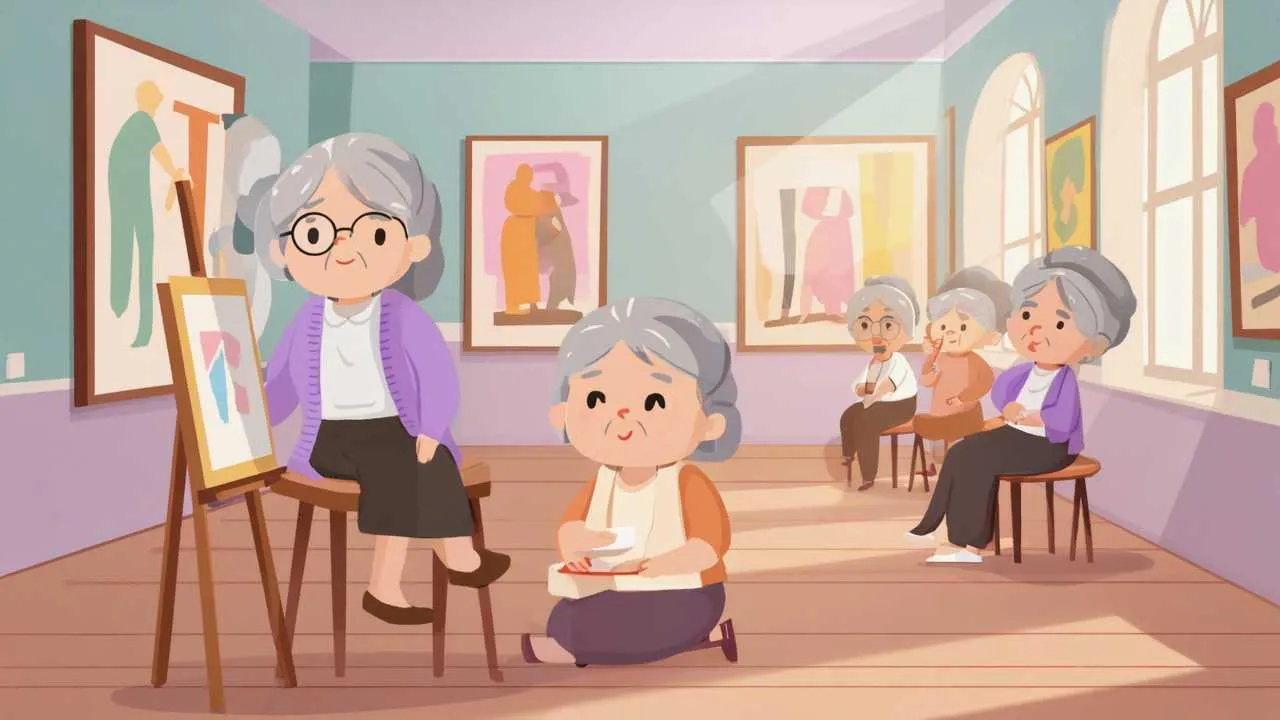
    Warm cartoon illustration of seniors enjoying art in museum gallery, painting classes, and virtual exhibitions in soft pastel tones
    Connect with others through creative expression in welcoming environments
                      Visual Art by Artani Paris
    Museum Type Best For Typical Cost (Senior) Average Visit Time Accessibility
    Major Art Museums Comprehensive collections $15-26 (discounted) 2-3 hours Excellent
    Local Art Museums Regional artists, intimacy $8-15 (often free) 1-2 hours Very Good
    University Museums Specialized collections Free-$10 1-2 hours Good
    Sculpture Gardens Outdoor art, nature Free-$12 1-2 hours Variable
    Contemporary Art Centers Modern/experimental art $10-20 1-2 hours Excellent
    Museum options comparison for senior visitors (2025 estimates)

    Exploring Art Online: Virtual Museums and Digital Collections

    The digital revolution has democratized art access in ways unimaginable a generation ago. World-class collections once requiring international travel now appear on your computer, tablet, or smartphone screen, offering intimate viewing experiences often superior to crowded museum galleries. Virtual art exploration suits seniors perfectly—no travel fatigue, accessible anytime, pausable for breaks, and completely free.

    Google Arts & Culture: Your Gateway to Global Collections
    Google Arts & Culture (artsandculture.google.com) aggregates over 2,000 museums and galleries across 80 countries, providing free access to millions of high-resolution artworks. The platform offers three primary ways to explore art: browse featured exhibitions curated around themes like “Women in Art” or “Impressionism”; search specific artists, movements, or subjects; or take virtual museum tours using Street View technology that lets you “walk” through galleries.

    The zoom capability exceeds what’s possible in physical museums—you can examine brushstrokes, canvas texture, and minute details invisible to naked eye viewing behind protective glass. Many paintings display in “gigapixel” resolution allowing zoom levels revealing individual paint particles. This intimate viewing helps you appreciate technique and craftsmanship impossible to observe in traditional museum visits.

    Google Arts & Culture’s “Art Camera” has photographed select masterpieces in extraordinary detail—the Mona Lisa image contains 1,600 times more pixels than standard digital photos. You can zoom so closely you see wood grain in the panel she’s painted on and individual brush hairs embedded in paint layers. This technology-enabled intimacy creates profound connections with artworks.

    Major Museum Websites and Online Collections
    Nearly every major museum now provides substantial online collections with high-quality images and detailed information. The Metropolitan Museum of Art offers 492,000+ artworks online with high-resolution images downloadable free for personal use. The Rijksmuseum in Amsterdam provides 700,000+ artworks in their online collection, many in ultra-high resolution allowing extreme magnification.

    Museum websites typically organize collections by artist, time period, culture, medium, and theme, facilitating exploration based on interests. Each artwork includes detailed information—artist biography, historical context, technique analysis, and provenance (ownership history). This educational content transforms viewing into learning experiences deepening appreciation and understanding.

    Many museums offer online exhibitions designed specifically for digital viewing, not just reproductions of physical exhibitions. These digital-native shows incorporate videos, interactive elements, curator commentary, and related content impossible in physical spaces. The National Gallery of Art’s online exhibitions include conservators explaining restoration work, curators discussing artistic techniques, and multimedia presentations enriching artwork understanding.

    Virtual Museum Tours and 360-Degree Galleries
    Virtual tours transport you inside museums worldwide from your living room. The Vatican Museums offer virtual tours of the Sistine Chapel in such detail you can examine Michelangelo’s ceiling frescoes more closely than physically possible—you can’t bring binoculars into the actual chapel, but virtual tours allow unlimited zooming. Audio narration explains each scene’s biblical and artistic significance.

    The Louvre provides virtual tours of Egyptian antiquities, remaining Renaissance paintings, and the Galerie d’Apollon. Navigate galleries at your pace, pause for extended viewing, replay sections, and access artwork information unavailable to physical visitors. Virtual tours eliminate crowds, waiting lines, physical fatigue, and travel costs while providing educational content enhancing appreciation.

    YouTube Art Channels for Seniors
    YouTube hosts thousands of channels dedicated to art appreciation, art history, and artistic techniques presented in accessible formats perfect for seniors. Channels like “The Art Assignment,” “Great Art Explained,” and “Perspective” offer 10-20 minute videos exploring specific artworks, artists, or movements with clear narration and helpful visuals.

    PBS’s “The Art Assignment” series features contemporary artists discussing their work and creative processes—fascinating insights into modern art often misunderstood or dismissed. “Great Art Explained” dissects famous paintings in detail, revealing symbolism, historical context, and technical innovations. Each video provides complete standalone education about specific works.

    Museum YouTube channels offer virtual exhibition tours, curator talks, conservation demonstrations, and artist interviews. The Met’s YouTube channel includes hundreds of videos from exhibition walk-throughs to detailed explorations of specific artworks. These videos recreate museum visit experiences while adding expert commentary and close-up details impossible in physical galleries.

    Joining Art Classes and Creative Communities

    Creating art yourself provides even greater cognitive and emotional benefits than viewing art alone. Art classes designed for seniors offer supportive environments where previous experience doesn’t matter, technical perfection isn’t expected, and creative expression takes priority over artistic skill. The social connections formed in art classes often become as valuable as the artistic learning itself.

    Senior Centers and Community Art Programs
    Nearly every senior center offers art classes—typically painting, drawing, crafts, or mixed media—at minimal cost ($5-15 per session) or free for members. These classes meet weekly for 1.5-2 hours, providing structured creative time with peer support and professional instruction. Class sizes usually range 10-15 students, allowing personalized attention while maintaining social atmosphere.

    Instructors at senior center classes understand older adults’ needs, pacing lessons appropriately and offering multiple ways to complete projects accommodating varying dexterity levels. Many seniors report these classes became weekly social highlights, with classmates becoming genuine friends who support each other beyond art activities. The low-pressure environment encourages experimentation without fear of judgment—everyone’s a beginner or returning to art after decades away.

    Community colleges offer “lifelong learning” or “continuing education” art classes specifically designed for older adults without grades or exams. These courses typically run 6-8 weeks meeting once weekly for 2-3 hours, costing $50-150 for complete sessions including most materials. Topics range from watercolor basics to art history, ceramics to digital photography, taught by practicing artists or retired art teachers.

    Art Museums and Gallery Classes
    Many art museums offer studio classes in dedicated education spaces. These classes combine viewing museum artworks for inspiration with hands-on creation in equipped studios. The Art Institute of Chicago offers 60+ adult art classes quarterly ranging from $165-385 for 6-8 week sessions. The De Young Museum in San Francisco provides similar programming. Classes often include museum admission, allowing students to arrive early to view collections before class begins.

    Museum classes attract diverse participants united by art interest rather than age alone, though many museums offer senior-specific sessions during weekday mornings when younger adults work. The advantage of museum classes lies in immediate access to masterworks for study and inspiration, along with instruction from professional artists with deep art historical knowledge.

    Private Art Studios and Independent Instructors
    Independent art studios offering classes provide intimate learning environments and specialized instruction. Search “senior art classes [your city]” or check Nextdoor and local Facebook groups for recommendations. Private studio classes typically cost $25-45 per session for 2-3 hours including materials. Smaller class sizes (4-8 students) allow personalized feedback and flexible pacing.

    Many professional artists offer private lessons or small group instruction in their studios, teaching specific techniques like oil painting, portraiture, or landscape art. Private lessons cost $50-100 per hour but provide intensive, customized instruction accelerating skill development. Some artists offer package discounts—10 lessons for the price of 8—making private instruction more affordable.

    Online Art Classes for Home Learning
    Online platforms democratize art education, offering professional instruction accessible from home at any time. Skillshare ($32/month or $168/year) provides thousands of art classes from 15-60 minutes covering every imaginable technique and style. Classes include watercolor, acrylic painting, drawing, digital art, mixed media, and art history. The platform’s strength lies in short, focused lessons allowing you to learn specific techniques without committing to multi-week courses.

    YouTube offers completely free art instruction through channels like “Paint Coach,” “The Mind of Watercolor,” and “Proko” (drawing). These channels provide structured lesson series guiding you from absolute beginner through intermediate techniques. While lacking personalized feedback, YouTube’s free access and pause/replay capability allow learning at your pace without pressure.

    Udemy offers one-time purchase courses ($15-50 after frequent sales) providing lifetime access to complete art curricula. “The Ultimate Drawing Course” or “Watercolor Painting for Beginners” include 10-30 hours of video instruction, downloadable resources, and student communities for sharing work and receiving feedback. One-time purchase eliminates ongoing subscription costs while providing permanent access for review and practice.

    Budget-Friendly Ways to Engage with Art

    Art appreciation and creation need not require significant financial investment. Numerous free and low-cost options allow seniors on fixed incomes to fully engage with art while staying within budget constraints. Creative thinking and strategic planning make rich artistic lives accessible regardless of economic circumstances.

    Free Museum Days and Community Access Programs
    Free admission days eliminate financial barriers to museum access. Most major museums offer one free day monthly—the Museum of Fine Arts Boston provides free Wednesday evenings 4-9 PM year-round. The de Young and Legion of Honor museums in San Francisco offer free admission every first Tuesday monthly for Bay Area residents. Track free days on museum websites or call ahead to confirm schedules.

    Library museum passes provide free or discounted admission to local cultural institutions. Many public libraries offer passes reservable online weeks in advance, saving $15-30 per visit. The Los Angeles Public Library system provides passes to 40+ museums and cultural sites. Check your library’s website under “Museum Passes” or “Culture Pass” programs.

    Museums offer need-based membership assistance and sliding-scale admissions for low-income visitors. Programs like “Community Access” or “Access Membership” provide year-round free admission to qualifying individuals. Contact museum membership departments directly to inquire about financial assistance programs—most handle applications confidentially without publicizing programs widely.

    Free Art Resources and Supplies
    Public libraries offer far more than books—many libraries provide art supplies for in-library use including drawing paper, colored pencils, markers, and watercolors. Some systems allow members to “check out” art supply kits for home use. The Chicago Public Library system offers “Museum Adventure Passes” plus art supply lending programs.

    Dollar stores and discount retailers offer surprisingly adequate art supplies for exploration and practice. Dollar Tree sells canvases, acrylic paints, brushes, and drawing pads for $1.25 each—perfectly suitable for learning and experimenting before investing in expensive materials. Walmart, Target, and Amazon offer Crayola and Artist’s Loft brands providing good quality at 1/3 to 1/2 the cost of premium brands.

    Art supply stores frequently offer senior discounts—Michael’s provides 10% off regular-priced items to seniors 55+ every day, with frequent 40-50% off coupons applicable to sale items. Blick Art Materials offers education discounts accessible to seniors enrolled in any art class. Sign up for store email lists to receive weekly coupons and sale notifications.

    Online marketplaces offer used art supplies at fraction of retail costs. Craigslist, Facebook Marketplace, and OfferUp frequently list barely-used art supplies from people who started hobbies and quit—pristine paint sets, unused canvases, and quality brushes for 50-75% below retail. Estate sales often include extensive art supply collections sold at giveaway prices.

    Free Community Art Events
    Art walks occur monthly in most cities, offering free gallery access, artist interactions, and often refreshments. First Friday Art Walks in cities nationwide open dozens of galleries 6-9 PM simultaneously, creating festive evening exploring art without admission costs. These events provide opportunities to view diverse contemporary art, meet working artists, and learn about local art scenes.

    University art departments offer free exhibitions in campus galleries showcasing student work, faculty creations, and visiting artists. These exhibitions often feature cutting-edge contemporary art and provide free artist talks and panel discussions. Campus environments welcome community members, and parking is usually free evenings and weekends when most exhibitions occur.

    Public art installations transform cities into free outdoor museums. Sculptures, murals, and installations appear in parks, plazas, and along streets requiring only walking to access. Cities like Miami, Philadelphia, and Seattle offer self-guided public art walking tours with free maps and smartphone apps explaining artworks encountered. This combines art appreciation with gentle exercise and fresh air.

    Art Activity Cost Range Frequency Social Aspect Skill Required
    Museum Visits Free-$26 Monthly Low-Medium None
    Senior Center Classes Free-$15/session Weekly High None
    Online Art Learning Free-$32/month Anytime Low None
    Community College $50-150/course Weekly (6-8 weeks) Medium-High None
    Private Lessons $50-100/hour Weekly Low Any level
    Art Walks/Public Art Free Monthly Medium None
    Art activity cost and commitment comparison for seniors (2025)

    Starting Your Own Art Practice at Home

    Creating art at home provides ultimate flexibility—work at your own pace, experiment without observers, and integrate artistic practice into daily routines. Beginning an art practice in later life requires only curiosity and willingness to play, not innate talent or previous training. The process of creating matters more than the resulting products, and personal satisfaction outweighs technical perfection.

    Essential Beginner Supplies Under $50
    Starting an art practice requires minimal investment. A complete watercolor beginner kit costs $35-45: student-grade watercolor set (12-24 colors, $12-18), watercolor paper pad (20 sheets, 9×12 inches, $8-12), three brushes (round sizes 4, 8, 12, $8-15), and two water containers (recycled jars work perfectly, free). This setup provides everything needed for months of experimentation and learning.

    Drawing requires even less investment—$20-30 covers everything: sketch pad (100 sheets, 9×12 inches, $8-12), graphite pencils (set of 6 ranging 2H to 6B, $8-12), kneaded eraser ($2-3), and pencil sharpener ($2-4). These basics enable exploring drawing fundamentals, shading techniques, and observational skills without specialized equipment.

    Acrylic painting offers versatility and forgiveness for beginners. A starter set costs $40-60: student-grade acrylic paint set (10-12 colors, $15-25), three canvas boards or canvas pad (5-10 surfaces, $12-18), four brushes (various sizes and shapes, $10-15), and palette (disposable paper palette or recycled plastic container, $3-5). Acrylics dry quickly, clean with water, and work on multiple surfaces making them ideal for experimentation.

    Creating Dedicated Art Space
    Establishing permanent art space, however small, significantly increases artistic practice frequency. A TV tray or small table near good natural light creates functional studio space. Store supplies in plastic containers or bins keeping everything accessible without daily setup and cleanup deterring spontaneous creativity.

    Lighting matters tremendously—natural north-facing windows provide ideal diffused light for accurate color perception. If natural light is insufficient, purchase daylight-balanced LED bulbs (5000-6500K color temperature, $8-12) for lamps positioned to illuminate work surface without casting shadows. Proper lighting reduces eye strain during extended art sessions.

    Protect surfaces with plastic tablecloths, old newspapers, or drop cloths costing $3-8. Even water-soluble paints can stain surfaces, and cleanup anxiety inhibits creative freedom. Knowing surfaces are protected allows experimentation without worry. Keep paper towels, water, and hand soap within reach for quick cleanup during and after art sessions.

    Establishing Regular Creative Practice
    Consistency matters more than duration—twenty minutes daily produces more progress than occasional three-hour marathons. Schedule art time like appointments, treating it as important health activity rather than optional hobby. Morning light is ideal for painting and drawing, while evening suits art appreciation or planning tomorrow’s creative session.

    Start with simple exercises building confidence and skill simultaneously. Copy photographs or postcards to practice observation and technique without creative pressure. Draw household objects—coffee cups, fruit, houseplants—focusing on accurate shapes and proportions. These exercises develop hand-eye coordination and observational skills foundational to all artistic endeavors.

    Keep sketchbooks or art journals documenting progress and experimentation. Date each piece to track improvement over time—reviewing work from months ago reveals remarkable development invisible in day-to-day practice. Sketchbooks become personal treasures recording creative journey and preserving artistic memories.

    Online Resources for Self-Taught Artists
    YouTube provides unlimited free instruction covering every technique imaginable. Channels like “The Mind of Watercolor” teaches watercolor fundamentals through clear demonstrations. “Paint Coach” offers acrylic painting tutorials for absolute beginners. “Draw with Jazza” provides drawing lessons from basic shapes through advanced techniques. Subscribe to channels matching your interests and work through lesson series systematically.

    Pinterest collects inspiration and tutorials in visual format ideal for artists. Search “beginner watercolor tutorials” or “easy acrylic painting ideas” finding thousands of images linked to step-by-step instructions. Create boards organizing ideas by technique, subject, or medium. Pinterest’s visual nature makes discovering new artists and styles effortless.

    Books remain valuable learning resources. “Drawing on the Right Side of the Brain” by Betty Edwards revolutionizes how absolute beginners approach drawing. “Watercolor for the Absolute Beginner” by Mark and Mary Willenbrink provides clear, achievable lessons. Library art sections offer extensive collections available free, allowing you to sample various instruction styles before purchasing favorites.

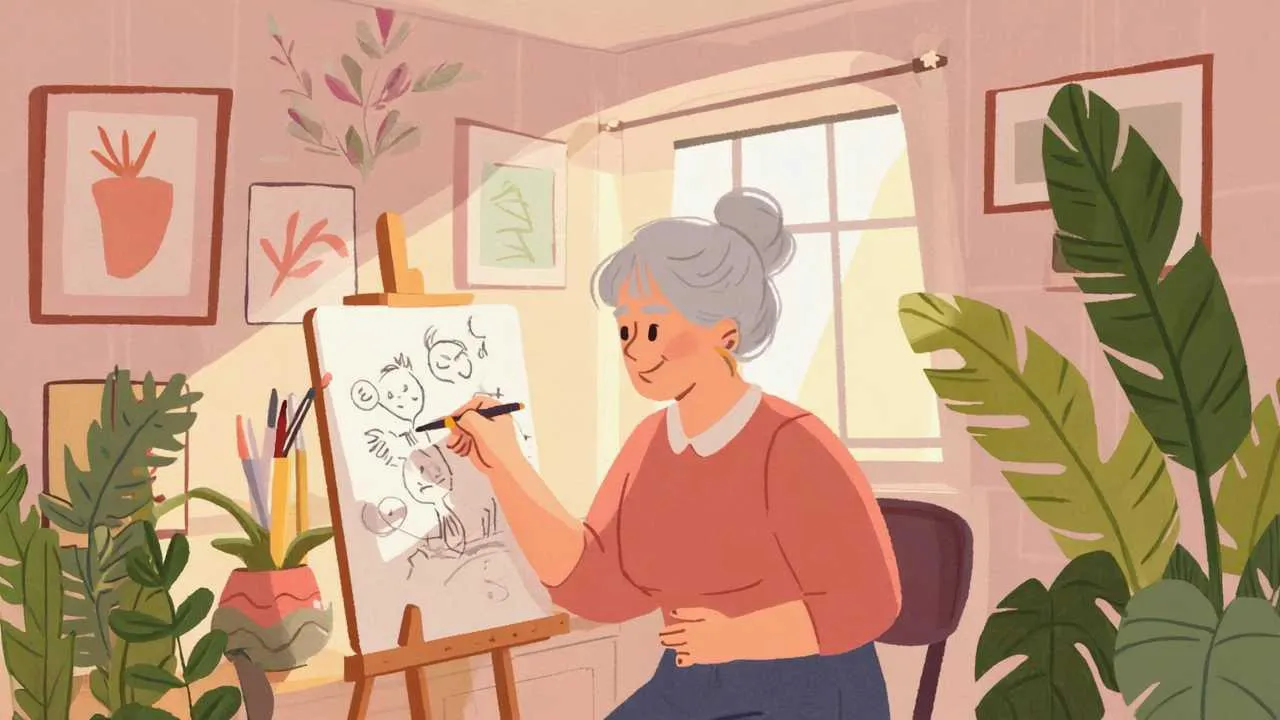
    Cozy illustration of senior creating watercolor painting at home workspace with art supplies, natural light, and comfortable setup

    Create your own inspiring art space at home with minimal investment
                      Visual Art by Artani Paris

    Learning Art History for Deeper Appreciation

    Understanding art historical context transforms viewing from superficial observation into profound engagement. Learning why and how artworks were created, what they meant to contemporary audiences, and how they influenced subsequent generations deepens appreciation immeasurably. Art history need not involve academic rigor—casual learning through accessible resources provides sufficient context for rich understanding.

    Free Online Art History Courses
    Khan Academy offers comprehensive art history curriculum completely free, requiring only internet access and curiosity. Courses cover major periods from prehistoric cave paintings through contemporary art, with each lesson including 5-10 minute videos, images, and articles. The interface is intuitive for seniors unfamiliar with online learning platforms, and progress saves automatically allowing you to stop and resume anytime.

    Yale University and other prestigious institutions offer free online courses through Coursera, edX, and institutional websites. Yale’s “Introduction to Art History” provides university-level instruction adapted for general audiences. These courses include video lectures, reading materials, and optional quizzes without pressure of grades or deadlines. Audit courses free rather than paying for certificates you don’t need.

    The Met’s Heilbrunn Timeline of Art History (metmuseum.org/toah) provides encyclopedic coverage of art from all cultures and time periods. Each entry includes multiple high-quality images, explanatory essays, and links to related artworks and topics. The timeline format helps visualize chronological development and cultural connections. This resource serves as reference for looking up specific artists, movements, or periods encountered in other learning.

    Documentary Films and Streaming Series
    Art documentaries combine education with entertainment, bringing art history alive through compelling storytelling. PBS’s “Art21” series profiles contemporary artists discussing their work and creative processes. “Civilizations” explores how art shaped human history across cultures and millennia. These programs are available free on PBS.org and the PBS app with occasional local station broadcasts.

    Netflix, Amazon Prime, and other streaming services offer extensive art documentary collections. “Abstract: The Art of Design” profiles contemporary designers and artists. “Exit Through the Gift Shop” explores street art culture. “Saving Banksy” documents efforts to preserve street artist Banksy’s work. These films make art relevant and exciting while educating about artistic processes and contemporary issues.

    YouTube channels dedicated to art history present information in digestible formats. “The Art Assignment” explores contemporary art themes. “Great Art Explained” dissects famous paintings in 15-minute deep dives. “Smarthistory” partners with Khan Academy providing art historical context for major works. Subscribe to multiple channels ensuring regular exposure to art content.

    Books and Audio Resources for Art Learning
    “The Story of Art” by E.H. Gombrich remains the gold standard art history introduction, explaining complex concepts in accessible language without condescension. The book traces art from cave paintings through modern abstraction, providing context making artwork meaningful beyond aesthetic appreciation. Public libraries universally stock this classic, and used copies cost $10-15 online.

    “The Annotated Mona Lisa” by Carol Strickland provides concise overview of art history through iconic works and movements. Its visual format with abundant illustrations suits those preferring images over dense text. “How to Read Paintings” by Liz Rideal teaches looking skills revealing meaning in artistic choices often overlooked by casual viewers.

    Audiobooks and podcasts bring art history to life during commutes, walks, or household chores. “The Lonely Palette” podcast explores one artwork per episode in conversational style. “Art Detective” investigates art historical mysteries. “Art Matters” interviews contemporary artists about their work and lives. Library apps like Libby provide free audiobook access to art titles.

    Real Success Stories

    Case Study 1: Sarasota, Florida

    Eleanor P. (73 years old)

    Eleanor experienced significant depression following her husband’s death after 48 years of marriage. Isolated in their retirement home with adult children living across the country, she struggled with purposelessness and declining health. Her daughter suggested trying the watercolor class at their local senior center, though Eleanor insisted she “had no artistic talent whatsoever” and hadn’t created art since elementary school.

    Reluctantly attending the first class in January 2024, Eleanor discovered the supportive, judgment-free environment allowed experimentation without pressure. The weekly Thursday morning class provided structure to empty days and introduced her to five women who became genuine friends. They began meeting Tuesday afternoons for independent painting sessions at each other’s homes, creating a tight-knit support network.

    Eleanor’s artistic skills developed steadily over eight months, but more importantly, her depression lifted significantly. She reported feeling excited about Thursday mornings for the first time in years and having genuine social connections beyond superficial neighborly greetings. Her art became meditation—focusing intently on color mixing and brushwork quieted the grief-driven mental loops that had dominated her thoughts.

    Results:

    • Depression scores (PHQ-9) decreased from 18 (moderate-severe) to 7 (mild) over 8 months as measured by her primary care physician
    • Created over 60 watercolor paintings, framing 12 for her home and gifting others to family and friends
    • Social network expanded from 2 regular contacts to 7, with weekly in-person interactions increasing from 0-1 to 4-5
    • Lost 12 pounds without dieting due to increased activity and decreased emotional eating
    • Total art investment of approximately $180 for 8 months (senior center class $5/week, supplies $40 initially plus $60 over time)

    “I genuinely thought my life was basically over after Harold died—just waiting around to join him. That stupid watercolor class saved my life. I have friends now, real friends who understand what I’m going through because most are widows too. Thursday mornings I wake up excited instead of dreading another empty day. My paintings aren’t masterpieces, but they’re mine, and creating them makes me feel alive again.” – Eleanor P.

    Case Study 2: Portland, Oregon

    Robert and Marie K. (both 68 years old)

    This retired couple found themselves drifting apart after Robert’s retirement—40 years of busy work schedules and child-rearing had left them with few shared interests beyond their now-adult children. They spent evenings in separate rooms, Robert watching television while Marie read, speaking little and feeling increasingly like roommates rather than partners.

    A friend suggested they try the Portland Art Museum’s “Art After Hours” program—monthly Thursday evening events featuring live music, cash bar, and special exhibition access for $15 each. Skeptical but willing to try anything to reconnect, they attended in March 2024. The relaxed evening atmosphere without daytime crowds allowed comfortable viewing and genuine conversation about artworks, surprising both with opinions and reactions they’d never discussed despite 45 years together.

    They began attending monthly, then exploring other museums together. They discovered the Oregon Historical Society, the Portland Japanese Garden, and smaller galleries in the Pearl District. These outings became shared adventures providing conversation topics and common experiences they’d lacked for years. They started “Friday Night Art Nights” at home—streaming art documentaries on Netflix followed by discussing the films over wine and cheese.

    Results:

    • Rekindled their relationship with weekly date nights centered on art and culture rather than restaurants and movies
    • Visited 24 different museums and galleries in 10 months, traveling to Seattle and San Francisco for major exhibitions
    • Both reported feeling “like we’re dating again” and rediscovering the intellectual connection that initially attracted them
    • Enrolled in Saturday morning drawing class together at community college ($140 each for 8-week session), creating side-by-side and giving each other feedback
    • Spent approximately $1,200 over 10 months on museum admissions, classes, and art books—far less than marriage counseling they’d considered

    “We’d been married 45 years but barely talked anymore beyond logistics and grandkid updates. Art gave us something to discuss, debate, and discover together. We have inside jokes now about specific paintings and artists. Last month we drove six hours to see a Monet exhibition because we wanted to—not because we had to visit family or attend obligations. Art literally saved our marriage by reminding us we actually enjoy each other’s company.” – Marie K.

    Case Study 3: Des Moines, Iowa

    James M. (76 years old)

    A retired accountant diagnosed with early-stage Alzheimer’s at 74, James faced terrifying cognitive decline and loss of identity after 50 years defining himself through analytical work. His neurologist suggested cognitive stimulation activities, specifically mentioning visual arts engagement showing promise in slowing dementia progression. James initially dismissed art as “frivolous” and “not for someone like me,” but his daughter researched local options and enrolled him in senior center drawing class without his knowledge.

    Though angry initially about being “forced” to attend, James found the structured weekly class provided cognitive challenge combined with creativity he’d never experienced. Drawing required observation, problem-solving, fine motor control, and decision-making—engaging multiple brain regions simultaneously. The instructor’s patience with his occasional confusion and the supportive classmates created safe environment for someone terrified of public cognitive failures.

    Over 14 months, James attended class weekly, practiced drawing at home 30-45 minutes most days, and visited the Des Moines Art Center monthly to sketch artworks. His artistic skill progressed remarkably for someone starting at 74, but more significantly, his cognitive decline plateaued rather than accelerating as initially projected. His neurologist noted drawing practice likely provided protective cognitive reserve effects.

    Results:

    • Montreal Cognitive Assessment (MoCA) scores stabilized at 22-23 over 14 months rather than declining as initially projected (typical decline 2-3 points annually)
    • Created over 200 drawings in sketchbooks documenting his artistic journey and providing tangible evidence of sustained capability
    • Fine motor skills improved measurably—timed button-fastening test improved from 38 seconds to 29 seconds over 14 months
    • Reduced anxiety about diagnosis significantly, reporting feeling “productive and capable” rather than “useless and waiting to deteriorate”
    • Investment of $280 over 14 months (senior center class $5/week, supplies $50 initially plus $30 replenishments)

    “When they told me I had Alzheimer’s, I thought my life was effectively over—just watching myself disappear piece by piece. Drawing gives me something I can still do well and keeps improving rather than declining. Every finished sketch proves my brain still works. My neurologist says the cognitive stimulation from drawing probably bought me extra good years before things get bad. Art didn’t cure me, but it gave me purpose and evidence I’m not gone yet.” – James M.

    Frequently Asked Questions

    Do I need artistic talent to appreciate or create art?

    Absolutely not. Art appreciation requires only curiosity and willingness to look—no previous knowledge or innate ability needed. The cognitive and emotional benefits of art engagement occur regardless of artistic talent or skill level. Creating art provides benefits through the creative process itself, not the quality of results. Many seniors who insist they “can’t draw” or “have no artistic ability” discover they can learn fundamental skills through practice and enjoy creating despite imperfect results. Art classes designed for seniors welcome absolute beginners and focus on enjoyment and experimentation rather than technical perfection. Your personal satisfaction and engagement matter far more than producing gallery-worthy work.

    What if I have arthritis or hand tremors—can I still create art?

    Yes, many adaptations accommodate physical limitations. Arthritis sufferers benefit from ergonomic brush handles, foam grips making standard brushes easier to hold, and finger loops attached to tools. Large-format work requires less fine motor control than detailed small pieces. Watercolors and fluid acrylics require less hand pressure than oil paints. For significant tremors, consider collage (cutting and gluing), digital art using tablets with styluses, or voice-directed digital art apps. Some artists deliberately incorporate tremors into their style, creating unique textured effects impossible with steady hands. Adaptive art programs specifically designed for those with physical limitations offer specialized instruction and modified techniques. The occupational therapy community provides extensive resources for adapted art tools and techniques.

    How much time should I dedicate to art activities for cognitive benefits?

    Research suggests even minimal engagement provides measurable benefits—30 minutes weekly shows positive effects, though more frequent engagement amplifies benefits. A 2019 study found seniors engaging with arts activities 100+ hours annually (about 2 hours weekly) showed most significant cognitive and health improvements. However, consistency matters more than duration—20 minutes daily produces better results than occasional marathon sessions. Start small with achievable commitments like weekly museum visits or one 90-minute class, then expand as interest develops. The key is making art engagement a regular habit rather than occasional activity. Many seniors find brief daily practice (15-30 minutes drawing or painting) combined with weekly structured activities (classes or museum visits) provides optimal balance.

    Are online art experiences as beneficial as in-person museum visits?

    Both offer valuable but different benefits. In-person museum visits provide social interaction, physical activity from walking galleries, and the powerful presence of original artworks impossible to fully replicate digitally. However, online art experiences offer unique advantages—unlimited time viewing specific works, extreme zoom capabilities revealing details invisible in person, expert commentary enriching understanding, and complete accessibility for those with mobility limitations or living far from museums. Cognitive engagement occurs through both modalities—your brain responds to visual stimulation, pattern recognition, and meaning-making whether viewing originals or high-quality reproductions. An ideal approach combines both—in-person visits when possible supplemented by extensive online exploration expanding access beyond what you can physically visit.

    How do I choose which art medium to try first?

    Start with watercolors or drawing—both are inexpensive, require minimal equipment, clean easily, and forgive mistakes. Watercolors cost $35-45 for complete starter kit and create beautiful results even with beginner skills. The transparency and fluidity of watercolors feel magical for many beginners. Drawing requires even less investment ($20-30) and provides foundational observational skills benefiting all artistic endeavors. Avoid oil paints initially—they’re expensive, require specialized supplies and ventilation, and have steep learning curve. Try multiple media through community center classes before investing significantly in any single medium. Many seniors discover unexpected affinities—those who “always wanted to paint” discover they love drawing, while others thinking they’d draw find sculpture or collage more satisfying. Stay open to exploration.

    Can art therapy help with grief or depression?

    Yes, substantial research demonstrates art’s therapeutic value for emotional processing and mental health. Art-making provides nonverbal expression outlet particularly valuable when words fail to capture complex emotions. The focused attention required for creating art induces meditative states reducing anxiety and rumination. Art therapy programs specifically designed for grief, depression, or trauma use structured creative exercises facilitating emotional exploration and healing. However, distinguish between therapeutic art-making (creating art for personal benefit) and formal art therapy (clinical treatment by licensed art therapists). If experiencing significant grief or depression, seek professional support from licensed therapists who may incorporate art therapy techniques into treatment. Many seniors find informal art-making complements professional mental health care by providing healthy coping mechanism and tangible expression of internal experiences.

    What if I feel embarrassed showing my artwork to others?

    This fear is nearly universal among beginning artists of all ages. Remember: art classes for seniors specifically create supportive, non-judgmental environments where everyone’s a learner. Your classmates face identical insecurities and typically offer only encouragement. Instructors see hundreds of beginners annually and genuinely celebrate progress regardless of starting point. You control artwork sharing—keep pieces private if preferred, show only to trusted friends/family, or embrace class sharing knowing everyone’s equally vulnerable. Many seniors report that vulnerability of sharing imperfect work builds genuine connections with classmates facing similar fears. Start by sharing with one trusted person, then gradually expand comfort zone as confidence grows. Remember: you create art for personal enjoyment and growth, not others’ approval. If sharing feels uncomfortable, skip it entirely—your creative journey benefits you whether anyone else sees results.

    How do I find legitimate senior art classes versus tourist scams?

    Legitimate senior programs operate through established institutions—senior centers, community colleges, museums, libraries, parks departments, and established art studios. These organizations have physical locations, published schedules, professional websites, and reputation in the community. Warning signs of questionable programs include: pressure to pay large sums upfront, promises of unrealistic results (“learn to paint like a master in 3 weeks”), requests for payment via gift cards or wire transfers, and lack of physical address or verifiable instructors. Ask friends and neighbors for recommendations, check Google reviews, and contact your local senior center for vetted program lists. Visit facilities before enrolling to assess cleanliness, safety, and professionalism. Legitimate programs offer trial classes or money-back guarantees for first session. Trust your instincts—if something feels wrong, it probably is.

    Can I donate or sell my artwork?

    Yes, many options exist for sharing or selling senior artwork. Local senior centers, libraries, community centers, and coffee shops often feature rotating art displays showcasing local artists including seniors. These exhibitions provide public sharing opportunity and potential sales without gallery commissions. Online platforms like Etsy, eBay, and Facebook Marketplace allow selling directly to buyers, though factor time spent photographing, listing, and shipping artwork. Local art fairs and craft shows often include categories for senior or amateur artists with modest booth fees ($25-100). Consider donating artwork to nursing homes, hospitals, or charitable auctions providing enjoyment to others while potentially receiving tax deductions. Many seniors find most satisfaction giving artwork to family and friends who treasure handmade gifts. Remember: monetary value doesn’t reflect artwork’s worth—the joy of creating and sharing matters far more than potential income.

    How do I maintain motivation when progress seems slow?

    Progress in art develops gradually and often invisibly day-to-day. Keep early work to compare with later pieces—the improvement becomes obvious over months even when daily practice feels stagnant. Remember that learning any new skill as an adult takes time and patience. Celebrate small victories—mixing the perfect color, capturing a particular shadow, completing a challenging piece. Focus on enjoyment rather than outcomes—if the creative process brings satisfaction, you’re succeeding regardless of technical results. Set realistic goals focused on practice rather than perfection (“I’ll paint 30 minutes daily” rather than “I’ll create a masterpiece”). Join supportive communities where encouragement flows freely and everyone understands the beginner experience. Take breaks when frustrated—stepping away often leads to breakthroughs upon returning. Remember why you started—likely for personal enjoyment and cognitive benefits, not to become professional artist. Give yourself permission to create imperfect work and enjoy the journey.

    Action Steps to Begin Your Art Journey

    1. Visit your local senior center this week to inquire about art classes, schedules, costs, and whether supplies are provided or must be purchased separately
    2. Check your public library website for museum passes, art books, and potential art programs offered directly through the library system
    3. Create free accounts on Google Arts & Culture (artsandculture.google.com) and Khan Academy (khanacademy.org) to begin exploring online exhibitions and art history lessons
    4. Research museums within 30 miles of your home, noting senior admission prices, free days, and accessibility accommodations—create a list of three you’ll visit in the next two months
    5. Purchase basic art supplies for home experimentation: either a watercolor starter kit ($35-45) or drawing supplies ($20-30) from local craft stores using senior discount days
    6. Set up dedicated art space in your home, however small—even a TV tray near a window provides adequate workspace for most beginning art activities
    7. Subscribe to three art-focused YouTube channels matching your interests (watercolor, drawing, art history) to receive regular free instruction and inspiration
    8. Schedule one hour weekly for art engagement—museum visits, online exploration, creating art, or watching art instruction videos—treating it as important health appointment
    9. Invite a friend to join your art exploration journey—companionship increases enjoyment, provides mutual encouragement, and ensures regular participation through accountability
    10. Start an art journal or sketchbook dated on the first page, committing to one entry weekly minimum—even simple doodles or observations count as building your artistic practice


    Disclaimer
    This article is provided for informational purposes only and does not constitute professional medical, mental health, or therapeutic advice. While research demonstrates cognitive and emotional benefits of art engagement, individual results vary significantly based on numerous factors. Art activities do not replace professional medical treatment for cognitive conditions, depression, or other health issues. Consult qualified healthcare providers regarding specific health concerns and before beginning new activities if you have physical limitations. Information about organizations, programs, and resources is current as of publication but may change without notice.
    Information current as of October 2, 2025. Program availability, costs, and accessibility features may vary by location and change over time. Verify all details with specific organizations before making plans or commitments.

    Get Weekly Senior Lifestyle and Wellness Tips

    Join thousands of seniors discovering enriching activities, health strategies, and practical advice for vibrant retirement living. Receive curated guides, resource lists, and inspiring success stories delivered to your inbox every Tuesday morning.

    Related Articles