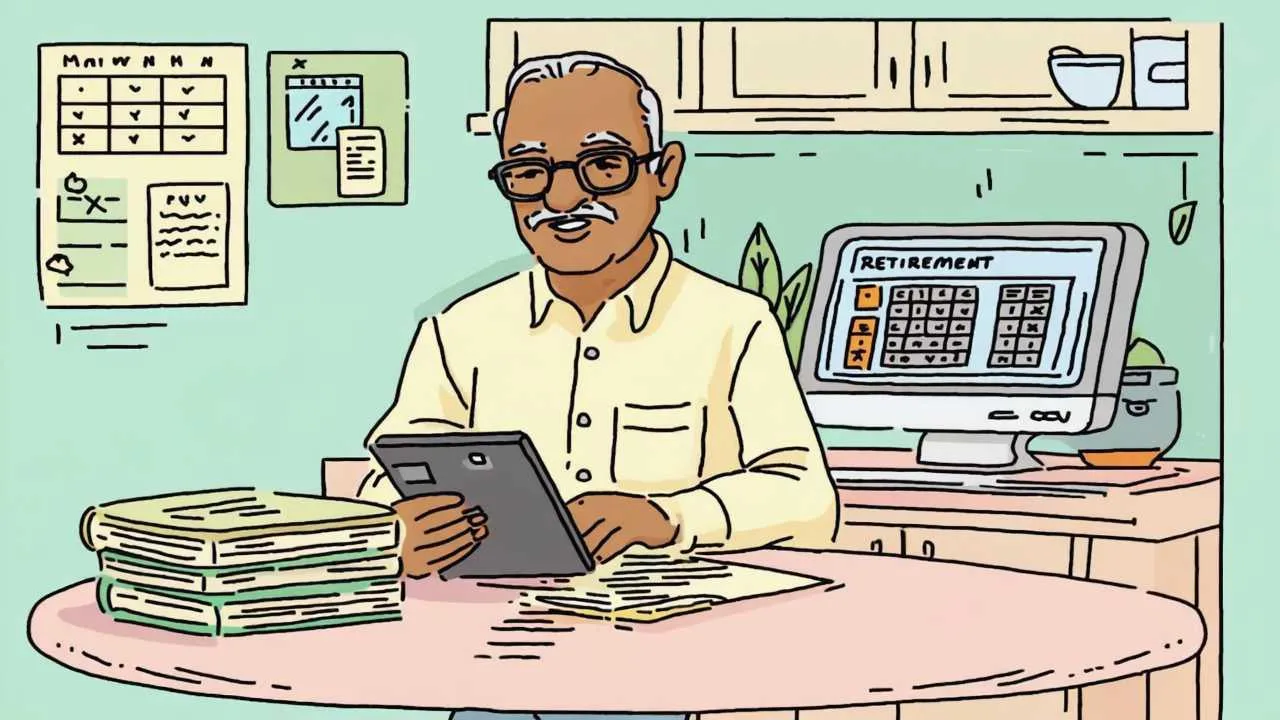
Monthly Budget Checklist for Seniors on Fixed Income (2026): six calm steps to manage money without stress.
A calm, realistic way to manage money without stress or spreadsheets
When your income is fixed, money isn’t about growth. It’s about stability.
Many seniors don’t overspend — they simply feel uncertain. Bills feel unpredictable. Prices keep changing. And budgeting advice online often feels written for people still earning more each year.
This guide is different.
It’s a monthly budget checklist designed for seniors on fixed income — calm, practical, and focused on peace of mind rather than perfection.
Who This Budget Checklist Is For
Seniors living on Social Security, pensions, or retirement income
Older adults who want clarity without complex apps or spreadsheets
Anyone who feels anxious about monthly bills or surprise expenses
Seniors who want to protect essentials and still enjoy small pleasures
Why Monthly Budgets Matter More Than Annual Plans for Seniors
Annual budgets are abstract. Monthly budgets are livable.
For seniors on fixed income, monthly planning helps you:
see cash flow clearly
catch problems early
avoid end-of-month stress
adjust gently instead of panicking
This checklist focuses on one month at a time — because that’s how real life works.
How to Use This Monthly Budget Checklist
Print it or write it by hand
Review it once at the start of each month
Update it once mid-month if needed
Stop when it feels clear — not perfect
This is a support tool, not a test.
Step 1: Confirm Your Monthly Fixed Income
Start with what is predictable.
Write down:
Social Security (net amount)
Pension payments
Retirement account withdrawals
Any regular support income
Checklist
I know my total monthly income after taxes
I’ve confirmed payment dates
I’m not counting irregular or “maybe” money
Clarity here reduces anxiety everywhere else.
Step 2: Protect Essential Expenses First
Essentials come before optimization.
These usually include:
housing (rent, mortgage, HOA)
utilities
food
medications & health insurance
transportation
Checklist
Essentials are fully covered by fixed income
I know which bills are non-negotiable
I can see which expenses are flexible
If essentials don’t fit, the solution is adjustment or support, not self-blame.
Step 3: Plan for Health Costs Separately
Health expenses are often uneven — not monthly.
Create a small health buffer category for:
co-pays
medications
medical supplies
unexpected appointments
Checklist
I set aside something monthly for health costs
I know my deductible or out-of-pocket limits
I track medical bills separately from daily spending
Separating health costs prevents them from overwhelming your regular budget.
Step 4: Include “Life Enjoyment” on Purpose
A budget without joy is not sustainable.
Even on fixed income, plan for:
coffee out
small gifts
hobbies
short outings
Checklist
I included a small joy category
I don’t feel guilty spending it
I keep it predictable
Planned enjoyment costs less — emotionally and financially — than impulse spending.
Step 5: Set One Simple Monthly Spending Limit
You don’t need dozens of categories.
Many seniors do best with:
one weekly spending allowance, or
one monthly discretionary limit
Checklist
I know my “safe spending” amount
I track it simply (notes, envelope, or bank app)
I stop when the limit is reached
Boundaries create freedom.
Step 6: Prepare for Irregular Expenses
Some costs don’t happen monthly — but they are predictable.
Examples:
annual insurance
property taxes
gifts
home maintenance
Checklist
I listed irregular yearly expenses
I divide them by 12
I save a small amount monthly
This turns surprises into plans.
Step 7: Do a Mid-Month Check-In (5 Minutes)
Halfway through the month, ask:
Am I on track?
Did anything unexpected happen?
Do I need to adjust gently?
Checklist
I check my balance calmly
I adjust without panic
I don’t judge myself
Budgets are living tools.
Common Budgeting Mistakes Seniors Make
Trying to copy younger people’s budgets
Ignoring small leaks instead of adjusting calmly
Feeling shame about needing help or changes
Making budgets too strict to maintain
A good budget should reduce stress, not create it.
A Simple Monthly Budget Rhythm
Start of month: review income + essentials
Mid-month: 5-minute check-in
End of month: note what worked and what didn’t
That’s enough.
30-Second Summary
Monthly budgeting works best for seniors on fixed income
Protect essentials first, then plan for health and joy
Keep categories simple and predictable
Small adjustments beat strict rules
A calm budget supports independence and peace
Money management in retirement is not about control. It’s about confidence.
Editorial Disclaimer
This article provides general educational information about budgeting for seniors. It is not personalized financial, tax, or investment advice. For guidance specific to your situation, consult a qualified financial professional.
“The 15-Minute Money Map for Adults 55+ (2026 Calm Start)”
Hero image placement suggestion (above the title or directly below it): Use a wide panoramic hero image that visually signals “calm planning”: a warm table, a simple calendar, a one-page note, gentle morning light, and the feeling of a fresh start.
Recommended image title: The 15-Minute Money Map (2026 Calm Start) ALT: Older adults reviewing a simple 2026 money map with a calendar and notes in a calm home setting Description: A panoramic hero image showing a calm, senior-friendly approach to monthly income, essentials, and flexible spending—without a spreadsheet.
If money has felt heavier than it used to—more confusing, more emotional, more tied to uncertainty—there’s nothing unusual about that. Many adults 55+ aren’t struggling because they “don’t care” or “aren’t disciplined.” They’re struggling because modern life has become noisy: rising costs, medical paperwork, subscription traps, constant warnings about scams, and the mental load of remembering what’s due and when.
A calm financial start to 2026 doesn’t require a new personality or a complicated app. It requires something far simpler:
A clear picture you can understand in one glance.
That’s what this guide gives you: a 15-minute Money Map—a one-page snapshot of your monthly life that helps you feel steady, make safer decisions, and reduce the constant background stress that money can create.
You do not need to track every penny. You do not need to be “good with numbers.” You do not need to do this perfectly.
You only need a page that answers three questions:
What comes in each month?
What must go out each month?
What is quietly draining you without improving your life?
When you can see those three things clearly, your next steps become obvious—and much less frightening.
Why a “Money Map” works when budgets don’t
Traditional budgets often fail for older adults for practical reasons, not personal ones:
They demand ongoing tracking, which is tiring.
They create guilt when real life interrupts the plan.
They can feel like homework—and nobody wants more homework after 55.
A Money Map works because it’s designed for the real world. It focuses on the outcomes that matter most in this life stage:
Stability: fewer late fees, fewer surprise shortages
Step 3 (2 minutes): Your Flexible Amount — the number that determines your stress
Now subtract:
TOTAL INCOME – TOTAL ESSENTIALS = FLEXIBLE AMOUNT
This is the money that covers:
dining out / takeout
gifts
travel
subscriptions
clothing
entertainment
hobbies
home extras
helping family
“life happens”
People often feel relief just seeing this number. Even when it’s tight, it becomes easier to plan once it has a name.
A simple note that helps emotionally:
If your flexible amount is small, that does not mean you did something wrong. It means you’re living in the same economy everyone else is living in.
Step 4 (3 minutes): Quiet Leaks — find what’s draining you without giving much back
Quiet leaks aren’t always big purchases. They’re often small costs that repeat.
Write:
QUIET LEAKS (pick 1–3 to check this week)
Subscriptions I forgot or don’t use: _________
Delivery/takeout creep: _________
Impulse shopping (online/TV): _________
Fees (late fees, bank fees, interest): _________
Extra gifting or family help beyond comfort: _________
Important: this is not about shame. It’s about stopping money from leaving your life without permission.
One helpful mindset shift:
Cutting a quiet leak isn’t “depriving yourself.” It’s reclaiming money for what actually matters.
Step 5 (2 minutes): Choose ONE rule that makes money feel safer in January
Pick one “Money Comfort Rule” for the next 30 days. One. Not five.
Here are options that fit real life:
Rule A: The 24-Hour Pause
Before a non-essential purchase over $50, wait 24 hours.
Why it works:
It stops emotional spending.
It reduces regret.
It’s easy to follow.
Rule B: The Subscription Filter
If you don’t use a subscription weekly, pause/cancel it and see if you miss it.
Why it works:
Many people pay for services they stopped enjoying months ago.
Rule C: The Bills-First Buffer
Keep a small buffer in checking (whatever is realistic—$100, $200, $500) to avoid overdraft stress.
Why it works:
Overdraft fees and panic are expensive.
Rule D: The Gift Boundary
Set a monthly “gift/help” limit and stick to it.
Why it works:
Many older adults overspend from love or pressure and pay for it later.
Circle your rule. Write it on the bottom of the page.
This is the part that reduces anxiety, because your brain can relax when it knows there’s a plan.
A simple one-page layout (copy this)
If you want a clean template, your page can look like this:
MONEY MAP — JANUARY 2026
INCOME (monthly): $____
ESSENTIALS (monthly): $____
FLEXIBLE AMOUNT: $____
QUIET LEAKS TO CHECK (1–3):
MY MONEY COMFORT RULE (30 days):
MONTHLY MONEY CHECK DAY:
_________ (example: first Monday)
That’s it. That’s the system.
What to do next (so this page actually changes your life)
A Money Map helps most when it connects to a tiny routine.
The 20-minute monthly money check
Once a month, same day each month, do this:
Look at your account balance(s).
Confirm essentials are covered.
Review one quiet leak category.
Decide one small adjustment for the next month.
Stop. You’re done.
This routine is short enough to continue even when life is busy.
“Consistency” for older adults shouldn’t mean “every day.” It should mean “simple enough to repeat.”
The most common money stress points after 55 (and how to soften them)
1) “I dread checking my accounts.”
This is common. Dread grows in the dark.
A gentle strategy:
Check once weekly, same time, same day, for 3 minutes.
Not to judge—just to notice.
Even a short weekly check can reduce anxiety over time because your brain stops imagining worst-case scenarios.
2) “Bills feel confusing and scattered.”
Scattered bills create mental load.
A calming fix:
Put everything into one place: one folder, one drawer, one email label.
Create one list: “Bills + Due Dates.”
You don’t need a fancy system. You need a system you can find when you’re tired.
3) “Subscriptions keep sneaking in.”
Subscriptions are designed to be forgotten.
A practical approach:
Choose one “subscription review day” every two months.
Cancel anything you wouldn’t buy again today.
4) “Helping family is getting expensive.”
Many older adults help from love, but love shouldn’t create fear.
A boundary that protects everyone:
Decide your monthly “help amount” in advance.
When it’s used, it’s used.
You can still be generous and still protect your future self.
A quick “quiet leaks” checklist (fast wins)
If you want easy wins in Week 1 of 2026, check these:
Streaming services you don’t use
Premium channels or add-ons
Forgotten app subscriptions
Delivery memberships
Duplicate insurance add-ons
Bank account fees you could avoid with a different account type
Auto-renewals you didn’t mean to keep
Even saving $25–$75 a month can reduce stress. Those small savings add up to groceries, prescriptions, or one enjoyable outing.
Scam safety: a calm rule that prevents costly mistakes
In retirement years, scams are not just annoying—they can be devastating. The best protection is not fear. It’s a habit.
Use one rule:
PAUSE → VERIFY → TALK
PAUSE: never act under pressure
VERIFY: use a phone number you find yourself (not the number provided)
TALK: consult a trusted person before sending money in an unusual way
Red flags that matter:
“Don’t tell your family.”
“It’s urgent.”
Gift cards, crypto, wire transfers requested.
Threats or intimidation.
Even if a call “sounds official,” pressure is a warning sign.
If your Money Map shows you’re too close to the edge
If your flexible amount is tiny—or negative—do not panic. Panic leads to bad decisions. Instead, think in “tiers.”
Tier 1: Stabilize (small changes first)
Reduce one leak by 10–20%
Cut one recurring fee
Simplify one bill situation (autopay only if safe and reviewed)
Tier 2: Improve (bigger levers)
Review insurance or phone/internet plans
Shop prescription pricing options with professional guidance
Adjust discretionary spending categories with compassion (not punishment)
Tier 3: Get support (when it’s worth it)
If you’re dealing with debt, taxes, complex withdrawals, or benefits decisions, consider qualified help. A professional can sometimes save more than they cost by preventing mistakes.
The key is to choose support that is transparent about fees and aligned with your goals.
Make it stick: the “January gentle promise”
Write one sentence at the bottom of your Money Map:
“In January, I will protect my peace by _________.”
Examples:
“…checking money once weekly for three minutes.”
“…pausing purchases over $50 for 24 hours.”
“…canceling one subscription I don’t use.”
“…keeping a small buffer so I don’t feel panicked.”
This isn’t motivation. This is a promise you can keep.
A final note that matters
A calm financial life after 55 is not about never spending. It’s about spending with intention—so money supports your safety, your independence, and your joy.
Your Money Map is a small page, but it does a big job:
It replaces fear with facts.
It replaces chaos with a simple system.
It helps you make better decisions without exhausting yourself.
If you complete the Money Map today, you already did something meaningful for your future self.
Next step suggestion (optional): Choose one quiet leak and take one action in under 10 minutes—cancel, pause, or set a reminder to review.
Small actions build calm.
Important Disclaimer (placed at the end, as requested)
This article is for general educational purposes only and does not constitute financial, legal, tax, or medical advice. It does not take into account your personal circumstances, goals, or needs. Rules and implications vary by country, region, and individual situation. For guidance tailored to you, consult qualified professionals (such as a licensed financial advisor, CPA/tax professional, attorney, physician, or pharmacist). If you feel at risk of financial fraud or exploitation, contact local authorities or trusted consumer protection resources in your country.
A 30-minute subscription cleanup: find recurring charges, cancel what you don’t use, and keep your monthly budget calmer in 2026.
Cindy’s Column × Senior AI Money A calm, practical money-and-life guide for adults 55+.
Some expenses don’t feel expensive—until you add them up.
A forgotten streaming add-on here, a “free trial” that quietly turned paid there, a delivery membership you barely use, a news subscription that keeps renewing, a phone app you don’t remember downloading. None of it feels dramatic in the moment, but together they can pull real money out of your month—money you’d probably rather keep for groceries, prescriptions, comfort, travel, hobbies, or simply peace of mind.
This guide is a senior-friendly, no-shame system to do one thing well: find and stop quiet subscription leaks in about 30 minutes.
No spreadsheets required. No new apps required. And you don’t have to cancel everything. You’re simply going to stop paying for things that no longer earn a place in your life.
Why subscription cleanups matter more after 55
Subscriptions are designed to be invisible. That’s the point.
In retirement or semi-retirement, your financial life often becomes more “fixed”: predictable income, fixed bills, less tolerance for surprise fees. Subscription creep is especially stressful because it creates the opposite: small, repeated surprises you don’t remember agreeing to.
A subscription cleanup helps you:
Reduce monthly outflow (even $20–$200/month is common)
Lower “money fog” and anxiety
Prevent overdrafts and late fees
Make room for spending that actually improves your life
Reduce scam risk (many scam charges masquerade as “memberships”)
And the biggest benefit isn’t just savings. It’s control.
The 30-minute plan (simple and realistic)
Set a timer. The goal is progress, not perfection.
Minute 0–3: Choose your method (pick ONE)
Option A: Paper method (low-tech, reliable)
Grab a pen and paper.
Write: “Subscriptions to Review.”
You’ll list items as you find them.
Option B: Email method (fast if you use email receipts)
Search your email for: “receipt”, “invoice”, “subscription”, “renew”, “trial”, “membership”.
These renew quietly and often use pricing that feels small.
If you haven’t used it in the last 30 days, it’s probably not serving you.
5) Health, fitness, and “wellness” subscriptions
Be careful here. Some are worth keeping because they support mobility and routine. But many are aspirational purchases that become guilt charges.
A gentle rule: If it causes guilt more than it provides comfort, pause it.
6) Security, backup, and “device protection” services
Some are helpful. Some are redundant. Some are sold aggressively at checkout.
Examples:
identity monitoring
cloud storage upgrades
antivirus bundles
extended warranties
You don’t have to cancel these blindly. You just need to verify:
Do I understand what it does?
Do I use it?
Is it overlapping with something else I already have?
Minute 10–18: Sort into three buckets (keep it simple)
On paper, make three headings:
KEEP (worth it)
You use it regularly and it improves your life.
PAUSE (test it)
You’re not sure. Cancel now, and if you truly miss it, re-subscribe later.
CANCEL (doesn’t earn its place)
You don’t use it, don’t enjoy it, or don’t remember agreeing to it.
This avoids the trap of trying to decide everything perfectly. You’re just sorting.
Minute 18–25: Cancel the “easy wins” first
Start with the CANCEL list. Pick one to three items. That’s enough for today.
Common easy wins for seniors
Duplicate streaming/music services
Unused app subscriptions
A “premium” tier you never use
Delivery membership you used once
A “trial” that became paid months ago
An old magazine/news subscription
If you’re nervous about canceling:
Take a screenshot of the subscription details first (price, renewal date).
Write down the login you used (if you know it).
Then cancel.
A senior-friendly cancellation script (phone or chat)
If you must contact support, use plain language:
“Hello. I’d like to cancel my subscription effective immediately and ensure there are no future charges. Please confirm the cancellation in writing and tell me the date my access ends.”
If they try to keep you with a discount:
If you truly want it, fine.
If you don’t, repeat: “No thank you. Please cancel.”
Minute 25–30: Set one protection habit so this doesn’t happen again
The goal isn’t to do this every week. It’s to prevent new leaks.
Choose one habit:
Habit A: The “Subscription Day” (every two months)
Put a reminder in your calendar:
March 1, May 1, July 1, etc.
Spend 10 minutes checking recurring charges.
Habit B: The “One-In, One-Out” rule
If you add a new subscription, you cancel or pause one old one.
Habit C: The “Email label” method
Create an email label/folder called:
“Receipts—Subscriptions”
Move receipts there so you can find them later.
Habit D: The “No free trial without a note” rule
If you start a free trial:
immediately write the end date on your calendar
add a reminder 2 days before renewal
This one rule alone prevents a huge amount of wasted money.
A simple table you can use (copy into your notes)
Subscription
Monthly/Yearly Cost
Used in last 30 days?
Bucket (Keep/Pause/Cancel)
Renewal Date
You don’t need to fill every row today. Even listing 5 items is progress.
What if you see charges you don’t recognize?
This is important. Unknown charges can be:
a subscription you forgot
a company name that looks unfamiliar (but is actually something you use)
or a fraudulent charge
Do this calmly, in order:
Check if the charge repeats monthly (that hints subscription).
Search your email for the amount or vendor name.
If still unknown, contact your bank/card issuer using the number on the back of your card.
Avoid calling numbers listed in suspicious emails or texts.
A safety note:
If anyone pressures you to pay via gift cards, crypto, wire transfer, or asks you not to tell family—treat that as a serious red flag.
Why older adults get hit hardest by subscription creep (and why it’s not your fault)
Subscription systems are designed to exploit human attention:
confusing menus
tiny “renewal” language
auto-renew defaults
vendor names that don’t match the app name
discounts that expire into higher rates
None of that is a personal failure. It’s design.
Your 2026 advantage is that you can choose a different value: clarity over convenience when convenience becomes expensive.
A realistic example (illustrative)
A 72-year-old checks two statements and finds:
Streaming add-on: $7.99/month (forgotten)
Two music services: $10.99 + $9.99/month (didn’t realize both were active)
Unused phone app: $4.99/month
Delivery membership: $14.99/month (used once)
News subscription: $12.00/month (rarely read)
Canceling three of those saves about $30–$40/month, or $360–$480/year. That’s not tiny. That’s a buffer. That’s medicine copays. That’s a weekend trip. That’s relief.
The gentle mindset that makes this easier
Some people avoid canceling because subscriptions feel like “future optimism”:
“Maybe I’ll use it next month.”
“Maybe I’ll start exercising again.”
“Maybe I’ll watch those shows.”
A kinder thought: If something becomes useful later, you can re-subscribe later. Your money doesn’t need to keep paying for “maybe.”
Quick checklist (printable-friendly)
Pick one method: paper, email search, or bank statement
Find repeating charges (last 1–2 months)
Sort into Keep / Pause / Cancel
Cancel 1–3 items today
Add one protection habit (calendar reminder, one-in/one-out, trial note rule)
If you see unknown charges, verify safely with your bank/card issuer
Closing: what success looks like
Success is not canceling everything.
Success is:
seeing what you’re paying for
keeping what truly helps
stopping what doesn’t
and creating a small system that protects you going forward
If you cancel even one forgotten subscription today, you’ve already improved 2026.
Disclaimer (legal safety, at the end)
This article is for general educational purposes only and does not constitute financial, legal, or medical advice. It does not consider your personal circumstances. For individualized guidance, consult qualified professionals. If you suspect fraud or unauthorized charges, contact your bank or card issuer using official contact information.
Liebe im Alter braucht keine großen Gesten. Sie wächst aus den kleinen Routinen, die wir täglich teilen – ob Dankbarkeit, gemeinsame Bewegung oder ein wöchentliches Ritual. Dieser Ratgeber zeigt Ihnen, wie Paare ab 60 mit praktischen, bezahlbaren Ritualen ihre Beziehung stärken – trotz Grundsteuer, Krankenkassenbeiträgen und Riester-Rente.
„10 Minuten echte Aufmerksamkeit am Tag sind oft mehr wert als ein zweiwöchiger Urlaub im Jahr.” – Beziehungsforscher, Deutschland
1. Finanzielle Realität: Liebe braucht auch ein Budget
Nach der Pensionierung verändern sich die Einkommensquellen grundlegend. Gesetzliche Rente, Riester-Rente, Krankenkassenbeiträge und Grundsteuer spielen plötzlich eine zentrale Rolle im Alltag. Viele Paare unterschätzen, wie sehr sich diese Veränderungen auf ihre gemeinsamen Aktivitäten auswirken. Die gute Nachricht: Rituale müssen nicht teuer sein, um wirksam zu sein. Ein Kaffee-Date im örtlichen Café (15–20 €), ein monatlicher Ausflug mit Seniorenticket (30–50 €) oder ein gemeinsames Abendessen zu Hause sind ideale Beispiele für bezahlbare und wiederholbare Beziehungsrituale.
Tipp für Bayern, Baden-Württemberg und Rheinland-Pfalz: Planen Sie Ihr „Paar-Budget” um die Renten-Auszahlungstermine (meist 1. des Monats) und Grundsteuerfälligkeiten (vierteljährlich oder halbjährlich) herum. So vermeiden Sie finanzielle Engpässe in Ihren Ritual-Wochen.
Beispiel-Budget für Beziehungsrituale (pro Monat)
Aktivität
Häufigkeit
Kosten pro Mal
Monatssumme
Bemerkung
Kaffee-Date
4×
18 €
72 €
Café im Ort
Spaziergänge
12×
0 €
0 €
Kostenlos, frische Luft
Monatlicher Ausflug
1×
40 €
40 €
ÖPNV mit Seniorenticket
Abend zu Hause mit Motto
2×
12 €
24 €
Besonderes Essen + Dessert
Gesamt
—
—
136 €
≈ 34 €/Woche
⚠️ Achtung: Abgaben-Monate beachten
In Monaten, in denen Grundsteuer oder erhöhte Krankenkassenbeiträge fällig sind, sollten Sie Ihr Ritual-Budget um 20–30 % reduzieren. Setzen Sie in diesen Wochen verstärkt auf kostenlose Aktivitäten wie Bücherei-Besuche, Spaziergänge im Stadtpark oder gemeinsame Kochexperimente zu Hause.
Anzeige
Zeitaufwand vs. Wirkung: Lohnt sich der Aufwand?
Ritual
Zeit pro Woche
Zufriedenheitssteigerung (nach 3 Monaten)
Schwierigkeitsgrad
10 Min. Dankbarkeit täglich
70 Min.
+20 %
Niedrig
3 Spaziergänge/Woche
60 Min.
+15 %
Niedrig
Wöchentlicher Reset-Tag
120 Min.
+12 %
Mittel
Gesamt
250 Min.
≈ +40 %
Machbar
Wie Sie sehen, führt ein moderater wöchentlicher Aufwand von etwa 4 Stunden zu einer signifikanten Verbesserung der Beziehungsqualität. Das entspricht weniger Zeit als viele Paare vor dem Fernseher verbringen.
2. Emotionale Vorbereitung: Reden, bevor es kracht
Selbst nach Jahrzehnten gemeinsamer Erfahrung kann man in eine reine Alltags-Kommunikation verfallen. Viele Paare sprechen über Einkaufslisten, Arzttermine und Grundsteuer-Fristen – aber selten über Gefühle, Wünsche oder Ängste. Die Lösung liegt in einer einfachen Struktur, die wir die „Fakt–Gefühl–Bitte”-Methode nennen:
Fakt: „Wir haben diesen Monat 100 € mehr ausgegeben als geplant.”
Gefühl: „Das macht mich unsicher und besorgt.”
Bitte: „Können wir ein festes Limit für Restaurantbesuche setzen?”
Diese Struktur vermeidet Vorwürfe und fördert konstruktive Gespräche. Sie funktioniert bei Finanzthemen genauso wie bei emotionalen oder gesundheitlichen Fragen.
Das 10-Minuten-Dankbarkeitsgespräch: Anleitung
Dieses tägliche Ritual ist das Herzstück einer starken Partnerschaft ab 60. Es dauert nur 10 Minuten, hat aber immense Langzeitwirkung:
Minute 1: Jeder Partner nennt eine Sache, für die er heute dankbar ist.
Minuten 2–3: Der andere Partner spiegelt: „Du fühltest dich gesehen, als ich…”
Minuten 4–6: Jeder teilt einen Stressfaktor des Tages – ohne Vorwurf oder Lösung.
Minuten 7–8: Raum für Entschuldigung oder Anerkennung bei Bedarf.
Minuten 9–10: Eine kleine, konkrete Bitte für den nächsten Tag.
Beispiel aus München: Hans (68) und Gertrud (66) führten dieses Ritual ein, nachdem sie wochenlang über Ausgaben gestritten hatten. Nach nur 3 Wochen berichteten sie von 60 % weniger Konflikten und einem deutlich entspannteren Miteinander. Ihre Zufriedenheit stieg von 58 auf 86 Punkte (auf einer Skala von 0–100).
Timeout-Regel: Wenn bei einem Gespräch die Stimme lauter wird, vereinbaren Sie ein einfaches Handzeichen (z.B. erhobene Hand) für eine 20-minütige Pause. Danach beginnen Sie das Gespräch mit der „Fakt–Gefühl–Bitte”-Struktur neu.
Anzeige
3. Gesundheit & Barrierefreiheit: Gemeinsam fit bleiben
Die Qualität einer Partnerschaft hängt stark von Gesundheit und Mobilität ab. Viele Paare denken erst spät an Barrierefreiheit – doch kleine Anpassungen verlängern nicht nur die Selbstständigkeit, sondern auch die gemeinsame Lebensqualität erheblich. Nutzen Sie die folgende 25-Punkte-Checkliste, um Ihr Zuhause und Ihre Beziehung zugleich sicherer und komfortabler zu machen:
25-Punkte-Checkliste für Partnerschaft & Alltagssicherheit
✓ Stufenloser Eingang oder Rampe
✓ Türgriffe als Hebel statt Knäufe
✓ Nachtlichter im Flur und Treppenhaus
✓ Rutschfeste Matten im Bad
✓ Stuhl oder Hocker in der Dusche
✓ Haltegriffe neben Toilette & Dusche
✓ Teppiche fixieren oder entfernen
✓ Küchenmatte gegen Ausrutschen
✓ Medikamente klar beschriften
✓ Blutdruckgerät griffbereit
✓ Gehwege frei von Möbeln
✓ Rauch- & CO-Melder halbjährlich prüfen
✓ Notfallliste am Kühlschrank
✓ Betthöhe auf 45–50 cm einstellen
✓ Wöchentliche Stuhlgymnastik einplanen
✓ 3 Spaziergänge pro Woche à 20 Min.
✓ 6–8 Gläser Wasser täglich trinken
✓ Quartalsweiser Arzt-Check-up
✓ Gemeinsamer Kalender für Medikamente
✓ Zwei gemeinsame Hobbys pflegen
✓ Quartalsweise Foto-/Erinnerungsrunde
✓ Familien-Notfallplan aktualisieren
✓ Treppen-Handläufe beidseitig montieren
✓ Ergonomische Sitzmöbel anschaffen
✓ Riester-/Krankenkasse-Termine prüfen
Gesundheits- & Ritual-Tabelle
Bereich
Frequenz
Methode
Partner-Rolle
Blutdruck
3×/Woche
Protokoll führen
Gegenseitig messen
Schlaf
Täglich
7 Std. Ziel
Abendgespräch über Schlafqualität
Bewegung
3×/Woche
20 Min. Spaziergang
Hand in Hand gehen
Ernährung
Täglich
Gemeinsam kochen
Einkaufsliste zusammen erstellen
Krankenkassen-Tipp: Viele Krankenkassen wie AOK, TK oder Barmer fördern Präventionskurse für Paare. Informieren Sie sich über Zuschüsse für Bewegungs-, Ernährungs- oder Stressbewältigungskurse – ideal, um gemeinsam motiviert zu bleiben!
Beispiel aus Stuttgart: Peter (72) hatte Knieprobleme, die lange Spaziergänge unmöglich machten. Gemeinsam mit Sabine (70) entdeckten sie Mall-Walking (Gehen in Einkaufszentren) und Stuhlgymnastik. Nach 10 Wochen verbesserte sich Peters Schlafqualität von 5,5 auf 7,8 (auf einer Skala von 0–10), und das Paar stritt nur noch 1× pro Woche statt 4×.
4. Standort & Gemeinschaft: Nähe zählt
Rituale bleiben nur dann bestehen, wenn sie leicht zugänglich sind. Achten Sie auf kurze Wege zu Café, Park, Apotheke und Arztpraxis. In Bayern, Baden-Württemberg und Rheinland-Pfalz gibt es zahlreiche Seniorentreffs und VHS-Kurse, die Paaren neue Impulse geben.
Regionale Tipps für Ihre Rituale
Bayern:
Spaziergänge an der Isar oder im Englischen Garten in München – auch im Winter belebt und sicher
Wochenmärkte in Augsburg, Nürnberg oder Regensburg für gemeinsame Einkäufe
Therme Erding für entspannte Paar-Nachmittage (Senioren-Rabatte beachten)
Baden-Württemberg:
Thermenbesuche in Bad Wörishofen oder Baden-Baden kombinieren Erholung und Paarzeit
Schlossparks in Ludwigsburg oder Heidelberg für barrierefreie Spaziergänge
VHS-Kurse in Stuttgart: Tanzen, Kochen oder digitale Kompetenzen gemeinsam lernen
Rheinland-Pfalz:
Weinwanderungen entlang der Mosel (viele Routen sind seniorengerecht)
Gemeinsames Ehrenamt im Dorfverein stärkt Beziehung und Gemeinschaft
Stadtfeste in Mainz, Koblenz oder Trier für kulturelle Erlebnisse
Beispiel aus Mainz: Ein Ehepaar reservierte jeden Mittwochabend für einen VHS-Kochkurs. Ergebnis: weniger Streit ums Abendessen, mehr Spaß beim Kochen – und neue Freunde im Kurs. Die gemeinsame Aktivität außerhalb des eigenen Zuhauses brachte frischen Wind in die Beziehung.
Anzeige
5. Perfektes Timing: Der wöchentliche Reset-Tag
Rituale funktionieren am besten, wenn sie fest im Kalender verankert sind. Ein gemeinsamer „Reset-Tag” (z.B. Samstagvormittag von 10–12 Uhr) bündelt Dankbarkeit, Gesundheit, Finanzen und Freizeit in einem strukturierten Block. Studien deutscher Krankenkassen zeigen: Paare, die feste Routinen pflegen, berichten von 25 % höherer Lebenszufriedenheit und signifikant weniger gesundheitlichen Beschwerden.
6. Versteckte Kosten: Kleine Ausgaben, große Wirkung
Auch wenn Rituale auf den ersten Blick günstig erscheinen, lauern versteckte Kosten, die schnell übersehen werden:
Taxi statt Bus bei schlechtem Wetter oder Arztbesuchen
Unerwartete Zuzahlungen bei Medikamenten oder Physiotherapie
Geschenke und Taschengeld für Enkelkinder
Feiertage, Geburtstage und besondere Anlässe
Kaffee- und Snack-Ausgaben, die sich schleichend erhöhen
Planen Sie im „Paar-Budget” stets 20–30 % Reserve für Unvorhergesehenes ein. Diese Puffer-Zone schützt Ihre Rituale vor plötzlichen Einschränkungen.
Kosten-Übersicht pro Quartal (in Euro)
Posten
Minimal-Budget
Durchschnitt
Komfortabel
Café & Snacks
90 €
180 €
300 €
Transport (ÖPNV/Taxi)
30 €
75 €
150 €
Ausflüge & Kultur
50 €
120 €
240 €
Geschenke & Extras
20 €
60 €
120 €
Gesamt
190 €
435 €
810 €
🚨 Achtung: Grundsteuer-Monate
Besonders in den Monaten mit Grundsteuer-Fälligkeit (je nach Bundesland vierteljährlich oder halbjährlich) oder erhöhten Krankenkassen-Beiträgen können Ausgaben plötzlich steigen. Planen Sie voraus und setzen Sie in diesen Monaten verstärkt auf kostenlose Aktivitäten!
7. Zukunftsplanung: Liebe in den 70ern, 80ern und 90ern
Eine starke Partnerschaft erfordert stufenweise Planung, die sich an verändernde Lebensumstände anpasst. Was in den 60ern funktioniert, muss in den 80ern möglicherweise modifiziert werden – aber die Grundprinzipien bleiben gleich.
Drei Lebensphasen, drei Strategien:
In den 60ern: Rituale aufbauen und festigen
Dankbarkeitsgespräche und Spaziergänge fest etablieren
Reset-Tag als unverrückbaren Termin einführen
Soziale Kontakte außerhalb der Familie pflegen
Finanzielle Grundlagen mit Riester-Rente und Grundsteuer klären
Präventive Gesundheitsmaßnahmen beginnen
In den 70ern: Anpassung an Gesundheit und Mobilität
Indoor-Alternativen für Spaziergänge: Therapiegruppe, Stuhlgymnastik, Mall-Walking
Barrierefreiheit im Wohnraum weiter ausbauen
Digitale Tools für Medikamenten-Erinnerung und Videoanrufe mit Familie
Familienmeeting einmal im Quartal – mit Kindern und Enkeln über Pläne und Sorgen sprechen
Veränderung nach 3 Monaten (geschätzt, basierend auf Paarbefragungen)
Kennzahl
Vorher
Nach 3 Monaten
Veränderung
Beziehungszufriedenheit (0–100)
61
84
+23 Punkte
Gesprächszeit (Min./Woche)
40
120
+80 Min.
Gemeinsame Aktivitäten (pro Woche)
1,1
3,8
+2,7
Konflikte (pro Woche)
3,5
1,2
−2,3
Erfolgsbeispiele aus Deutschland
Fall 1: München, Bayern – Hans (68) & Gertrud (66)
Nach dem Renteneintritt stritten Hans und Gertrud häufig über Geld. Die Riester-Rente war niedriger als erwartet, und die Grundsteuer war gestiegen. Mit dem wöchentlichen Reset-Tag und täglichen Dankbarkeitsgesprächen änderte sich alles:
Zufriedenheit stieg von 58 auf 86 Punkte (0–100 Skala)
Restaurantausgaben sanken von 220 € auf 140 €/Monat (−36 %)
Konflikte reduzierten sich von 4× auf 1× pro Woche
Gemeinsame Zeit stieg von 3 auf 9 Stunden pro Woche
„Der Reset-Tag hat uns gerettet. Wir sprechen jetzt über Geld, bevor es zum Problem wird.” – Gertrud
Fall 2: Stuttgart, Baden-Württemberg – Peter (72) & Sabine (70)
Peters Knieprobleme verhinderten lange Spaziergänge. Das Paar fühlte sich isoliert und frustriert. Ihre Lösung: Mall-Walking im örtlichen Einkaufszentrum plus Stuhlgymnastik zu Hause.
Schlafqualität verbesserte sich von 5,5 auf 7,8 (0–10 Skala)
Streit reduzierte sich von 4× auf 1× pro Woche
Soziale Kontakte nahmen zu (neue Bekanntschaften beim Mall-Walking)
Krankenkassen-Zuschuss für Präventionskurs genutzt
„Wir dachten, Bewegung sei nicht mehr möglich. Jetzt gehen wir dreimal pro Woche – nur eben drinnen.” – Peter
Fall 3: Mainz, Rheinland-Pfalz – Erika (69) & Klaus (71)
Erika und Klaus verbrachten viel Zeit mit Enkelbetreuung und vernachlässigten ihre Paarzeit. Nach Einführung eines festen Mittwochabends für VHS-Kochkurs:
Weniger Streit über Haushaltsführung und Essen
Neue gemeinsame Gesprächsthemen durch Kursinhalte
Freundschaften mit anderen Paaren aus dem Kurs
Kreativität in der Küche stieg – Kosten für Fertiggerichte sanken
„Wir haben uns wiederentdeckt. Der Mittwoch gehört nur uns.” – Erika
Anzeige
Häufige Fragen (FAQ)
1. Mein Partner vergisst die Rituale ständig – was kann ich tun?
Setzen Sie auf externe Erinnerungen statt Vorwürfe: Handy-Alarme, Post-its am Spiegel, gemeinsamer Kalender mit Benachrichtigungen. Der wöchentliche Reset-Tag hilft, Rituale zu überprüfen und neu zu justieren. Geduld ist wichtig – neue Gewohnheiten brauchen 3–6 Wochen, um sich zu festigen.2. Wir können beide kaum noch laufen – welche Alternativen gibt es zu Spaziergängen?
Perfekte Alternativen sind: Stuhlgymnastik (YouTube-Videos oder Krankenkassen-Kurse), Mall-Walking in Einkaufszentren (wetterunabhängig, barrierefrei), sanftes Yoga im Sitzen, gemeinsame Atemübungen, oder einfach 20 Minuten auf der Terrasse/Balkon sitzen und reden. Bewegung kann auch mental sein: Gedächtnisspiele, Kreuzworträtsel gemeinsam lösen.3. Die Enkelbetreuung nimmt viel Zeit in Anspruch – wie schaffen wir trotzdem Paarzeit?
Blocken Sie einen festen Abend pro Woche im Familienkalender und kommunizieren Sie ihn klar als „nicht verfügbar”. Selbst 30 Minuten täglich reichen für das Dankbarkeitsgespräch. Beziehen Sie Enkel gelegentlich in Rituale ein (gemeinsamer Spaziergang mit Enkelkind), aber schützen Sie Ihre exklusive Paarzeit. Familie wird es verstehen – Ihre Beziehung ist das Fundament.4. Wir leben von einer kleinen Rente – sind diese Rituale überhaupt finanzierbar?
Absolut! Viele Rituale sind komplett kostenlos: Dankbarkeitsgespräche, Spaziergänge, Reset-Tag zu Hause. Selbst mit nur 50–70 € pro Monat können Sie monatliche Café-Besuche und einen Ausflug finanzieren. Nutzen Sie Seniorentickets, kostenlose VHS-Veranstaltungen, Büchereien und Community-Zentren. Die wertvollsten Rituale kosten kein Geld – nur Zeit und Aufmerksamkeit.5. Was tun, wenn wir uns trotz Ritualen ständig streiten?
Nutzen Sie das Timeout-Signal: vereinbaren Sie ein Handzeichen, machen Sie 20 Minuten Pause, dann Neustart mit der „Fakt-Gefühl-Bitte”-Struktur. Wenn Konflikte länger als 3 Wochen unverändert bleiben oder Sie körperliche Stresssymptome entwickeln, ziehen Sie professionelle Hilfe in Betracht. Viele Krankenkassen bezuschussen Paartherapie oder Paarberatung.6. Wie gehen wir mit heiklen Themen wie Politik oder Religion um?
Setzen Sie ein Zeitlimit von 10 Minuten für kontroverse Themen. Vereinbaren Sie Redezeit-Wechsel: 3 Minuten Partner A, 3 Minuten Partner B, 4 Minuten gemeinsame Reflexion. Wenn keine Einigung möglich ist, „parken” Sie das Thema bewusst. Nicht jedes Thema muss gelöst werden – Respekt für unterschiedliche Meinungen ist wichtiger als Einigkeit.7. Wann sollten wir professionelle Hilfe (Paartherapie) in Anspruch nehmen?
Professionelle Hilfe ist sinnvoll, wenn: Konflikte länger als 3 Wochen unverändert bleiben; einer von Ihnen körperliche Symptome (Schlafstörungen, Appetitlosigkeit) entwickelt; verbale oder emotionale Verletzungen zunehmen; Sie sich zunehmend isoliert fühlen; Suizidgedanken auftreten. Viele Krankenkassen (AOK, TK, Barmer) bieten kostenlose Erstberatung und Zuschüsse zu Paartherapie. Online-Paartherapie ist oft günstiger und flexibler.8. Können wir Rituale auch mit gesundheitlichen Einschränkungen (Demenz, Parkinson) aufrechterhalten?
Ja, aber mit Anpassungen: vereinfachen Sie Rituale (5 statt 10 Minuten Dankbarkeit), nutzen Sie visuelle Erinnerungen (Fotos, Zettel), beziehen Sie Pflegekräfte ein, fokussieren Sie auf sensorische Erlebnisse (Musik, Berührung, Gerüche). Selbst bei fortgeschrittener Demenz können kurze Momente der Verbundenheit aufrechterhalten werden. Konsultieren Sie Ihren Arzt für individuelle Strategien.9. Wie passen Rituale zu Finanzen, Grundsteuer und Riester-Rente?
Planen Sie Ihr Paar-Budget um Renteneingänge (meist 1. des Monats) und Grundsteuer-Fälligkeiten herum. In Monaten mit höheren Abgaben nutzen Sie mehr kostenlose Aktivitäten. Prüfen Sie Riester-Rente und Krankenkassen-Leistungen jährlich auf Optimierungsmöglichkeiten. Ein finanziell entspanntes Paar streitet weniger – investieren Sie 20 Minuten pro Woche in Finanzplanung als Teil Ihres Reset-Tags.10. Wo finde ich weitere Unterstützung und Ressourcen?Anlaufstellen: Seniorenzentren und Mehrgenerationenhäuser, Krankenkassen-Beratungsstellen (kostenlos), Volkshochschulen (VHS) für Kurse, Online-Paartherapie-Plattformen (z.B. PaarBalance, TherapieHub), kirchliche Beratungsstellen (konfessionsunabhängig, oft kostenlos), Selbsthilfegruppen für Senioren-Paare. Viele Angebote sind kostenlos oder stark bezuschusst.
6 Optionen für sofortige Umsetzung – starten Sie jetzt!
A. Heute Abend Starten Sie das erste Dankbarkeitsgespräch nach dem Abendessen. Nur 10 Minuten. Kein Handy, keine Ablenkung.
B. Diese Woche: Spaziergänge Blocken Sie 3× 20 Minuten für gemeinsame Spaziergänge. Bei Regen: Mall-Walking oder Treppenhaus.
C. Dieses Wochenende: Reset-Tag Reservieren Sie Samstagvormittag 10–12 Uhr als festen Reset-Tag. Kalender blocken, Familie informieren.
D. Diese Woche: Checkliste Setzen Sie 5 Punkte der 25-Punkte-Checkliste um: Nachtlicht, Medikamente beschriften, Notfallliste, etc.
E. Bis Monatsende: Budget Legen Sie 136 € in einen Umschlag als „Paar-Budget”. Planen Sie Ausgaben für nächsten Monat.
F. Bis Monatsende: Notfallplan Aktualisieren Sie Notfallkontakte und platzieren Sie sie am Kühlschrank. Informieren Sie Familie.
⚖️ Rechtlicher Hinweis
Dieser Artikel dient ausschließlich zu Informations- und Bildungszwecken. Er ersetzt keine professionelle rechtliche, medizinische, therapeutische oder finanzielle Beratung. Für Fragen zu Krankenkasse, Grundsteuer, Riester-Rente, Steuern oder Gesundheit konsultieren Sie bitte qualifizierte Fachleute (Steuerberater, Rechtsanwalt, Arzt, Krankenkassen-Berater). Stand: 2. Oktober 2025 – Alle Angaben ohne Gewähr. Änderungen in Gesetzen, Krankenkassen-Leistungen und regionalen Angeboten vorbehalten. Haftungsausschluss: Die Autoren und Herausgeber übernehmen keine Haftung für Schäden oder Verluste, die aus der Anwendung der hier bereitgestellten Informationen entstehen.
Anzeige
📬 Möchten Sie mehr Tipps für ein starkes Miteinander?
Erhalten Sie wöchentliche Checklisten, Budgettipps, Gesundheitsratschläge und Ideen für gemeinsame Auszeiten – speziell für Paare ab 60 in Deutschland.
2026 Budget Planning for Seniors: a gentle, one-page roadmap to protect essentials, plan health costs, and still make room for small joys on a fixed income.
If 2025 felt like “everything is getting more expensive,” you are not imagining it.
Housing, groceries, insurance, and medical costs have all moved, and many older adults are feeling the pressure. That’s why 2026 Budget Planning for Seniors needs to be calmer, clearer, and kinder than the harsh budgeting rules you may have seen when you were younger.
This guide is not here to scold you about coffee or tell you to stop being generous. It’s here to help you:
see your real 2026 income clearly,
protect your essentials first,
make space for joy on purpose,
and create one simple page you can actually follow all year.
Who this 2026 budget planning guide is for
adults 55+ (especially 65+)
seniors living on Social Security, pensions, or mixed income
older adults in Florida, Arizona, California, or similar cost-of-living states
anyone who wants a 2026 budget that is simple enough to keep, not just dream about
What you’ll get
a step-by-step process to build a realistic 2026 budget
a clear way to list income from Social Security, pensions, 401(k)/IRA withdrawals, and part-time work
a “must-have vs nice-to-have” checklist that respects how life really feels after 55
a simple health-care and medication planning section for 2026
a one-page 2026 senior budget worksheet you can copy and put on your fridge
gentle scripts to talk with family about money boundaries
Important note (YMYL)
This “2026 Budget Planning for Seniors” guide is general educational information, not personal financial, tax, legal, or retirement advice. Your situation is unique. Before making decisions about Social Security, 401(k) and IRA withdrawals, Medicare choices, investments, or taxes, please speak with a qualified financial planner, tax professional, or benefits counselor who can look at your full picture.
1. Why 2026 budget planning is different after 55
Budget advice written for 25-year-olds assumes:
your income will go up,
your body can work long hours if needed,
you can “catch up later” if you overspend.
After 55–65, your reality is different:
Income may be fixed or limited: Social Security, pensions, and retirement accounts.
Health may be less predictable: more appointments, medications, and co-pays.
Energy is part of your budget: you can’t just “work more” to cover a surprise bill.
Long-term security matters more than short-term “keeping up” with others.
That means your 2026 budget has to do three jobs at once:
Protect your essentials.
Make room for small joys.
Avoid choices that threaten your future safety.
You don’t need perfection. You need a map.
2. Step 1: See your real 2026 income on one page
Before you touch expenses, you need a clear picture of money coming in.
On a blank page, write:
“My 2026 Monthly Income”
Underneath, list:
Social Security (after Medicare Part B, if it’s deducted)
Pension(s)
401(k) or IRA withdrawals
Annuity income
Part-time work or self-employment
Rental income (if any)
Other regular income (alimony, support, side gigs)
For each, write the monthly amount you expect in 2026.
Example:
Social Security: $1,850
Pension: $600
401(k)/IRA withdrawals: $400
Part-time work: $300
Total expected monthly income: $3,150
A few gentle reminders:
If you are taking money from a 401(k) or IRA, consider asking a financial planner what a sustainable withdrawal looks like for your age and savings.
If you are still deciding when to start Social Security, speak with a Social Security representative or planner before finalizing your 2026 budget.
If part-time work is uncertain, budget conservatively (assume a lower number) and treat extra income as a bonus, not a guarantee.
Write your own total:
“My expected monthly income for 2026 is about $________.”
This number is the ceiling, not the starting point for spending.
3. Step 2: Protect your essentials first (no guilt)
Essentials are the things that keep you housed, safe, fed, and connected.
Write a new heading:
“My 2026 Essential Monthly Expenses”
Categories to include:
Housing (rent or mortgage, condo/HOA fees)
Property tax (divide annual amount by 12)
Home insurance (and flood/hurricane/fire if separate)
Utilities (electricity, water, gas, trash)
Phone and internet
Groceries and basic household supplies
Transportation (fuel, public transit, rides, maintenance)
Health insurance premiums (Medicare, Medigap, Advantage, Part D, employer plans)
Out-of-pocket medications and co-pays (estimate monthly average)
Minimum debt payments (credit cards, personal loans)
Go category by category and write a realistic monthly number next to each. Use recent bank or card statements if you can.
Then add them up.
Example (numbers just to illustrate):
Housing (rent): $1,200
Utilities (average): $220
Phone & internet: $120
Groceries & basics: $450
Transportation: $150
Health premiums & dental plan: $350
Medications & co-pays (average): $150
Minimum debt payments: $160
Total essentials: $2,800
Now compare:
Monthly income (from step 2 example): $3,150
Essential expenses: $2,800
Money left after essentials: $3,150 – $2,800 = $350
This leftover is precious. It has to cover:
“wants” (meals out, gifts, travel, hobbies),
savings and emergency buffer,
irregular costs (car repairs, home repairs, eyeglasses, dental work).
If your essential expenses are higher than your income, that’s a red flag — not a failure, but a signal that you may need professional help to adjust housing, debt, or benefits. Don’t ignore it; this is exactly when talking to a credit counselor, benefits counselor, or planner is worth the time.
4. Step 3: Give healthcare its own line in your 2026 budget
For seniors in the U.S., health costs in 2026 can be one of the biggest budget surprises.
Instead of hiding health costs inside “miscellaneous,” give them their own section:
“My 2026 Health-Care & Medication Budget”
Include:
Medicare Part B premium (if taken from Social Security)
Medicare Advantage or Medigap plan premium
Part D (drug plan) or drug coverage through other insurance
Dental and vision plans (if any)
Average monthly co-pays and prescriptions
A small monthly amount for over-the-counter items (pain relievers, supplements, supplies)
Then, add a health buffer if you can:
Even $20–$50/month set aside for future medical bills can help with:
unexpected tests,
new prescriptions,
a specialist visit.
If you had unexpected health costs in 2025, ask:
“If 2025 repeats in 2026, what would a safe monthly average look like?”
Whatever number you decide, write:
“In 2026, I plan to set aside about $_____ per month for health-care costs.”
This makes future doctor visits less frightening because you’re planning for them, not pretending they won’t happen.
5. Step 4: Plan your “joy spending” on purpose, not by accident
After essentials and basic health costs, you will see what’s truly left for wants.
Instead of feeling guilty every time you buy something nice, plan a small, named amount for each joy category.
Start with your leftover amount (from earlier example: $350). Then divide it by purpose.
Example:
Gifts: $70
Eating out and treats: $60
Hobbies & streaming: $50
Travel & visits: $90
Grandchildren & giving: $40
Small extra savings: $40
Total: $350
You can adjust the numbers however you like, but the point is:
every dollar has a job,
joy is allowed,
but joy also has limits so that you don’t hurt your future self.
Write your own version:
“In 2026, I will aim to spend about $_____ per month on gifts, $_____ on eating out, $_____ on hobbies/streaming, and $_____ on travel or visits.”
When those amounts are gone for the month, you’re done — not because you’re failing, but because you’re honoring your plan.
6. Step 5: Build mini “sinking funds” for big, irregular costs
Some of the most stressful bills for seniors are not monthly. They are:
car repairs,
home repairs (roof, AC, plumbing),
dental work,
new glasses or hearing aids,
insurance renewals.
Instead of being surprised each time, use a simple idea called a “sinking fund.”
Write a heading:
“My 2026 Sinking Funds”
Then list 3–5 areas:
Car maintenance & repairs
Home repairs & appliances
Dental & vision
Gifts & holidays
Travel fund
Next to each, write:
an annual target (what you’d ideally like to have),
and a monthly mini-contribution.
Example:
Car repairs: aim for $600/year → $50/month
Home repairs: aim for $600/year → $50/month
Dental & vision: aim for $360/year → $30/month
Gifts & holidays: aim for $600/year → $50/month
Total sinking fund contributions: $180/month
If your leftover money doesn’t allow all of these, prioritize:
Health & safety first (car, home, dental),
Then gifts & travel.
Even small amounts help. $25/month for car repairs is $300 by the end of the year — enough to ease many emergencies.
7. Step 6: Adjust for where you live (Florida, Arizona, California and beyond)
Where you live changes your 2026 budget in real ways.
If you are in Florida:
Watch: homeowner’s insurance, flood or hurricane coverage, HOA fees.
Utilities: air conditioning can push electric bills up, especially in summer.
Good news: no state income tax, which can help stretch your retirement income.
If you are in Arizona:
Watch: summer cooling costs, medical care access in your area, potential travel to cooler places in very hot months.
Transportation: distances can be longer; budget for fuel or rides.
If you are in California:
Watch: higher housing costs (rent or property tax), wildfire insurance in some areas.
Transportation: fuel, parking, and tolls may be higher.
Some cities have higher local taxes or fees.
Regardless of state:
Write down the 3 biggest location-specific costs you face (for example, “hurricane insurance,” “HOA fee,” or “parking and tolls”).
Make sure they appear clearly in your 2026 budget instead of catching you off-guard.
If you are thinking about moving (downsizing, relocating closer to family, or moving to a lower-cost area), treat 2026 as a research year, not a panic year:
Note what your 2026 housing and utility numbers really are.
Compare them to realistic numbers in places you’re considering.
Talk to a financial professional before making big moves.
8. Step 7: Create your one-page 2026 senior budget
Now we pull it all together into a simple page you can keep on your fridge or in a folder.
You can copy this format by hand:
2026 Budget Planning for Seniors – One-Page Worksheet
Monthly income
Social Security: $_____
Pension(s): $_____
401(k)/IRA withdrawals: $_____
Part-time work: $_____
Other: $_____
Total monthly income: $_____
Essentials
Housing (rent/mortgage/HOA): $_____
Property tax (monthly equivalent): $_____
Utilities (average): $_____
Phone & internet: $_____
Groceries & basics: $_____
Transportation: $_____
Health premiums (Medicare, Medigap, etc.): $_____
Medications & co-pays (average): $_____
Minimum debt payments: $_____
Total essentials: $_____
Health-care buffer
Extra monthly amount for medical surprises: $_____
Joy & living money
Gifts: $_____
Eating out & treats: $_____
Hobbies & streaming: $_____
Travel & visits: $_____
Grandchildren & giving: $_____
Total joy & living: $_____
Sinking funds (irregular costs)
Car maintenance & repairs: $_____
Home repairs & appliances: $_____
Dental & vision: $_____
Holidays & big gifts: $_____
Total sinking funds: $_____
Summary
Total income: $_____
Essentials + health + joy + sinking funds: $_____
If your total expenses are less than your income, you have some room to save or add to sinking funds. If they are more, you’ll need to adjust: reduce some “wants,” explore cheaper options, or seek help with debt or benefits.
Tape this page where you can see it. It’s not a punishment sheet. It’s your 2026 safety and peace map.
9. Scripts for talking with family about your 2026 budget
Sometimes the hardest part of 2026 budget planning for seniors is not the math — it’s the conversations.
Here are some gentle, ready-to-use lines:
For adult children:
“I’ve done my 2026 budget, and I need to be careful. I’ll be giving smaller gifts this year, but my love isn’t smaller.”
“My priority is staying independent as long as I can. That means I have to say no to some expenses, even when I wish I could say yes.”
For grandchildren:
“I won’t always be able to buy big things, but I can promise time, stories, and calls. That’s the part I want you to remember.”
For friends or extended family:
“I’m on a simple, fixed budget now. I’ll join for things that fit, and I may say no to pricier plans. I hope you understand — I still want to see you.”
For yourself (yes, this matters too):
“I am allowed to protect my future, even if other people don’t see the full picture.”
10. 30-second summary of 2026 budget planning for seniors
If you remember only a few lines from this guide, let them be these:
Write down your real 2026 income on one page before you plan anything.
Protect essentials and health costs first; joy comes next, not the other way around.
Plan small monthly amounts for big, irregular costs so they don’t become emergencies.
Adjust your 2026 budget for the real costs of where you live.
Use one simple page as your budget map — and talk openly with family about your limits.
You don’t need a perfect budget. You need a kind, realistic one that keeps 2026 safer for you and your future self.
Editorial disclaimer
This “2026 Budget Planning for Seniors” article is for general education only. It does not provide personalized financial, investment, tax, legal, Social Security, Medicare, or retirement planning advice. Every person’s situation is different. Before making decisions about Social Security timing, pension options, 401(k)/IRA withdrawals, annuities, insurance, or debt, please consult qualified professionals such as a financial planner, tax preparer, attorney, or certified credit counselor.
If you are struggling to pay essential bills, consider reaching out to local agencies on aging, nonprofit credit counseling services, or government benefits programs to explore additional support.
You saved diligently for 30 years. Your neighbor saved the exact same amount, in the same investments, earning the same average return. Yet when you both retire, one of you might run out of money years before the other. How is this possible? The answer lies in sequence-of-returns risk—a mathematical concept that can affect retirement savings even when long-term returns look identical on paper. This guide breaks down this concept using simple math that anyone over 60 can understand, without financial jargon or complex formulas. You’ll see exactly why the order of your investment returns can matter, especially in the years immediately before and after retirement. Understanding this concept may help you plan more effectively for retirement security, though outcomes vary significantly by individual circumstances.
⚠️ Important Financial Disclaimer
This article provides educational information only and is not financial, investment, or legal advice. It does not recommend specific investment strategies or guarantee any outcomes. Sequence-of-returns risk is a complex topic with many variables. The simplified examples shown cannot capture all factors that affect real retirement outcomes—including taxes, fees, inflation, varying withdrawal amounts, and individual circumstances. Market conditions vary unpredictably, and past performance does not predict future results. The strategies discussed may not be suitable for your situation. Before making any financial decisions, please consult a qualified financial advisor who can assess your specific situation, goals, and complete financial picture. Professional guidance specific to your circumstances is strongly recommended.
What Is Sequence-of-Returns Risk? The Tale of Two Retirees
Let’s start with a story that illustrates the concept. Meet Robert and Susan, both age 65, both retiring with exactly $500,000 in savings. Both invest in the same balanced portfolio. Both withdraw $30,000 per year to live on. Over the next 20 years, both earn an average annual return of 6%.
Common sense suggests they’d end up in roughly the same financial position, right? In theory, with identical averages, outcomes should be similar. But here’s what the math shows can happen:
Robert retires in a year when the market immediately drops 20%, then recovers gradually. In this scenario, his account might be significantly depleted over time.
Susan retires in a year when the market immediately gains 20%, then experiences the exact same returns as Robert, just in reverse order. In this scenario, Susan might still have substantial assets remaining.
Same starting amount. Same average return. Same withdrawal rate. Yet the order of returns creates potentially very different outcomes. This is the essence of sequence-of-returns risk—the possibility that poor market returns in the early years of retirement can affect your financial security differently than if those same returns occurred later, even if long-term averages are identical.
The mathematics behind this might sound counterintuitive, but once you see it broken down with simple numbers, it becomes clearer why the timing of returns can matter when you’re withdrawing money regularly from a portfolio. However, remember that these are simplified examples for educational purposes—your actual experience will involve many additional factors.
The Simple Math: Why Order Can Matter When You’re Withdrawing
Let’s use a simplified three-year example to demonstrate the concept. We’ll compare two scenarios with identical returns, just in different orders.
Starting amount: $100,000 Annual withdrawal: $5,000 (taken at year-end) Three years of returns: -20%, +10%, +15% Average return: 1.67% per year
Scenario A: Negative returns first (-20%, +10%, +15%)
Year 1: $100,000 drops 20% = $80,000. Withdraw $5,000. End balance: $75,000
Year 2: $75,000 gains 10% = $82,500. Withdraw $5,000. End balance: $77,500
Year 3: $77,500 gains 15% = $89,125. Withdraw $5,000. End balance: $84,125
Scenario B: Positive returns first (+15%, +10%, -20%)
Year 1: $100,000 gains 15% = $115,000. Withdraw $5,000. End balance: $110,000
Year 2: $110,000 gains 10% = $121,000. Withdraw $5,000. End balance: $116,000
Year 3: $116,000 drops 20% = $92,800. Withdraw $5,000. End balance: $87,800
The difference: $87,800 – $84,125 = $3,675
That’s nearly $4,000 difference from the same three returns in different order—on just $100,000 over three years. Scale this concept to larger portfolios over longer time periods, and the differences can grow substantially, though actual results vary widely based on many factors.
The key insight: When you experience losses early, you’re withdrawing from a smaller account balance, which means you’re selling proportionally more of your remaining investments to generate the same dollar amount. Those shares aren’t available to participate in subsequent growth. Once sold, they can’t compound back.
Important Note About These Examples:
This simplified example demonstrates the mathematical concept but doesn’t include taxes, investment fees, inflation adjustments, varying withdrawal amounts, rebalancing, or many other real-world factors that significantly affect actual outcomes. Your personal experience will differ from these theoretical calculations. Use this as a learning tool to understand the concept, not as a prediction of your specific situation. Always consult a financial advisor for guidance tailored to your circumstances.
Visual Art by Artani Paris
The Critical 10-Year Window: Ages 60-70
Financial research often focuses on the returns you experience in the five years before and five years after retirement as potentially having an outsized impact on long-term retirement outcomes. This 10-year period is sometimes called the “retirement red zone” or the “fragile decade,” though the degree of impact varies by individual circumstances.
Why might these particular years matter? Because this is when two forces can collide:
1. Your portfolio may reach its maximum size. After decades of accumulation, you potentially have more money at risk than ever before. A 20% market decline on $50,000 affects $10,000. A 20% decline on $500,000 affects $100,000. The absolute dollar impact of percentage movements grows with portfolio size.
2. You begin making withdrawals. Instead of adding money during market downturns (buying at lower prices), you may now need to sell during downturns to generate income. This reverses the compounding dynamic that built wealth during your working years and creates the sequence-of-returns situation.
Consider this hypothetical scenario: A 65-year-old retires with $600,000 and withdraws $30,000 annually (5% initial withdrawal rate). If the market drops 25% in year one of retirement:
Portfolio value after decline: $450,000
After $30,000 withdrawal: $420,000 remaining
Recovery needed to return to starting value: 43%
But here’s the challenge: Even if markets eventually recover that amount, the retiree continues withdrawing annually (typically adjusted for inflation). The portfolio is attempting to recover while being drawn down. It’s like trying to fill a bathtub while water drains out.
Some financial planning research suggests that the sequence of returns during this critical decade may influence long-term portfolio outcomes, though many other factors—including withdrawal flexibility, other income sources, and longevity—also play significant roles. Individual results vary dramatically based on specific circumstances.
Real-World Example: The 2008 Financial Crisis Perspective
The 2008-2009 financial crisis offers one historical example of how retirement timing can create different experiences, though every market cycle differs and past events don’t predict future results. Consider two groups of hypothetical retirees with identical $500,000 portfolios invested in a typical 60/40 stock/bond mix:
Group A: Retired in 2007 (just before the crisis) These retirees experienced portfolios declining approximately 37% during 2008. Someone withdrawing $25,000 annually might have gone from $500,000 to roughly $290,000 after the decline and withdrawal. Even as markets recovered from 2009-2013, portfolios starting from this depleted level faced different mathematical dynamics than those that avoided the initial decline.
Group B: Retired in 2010 (after the crisis recovery began) These retirees avoided the 2008-2009 decline entirely while still working and potentially contributing to their portfolios. They retired into a period of growth (2010-2019) and generally experienced different portfolio dynamics while making withdrawals.
Some financial planning analyses comparing these timing scenarios have noted substantially different outcomes over subsequent years, though the specific differences varied based on withdrawal strategies, asset allocations, and many other factors. This isn’t hypothetical—the timing of retirement relative to market cycles created genuinely different experiences for real people. However, it’s impossible to isolate the retirement timing factor from all the other variables that affected individual outcomes.
Many 2007-2008 retirees made various adjustments: some returned to work, some reduced spending, others adjusted their strategies. Not because they saved poorly or spent recklessly, but in response to the specific sequence of returns they experienced early in retirement.
How to Address This Risk: Five Strategies to Consider
Understanding sequence-of-returns risk is useful, but considering strategies to address it may be more valuable. Here are five approaches that financial planners commonly discuss with clients. Each has trade-offs, and their appropriateness varies significantly by individual circumstance. None guarantees protection, and all should be discussed with a qualified advisor before implementation.
Strategy 1: Build a Cash Buffer (The “Bucket Strategy”)
One approach involves keeping 2-3 years of living expenses in cash or very stable investments. This “cash bucket” may allow you to avoid selling stocks during market downturns. If markets decline early in retirement, you could potentially draw from cash while your portfolio recovers, possibly reducing sequence-of-returns exposure.
Example: If you need $40,000 annually, this would mean keeping $80,000-$120,000 in high-yield savings, money market funds, or short-term CDs. This cash typically earns lower returns, but that’s not its purpose in this strategy. It’s intended as a reserve against being forced to sell stocks during declines.
Trade-off: Cash earning minimal returns means potentially lower long-term portfolio growth in favorable market conditions. You’re trading some growth potential for possible stability during early retirement market downturns. Whether this trade-off makes sense depends on your specific situation and risk tolerance.
Note: This strategy’s effectiveness varies by individual circumstances, market conditions, and how it’s implemented. Discuss with a qualified advisor before adopting this approach.
Strategy 2: Use a Dynamic Withdrawal Strategy
Instead of withdrawing a fixed dollar amount every year regardless of market conditions, some retirees adjust their withdrawals based on portfolio performance. When portfolios perform well, they may withdraw more. When portfolios decline, they reduce withdrawals if possible.
Example approaches financial advisors sometimes discuss:
The “guardrails” method: Set upper and lower spending limits. If your portfolio performs well, spend up to the upper limit. If it drops below a threshold, temporarily reduce to the lower limit.
The percentage method: Always withdraw a fixed percentage (like 4%) of your current balance, not a fixed dollar amount. This automatically reduces withdrawals after losses and increases them after gains.
Trade-off: Requires flexibility in your budget and willingness to reduce spending during challenging market years. Not everyone has this flexibility, especially if you’re already covering only essential expenses. The psychological difficulty of cutting spending shouldn’t be underestimated.
Note: Dynamic withdrawal strategies have various implementations, each with different implications. Professional guidance is important for determining if and how to apply this approach to your situation.
Strategy 3: Consider Delaying Retirement If Markets Decline Sharply
If you’re 63-65 and planning to retire, but markets have just experienced a major downturn, some financial advisors suggest considering delaying retirement briefly if circumstances permit. Even one or two additional years of not withdrawing from your portfolio—and perhaps continuing to contribute—might help address sequence-of-returns concerns, though this depends heavily on individual factors.
The potential considerations: If your portfolio declined substantially and you delay retirement:
You might avoid withdrawing from a depleted account during early recovery
You could potentially add contributions for a longer period
You might give the portfolio more time to recover before drawing begins
You would delay Social Security, which increases your future guaranteed monthly benefit
Trade-off: Obviously, not everyone can delay retirement—health issues, job loss, caregiving responsibilities, or other factors may prevent this. But if you have the flexibility and the option, timing retirement to avoid starting withdrawals during a major market decline is worth considering with an advisor. However, this also means working longer than originally planned.
Note: The decision to delay retirement involves many factors beyond investment returns, including health, job availability, and personal preferences. This is a complex decision requiring professional guidance tailored to your complete situation.
Strategy 4: Reduce Stock Exposure Gradually Before Retirement
The traditional advice to become more conservative as you age relates partly to sequence-of-returns considerations. A portfolio that’s 80% stocks at age 64 may be more vulnerable to early retirement market declines than a portfolio that’s 50% stocks and 50% bonds, though specific allocations should be based on your individual circumstances.
Common approach some advisors discuss: Gradually reduce stock allocation from 70-80% in your 50s to 50-60% by retirement, then to 40-50% by age 70. The exact numbers depend greatly on your circumstances, other income sources, and risk tolerance. There is no universal “right” allocation.
Trade-off: Lower potential for long-term growth. Bonds and cash typically grow more slowly than stocks over extended periods. You’re potentially trading some growth opportunity for more stability during the critical early retirement years. Whether this trade-off makes sense depends entirely on your specific situation.
Note: Asset allocation is highly individual and should be based on your complete financial picture, time horizon, risk tolerance, and goals. Generic allocation rules rarely fit everyone. Work with a financial advisor to determine what makes sense for you.
Strategy 5: Consider Guaranteed Income Sources
The more of your essential expenses covered by guaranteed income (Social Security, pensions, annuities), the less you may need to withdraw from your portfolio, potentially reducing exposure to sequence-of-returns risk since you’re drawing less from market-exposed assets.
Example: If Social Security covers $30,000 of your $50,000 annual needs, you only need to withdraw $20,000 from your portfolio. This lower withdrawal rate may make your portfolio more resilient to poor early returns, though outcomes vary.
Some retirees use a portion of their savings to purchase an income annuity that provides guaranteed payments, reducing portfolio withdrawal needs. Others delay Social Security to age 70 to maximize that guaranteed income stream. Each approach has significant trade-offs.
Trade-off: Annuities involve costs, complexity, and reduce flexibility—you’re typically giving up a lump sum in exchange for guaranteed income. Delaying Social Security means less income in your 60s and only benefits those who live longer. These decisions involve highly complex trade-offs that vary dramatically by individual circumstances.
Note: Decisions about annuities and Social Security timing are among the most consequential financial choices in retirement and involve numerous factors. Professional guidance from a fee-only financial planner who can analyze your specific situation is strongly recommended.
Strategy
May Be Suitable For
Potential Benefit
Common Trade-off
Cash Buffer (2-3 years)
Many retirees
May help avoid selling during downturns
Cash typically earns lower returns
Dynamic Withdrawals
Those with flexible budgets
Might adjust to market conditions
Requires spending flexibility
Delay Retirement 1-2 years
Those with flexibility
Could avoid starting from depleted level
Work longer than planned
Reduce Stock Exposure
Risk-conscious retirees
Potentially lower volatility
Possibly lower growth potential
Guaranteed Income
Those wanting more certainty
May reduce portfolio reliance
Costs, reduced flexibility
Common strategies financial advisors discuss for addressing sequence-of-returns considerations (consult advisor for personalized guidance)
Visual Art by Artani Paris
What If You’re Already Retired and Markets Decline?
If you’ve already retired and experience a major market decline in your first few years, you’re facing sequence-of-returns risk in real-time. Here are some approaches that financial advisors commonly discuss with clients in this situation, though appropriateness varies dramatically by individual circumstances:
1. Consider reducing withdrawals temporarily if possible. Even reducing withdrawals by 10-20% for 2-3 years during a market recovery might help improve long-term portfolio sustainability in some situations, though this depends on many factors. Can you reduce discretionary spending, take on part-time work, or tap other resources temporarily? Not everyone has this flexibility.
2. Withdraw from bonds/cash rather than stocks if possible. If you have a diversified portfolio, some advisors suggest taking your needed withdrawals from bonds and cash during downturns when possible, leaving stocks untouched to potentially recover. This is one reason the cash buffer strategy may be valuable, though it doesn’t guarantee protection.
3. Avoid panic selling. Selling everything during a market bottom locks in losses permanently and eliminates the possibility of recovery. Market recoveries have historically followed downturns, though timing varies unpredictably and past patterns don’t guarantee future outcomes. However, staying invested during downturns is psychologically difficult and requires tolerance for uncertainty.
4. Consider Social Security timing if you haven’t started. If you’re 65-69 and haven’t claimed Social Security, starting it now might reduce portfolio withdrawals, even though delaying to 70 would increase the monthly benefit. In some situations, preserving your portfolio during recovery may be more valuable than the higher future benefit, though this involves complex trade-offs. Discuss with an advisor who can run specific analyses.
5. Review your plan with a professional. A significant downturn early in retirement is a good reason to consult a fee-only financial planner who can run projections based on your actual situation and help you evaluate adjustments. What works for one person may not work for another.
The key principle: If possible, try to avoid withdrawing large amounts from your portfolio while it’s significantly declined. The more you can reduce withdrawals during recovery phases, the better your long-term outcome might be, though this isn’t always feasible and isn’t guaranteed to work.
Real Stories: How Two Retirees Approached Sequence Risk
Story 1: Patricia, 66, Denver, Colorado
Patricia (66)
Patricia retired in January 2008 with $480,000 saved, planning to withdraw $25,000 annually. Within 10 months, her portfolio had dropped to $320,000 due to the financial crisis. She faced a significant sequence-of-returns challenge.
Instead of panic selling, Patricia made three key adjustments with her advisor’s guidance. First, she took a part-time consulting job that brought in $15,000 annually for three years, reducing her portfolio withdrawal to $10,000. Second, she shifted her withdrawals to come entirely from bonds and cash for two years while stocks recovered. Third, she delayed claiming Social Security until age 70, using her reduced portfolio withdrawals to bridge the gap.
By 2014, markets had recovered and Patricia’s portfolio had rebounded to $410,000 despite ongoing withdrawals. She attributes this partly to her strategy, though market recovery obviously played a major role. When she claimed Social Security at 70, her monthly benefit was 32% higher than if she’d claimed at 66, which reduced future portfolio withdrawal needs. However, it’s impossible to know what would have happened with different choices.
Changes Patricia experienced:
Avoided selling at market lows through strategic adjustments
Temporary income from work reduced withdrawal pressure on portfolio
Higher eventual Social Security reduced long-term portfolio dependence
“Those first two years were scary, but having a plan and sticking to it made all the difference. I’m 73 now and my portfolio situation is much more comfortable. But I know others who made different choices and also did well—there’s no single right answer.” – Patricia
Story 2: James, 64, Portland, Maine
James (64)
James had planned to retire at 65 with $540,000 saved. However, in the year before his planned retirement, markets declined significantly due to various factors. His portfolio fell to $421,000. His financial advisor helped him understand sequence-of-returns risk and the potential implications of retiring during this decline.
James made the difficult decision to delay retirement by 18 months. During those months, he continued working and contributing $1,200 monthly to his 401(k). More importantly, he avoided withdrawing from his portfolio during the recovery period. By the time he retired at 66.5, markets had recovered and his portfolio had grown back to $515,000, though he acknowledges that market recovery was the primary factor, not just his contributions.
When James finally retired, his portfolio was larger than if he’d retired as originally planned. His advisor suggested this timing adjustment might improve his long-term outcomes, though actual results depend on future market performance, which cannot be predicted. It’s impossible to know what would have happened if he’d retired on schedule—perhaps markets would have recovered quickly enough that the difference would have been minimal.
Changes James experienced:
Avoided starting retirement during a portfolio decline
Continued contributions during a market recovery period
Gave portfolio time to rebound before withdrawals began
Started retirement with a larger portfolio, though future outcomes remain uncertain
“Working that extra year and a half wasn’t my first choice, but understanding the math made the decision clearer. I felt it was worth it, though I know it’s not an option everyone has. And honestly, there’s no way to know if it will matter in 20 years.” – James
Frequently Asked Questions
Is sequence-of-returns risk only a problem for retirees?
Primarily, yes. During your working years when you’re adding money to your portfolio, sequence of returns typically matters much less because you’re buying at various price levels, including during declines (which can be beneficial long-term). The risk emerges specifically when you’re withdrawing money regularly from your portfolio, which usually happens in retirement. However, those very close to retirement (within 5 years) may also want to consider this concept when planning. Individual circumstances vary significantly.
How do I know if I should be concerned about this risk?
You may be more exposed if: (1) You’re within 5 years of retirement or early in retirement, (2) You’re heavily invested in stocks (70%+), (3) You have limited guaranteed income sources beyond Social Security, and (4) You plan to withdraw 4-5% or more of your portfolio annually. If several of these apply, consider discussing sequence-of-returns risk with a financial advisor who can assess your specific situation. However, everyone’s circumstances differ, and there’s no universal threshold for “at risk.”
Does the 4% rule account for sequence-of-returns risk?
The original 4% rule research tested withdrawals across many different historical retirement periods, including some with poor early returns, so it did implicitly consider sequence risk. However, the research was based on historical data, and some experts now suggest the 4% guideline may not be appropriate for all current market conditions or individual circumstances. Your personal sustainable withdrawal rate depends on your specific situation, asset allocation, flexibility, and other income sources. The 4% rule is a starting point for discussion with an advisor, not a guarantee.
Should I avoid stocks entirely in retirement because of this risk?
Most financial advisors don’t recommend avoiding stocks entirely. While sequence-of-returns risk is a real consideration, completely avoiding stocks creates a different challenge: your portfolio may not grow enough to sustain purchasing power over a potentially 30-year retirement. Most planners suggest maintaining some stock exposure (commonly 40-60%) even in retirement, while using strategies to address sequence risk. The goal is typically balance based on your individual circumstances, not elimination of all market exposure. However, appropriate allocation varies dramatically by individual.
Can I completely eliminate sequence-of-returns risk?
You might significantly reduce exposure but rarely eliminate it entirely unless your entire retirement is funded by guaranteed sources like pensions and Social Security. The strategies discussed (cash buffers, lower withdrawal rates, guaranteed income, etc.) all may help reduce the risk, but some market exposure typically remains if you’re relying partly on invested assets for income. This is why professional guidance tailored to your specific situation is valuable—an advisor can help you understand and manage the level of risk appropriate for your circumstances.
What’s more important: sequence-of-returns risk or my withdrawal rate?
Both factors matter and they interact significantly. A lower withdrawal rate (3% or less) may provide more cushion against poor early returns. A higher withdrawal rate (6%+) may make you more vulnerable to sequence-of-returns challenges. Many financial planning studies suggest withdrawal rate is among the most important factors for portfolio sustainability, but the sequence of returns you experience affects whether any given withdrawal rate proves sustainable for your specific retirement. They’re interconnected, not separate concerns. Individual results vary widely.
If I experience poor returns early in retirement, what are my options?
Poor early returns create challenges but don’t necessarily doom a retirement plan. The adjustments discussed earlier (reducing withdrawals if possible, working part-time, strategic withdrawal sources, adjusting asset allocation) may help improve outcomes in some situations, though effectiveness varies. Many retirees who experienced market declines like 2008 early in retirement successfully navigated it by making strategic adjustments with professional guidance. The key is recognizing the situation early and considering adjustments rather than hoping markets will quickly recover, though there are no guarantees. Every situation is unique.
Action Steps: Considerations for Your Retirement Plan
Calculate your current or planned withdrawal rate. Divide your anticipated annual withdrawal by your total portfolio value. This gives you a baseline number to discuss with an advisor. Note that “safe” withdrawal rates vary by individual circumstances and market conditions.
Assess your cash reserves. Do you have 1-3 years of living expenses in cash or very stable investments? If not, this is worth discussing with an advisor, especially if you’re within 5 years of retirement. Whether to build such a reserve depends on your complete financial picture.
Review your stock/bond allocation. If you’re near retirement, consider whether your current allocation matches your risk tolerance and circumstances. There’s no universal “right” allocation—it depends entirely on your specific situation. An advisor can help you evaluate this.
Calculate your guaranteed income coverage. What percentage of your retirement expenses will be covered by Social Security, pensions, or other guaranteed sources? Understanding this helps frame how much you’ll depend on portfolio withdrawals. The higher your guaranteed income coverage, the less exposed you may be to portfolio sequence risk, though this varies by situation.
Consider “what if” scenarios. What would you do if markets declined 30% in your first year of retirement? Could you reduce spending? Work part-time? Having thought through possibilities before they occur may help you respond more effectively if needed, though no one can predict their actual reaction to real stress.
Consult a fee-only financial planner. Especially if you’re within 5 years of retirement, professional guidance on sequence-of-returns risk specific to your complete situation may be valuable. Look for a CFP (Certified Financial Planner) who charges flat fees, hourly rates, or percentage-based fees and has a fiduciary duty. They can run projections based on your actual circumstances rather than generic examples.
Comprehensive Financial Disclaimer This article provides educational information only and is not personalized financial, investment, tax, or legal advice. It does not recommend specific investment products, strategies, or actions. The author and publisher are not financial advisors, and nothing in this article should be interpreted as financial advice or recommendations. Sequence-of-returns risk is a complex concept affected by numerous variables including (but not limited to): market conditions, inflation, taxes, fees, withdrawal timing and amounts, asset allocation, rebalancing strategies, Social Security claiming decisions, healthcare costs, longevity, and many other factors. The examples and scenarios shown are simplified illustrations for educational purposes only and do not reflect actual investment recommendations, predictions, or likely outcomes for any specific individual. They cannot capture the full complexity of real retirement situations. Market returns vary unpredictably and past performance does not guarantee or predict future results. All investments involve risk, including possible loss of principal. Before making any financial decisions, including retirement planning, investment strategies, withdrawal approaches, asset allocation changes, or Social Security timing, please consult a qualified financial advisor who can assess your specific situation, goals, risk tolerance, time horizon, and complete financial picture. Different advisors may provide different recommendations based on their analysis. The National Association of Personal Financial Advisors (NAPFA) and the Certified Financial Planner Board can help you find fee-only fiduciary advisors. Investment decisions involve risk and outcomes are uncertain. Information current as of October 2025. Tax laws, financial regulations, market conditions, and retirement planning best practices may change. The strategies discussed may not be suitable for your situation and may have different implications depending on when they’re implemented.
Your entrepreneurial journey starts now—age is your advantage, not your obstacle Visual Art by Artani Paris | Pioneer in Luxury Brand Art since 2002
You’ve spent decades building expertise, relationships, and wisdom. Now it’s time to turn that into a business on your own terms. Starting a micro-business after 60 isn’t just possible—it’s becoming one of the fastest-growing trends among retirees. This 30-day roadmap will guide you from idea to launch, with realistic steps designed specifically for seniors. No massive investment required. No complex technology barriers. Just practical action steps that fit your life, your schedule, and your goals. Whether you want supplemental income or a meaningful project, this plan works. Let’s transform your retirement into an active, entrepreneurial chapter.
Why Micro-Businesses Make Sense for Seniors in 2025
The micro-business movement is perfectly suited for people over 60. According to the Kauffman Foundation, adults 55-64 now have the highest rate of entrepreneurial activity in the United States. Here’s why this trend makes sense:
You have what money can’t buy: Decades of industry knowledge, problem-solving experience, and professional networks. A 62-year-old former accountant doesn’t need to “learn accounting”—you already know it better than most younger competitors. Your expertise is your foundation.
Lower overhead, manageable risk: Micro-businesses typically require modest startup investment. You’re not renting commercial space or hiring employees. You’re leveraging technology to work from home, on your schedule, serving clients locally or online.
Flexibility meets purpose: Many retirees find that fixed income covers basics but leaves little room for extras—or that sitting idle feels unfulfilling. A micro-business addresses both: supplemental income and continued contribution to your field or community.
Technology is more accessible: Tools like Zoom, Canva, Square, and user-friendly website builders have interfaces designed for simplicity. You don’t need coding skills or technical degrees. If you can send an email and browse websites, you can manage a modern micro-business.
Traditional Part-Time Work
Micro-Business After 60
Fixed hourly wage
Set your own rates
Employer’s schedule
Your schedule
Physical commute often required
Work from anywhere
Age bias can be an issue
Experience valued as expertise
Limited growth potential
Scale as you choose
Benefits tied to employment
Potential tax deductions on business expenses
Comparing traditional retirement work with micro-business ownership for seniors
AARP research shows that self-employment among adults 65+ has increased significantly over the past two decades. These aren’t Silicon Valley startups—they’re consulting practices, online stores, service businesses, and creative ventures that provide both income and intellectual engagement.
The 8 Most Popular Micro-Business Models for People Over 60
Not all business ideas work equally well for seniors. The most successful models leverage existing knowledge, require modest startup capital, and offer flexible workloads. Here are proven models used by thousands of 60+ entrepreneurs:
1. Consulting in Your Former Field
You spent 30-40 years mastering your profession. Organizations value that expertise without the overhead of full-time employment. Former teachers consult on curriculum. Retired engineers advise on projects. Ex-accountants help small businesses with bookkeeping. The work is familiar, and you choose which projects to accept.
Startup range: $200-500 (website, business cards, professional profile) Time to first client: Often 2-6 weeks through networking Work style: Project-based, typically 10-20 hours/week
2. Online Course Creation
Package your knowledge into video courses on platforms like Teachable or Udemy. You create content once and can sell repeatedly. Popular topics from senior creators include: gardening techniques, woodworking, genealogy research, craft skills, and specialized professional knowledge.
Startup range: $300-800 (basic equipment, platform fees) Time to launch: 4-8 weeks to create first course Work style: Front-loaded creation work, then ongoing marketing
3. Local Service Business
Your community needs services you can provide: pet sitting, home organization, garden design, senior tech support, estate sale coordination, or handyman services. These businesses rely on reputation and referrals—your strength.
Startup range: $100-500 (business license, basic supplies, insurance) Time to first client: 1-4 weeks through local marketing Work style: Part-time, local, relationship-based
4. E-commerce/Etsy Store
Turn hobbies into income. Woodworking, knitting, painting, jewelry-making, vintage collecting—if you create or curate items, there’s an online market. Etsy reports strong growth among sellers over 60.
Startup range: $200-1,000 (materials, listing fees, shipping supplies) Time to first sale: 2-8 weeks depending on product and marketing Work style: Flexible hours, combination of creation and customer service
5. Bookkeeping Services
Small businesses need affordable bookkeeping help. If you have accounting experience or are willing to complete training, this offers steady work. Many bookkeepers manage several small business clients on a monthly retainer basis.
Startup range: $500-1,200 (software, certification, insurance) Time to first client: 4-10 weeks Work style: Recurring monthly work, 15-25 hours/week typical
6. Freelance Writing/Editing
Businesses need professional content: blog posts, website copy, newsletters, grant proposals, or editing services. Many senior writers focus on niches where experience matters—healthcare, finance, education, or retirement topics.
Startup range: $100-300 (portfolio website, writing tools) Time to first client: 2-6 weeks Work style: Project-based, work-from-anywhere flexibility
7. Virtual Assistant Services
Busy professionals and small business owners need administrative help: email management, scheduling, travel booking, customer service, or social media posting. Your organizational skills and reliability are valuable assets.
Startup range: $200-400 (reliable internet, productivity tools) Time to first client: 2-6 weeks Work style: Hourly or retainer-based, remote work
8. Photography Services
Family portraits, real estate photos, event photography, or stock photography can generate income. Modern smartphones take excellent photos—the key is learning basic editing and marketing locally.
Startup range: $500-2,000 (equipment if needed) Time to first client: 3-8 weeks Work style: Project and event-based, often weekends
Business Model
Typical Startup Range
Best If You…
Consulting
$200-500
Have deep professional expertise
Online Courses
$300-800
Enjoy teaching, want scalable income
Local Services
$100-500
Prefer in-person, community work
E-commerce/Etsy
$200-1,000
Make or collect items, creative
Bookkeeping
$500-1,200
Have numbers/accounting skills
Writing/Editing
$100-300
Communicate clearly, enjoy writing
Virtual Assistant
$200-400
Are organized and detail-oriented
Photography
$500-2,000
Have photography skills/interest
Comparing micro-business models: investment requirements and ideal fit for different skills and preferences
Your 30-Day Launch Plan: Week-by-Week Action Steps
This timeline assumes working 5-10 hours per week on business setup. You can adjust the pace to match your schedule. The goal: have your business ready to accept its first customer or client by Day 30.
Week 1: Foundation & Decision (Days 1-7)
Day 1-2: Self-assessment and idea validation List your skills, experience, and interests. What problems can you solve? What do people ask you for help with? Write down 5-10 possible business ideas. Keep it simple—just brainstorm.
Day 3-4: Market research For your top 3 ideas, research actual demand. Search online for similar services or products. Check local marketplaces and forums. Are people already paying for this? If yes, that’s market validation.
Day 5-6: Financial planning Calculate what you need: supplemental income goal, startup budget, ongoing costs. What do you already own? What must you buy? Create a simple budget. Most micro-businesses start with under $1,000.
Day 7: Final decision and commitment Choose ONE business model. Write it down: “I am starting a [specific business] that helps [specific people] solve [specific problem].” Tell someone about your decision—accountability helps follow-through.
Week 2: Legal & Logistics (Days 8-14)
Day 8-9: Business structure research Research whether you need to register a business entity. Many seniors start as sole proprietors (simplest) or may choose an LLC. Check your state’s Secretary of State website for requirements and costs. Consider consulting a local attorney or business advisor about which structure fits your situation.
Day 10: Banking setup If recommended for your business type, apply for an Employer Identification Number (EIN) at IRS.gov. Open a dedicated business checking account. This separates personal and business finances.
Day 11-12: Insurance and licenses Check if you need a local business license (call your city clerk). Research business insurance options—general liability protects your assets. Contact an insurance agent for guidance on appropriate coverage for your business type.
Day 13-14: Set up basic systems Create a business email address. Set up a simple spreadsheet for tracking income and expenses. Choose how you’ll accept payments: Square, PayPal, checks, or other methods. Test everything.
Week 3: Brand & Online Presence (Days 15-21)
Day 15-16: Name and basic branding Choose a business name that’s clear and memorable. Check domain availability at domain registrars. Buy the .com for around $12-15 annually. Design a simple logo using free tools like Canva—spend 2 hours max, not 2 days.
Day 17-18: Create your website Use beginner-friendly platforms: Wix, Squarespace, or WordPress. Choose a clean template. Include: what you offer, who you help, how to contact you, and your background. Add 3-5 pages maximum. Launch with “good enough” and improve later.
Day 19: Set up Google Business Profile Create a free listing that appears in Google Maps and local searches. Add photos, services, and hours. This simple step can help potential customers find you locally.
Day 20-21: Social media presence Choose ONE platform where your customers are likely to be: Facebook for local services, LinkedIn for professional consulting, Instagram for visual products. Create a business page, post 3 times introducing yourself, and connect with your network.
Your visual roadmap: 30 days from idea to launch, broken down into manageable weekly goals Visual Art by Artani Paris
Week 4: Marketing & Launch (Days 22-30)
Day 22-23: Create your offer Define exactly what you’re selling and for how much. Be specific: “2-hour home organization consultation: $150” beats “organization services.” Research competitor rates in your area before setting prices.
Day 24-25: Reach out to your warm network Make a list of 25-50 people who know you: former colleagues, friends, neighbors, community contacts. Send personalized messages: “I’m starting [business] and would appreciate your advice. Can we chat for 10 minutes?” Many first clients come from warm introductions.
Day 26-27: Create marketing materials Design simple business cards (online printing services offer affordable options). Write a one-page service description. Prepare your “elevator pitch”—30 seconds explaining what you do and who you help. Practice delivering it naturally.
Day 28-29: Launch announcement Post on social media. Email your network. Tell everyone you know. Ask for shares and referrals. Join local online groups and introduce yourself appropriately. Visit local businesses that serve your target market and network.
Day 30: Celebrate and commit to next 30 days You did it. Your business exists. Set goals for Days 31-60: contact potential clients weekly, improve one business process, learn one new skill monthly. Schedule specific work hours. Treat this like the real business it is.
Setting Up Your Home Office for Under $500
You don’t need an expensive setup. You need a functional workspace that separates “business time” from “personal time.” Here’s what actually matters:
Essential equipment (estimated total: $350-500):
Dedicated desk space: $0-100 (repurpose existing furniture or buy a simple desk)
Comfortable chair: $100-150 (important for your back health)
Reliable computer: $0-300 (your current laptop likely works; upgrade only if necessary)
Basic supplies: $50 (notebooks, pens, folders, business cards)
Free or affordable software tools: Google Workspace (free for basic use), Canva (free version for graphics), Wave or ZipBooks (free accounting), Calendly (free scheduling), Zoom (free for meetings under 40 minutes).
Organization systems: Dedicate specific hours for business work. Create physical boundaries—when you sit at your desk, you’re “at work.” When you leave that space, you’re done for the day. This psychological separation helps maintain work-life balance.
Real Success Stories: Seniors Who Launched Micro-Businesses
Case Study 1: From Retired Teacher to Educational Consultant (Phoenix, Arizona)
Margaret C., 64 years old
Background: Retired elementary school principal after 38 years in education. Pension covered living expenses, but she wanted supplemental income and a sense of purpose.
Business launched: Educational consulting for homeschool families and small private schools—curriculum design, teacher training, and parent workshops.
Startup investment: Approximately $425 (website, business cards, professional membership, initial insurance)
Launch timeline: Started outreach in Week 3 of her planning; first paid client within 5 weeks; built to three regular clients by Month 2.
Current status (18 months later):
Works approximately 15 hours per week, entirely from home via video consultations
Serves 4-6 clients on rotating basis depending on season
Adjusted rates twice based on demand and market feedback
Gets most new clients through referrals—hasn’t needed active advertising in 12 months
Created two online courses that generate passive income
“I thought my teaching career was over. Instead, I found a way to share my expertise on MY terms—without meetings or bureaucracy. It keeps me intellectually engaged and connected to work I love.”
Key lesson: Margaret didn’t “learn something new”—she packaged what she already knew. Her decades of experience gave her immediate credibility. Note: Individual results vary significantly based on market, effort, and circumstances.
Case Study 2: From Corporate Accountant to Bookkeeper for Small Businesses (Asheville, North Carolina)
Robert P., 67 years old
Background: Retired after 41 years in corporate accounting. Financially secure but missed problem-solving and structure.
Business launched: Bookkeeping services for local restaurants, retail shops, and service businesses—monthly financials and basic consulting.
Startup investment: Approximately $780 (QuickBooks subscription, business license, professional liability insurance, website, professional association membership)
Launch timeline: Spent 6 weeks getting all systems right; first client from former colleague referral; gradually built client base over 6 months.
Current status (2 years later):
Maintains 8 regular clients on monthly retainer basis
Works primarily Monday-Wednesday, travels Thursday-Sunday with wife
Intentionally maintaining comfortable workload rather than expanding
Uses cloud-based technology that initially seemed intimidating but is now routine
“The hardest part was believing businesses would hire someone my age. Turns out, my age is an advantage—clients see me as steady, reliable, and experienced. They appreciate that I’m not building some empire—just doing good work.”
Key lesson: Robert’s accounting background gave him immediate credibility. After overcoming initial tech anxiety, he now handles everything digitally. Note: Building a client base takes time and varies by location and market conditions.
Case Study 3: From Hobby Woodworker to Etsy Store Owner (Portland, Maine)
James and Linda M., ages 63 and 61
Background: James worked in construction; Linda in healthcare. Both retired with modest savings. Needed supplemental income and something productive to do together.
Business launched: Etsy store selling handmade wooden home goods—cutting boards, shelves, small furniture, and custom pieces. James builds; Linda handles photography, listings, and customer service.
Startup investment: Approximately $1,200 (tool upgrades, wood supplies, photography setup, Etsy fees, business license)
Launch timeline: Took 8 weeks to build initial inventory and learn Etsy platform; first sale Week 9; consistent orders by Month 4.
Current status (20 months later):
Averages 15-25 orders monthly depending on season (busier October-December)
Has achieved “Star Seller” status with hundreds of five-star reviews
Expanded to local craft shows for additional revenue stream
Works 20-25 hours weekly—James builds 3-4 days, Linda manages business side 2-3 days
“We never imagined selling online. We’re not ‘computer people.’ But Etsy makes it surprisingly manageable. Our daughter helped us set everything up, and now we handle it ourselves. The best part? We’re doing something we love together, and it actually generates income.”
Key lesson: The Morrisons succeeded by focusing on quality, responding quickly to customers, and continuously improving their craft. Note: E-commerce success requires consistent effort and patience—results vary widely by product, pricing, and market timing.
Overcoming Common Obstacles and Fears
“I’m too old to start a business.” Research shows entrepreneurs over 55 have high success rates. Your experience, emotional intelligence, and network are significant advantages. Age brings wisdom that young entrepreneurs lack.
“I don’t understand technology.” You don’t need to understand it deeply—you need to use it functionally. Can you send email? Watch YouTube? Use your smartphone? Then you can manage most business technology. Most platforms are designed for non-technical users. YouTube tutorials and customer support handle most questions. When stuck, local tech-savvy helpers (teenagers, college students) can assist affordably.
“What if I fail?” Define what failure means to you. Most micro-businesses don’t “fail catastrophically”—they either grow modestly or teach valuable lessons. If you invest $500 and learn it’s not for you, you’re wiser and out $500. Many seniors find that even “unsuccessful” businesses generated some income and valuable experience. The risk is generally manageable.
“I don’t have enough money to start.” Many successful micro-businesses start with under $500. Use what you own. Borrow what you can. Start small and reinvest early revenue. You’re not buying a franchise—you’re starting a lean, efficient business.
“What about business taxes?” Keep it simple initially: dedicated bank account, spreadsheet tracking all income/expenses. Common practice includes setting aside approximately 25-30% of profit for taxes. Consult a CPA or tax professional in your first year—they can advise on quarterly estimated payments, eligible deductions, and proper record-keeping for your specific situation.
“How does self-employment affect Social Security or Medicare?” Rules vary based on your age and benefit status. The Social Security Administration (SSA.gov or 1-800-772-1213) can explain how self-employment income affects your specific benefits. Medicare eligibility is generally age-based, though premiums may vary with income. Contact Medicare.gov (1-800-MEDICARE) for guidance on how business income might affect your coverage and costs. Always verify current rules with official sources.
Frequently Asked Questions
How much money do I realistically need to start a micro-business after 60?
Many successful senior micro-businesses start with $300-1,000 in initial investment. Service-based businesses (consulting, writing, bookkeeping) often need less—$200-500 for website, business cards, and basic tools. Product-based businesses (Etsy stores, local crafts) typically need $500-1,500 for initial inventory and materials. The key is starting lean and reinvesting early revenue rather than making large upfront investments. Focus on essentials first, then expand as the business grows.
Can I run a micro-business while receiving Social Security or other retirement benefits?
Self-employment is generally permitted while receiving retirement benefits, but specific rules vary based on your age and benefit type. If you’re under full retirement age, earnings limits may apply. The Social Security Administration can explain how self-employment income affects your specific situation—contact SSA.gov or call 1-800-772-1213 for official guidance. Many seniors successfully run micro-businesses alongside retirement benefits, but it’s important to understand the rules that apply to your circumstances.
What if I’m not “tech-savvy”—can I still run a modern business?
Yes, absolutely. Modern business platforms are designed for ease of use: website builders like Wix use drag-and-drop; Square processes payments with simple taps; Zoom handles video calls with one click. If you can send email and browse websites, you can learn these tools. Start with one platform at a time. YouTube offers free tutorials for almost everything. You can also hire local tech-savvy helpers (students, young adults) for affordable one-time setup assistance. Thousands of seniors over 70 successfully run businesses with basic tech skills.
How many hours per week do I need to commit?
It varies significantly by business type and your goals. The first 30-60 days typically require more time (15-20 hours weekly) for setup and learning. Once established, many senior entrepreneurs report working 10-25 hours weekly, depending on income goals and workload preferences. The beauty of micro-businesses is flexibility: you can increase hours when you want more income, decrease during travel or family time. You control the pace.
What business structure should I choose?
Many small businesses start as sole proprietorships due to simplicity—no separate formation paperwork needed. Others choose LLC structures for potential liability protection and professional appearance. Each option has different legal and tax implications. Business structure decisions depend on your specific risk tolerance, business type, and financial situation. Consult with a local attorney and CPA to understand which structure best fits your circumstances before deciding.
How do I handle business taxes and accounting?
Start with basics: open a dedicated business bank account and track all income and expenses in a spreadsheet (date, description, amount). Save receipts digitally (photos work fine). Many self-employed individuals make quarterly estimated tax payments to the IRS. In your first tax year, hire a CPA or use specialized tax software for self-employed individuals. A tax professional can explain deductions you may be eligible for, set you up with proper systems, and ensure compliance. Budget for professional tax help—it typically pays for itself through proper planning and deduction guidance.
What if I don’t get customers immediately—should I quit?
Give yourself realistic time: 3-6 months minimum. First clients often come from personal networks (former colleagues, friends, community) and referrals, which take time to develop. If you have minimal interest after 90 days of active effort, consider adjusting: refine your message, try different marketing channels, modify your service slightly, or revisit your pricing. Most successful senior entrepreneurs report their business “clicked” somewhere between Months 3-6. Persistence and willingness to adjust are key factors in eventual success.
How should I price my services without a track record?
Research market rates for your service in your geographic area, then price competitively. Your decades of experience justify professional pricing, even without a new client list. Confidence in your value matters. After serving your first 3-5 clients, you can adjust based on market response. If you’re consistently booked or turning away work, that may signal opportunity to increase rates. If you’re not getting inquiries, your marketing message or target market may need refinement more than your pricing.
What insurance do I need for a home-based business?
Insurance needs vary significantly by business type. General liability insurance protects against accidents and injuries. Professional liability (errors & omissions) matters for consulting and professional services. Product liability is important if you manufacture or sell physical goods. Home business insurance may be needed if clients visit your home. Contact an insurance agent who specializes in small business coverage to discuss appropriate protection for your specific business type and situation.
Should I tell my former employer about my business?
Review any employment contracts or agreements you signed, particularly non-compete or confidentiality clauses. If you’re fully retired with no ongoing employment relationship and your business doesn’t compete with your former employer, there’s generally no obligation to inform them. If you signed restrictive agreements, consult an attorney about your obligations. If you’re currently employed part-time, check your employment agreement and company policies before launching a side business.
Next Steps: Your Immediate Action Plan
Reading this guide is Step Zero. Here’s what to do in the next 48 hours:
Complete self-assessment (2 hours): List your skills, experience, interests, and resources. Write down 5-10 business ideas. Which one interests you most? Which leverages existing expertise? Circle your top choice.
Validate the market (1 hour): Search online for similar services or products. Are people paying for this? What do they charge? Read reviews—what do customers praise and complain about? This tells you if demand exists.
Calculate your numbers (30 minutes): What supplemental income would be meaningful to you? What can you afford to invest in startup costs? Write down these numbers realistically.
Set your start date (5 minutes): Pick a specific date within the next 7 days to officially begin your 30-day plan. Mark it on your calendar. Tell someone who’ll hold you accountable.
Buy your domain name (15 minutes): Even if you don’t build a website immediately, securing your business name domain is an affordable first commitment. Search for “[YourBusinessName].com” at a domain registrar. Available? Consider buying it.
Schedule your Week 1 tasks (15 minutes): Block specific times in your calendar for business development. Treat these appointments seriously. “Monday 9-11am: Business research. Wednesday 2-4pm: Financial planning. Friday 10am-noon: Final decision.”
Six actions in 48 hours. After that, you’re not “thinking about” starting a business—you’re actively building one.
⚠️ Important Legal Disclaimer
Not Professional Advice: This article provides general educational information only and does not constitute professional financial, legal, tax, insurance, or business advice. Do not rely on this content as a substitute for consultation with qualified professionals.
Individual Results Vary: Case studies, income ranges, timelines, and examples presented represent specific individual experiences and are not typical or guaranteed results. Your outcomes will differ based on numerous factors including market conditions, personal effort, skills, location, timing, economic environment, and circumstances beyond your control. No income, earnings, or business success is guaranteed or implied.
Financial Risk: Starting any business involves financial risk, including potential loss of invested capital. Only invest money you can afford to lose. Success is not guaranteed, and many small businesses do not generate significant income.
Consult Qualified Professionals Before Starting: – Tax Professional: Consult a Certified Public Accountant (CPA) or licensed tax professional regarding tax obligations, potential deductions, quarterly payment requirements, and business structure tax implications specific to your situation – Attorney: Consult a licensed attorney regarding business formation, contracts, liability protection, intellectual property, and compliance with applicable laws and regulations – Financial Advisor: Consult a Certified Financial Planner (CFP) or fiduciary financial advisor regarding how self-employment income may affect your retirement benefits, overall financial plan, and long-term goals – Social Security Administration: Contact SSA.gov or call 1-800-772-1213 for official guidance on how self-employment earnings affect your specific Social Security benefits – Medicare: Contact Medicare.gov or call 1-800-MEDICARE for guidance on how business income might affect your Medicare premiums and coverage – Insurance Agent: Consult an insurance professional regarding appropriate business insurance coverage for your specific business type
Regulatory Compliance: Business licensing, permits, insurance requirements, and regulations vary significantly by location, industry, and business type. You are responsible for researching and complying with all applicable federal, state, and local requirements. This article does not address all legal obligations.
No Professional Relationship Created: Reading this article does not create any attorney-client, CPA-client, advisor-client, or other professional relationship. The author and publisher are not your attorney, accountant, financial advisor, or business consultant.
Information Currency: Content is current as of October 17, 2025. Tax laws, Social Security rules, Medicare regulations, and business requirements change frequently. Always verify information with current official sources before making decisions.
Third-Party Links: Links to external websites are provided for convenience only. We do not endorse, guarantee, or assume responsibility for third-party content, products, or services.
Limitation of Liability: Use this information entirely at your own risk. To the fullest extent permitted by law, the author, publisher, and Senior AI Money assume no liability for any financial losses, legal issues, tax problems, or other damages resulting from acting on information in this article.
By continuing to read, you acknowledge understanding these terms and agree to seek appropriate professional advice before making business, financial, legal, or tax decisions.
Get Our Free “60+ Entrepreneur Starter Guide”
Join thousands of seniors exploring entrepreneurship after 60. Receive our weekly newsletter with practical guides, business templates, real success stories, and resources designed specifically for senior entrepreneurs. Plus get immediate access to our free “60+ Entrepreneur Starter Guide” with checklists and worksheets.
Create a safe, accessible home environment supporting independent senior living Visual Art by Artani Paris | Pioneer in Luxury Brand Art since 2002
Creating a safe, accessible home environment becomes increasingly critical as we age, with home modifications potentially preventing the falls, injuries, and accidents that lead to loss of independence and forced relocation to assisted living facilities. According to the CDC, one in four Americans aged 65+ falls each year, with falls being the leading cause of fatal and non-fatal injuries among older adults—yet most falls occur at home and are preventable through environmental modifications. Research from the Journal of the American Geriatrics Society shows seniors living in properly modified homes maintain independence 3.2 years longer on average than those in unmodified environments, with 67% fewer serious falls requiring hospitalization. The good news is that making your home safer doesn’t require expensive whole-house renovations—strategic, affordable modifications in key areas create dramatic safety improvements while maintaining the comfort and aesthetics that make your house feel like home. This comprehensive guide provides room-by-room safety strategies, affordable modification options, and practical implementation advice helping you create a secure environment supporting healthy, independent aging in place for years to come.
Making Bathrooms Safe: The Highest-Priority Room
Bathrooms pose the greatest fall risk in homes—slippery surfaces, wet conditions, and awkward movements required for bathing, toileting, and grooming create dangerous situations. The CDC reports that bathroom falls account for approximately 80% of home-related injuries among seniors, making this room the most critical area for safety modifications.
Grab Bars: Non-Negotiable Safety Investment Installing grab bars is the single most important bathroom safety modification. These sturdy supports prevent falls during the most dangerous activities—entering and exiting showers or tubs, sitting on and standing from toilets, and maintaining balance while bending or reaching. Professional-grade grab bars must support 250-300 pounds minimum and mount directly into wall studs or with specialized anchors, never into drywall alone which cannot support your weight.
Essential grab bar locations include: inside the shower or tub (horizontal bar at waist height 33-36 inches from floor), outside the shower or tub entrance (vertical bar assisting entry and exit), beside the toilet on the wall side (horizontal bar 33-36 inches high), and near the bathroom sink if balance is an issue. Install L-shaped bars combining vertical and horizontal elements providing support in multiple directions during complex movements.
Grab bars now come in attractive finishes (brushed nickel, oil-rubbed bronze, chrome) and styles matching your bathroom fixtures rather than institutional-looking white bars. Decorative grab bars ($30-80 each) blend seamlessly with bathroom design while providing crucial safety. Professional installation costs $75-150 per bar including labor and materials, or DIY installation saves money if you’re confident locating studs and drilling properly. Never compromise on installation quality—improperly installed grab bars provide false security and can cause serious falls if they pull out during use.
Non-Slip Surfaces and Mats Wet bathroom floors and tub surfaces become dangerously slippery, particularly for seniors with balance issues or slow reflexes. Address slipping hazards through multiple strategies. Install textured non-slip strips or decals in bathtubs and shower floors ($10-25 per set)—these adhesive strips provide traction without changing your tub’s appearance significantly. Place non-slip bath mats with suction cups inside tubs and showers during use ($15-30), ensuring they stay firmly attached and don’t slide during stepping.
Outside tubs and showers, use bath rugs with rubber backing or non-slip pads underneath preventing rugs from sliding on tile floors. Replace traditional loop-pile bath rugs with low-pile, quick-dry mats that won’t bunch or curl at edges creating tripping hazards. Consider replacing slippery tile flooring with textured, slip-resistant flooring materials ($3-8 per square foot professionally installed) if you’re planning bathroom updates—this permanent solution eliminates ongoing concerns about mat placement and maintenance.
Shower and Bath Modifications Walk-in showers with no curbs or lips to step over are ideal for senior safety, eliminating the dangerous step-up and step-down movements required with traditional tubs and shower pans. If you have a bathtub and bathing is difficult, consider converting it to a walk-in shower ($2,000-6,000 professionally installed)—this significant investment dramatically improves safety and accessibility while often increasing home value.
For less expensive modifications, install a transfer bench or shower chair ($40-150) allowing you to sit while bathing, eliminating standing balance requirements and reducing fall risk. Hand-held shower heads ($25-80) attach to existing shower arms, allowing seated bathing and making hair washing easier without overhead reaching. Raised toilet seats ($30-80) add 3-5 inches to toilet height, making sitting and standing significantly easier for those with knee problems, arthritis, or limited mobility.
Lighting Improvements Bathrooms need bright, even lighting eliminating shadows that hide depth changes and obstacles. Replace single overhead fixtures with multiple light sources—vanity lights on both sides of mirrors, recessed ceiling lights, and nightlights providing gentle illumination for nighttime bathroom visits. Install motion-sensor nightlights ($15-30) in bathrooms and hallways leading to bathrooms, automatically lighting paths for safe nighttime navigation without fumbling for switches in the dark.
Ensure light switches are easily accessible near bathroom entrances—you should be able to turn on lights before entering rather than navigating dark bathrooms to reach switches inside. Consider rocker-style switches ($3-8 each) requiring pressing rather than pinching, easier for arthritic hands than traditional toggle switches.
Securing Stairways and Steps
Stairs present serious fall risks—the National Safety Council reports that stairway falls cause over 12,000 deaths annually among adults 65+, with thousands more suffering serious injuries. Making stairs safer requires attention to lighting, railings, visibility, and sometimes alternatives to stair use.
Proper Railings and Handrails Every stairway must have sturdy handrails on both sides regardless of building code requirements (which typically mandate only one handrail for stairs less than 44 inches wide). Two-sided handrails allow you to maintain support throughout climbs regardless of which hand you favor and provide critical support if one side is temporarily unusable due to carrying items or injury.
Handrails should extend beyond the top and bottom steps by 12 inches, providing support before you begin descending and after you complete climbing. Rails must be mounted 34-38 inches above stair treads and should be graspable—round or oval profiles 1.25-2 inches in diameter work better than flat profiles or decorative rails impossible to grip properly. Test handrails by pulling hard—they should feel absolutely solid without any wobble or movement. Loose handrails are dangerous, providing false security that fails when you need support most.
If your home lacks handrails or has only one, installing a second rail costs $150-400 professionally depending on stairway length and configuration. This investment dramatically improves stairway safety and often increases home value, as proper handrails appeal to buyers of all ages.
Visibility and Marking Many stair falls occur because people misjudge step locations, particularly at the top and bottom where transitions from flat surfaces catch attention less than mid-stairway steps. Improve step visibility through high-contrast marking—apply bright colored tape or paint to step edges (nosing) creating clear visual boundaries between steps. Yellow or white contrasting tape ($10-20 for 30 feet) works well on dark stairs, while dark tape suits light-colored stairs.
Ensure adequate lighting at stair tops, bottoms, and along entire stairways. Install three-way switches allowing lights to be controlled from both top and bottom, so you never climb or descend in darkness. Motion-sensor lights eliminate the need to find switches while carrying items or if switches are inconveniently located. LED strip lights under stair nosing or along baseboards ($30-60 for 15 feet) provide gentle illumination perfect for nighttime stair use without harsh overhead glare.
Stair Treads and Carpet Stairs should have non-slip surfaces preventing foot slippage that causes falls. If you have hardwood or tile stairs, install rubber or carpet stair treads ($50-150 for 13 steps) providing traction while leaving stair appearance attractive. Secure loose carpet or torn edges immediately—even small lifting corners can catch feet causing tumbles. Replace worn, slippery carpet on stairs rather than waiting until carpet is thoroughly worn out—the cost of replacement ($300-800 for typical residential staircases) is insignificant compared to injury costs from falls.
Remove or secure runners on stairs—loose runners slide dangerously under feet. If you love the aesthetic of runners, secure them properly with runner rods ($30-80 per flight) or carpet tacks every few inches rather than relying on friction alone.
Alternatives to Stairs For multi-story homes where stairs become increasingly difficult or dangerous, consider alternatives preserving access to all levels. Stairlifts ($3,000-5,000 installed for straight stairs, $7,000-15,000 for curved stairs) provide seated transport up and down stairs, eliminating physical demands and fall risks of stair climbing. While expensive, stairlifts often cost less than moving to single-story housing and preserve ability to age in place in homes you love.
For homes with small step transitions between rooms or into garages, install permanent ramps ($200-800 depending on length) eliminating steps entirely. Modular ramp systems work for higher transitions, though professional design ensures proper slope ratios (maximum 1:12 slope recommended for independent wheelchair use, 1:16 for walker use) and code compliance.
Strategic safety modifications throughout your home prevent falls and injuries Visual Art by Artani Paris
Creating Safe, Accessible Bedrooms
Bedrooms should provide safe, comfortable rest without hazards during nighttime bathroom trips when you’re groggy and vision is compromised by darkness. Falls in bedrooms frequently occur during these nighttime movements, making this room crucial for safety modifications.
Proper Bed Height and Access Bed height significantly affects getting in and out safely. Ideal bed height positions your feet flat on the floor when sitting on the bed edge, with knees bent approximately 90 degrees—typically 20-23 inches from floor to top of mattress for most adults. Beds too low require difficult standing from low positions, straining knees and back. Beds too high force dangerous jumping or climbing down, risking falls and twisted ankles.
Adjust bed height using bed risers ($15-40 per set) adding 3-8 inches to low beds, or by removing box springs and using low-profile foundations for too-high beds. Hospital-style adjustable beds ($800-3,000) allow electronic height adjustment plus head and foot elevation, providing optimal comfort and safety for those with breathing problems, acid reflux, or circulation issues.
Ensure clear space on both sides of beds for safe entry and exit. Position beds away from walls on at least one side (preferably both) allowing unrestricted access. Keep bed sides clear of furniture impeding movement—nightstands should sit back slightly from bed edges rather than blocking side access.
Bedroom Lighting Bedrooms require multiple lighting options accommodating different needs and times. Install bedside lamps on both sides of beds for reading and for illuminating the room when getting up at night. Use motion-sensor nightlights ($15-25) providing automatic path lighting for bathroom trips without requiring fumbling for switches. Position nightlights along pathways from beds to bathrooms, eliminating navigation in complete darkness.
Consider smart bulbs or switches allowing voice activation of bedroom lights—calling “lights on” eliminates dangerous groping for switches or lamps when disoriented by nighttime waking. Voice control particularly benefits those with limited mobility or arthritis making switch operation painful. Smart switches cost $15-50 each, while smart bulbs cost $10-25 each, with most systems working with Amazon Alexa or Google Assistant voice controls.
Floor Hazards and Trip Prevention Keep bedroom floors completely clear of tripping hazards—shoes, clothing, extension cords, and loose rugs cause unnecessary falls. Establish specific storage locations for everything: shoes in closets or under-bed organizers, clothing in hampers or hung immediately, cords secured along baseboards rather than crossing floor pathways. This organization eliminates moment-by-moment decisions about where to place items, preventing the gradual floor clutter accumulation that creates hazards.
Remove or secure loose area rugs. Small scatter rugs slide easily on hardwood or tile floors, catching feet and causing falls. If you want rugs for warmth or aesthetics, use non-slip rug pads ($15-40 depending on size) underneath or choose rugs with non-slip rubber backing. Low-pile rugs (1/4-1/2 inch) pose fewer tripping hazards than high-pile or shag rugs where feet can catch on fibers.
Emergency Preparedness Keep flashlights on both bedside tables for power outage situations. Motion-activated emergency lights ($20-40) provide automatic backup lighting during outages, preventing dangerous navigation in complete darkness. Keep phones within easy reach from beds—cordless phones on charging cradles ($30-70) or cell phones with large-button emergency contact settings ensure you can call for help if needed without leaving beds during nighttime emergencies.
Room-by-room safety priorities and modification costs for senior homes (2025 estimates)
Kitchen Safety and Accessibility Modifications
Kitchens present unique safety challenges—hot surfaces, sharp objects, reaching and bending requirements, and standing duration demands make this room hazardous without proper modifications. The goal is maintaining independence in meal preparation while minimizing injury and fatigue risks.
Storage Reorganization for Easy Access Store frequently used items at waist to shoulder height (roughly 30-54 inches from floor), eliminating dangerous reaching overhead or bending to floor-level cabinets. Move everyday dishes, glasses, cooking utensils, pots, pans, and food staples to easily accessible shelves. Use lower cabinets for rarely used items or items you can retrieve while seated. Upper cabinets above shoulder height should hold only rarely used holiday items or excess supplies.
Install pull-out shelves ($30-80 each) in lower cabinets, bringing contents to you rather than requiring kneeling or deep reaching into cabinet backs. Lazy Susans ($15-40) in corner cabinets make all items accessible with simple rotation rather than reaching awkwardly into dark corners. Drawer organizers ($10-30) keep utensils and small items sorted and visible, preventing frustrated digging through cluttered drawers.
Reducing Physical Demands Anti-fatigue mats ($30-70) in front of sinks and preparation areas reduce leg and back fatigue during meal preparation, allowing longer standing without pain. Pull-out cutting boards and work surfaces at comfortable heights reduce awkward bending and reaching. Keep a stool or chair in kitchens for seated food preparation when possible—chopping vegetables, mixing ingredients, and other tasks often can be done while seated, reserving standing for activities truly requiring it.
Use lightweight cookware rather than heavy cast iron or thick stainless steel. Nonstick pans require less scrubbing, reducing hand and wrist strain. Replace traditional tea kettles with electric kettles ($25-60) featuring automatic shut-off preventing dangerous dry-boiling if you forget the kettle. Electric can openers ($15-35) eliminate hand strain and arthritis pain from manual openers.
Preventing Burns and Injuries Mark stove controls clearly with large, high-contrast labels indicating off positions, making it easy to verify burners are off. Consider induction cooktops ($300-1,200) for kitchen updates—these stay cool to touch except where pots sit, dramatically reducing burn risks and automatically shutting off when pots are removed. Keep a fire extinguisher ($20-50) easily accessible in kitchens, mounted near exit doors rather than near stoves (you don’t want to reach over fires to access extinguishers).
Use timer reminders for anything cooking or boiling—smartphone timers, kitchen timers, or smart speakers all work. Set timers immediately when starting cooking, preventing forgotten items burning or boiling dry while you’re distracted. Install smoke detectors ($15-40) in kitchens and adjacent rooms, testing them monthly to ensure they function properly.
Lighting and Visibility Kitchens need excellent task lighting for safe food preparation. Install under-cabinet LED strip lights ($30-60 per cabinet section) illuminating countertops where you work, eliminating shadows from overhead fixtures. Increase overall ambient lighting with brighter bulbs or additional fixtures—kitchens should be the brightest rooms in your home. Use warm-white LEDs (2700-3000K) providing adequate brightness without harsh, cold institutional feelings.
General Home Modifications for Overall Safety
Beyond room-specific modifications, general changes throughout your home improve safety comprehensively, creating secure environments regardless of which rooms you occupy at any moment.
Flooring and Surface Improvements Replace slippery flooring with textured, slip-resistant alternatives when planning updates. Luxury vinyl plank flooring ($2-7 per square foot installed) provides attractive, durable, slip-resistant surfaces at moderate cost. If replacing flooring isn’t feasible, secure loose carpet edges, repair or replace worn carpet, and ensure area rugs have non-slip backing or pads underneath.
Maintain consistent flooring heights throughout homes—transitions between different flooring types often create small lips where materials meet. These height differences, even 1/4 inch, create tripping hazards particularly for those using walkers or shuffling feet rather than lifting high with each step. Install beveled transition strips ($8-20 each) smoothing height differences, or consider removing transitions entirely during flooring updates by extending single flooring types through multiple rooms.
Lighting Throughout the Home Aging eyes require 2-3 times more light than younger eyes for comfortable vision and safe navigation. Increase lighting throughout homes, particularly in hallways, staircases, and transition areas where falls commonly occur. Replace low-wattage bulbs with brighter LEDs—many modern LEDs produce equivalent light to 100-watt incandescent bulbs while using only 15-20 watts, providing brightness without excessive energy costs.
Install motion-sensor lights ($15-35 each) in hallways, bathrooms, and entryways providing automatic lighting when you enter spaces, eliminating fumbling for switches. Three-way switches in hallways allow lighting control from both ends, preventing navigation through dark hallways to reach switches on opposite ends. Timer switches or smart switches allowing scheduled automatic lighting ensure key routes stay illuminated during times you typically move through them.
Eliminating Tripping Hazards Conduct thorough room-by-room hazard assessments identifying and eliminating tripping risks. Remove unnecessary furniture blocking pathways or creating narrow passages. Secure electrical cords along baseboards using cord channels ($8-15) or cord clips rather than allowing cords to cross floor pathways. Remove throw rugs without non-slip backing. Eliminate floor clutter—shoes, bags, pet toys, and miscellaneous items left on floors create unnecessary hazards.
Establish and maintain clear pathways minimum 36 inches wide through all living spaces—sufficient for safe walking and wide enough for walkers or wheelchairs if needed in future. This width provides comfortable passing even when carrying items and prevents the sideways shuffle required to navigate tight spaces that can cause balance loss.
Technology for Safety Medical alert systems ($25-50 monthly) provide emergency response access at button-push, connecting you with monitoring centers 24/7. Modern systems include fall detection automatically alerting responders if falls are detected even when you can’t press buttons. While monthly fees add up, these systems provide peace of mind for both you and your family, potentially saving lives during medical emergencies when you cannot reach phones.
Smart home technology enhances safety through voice control, automation, and remote monitoring. Smart speakers ($30-100) allow voice control of lights, thermostats, timers, and calls without physical movement. Video doorbells ($80-250) let you see and speak to visitors without approaching doors, preventing falls rushing to answer bells. Smart locks ($100-300) allow remote locking verification and emergency access for family or responders without physical key management.
Modification Type
DIY Cost
Professional Cost
Impact Level
Grab Bars (per bar)
$30-50
$75-150
Very High
Non-Slip Mats/Strips
$10-30
N/A
High
Motion Sensor Lights (each)
$15-35
$50-100
High
Stair Handrails (one side)
$80-200
$150-400
Very High
Raised Toilet Seat
$30-80
N/A
Medium-High
Lever Door Handles (each)
$15-40
$50-100
Medium
Stairlift Installation
N/A
$3,000-5,000
Very High
Walk-in Shower Conversion
N/A
$2,000-6,000
Very High
Common safety modification costs and impact ratings (2025 estimates)
Outdoor and Entryway Safety
Outdoor areas and entryways present unique hazards—weather exposure, uneven surfaces, steps, and poor lighting combine creating dangerous conditions. Many falls occur during entry and exit, making these transition areas critical for safety attention.
Steps and Ramps All outdoor steps require sturdy handrails on both sides regardless of step number—even single steps cause falls and benefit from handrail support. Handrails should be weather-resistant materials (powder-coated metal, treated wood, composite materials) withstanding rain, snow, and temperature extremes without deteriorating. Mark step edges with high-contrast paint or tape improving visibility, particularly important outdoors where lighting varies throughout the day and step edges may be less obvious than indoors.
For homes with multiple entry steps, consider permanent ramp installation ($500-3,000 depending on height and length) eliminating steps entirely. Modular ramp systems allow DIY installation or professional installation, providing wheelchair access and easier entry for anyone using walkers, canes, or simply finding steps increasingly difficult. Ramps require proper slope ratios (1:12 maximum for independent wheelchair use) and may need railings on both sides depending on height and local codes.
Lighting and Visibility Outdoor entry areas need excellent lighting for safe nighttime access. Install motion-sensor lights ($30-80) at front and back doors, automatically illuminating approaches when you arrive home after dark. Dusk-to-dawn lights ($20-50) provide all-night illumination without manual switching, ensuring entry areas stay lit throughout dark hours. Solar-powered pathway lights ($30-100 for sets of 6-12) mark walkways from driveways or sidewalks to doors, requiring no electrical work and providing sustainable lighting.
Ensure house numbers are large (minimum 4 inches tall), high-contrast, and well-lit so emergency responders can locate your home quickly during emergencies. Backlit or solar house numbers ($25-60) provide 24/7 visibility without ongoing electricity costs.
Weather Protection and Surface Maintenance Keep walkways, steps, and entry areas clear of ice, snow, leaves, and debris. Apply ice-melt products ($10-25 per 50-pound bag) liberally during winter, preventing slippery conditions on walkways and steps. Store ice melt in easily accessible locations near doors you use regularly, allowing quick application before leaving home. Consider heated entry mats ($80-200) automatically melting snow and ice from small entry areas like single steps or small porches.
Repair cracked or uneven concrete, asphalt, or paving stones creating tripping hazards. Small height differences between paving sections catch toes and cause falls. Fill cracks with concrete patch ($8-15 per container), level sunken sections with polyurethane foam injection ($500-1,500 professionally for typical residential repair), or replace severely damaged sections ($5-15 per square foot installed).
Seating at Entries Place benches or chairs near entryways allowing seated shoe removal and rest while handling bags, packages, or mail. Entry seating proves particularly valuable after shopping trips or when arriving home tired. Weather-resistant benches ($80-250) work for covered porch areas, while simple plastic resin chairs ($15-40) provide affordable, durable seating for more exposed areas. Seating eliminates rushed, one-legged hopping while putting on or removing shoes—a surprisingly common cause of entry area falls.
Thoughtful accessibility modifications support independent living for years to come Visual Art by Artani Paris
Financial Assistance for Home Modifications
Home safety modifications can be expensive, particularly major projects like stairlifts or bathroom conversions. Fortunately, various programs and strategies can help fund necessary modifications, making safety improvements accessible even on limited budgets.
Government Programs and Tax Benefits Medicaid Waiver programs in many states cover home modifications allowing seniors to remain at home rather than entering nursing facilities. Coverage and eligibility vary by state, but programs typically cover modifications like ramps, grab bars, stairlifts, and bathroom adaptations when medically necessary. Contact your state Medicaid office or local Area Agency on Aging for specific program information and application assistance.
Veterans Affairs (VA) offers home modification grants for eligible veterans through programs like Specially Adapted Housing (SAH) grants up to $109,986 and Special Housing Adaptation (SHA) grants up to $21,996 for service-connected disability modifications. Even veterans without service-connected disabilities may qualify for Home Improvements and Structural Alterations (HISA) grants up to $6,800. Contact your local VA office or visit va.gov for eligibility information and applications.
IRS medical expense deductions may include home modifications if prescribed by doctors for specific medical conditions. Modifications improving accessibility for mobility-impaired individuals (ramps, widened doorways, modified bathrooms) qualify as deductible medical expenses. Consult tax professionals about claiming these deductions, as rules are complex and require proper documentation.
Nonprofit and Community Resources Rebuilding Together (rebuildingtogether.org) provides free home repairs and modifications for low-income homeowners, including seniors. Local affiliates coordinate volunteer labor and donated materials making critical safety repairs at no cost. Services typically include grab bar installation, ramp construction, step repairs, and other safety modifications. Contact your local affiliate for eligibility requirements and application processes.
Habitat for Humanity and similar organizations often operate aging-in-place or home repair programs for seniors. While famous for building new homes, many affiliates now focus on modification and repair services helping seniors remain in existing homes. Services and eligibility vary by location, so contact local affiliates for program information.
Home Equity and Loan Options Home equity loans or lines of credit provide funds for major modifications using your home’s value as collateral. Interest rates are typically lower than personal loans or credit cards, and interest may be tax-deductible (consult tax professionals). However, these loans require monthly payments and put your home at risk if you can’t repay, so consider carefully whether this option suits your financial situation.
Reverse mortgages for homeowners 62+ convert home equity into cash without monthly payments, with loans repaid only when you move or pass away. Proceeds can fund home modifications, though reverse mortgages involve fees and reduce equity available for heirs. Consult with HUD-approved counselors before pursuing reverse mortgages to ensure you understand terms and implications.
Funding Source
Maximum Amount
Eligibility
Application Process
Medicaid Waivers
Varies by state
Low income, medical necessity
State Medicaid office
VA SAH Grant
$109,986
Eligible veterans, service-connected disability
Local VA office, va.gov
VA SHA Grant
$21,996
Eligible veterans, service-connected disability
Local VA office, va.gov
VA HISA Grant
$6,800
Eligible veterans
Local VA office, va.gov
Rebuilding Together
Free (donated)
Low income homeowners
Local affiliate, rebuildingtogether.org
IRS Medical Deduction
No limit
Medically necessary modifications
Tax return (consult professional)
Financial assistance programs for home safety modifications (2025 information)
Real Success Stories
Case Study 1: Tampa, Florida
Barbara M. (73 years old)
Barbara fell twice in six months—once stepping out of her bathtub and once on her dimly lit staircase. The second fall resulted in a fractured wrist requiring surgery, and her orthopedic surgeon warned that another serious fall could end her independence. Her daughter pushed for moving to assisted living, but Barbara desperately wanted to remain in the home where she’d lived for 40 years.
Working with an occupational therapist ($150 for home assessment), Barbara identified critical modifications needed for safe aging in place. She prioritized bathroom safety first, installing grab bars inside and outside her tub ($200 professionally installed), adding a shower chair ($60), placing non-slip mats ($25), and installing a raised toilet seat ($45). For stairway safety, she added a second handrail on the previously open side ($180 professionally installed), applied bright yellow contrast tape to all step edges ($12), and installed motion-sensor LED lights at top and bottom ($40).
Additional modifications included motion-sensor nightlights in hallways and bathrooms ($60 for four lights), removing throw rugs throughout the house, and reorganizing kitchen storage to eliminate overhead reaching. Total investment of $772 transformed Barbara’s home from hazardous to safe.
Results:
Zero falls in the 18 months following modifications versus 2 serious falls in previous 6 months
Maintained independent living versus facing assisted living costs of $4,000-6,000 monthly
Increased confidence performing daily activities without fear of falling
Daughter’s anxiety about Barbara’s safety decreased significantly, reducing family conflict about living arrangements
Total investment of $772 (including OT assessment) provided peace of mind and prevented potential medical costs from future falls
“After my second fall and surgery, I was terrified in my own home—scared to shower, scared to use the stairs, scared to move around at night. The modifications changed everything. I feel safe again. My daughter wanted me to move to assisted living, but now she sees I can stay here safely. Those grab bars and better lighting probably saved my independence.” – Barbara M.
Case Study 2: Portland, Oregon
David and Susan K. (both 70 years old)
This retired couple loved their two-story home but increasingly struggled with stairs as arthritis and balance issues worsened. They considered selling and buying a ranch-style home but dreaded leaving their neighborhood, friends, and the home where they’d raised their children. Daily stair climbing caused knee pain, and both feared falling on stairs—a realistic concern given Susan’s two near-falls in recent months.
Rather than moving, they explored modifications allowing them to age in place in their beloved home. After researching options and consulting with contractors, they invested in a straight stairlift ($3,800 installed) eliminating physical demands and fall risks of stair climbing. They converted a first-floor office into a bedroom ($800 for closet addition and privacy upgrades) and modified the adjacent powder room with a shower insert ($1,200 professionally installed) creating a complete first-floor living suite.
These modifications allowed David and Susan to live entirely on the first floor if desired while maintaining access to second-floor bedrooms for guests. Total investment of $5,800 seemed significant initially but compared favorably to selling costs (typically 6-8% of home value plus moving expenses) and the emotional cost of leaving their community.
Results:
Eliminated daily stair climbing pain and fall anxiety while maintaining access to all home areas
Avoided selling costs of approximately $24,000-32,000 on their $400,000 home plus $5,000-10,000 moving expenses
Remained in their community near friends, familiar doctors, and support networks
Created guest bedroom suite on second floor allowing adult children and grandchildren to visit comfortably
Increased home value by approximately $6,000-8,000 through modifications, recovering most investment
“We almost sold our house because of those stairs—we couldn’t imagine continuing to climb them multiple times daily as we got older. The stairlift seemed expensive until we calculated moving costs and realized we’d spend three times as much selling and buying a different house. Now we get to stay in the home and neighborhood we love, and honestly, we use the lift multiple times daily and wonder why we waited so long to install it.” – Susan K.
Case Study 3: Albuquerque, New Mexico
Robert T. (68 years old)
As a veteran with service-connected mobility issues, Robert struggled increasingly with his home’s accessibility as his condition worsened. He used a walker full-time and anticipated needing a wheelchair within a few years. His home had three entry steps with no handrails, a step-in shower impossible to use safely with a walker, narrow doorways barely accommodating his walker, and a toilet too low for safe transfers. He assumed he’d eventually need to move to accessible housing despite wanting to stay in his home near the VA medical center where he received care.
Robert’s VA social worker informed him about VA’s Special Housing Adaptation (SHA) grant providing up to $21,996 for accessibility modifications. Working with a VA-approved contractor, Robert installed a permanent entry ramp ($2,400), widened key doorways to 36 inches ($3,200 for four doorways), converted his step-in shower to a roll-in shower with built-in seat ($4,800), raised his toilet and added grab bars throughout the bathroom ($800), and added lever-style door handles throughout the house replacing difficult-to-grip knobs ($600 for 12 handles).
Total modifications cost $11,800, fully covered by his SHA grant. These changes transformed Robert’s home from barely manageable to fully accessible, extending his ability to age in place independently by an estimated 5-8 years according to his occupational therapist.
Results:
Achieved wheelchair accessibility throughout home, preparing for anticipated mobility decline
Eliminated dangerous step navigation and awkward doorway maneuvering risking falls and injury
Zero out-of-pocket costs through VA SHA grant—$11,800 in modifications fully funded
Extended projected independent living by 5-8 years, saving estimated $240,000-480,000 in facility care costs ($4,000-6,000 monthly for 5-8 years)
Remained near VA medical center providing specialized care for his service-connected conditions
“I had no idea the VA would pay for all these modifications. I thought I’d have to move to some accessible apartment complex away from my doctors and the VA hospital. Instead, my house is now fully accessible—I can get in and out independently, use my bathroom safely, and move throughout my home with my walker or wheelchair when I eventually need one. These modifications changed everything. Every veteran should know about these benefits.” – Robert T.
Frequently Asked Questions
Do home safety modifications decrease home value?
Most safety modifications either maintain or increase home value, contrary to common concerns. Grab bars, improved lighting, non-slip surfaces, and handrails appeal to buyers of all ages as “universal design” features. Major modifications like stairlifts can be removed before selling if buyers don’t need them, while walk-in showers, ramps, and widened doorways typically increase home value by improving accessibility. Real estate agents report that homes with safety and accessibility features often sell faster and for higher prices than comparable homes without them, as aging Baby Boomers increasingly seek move-in-ready homes requiring no modification work.
Should I make all modifications at once or gradually over time?
Prioritize modifications addressing your most serious fall risks and mobility limitations first, then add others over time as needed and budget allows. Start with bathroom grab bars, adequate lighting throughout, and stairway handrails—these prevent the most common and dangerous falls. Add other modifications gradually unless you’re recovering from falls or injuries requiring immediate comprehensive changes. Gradual modification allows spreading costs over time and ensures you invest in modifications you actually need rather than anticipating problems that may never occur. However, if you’re planning other home updates (bathroom remodels, flooring replacement), incorporate accessibility features during those projects rather than making separate modifications later.
Can I install safety modifications myself or should I hire professionals?
Simple modifications like non-slip mats, nightlights, lever door handles, and cord organization are easy DIY projects requiring no special skills. Installing grab bars requires finding wall studs and drilling properly—DIY is possible if you’re confident with tools, but improper installation creates dangerous false security. Handrails, lighting modifications requiring new electrical work, and any structural changes (ramps, doorway widening, bathroom conversions) should be done by licensed professionals ensuring safety, code compliance, and proper installation. When in doubt, hire professionals—the cost difference is small compared to injury costs from failed DIY installations. Many handyman services charge $50-100 per hour for simple installations like grab bars and handrails, providing professional installation at reasonable costs.
How do I know which modifications I actually need?
Consider professional home safety assessments by occupational therapists ($150-300) who evaluate your home identifying specific fall risks and mobility challenges based on your current and anticipated needs. OTs provide prioritized recommendations and can write prescriptions for modifications potentially covered by insurance or qualifying for tax deductions. Alternatively, free or low-cost assessments are available through Area Agencies on Aging (find yours at eldercare.acl.gov) offering home safety evaluations, or through organizations like Rebuilding Together if you qualify for their services. You can also conduct self-assessments using free checklists from CDC, National Institute on Aging, or AARP, though professional assessments identify issues you might miss.
Will Medicare or insurance pay for home modifications?
Traditional Medicare does not cover home modifications like grab bars, ramps, or stairlifts, though it covers durable medical equipment like shower chairs, raised toilet seats, and walkers when prescribed by doctors. Medicare Advantage plans sometimes cover home safety modifications as supplemental benefits—check specific plan details. Medicaid waiver programs in most states cover home modifications for eligible low-income seniors, though coverage varies by state. Long-term care insurance policies may cover modifications if you’re receiving benefits. Private homeowners insurance doesn’t cover accessibility modifications but may cover repairs if damage from falls or accidents necessitates modifications. Check specific policies and consult with insurance agents about potential coverage.
How can I make modifications without making my home look institutional?
Modern safety products come in attractive finishes and styles blending with home decor rather than looking medical or institutional. Grab bars are available in oil-rubbed bronze, brushed nickel, chrome, and other finishes matching bathroom fixtures. Decorative grab bars incorporate towel bar styling looking like intentional design elements. Stair handrails come in wood, metal, and composite materials matching existing trim and design aesthetics. LED lighting with warm color temperatures (2700-3000K) provides bright, safe lighting without harsh institutional feelings. Focus on universal design principles benefiting everyone rather than appearing specifically disability-oriented. Many safety features—lever handles, adequate lighting, non-slip surfaces—are simply good design appropriate for all ages and abilities.
What if I’m renting and can’t make permanent modifications?
Many effective safety modifications require no permanent changes and can be implemented in rentals. Use suction-cup grab bars ($20-50) in showers and near toilets—while not suitable for full weight-bearing, they provide balance support for most situations. Add motion-sensor plug-in nightlights, non-slip mats, shower chairs, raised toilet seats, and improved lighting through floor and table lamps. Secure cords with removable cable channels. Use furniture risers to adjust bed and seating heights. Discuss critical modifications like grab bars or handrails with landlords—many will install or allow installation if you offer to cover costs, as modifications increase property value. Document all modifications before moving in and plan restoration if required when moving out, though many safety features actually make properties more marketable to a wider range of tenants.
At what age should I start thinking about home safety modifications?
Start implementing basic modifications in your 60s before falls or injuries force reactive modifications, allowing gradual, affordable improvements rather than expensive emergency changes. Many modifications benefit all ages—adequate lighting, clutter-free pathways, non-slip surfaces—making implementation sensible at any age. However, focus intensifies after age 65 when fall risks increase significantly. If you’ve experienced falls, near-falls, or notice balance or mobility changes, implement modifications immediately regardless of age. Proactive modification prevents injuries rather than responding to them, and early modifications allow time to adjust to changes like using grab bars or handrails that feel odd initially but become automatic with use. Think of safety modifications as preventive healthcare—addressed early, they prevent problems rather than fixing damage after it occurs.
How do I convince a parent or spouse that modifications are needed?
Resistance to modifications often stems from denial about aging or fear that changes make homes look institutional. Approach conversations focusing on maintaining independence rather than limitations—modifications allow longer independent living rather than acknowledging disability. Share statistics about fall risks and consequences, noting that falls are the leading cause of forced moves to assisted living. Suggest starting with small, non-invasive changes (better lighting, decluttering) allowing them to experience benefits before major modifications. Consider professional home assessments by occupational therapists providing objective, expert recommendations hard to dismiss as overconcern. After falls or close calls, act quickly during windows when resistance is lower and necessity is obvious. If appropriate, involve their doctors who can prescribe modifications as medical necessities, increasing psychological acceptance. Emphasize that modifications are investments in future freedom, not admissions of current incapacity.
What modifications provide the best return on investment for safety?
Bathroom grab bars provide the highest safety return on investment—relatively inexpensive ($30-150 per bar installed) but preventing the most dangerous and common falls. Improved lighting throughout homes ranks second—affordable ($100-300 for whole-home improvements) but dramatically reducing falls during nighttime navigation. Stair handrails (preferably both sides) are third—moderate cost ($150-400 per flight) preventing falls on the most dangerous home feature. These three modifications address the vast majority of senior home fall risks at combined costs of $280-850, providing maximum safety improvement for minimum investment. Additional modifications should be prioritized based on individual fall risks and mobility limitations identified through home assessments. Don’t postpone these critical modifications trying to save money—fall-related injuries cost far more than preventive modifications both financially and in quality of life impacts.
Action Steps to Make Your Home Safer
Conduct room-by-room home safety assessment using free checklists from CDC or AARP, photographing hazards and noting specific concerns about falls, reaching, or access difficulties
Prioritize bathroom modifications first—install grab bars inside/outside tub or shower, add non-slip mats, consider raised toilet seat and shower chair based on current mobility and balance
Improve home lighting throughout by replacing low-wattage bulbs with bright warm-white LEDs and installing motion-sensor nightlights in bathrooms, hallways, and any areas you navigate at night
Ensure all stairways have sturdy handrails on both sides, apply high-contrast tape to step edges, and add lighting at tops and bottoms of stairs controlled by three-way switches
Eliminate tripping hazards by removing unnecessary rugs without non-slip backing, securing electrical cords along baseboards, decluttering floors, and maintaining clear 36-inch-wide pathways throughout your home
Reorganize kitchen and bathroom storage placing frequently used items at waist to shoulder height (30-54 inches), eliminating dangerous overhead reaching and floor-level bending for everyday items
Research financial assistance programs including Medicaid waivers, VA grants if you’re a veteran, local nonprofit home repair programs, and potential tax deductions for medically necessary modifications
Consider professional home safety assessment by occupational therapist ($150-300) providing expert recommendations prioritized to your specific fall risks and mobility challenges
Create modification budget and timeline starting with highest-priority safety issues (bathroom, stairs, lighting) and adding other improvements gradually as funds allow over 6-12 months
Install medical alert system ($25-50 monthly) with fall detection providing emergency response access if falls occur despite modification efforts—prevention is primary, but backup plans ensure safety
Disclaimer This article is provided for informational purposes only and does not constitute professional medical, safety, or construction advice. While modification strategies discussed generally improve home safety for seniors, individual needs vary based on specific health conditions, mobility limitations, cognitive status, and home configurations. Consult qualified professionals including occupational therapists, certified aging-in-place specialists, licensed contractors, and healthcare providers before implementing modifications, particularly those involving structural changes or electrical work. Building codes and safety standards vary by location—ensure all modifications comply with local requirements. Financial assistance program eligibility and benefits change frequently—verify current program details through official sources before making decisions based on this information. Information current as of October 2, 2025. Safety standards, product availability, costs, and assistance programs may change. Always verify critical information with qualified professionals and official program sources before implementation.
Get Weekly Senior Safety and Home Modification Tips
Join thousands of seniors discovering practical strategies for safe, accessible homes. Receive room-by-room safety checklists, affordable modification ideas, financial assistance updates, and success stories delivered to your inbox every Tuesday morning.
A well-planned retirement budget provides financial security and peace of mind throughout your golden years Visual Art by Artani Paris | Pioneer in Luxury Brand Art since 2002
Retirement brings the freedom you’ve worked decades to achieve, yet that freedom quickly becomes anxiety when you’re uncertain whether your money will last. Many retirees face sleepless nights wondering: “Will I run out of money?” “Can I afford this purchase?” “What if healthcare costs explode?” These fears often stem not from insufficient savings but from lacking a clear, realistic budget providing financial visibility and control. The encouraging reality? A well-constructed retirement budget isn’t about deprivation or complex spreadsheets—it’s about intentionally allocating your resources to fund the life you want while ensuring sustainability for 20-30+ years. This comprehensive guide helps you build a retirement budget that works: understanding your true income sources and their reliability, categorizing expenses into essential, discretionary, and occasional spending, applying proven budgeting frameworks specifically designed for retirees, planning for inevitable cost increases including healthcare inflation, building emergency reserves preventing financial shocks, and adjusting your budget as circumstances change. You’ll learn the 4% withdrawal rule and why it may not apply to you, how to balance enjoying retirement now versus preserving assets, strategies for reducing expenses without sacrificing quality of life, and when to seek professional financial guidance. Whether you’re retiring next month or years into retirement struggling with overspending, this guide provides practical tools creating financial confidence. A sustainable budget doesn’t restrict your retirement—it enables it by ensuring your resources match your lifestyle for decades to come.
Understanding Your Retirement Income Sources
Before creating a budget, you must understand exactly what money you have coming in each month. Retirement income differs fundamentally from employment income—it’s typically more complex, coming from multiple sources with varying reliability and tax treatment.
Social Security Benefits: For most Americans, Social Security forms the foundation of retirement income. Calculating your benefit—your monthly amount depends on your earnings history and claiming age. Full retirement age (FRA) is 66-67 depending on birth year. Claiming at 62 (earliest possible) reduces benefits by 25-30% permanently. Delaying until 70 increases benefits by 8% annually beyond FRA. Average 2025 benefit: $1,907/month ($22,884 annually). Maximum 2025 benefit at FRA: $3,822/month ($45,864 annually). Tax considerations—Social Security is federally taxable if combined income (adjusted gross income + nontaxable interest + half of Social Security) exceeds $25,000 (single) or $32,000 (married). Up to 85% of benefits may be taxable. Some states also tax benefits. Cost of living adjustments (COLA)—benefits increase annually for inflation. 2025 COLA: 2.5%. While helpful, COLA often lags actual retiree inflation. Spousal and survivor benefits—spouses can claim on partner’s record (up to 50% of partner’s FRA benefit). Survivors receive 100% of deceased spouse’s benefit if higher than their own.
Pension Income: Traditional defined-benefit pensions are increasingly rare but remain primary income for many current retirees. Understanding your pension—most pensions pay fixed monthly amounts based on salary history and years of service. Some offer cost of living adjustments (rare in private pensions, common in government pensions). Payment options—single life (highest payment, stops at death), joint and survivor (reduced payment, continues for surviving spouse at 50-100% of original), period certain (guaranteed payments for specific years). Tax treatment—pension income is fully taxable as ordinary income unless you made after-tax contributions (rare). No early withdrawal penalties like retirement accounts. Stability—pensions provide reliable, predictable income. However, private company pensions carry slight risk if company fails (PBGC insurance covers most but may reduce benefits). Government pensions extremely secure.
Retirement Account Withdrawals: 401(k)s, Traditional IRAs, and similar accounts accumulated during working years now fund retirement through systematic withdrawals. Required Minimum Distributions (RMDs)—at age 73 (born 1951-1959) or 75 (born 1960+), you must withdraw and pay taxes on minimum percentages calculated by dividing account balance by IRS life expectancy factor. Age 73 factor: 26.5 (3.77% withdrawal). Age 80 factor: 20.2 (4.95% withdrawal). Percentages increase with age. Failure to take RMDs incurs 25% penalty. Strategic withdrawal planning—most retirees withdraw more than RMDs in early retirement, less in late retirement. Consider tax brackets—staying in 12% or 22% bracket optimal for most. Coordinate withdrawals with Social Security to minimize taxes on benefits. Roth conversions—converting Traditional IRA funds to Roth before RMDs begin can reduce future tax burden (you pay taxes on conversion but future Roth withdrawals tax-free). Most beneficial in low-income years. Sustainable withdrawal rates—the “4% rule” suggests withdrawing 4% of initial retirement savings annually, adjusted for inflation. Research shows 3-3.5% safer for 30+ year retirements. We’ll explore this deeply later.
Part-Time Work and Side Income: Many retirees supplement income through work—by choice for engagement or by necessity for finances. Earned income impacts—if you work before full retirement age while claiming Social Security, benefits are reduced $1 for every $2 earned above $22,320 (2025). After FRA, no reduction regardless of earnings. Tax implications—earned income is taxed as ordinary income and subject to FICA taxes (Social Security and Medicare taxes). However, working increases Social Security credits potentially raising future benefits if you delay claiming. Common retirement work—consulting in previous field ($20-$50/hour typical), part-time retail or service ($15-$20/hour), tutoring or teaching ($25-$60/hour), freelancing or gig work (varies widely). Strategic considerations—part-time work early in retirement can dramatically reduce portfolio withdrawals, allowing investments more growth years. $15,000 annual part-time income means $15,000 less withdrawn from savings—with market returns, that compounds significantly over decades.
Investment Income: Dividends, interest, and capital gains from taxable investment accounts supplement retirement income for many. Dividends—qualified dividends taxed at preferential rates (0%, 15%, or 20% depending on income) making them tax-efficient income. Average stock dividend yield: 1.5-2.5%. Dividend-focused portfolios: 3-4%. Some high-dividend stocks: 5-7% but higher risk. Interest income—bonds, CDs, savings accounts generate interest. Currently (2025) high-yield savings: 4-4.5%, investment-grade bonds: 4-5%, Treasury bonds: 3.5-4.5%. Interest taxed as ordinary income (less favorable than dividends). Capital gains—selling appreciated investments generates taxable gains. Long-term capital gains (held 1+ years) taxed at 0%, 15%, or 20% rates. Short-term gains taxed as ordinary income. Tax-loss harvesting—strategically selling losing investments to offset gains reduces taxes. Municipal bonds—interest from muni bonds federal tax-free (and state tax-free if in-state bonds). Lower yields but after-tax returns competitive for high-income retirees.
Income Source
Average Monthly Amount
Tax Treatment
Reliability
Inflation Protection
Social Security
$1,907 (avg) $3,822 (max at FRA)
Up to 85% federally taxable
Very high
Annual COLA adjustments
Traditional Pension
$1,500-$3,000 (typical)
Fully taxable ordinary income
High (PBGC insured)
Rare (mostly government)
401(k)/IRA Withdrawals
Varies by balance (4% rule: $400/month per $100k)
Fully taxable ordinary income
Depends on portfolio
You control withdrawals
Roth IRA Withdrawals
Varies by balance
Tax-free
Depends on portfolio
You control withdrawals
Part-Time Work
$500-$2,000 (typical)
Ordinary income + FICA
Moderate (health-dependent)
Wages often increase
Investment Dividends/Interest
Varies by portfolio (3% yield: $250/month per $100k)
Common retirement income sources with typical amounts, tax treatment, reliability, and inflation protection
Categorizing Your Retirement Expenses
Understanding where money goes is equally critical as knowing where it comes from. Retirement expenses differ from working years—some costs disappear (commuting, work clothes), others explode (healthcare, travel), and many shift as you age.
Essential Fixed Expenses: These are non-negotiable costs due monthly or annually regardless of choices. Housing costs—mortgage or rent (ideally eliminated by retirement but 44% of 65+ Americans still have mortgages), property taxes ($2,000-$8,000+ annually depending on location and home value), homeowners/renters insurance ($1,000-$3,000 annually), HOA fees if applicable ($200-$500+ monthly). Utilities—electric, gas, water, trash typically $200-$400 monthly. Internet and phone $80-$150 monthly (increasingly essential, not discretionary). Insurance premiums—Medicare Part B ($174.70/month standard 2025, higher-income surcharges apply), Medicare Part D prescription coverage ($30-$80/month typical), Medigap supplemental insurance ($150-$300/month) or Medicare Advantage ($0-$200/month), dental and vision insurance ($30-$80/month combined), long-term care insurance if purchased ($200-$400/month typical, increases with age), life insurance if maintaining ($50-$300+ monthly depending on coverage). Healthcare out-of-pocket—copays, deductibles, prescriptions not covered. Average 65-year-old couple: $315,000 lifetime healthcare costs. Annual average: $6,500-$8,000 per person. Transportation—car insurance ($1,000-$2,000 annually), registration and taxes ($100-$500 annually). Food essentials—grocery bill for nutritious basic meals ($400-$600 monthly for couple). Debt payments—any remaining credit cards, loans, car payments (ideally eliminated in retirement but increasingly common).
Essential Variable Expenses: Necessary but amounts fluctuate. Healthcare variables—specialist visits, prescriptions with varying costs, medical equipment, physical therapy. Some months $100, others $1,000+. Home maintenance and repairs—rule of thumb: 1-3% of home value annually ($2,000-$6,000 for $200,000 home). Expenses lumpy—one year new roof ($8,000), next year minimal. Auto maintenance and fuel—oil changes, tires, repairs, gas. Typically $200-$400 monthly. Major repairs (transmission, engine) $1,500-$4,000. Personal care—haircuts, hygiene products, over-the-counter medications. $100-$200 monthly. Clothing replacement—while reduced in retirement, still necessary. $50-$150 monthly averaged.
Discretionary Spending: These enhance life quality but aren’t strictly necessary for survival. This category is where budgets are made or broken. Dining out and entertainment—restaurants, movies, concerts, theater. Can range from $100/month (minimal) to $1,000+ (frequent). Average: $300-$500 monthly. Travel and vacations—highly variable. Some retirees: $5,000-$10,000 annually. Others: $0-$2,000. Early retirement typically higher travel spending, declining in late 70s-80s. Hobbies and recreation—golf memberships ($100-$300 monthly), gym memberships ($30-$80 monthly), craft supplies, classes, equipment. $100-$400 monthly typical. Gifts and charitable giving—grandchildren birthdays and holidays, donations to causes. $100-$500 monthly depending on values. Subscriptions and memberships—streaming services (Netflix, Hulu, Amazon), newspapers, magazines, clubs. Easily $50-$150 monthly accumulated. Personal services—housekeeping ($100-$400 monthly if used), lawn care ($80-$200 monthly), handyman services as needed. Increasingly necessary as aging makes tasks difficult.
Occasional Large Expenses: Infrequent but predictable major costs that destroy budgets if not planned. Home and auto replacement—new HVAC system ($5,000-$10,000 every 15-20 years), roof replacement ($8,000-$15,000 every 20-30 years), water heater ($1,000-$2,000 every 10-15 years), vehicle replacement ($25,000-$40,000 every 8-12 years). Major medical expenses—dental work not covered by insurance (implants $2,000-$4,000 each, dentures $1,500-$8,000), hearing aids ($2,500-$6,000 pair, every 5-7 years), eye surgery, medical equipment. Family assistance—helping adult children (down payment assistance, emergency loans), paying for grandchildren’s education, supporting aging parents. Home modifications—as mobility declines: bathroom grab bars ($200-$600), stair lifts ($3,000-$5,000), ramps ($1,000-$3,000), walk-in tub conversion ($5,000-$10,000). These enable aging in place but require capital.
Proven Retirement Budgeting Frameworks
Various budgeting methods work for retirees—the best depends on your personality, income complexity, and retirement goals. Here are proven frameworks to consider.
The Essential vs. Discretionary Budget (Most Recommended for Retirees): This simple but powerful approach divides expenses into two categories. Essential spending—housing, utilities, insurance, healthcare, basic food, transportation. Calculate total monthly essentials. Goal—cover 100% of essentials with guaranteed income (Social Security + pension). This ensures you can always pay bills regardless of market performance. Discretionary spending—dining out, travel, hobbies, gifts, entertainment. Fund from portfolio withdrawals, part-time work, or excess guaranteed income. Advantage—creates floor of financial security. Market crashes don’t threaten your ability to eat or keep your home. Psychologically comforting. Example—Couple has $3,200 monthly essentials (housing $1,200, utilities $250, insurance $800, healthcare $600, food $350). Social Security provides $3,500 monthly. Essentials covered with $300 cushion. Discretionary spending ($1,500 monthly for travel, dining, hobbies) comes from portfolio withdrawals ($18,000 annually = 3.6% of $500,000 portfolio). Very sustainable.
The 4% Rule (With Important Caveats): Perhaps most famous retirement guideline—withdraw 4% of portfolio in year one, adjust for inflation annually. Origin—1994 William Bengen study found 4% withdrawal rate survived all historical 30-year periods without running out. How it works—$1 million portfolio = $40,000 first year withdrawal. Year two: $40,000 × 1.03 (3% inflation) = $41,200. Year three: $41,200 × 1.03 = $42,436. Continue regardless of portfolio performance. Why it may not apply to you—4% rule assumes: 30-year retirement (retiring at 65, dying at 95), 50/50 stock/bond allocation, no pension or Social Security (withdrawals are ONLY income), no legacy goals (spend portfolio to zero acceptable), no major healthcare events. Modern research—many experts recommend 3-3.5% for longer retirements (retiring younger), conservative portfolios, or greater certainty. Some suggest 4.5-5% for shorter retirements or aggressive portfolios. Better approach—use 4% rule as starting point, adjust based on specific situation: Lower to 3% if: retiring before 60, conservative investor, want to leave inheritance, concerned about longevity. Raise to 4.5-5% if: substantial pension/Social Security (portfolio supplements, not replaces), retired after 65, flexible spending (can cut if needed), comfortable with risk. Dynamic strategies—instead of fixed percentage, adjust withdrawals based on portfolio performance. Good years: withdraw more. Poor years: tighten belt. Improves sustainability significantly but requires discipline.
The Bucket Strategy: Divides portfolio into time-based “buckets” with different investment strategies. Bucket 1 (Years 1-3)—Cash and cash equivalents covering 2-3 years expenses. $90,000-$135,000 for couple needing $45,000 annually. Held in high-yield savings or money market ($0 market risk). Bucket 2 (Years 4-10)—Conservative bonds and bond funds. Lower volatility, modest growth. Replenishes Bucket 1 as it depletes. Bucket 3 (Years 11+)—Stocks and equity funds for growth. Longest time horizon allows weathering volatility. Advantage—psychological comfort from cash cushion. Prevents selling stocks in crashes (portfolio losses on paper only, not realized). Systematic rebalancing. Disadvantage—cash drag (uninvested cash earns less). More complex to manage. Best for—retirees anxious about market volatility, those wanting structure, DIY investors comfortable managing multiple accounts.
The Percentage-of-Portfolio Method: Each year, recalculate affordable spending as percentage of current portfolio value. How it works—decide comfortable withdrawal rate (3-5%). Each January 1, calculate portfolio value, multiply by rate. That’s annual budget. Example—4% rate, January 1 portfolio $800,000 = $32,000 annual budget ($2,667 monthly). Next January portfolio dropped to $750,000 = $30,000 annual budget ($2,500 monthly). Following January portfolio grew to $820,000 = $32,800 budget ($2,733 monthly). Advantage—mathematically impossible to run out of money (always withdrawing percentage of remaining). Automatically adjusts to market. Disadvantage—income volatility. Market crashes require spending cuts. Psychologically challenging. Best for—highly flexible retirees able to adjust spending, those prioritizing never running out over stable income, retirees with supplemental income (Social Security, pension) providing floor.
Multiple proven budgeting frameworks help retirees match spending with income for decades of financial security Visual Art by Artani Paris
Planning for Healthcare and Inflation
Two factors destroy retirement budgets more than any others: healthcare costs and general inflation. Planning for both is non-negotiable for sustainable budgets.
Understanding Medicare and Out-of-Pocket Costs: Medicare provides foundation but far from complete coverage. Medicare Part A (Hospital)—covers inpatient hospital, skilled nursing facility, hospice, some home health. Premium-free if you/spouse worked 10+ years. 2025 deductible: $1,632 per benefit period. Medicare Part B (Medical)—covers doctor visits, outpatient care, medical equipment, preventive services. 2025 premium: $174.70/month standard ($2,096 annually). High earners pay surcharges ($244 to $594 monthly based on income). Deductible: $240 annually, then 20% coinsurance (no maximum). Medicare Part D (Prescription)—drug coverage through private insurers. Average premium: $40-$60/month ($480-$720 annually). Costs vary by plan and drugs needed. Medigap (Supplemental)—fills Medicare gaps (deductibles, coinsurance, foreign travel emergencies). Plans F, G most comprehensive. Costs: $150-$300/month ($1,800-$3,600 annually). Medicare Advantage (Part C)—alternative to Original Medicare combining A, B, often D. Usually lower premiums ($0-$100/month) but higher out-of-pocket maximums ($3,000-$8,000) and network restrictions. Total annual costs—Part B + Part D + Medigap: $4,500-$7,500. Or Medicare Advantage + out-of-pocket: $2,000-$6,000. Plus dental ($500-$1,500), vision ($200-$800), hearing ($2,500-$6,000 every 5-7 years). Average 65-year-old couple needs $315,000 for lifetime healthcare (Fidelity 2024 estimate). That’s $10,500 annually over 30 years—and rising.
Healthcare Inflation: Medical costs historically increase 5-7% annually—double general inflation. Impact on budgets—$6,000 annual healthcare at 65 becomes $12,000 at 75 (6% inflation), $24,000 at 85. This compounds brutally. Planning strategies—budget healthcare separately with higher inflation assumption (6% instead of 3% general). HSA funds if available—tax-free growth and withdrawals for medical (best retirement healthcare account). Long-term care insurance consideration—nursing home averages $108,000 annually (2025). One spouse needing 3 years care: $324,000. Insurance offsets this risk. Typical policies: $200-$400/month premiums for $4,000-$6,000/month benefits. Evaluate at age 55-60—buy too young, pay unnecessary premiums for decades. Buy too old, prohibitively expensive or uninsurable due to health. Sweet spot: late 50s-early 60s. Alternative strategies—self-insure by saving dedicated long-term care fund, relocate to lower healthcare cost areas, Medicare Advantage with out-of-pocket maximum (limits catastrophic expenses).
General Inflation Protection: Overall costs rise 2-4% annually—compounding dramatically over decades. Impact examples—$50,000 annual budget at 3% inflation: Year 10: $67,196. Year 20: $90,306. Year 30: $121,363. Without adjusting, purchasing power halves every 23 years at 3% inflation. Income sources with inflation protection—Social Security provides annual COLA adjustments (though sometimes insufficient), investment portfolio growth should outpace inflation long-term (stocks average 10% historically, bonds 4-5%), inflation-linked bonds (TIPS) guarantee inflation protection but lower returns, real estate and rental income typically increase with inflation. Fixed income vulnerability—traditional pensions usually no COLA (private sector), annuities often fixed payments (declining purchasing power), bond interest fixed (requires principal growth to combat inflation). Retirees with fixed pensions must plan for declining purchasing power—$3,000/month pension feels comfortable initially but equals ~$2,000 purchasing power after 15 years at 3% inflation. Compensate through: supplemental income from investments, reducing discretionary spending gradually, part-time work early retirement to build reserves.
Building Emergency Reserves and Flexibility
The Retirement Emergency Fund: Working years, experts recommend 3-6 months expenses emergency fund. Retirement requires larger cushion—12-24 months expenses. Why larger? Market volatility—selling stocks in 2022 (down 18%) to cover emergency locks in losses. Cash prevents this. Healthcare unpredictability—sudden medical needs ($5,000-$20,000) common in retirement. Home repairs—aging homes need major work (roof, HVAC, plumbing). No employment income backup—working years, you could pick up overtime or second job. Retirement, income relatively fixed. Calculating amount—determine monthly expenses ($4,500 example). Multiply by 12-24 months. 12 months: $54,000. 18 months: $81,000 (recommended). 24 months: $108,000 (very conservative). Where to keep—high-yield savings account (currently 4-4.5%, liquid, FDIC insured to $250,000 per bank), money market funds (similar rates, check-writing ability), short-term CDs laddered (slightly higher rates, less liquid). NOT invested in stocks—defeats purpose. Replenishing—if you tap emergency fund for true emergency, make replenishment budget priority. Direct $200-$500 monthly until restored.
Flexible vs. Fixed Expenses: Sustainable retirement budgets build in flexibility—ability to reduce spending temporarily without catastrophe. Identify truly fixed expenses—cannot eliminate without major life changes: mortgage/rent, property taxes, insurance premiums, utilities (basic), prescription medications, debt payments. Identify flex expenses—can reduce or eliminate temporarily: dining out (eat at home), travel (postpone or choose cheaper), entertainment subscriptions (cancel non-essentials), hobbies (pause expensive activities), gifts (reduce or simplify), home/lawn services (DIY temporarily). Creating spending tiers—Essential tier (cannot cut): $3,200/month. Comfortable tier (prefer not to cut): $1,500/month. Total: $4,700/month. Discretionary tier (nice to have): $800/month. Total: $5,500/month. Strategy—in normal times, spend at comfortable or discretionary tier. Market crashes or unexpected expenses: drop to essential tier temporarily. This prevents portfolio depletion during crises. Many retirees discovered this flexibility during 2008-2009 recession—those who could cut spending by 20-30% temporarily preserved portfolios. Those who couldn’t, often ran short.
Sequencing Risk Protection: Most dangerous time in retirement is first decade—market crashes here can devastate portfolios before recovery possible. What is sequencing risk? Order of returns matters enormously. Two retirees, identical portfolios, identical average returns over 30 years—but different orders. Retiree experiencing crashes early runs out of money. Retiree with same returns in different order ends with surplus. Example—Both start $1 million, withdraw $50,000 annually (5%). Retiree A: -20%, -10%, +25%, +15%, +10%… average 6%. Retiree B: +10%, +15%, +25%, -10%, -20%… average 6%. After 5 years: Retiree A portfolio $680,000 (early losses + withdrawals devastating). Retiree B portfolio $1.28 million (early gains cushion later losses). Protection strategies—cash buffer (2-3 years expenses) prevents selling stocks in crashes, bond tent strategy (higher bond allocation early retirement, gradually shift to stocks), part-time work first 5-10 years dramatically reduces withdrawal pressure, flexible spending (cut discretionary during down markets), delay Social Security (reduces need for portfolio withdrawals early years).
Common Budget-Busting Mistakes to Avoid
Underestimating Longevity: Most dangerous assumption—planning for average lifespan instead of potential lifespan. Reality check—65-year-old man: 50% chance living to 84, 25% chance to 92. 65-year-old woman: 50% chance living to 87, 25% chance to 94. 65-year-old couple: 50% chance at least one lives to 92, 25% chance to 97. Budget implications—planning for 20-year retirement (65-85) when you live to 95 means 10 years unfunded. At $60,000 annual expenses, that’s $600,000 shortfall. Solution—plan for 30+ year retirement (to age 95-100), use conservative withdrawal rates (3-3.5% instead of 4%), consider longevity annuities (deferred annuities starting age 80-85 guaranteeing income if you survive).
Lifestyle Creep in Early Retirement: First years of retirement often involve splurging—pent-up desires finally fulfilled. Common pattern—Year 1-3: extensive travel, major home renovations, new vehicles, generous gifts to children/grandchildren. Spending 30-40% above budget. “We deserve it after working so hard!” Year 4-10: maintain elevated spending as new normal. Portfolio depletes faster than planned. Year 11-20: forced dramatic cuts, anxiety about running out. Reality—”go-go years” (60s-early 70s, active travel), “slow-go years” (mid 70s-early 80s, less active), “no-go years” (mid 80s+, primarily home-based). Spending naturally declines after early retirement. Front-loading all spending in go-go years leaves insufficient funds for later. Better approach—budget allows reasonable travel and enjoyment early but within sustainable parameters. $50,000 annual budget shouldn’t become $70,000 because “we can always cut back later.” Delayed gratification didn’t end at retirement.
Ignoring Taxes: Many retirees think retirement means low taxes. Reality: retirement income is largely taxable. Tax bombs—Traditional 401(k)/IRA withdrawals: fully taxable as ordinary income. Large withdrawals push into high brackets. Social Security taxation: up to 85% taxable for many middle-income retirees. Pension income: fully taxable. Capital gains: selling winners incurs taxes. RMDs: forced withdrawals at 73+ often exceed spending needs, creating unnecessary taxes. Tax planning strategies—Roth conversions in low-income years (before RMDs begin) move money to tax-free bucket. Tax-loss harvesting offsets capital gains. Qualified Charitable Distributions (QCDs) from IRAs satisfy RMDs without creating taxable income (if donating to charity anyway). Managing income to stay in 12% or 22% bracket dramatically lowers taxes versus 24% or 32%. Working with tax professional in retirement saves thousands—$500 advisor fee often returns $3,000-$10,000 in tax savings.
Helping Adult Children Beyond Your Means: Generous retirees often jeopardize own security helping kids. Common scenarios—”temporary” loans becoming permanent, down payment assistance depleting emergency funds, paying grandchildren’s college ($20,000-$40,000+ per child), allowing adult children to move back home (adding expenses), co-signing loans (contingent liability). Hard truth—your children can borrow for education, homes, cars. You cannot borrow for retirement. You worked decades to secure your future. Depleting that helping capable adults (not disabled or facing true emergencies) is financially and emotionally unhealthy. Better approach—only help from surplus, not core retirement funds. “We can contribute $X toward college, but that’s maximum.” Teach financial responsibility rather than creating dependence. Exception—true emergencies (medical, job loss) deserve family support within your capacity. But ongoing subsidization of adult children’s lifestyle is gift you likely cannot afford.
Avoiding common budgeting mistakes helps ensure financial security throughout retirement Visual Art by Artani Paris
Adjusting Your Budget Over Time
Retirement budgets are living documents—what works at 65 won’t work at 75 or 85. Successful retirees regularly review and adjust.
Annual Budget Reviews:Schedule yearly review—same time annually (January after tax documents arrive, or birthday month). Questions to answer—Did we overspend or underspend budget? (Tracking required.) What unexpected expenses occurred? Can we plan better? Did our income change? (Social Security COLA, investment performance, pension reductions.) Are our expense categories still accurate? What major purchases are coming in next 1-3 years? How did portfolio perform? Are we still on track? Should we adjust withdrawal rate? What health changes affect costs? Making adjustments—increase budget 2-3% annually for inflation (minimum), adjust withdrawal rate if portfolio significantly up or down, reallocate spending between categories based on actual patterns (spending less on travel, more on healthcare? Adjust projections), rebuild emergency fund if depleted, celebrate staying on track or course-correct if overspending. Documentation—keep simple records: annual budget vs. actual spending, portfolio values year-end, major expenses and lessons learned. This historical data guides future planning.
Life Changes Requiring Budget Revision:Death of spouse—income typically drops (lose one Social Security check, pension often reduces 50%, expenses don’t drop proportionally), may need to downsize home or hire services spouse provided, survivor needs smaller budget but not 50% cut. Major health diagnosis—chronic conditions increase prescription/treatment costs, may need home modifications or care assistance, potential long-term care need, may reduce discretionary spending (can’t travel if ill). Relocation—moving to lower cost area can dramatically reduce expenses, moving near family may increase or decrease costs, downsizing reduces home expenses but may not proportionally reduce overall budget. Market crashes—2008, 2020, 2022-style events require response, temporary spending cuts protect portfolio, consider dynamic withdrawal rate instead of fixed. Inheritance or windfall—increases resources but don’t inflate lifestyle permanently, one-time boost allows major purchase (new car) or replenishing reserves, ongoing lifestyle increase requires sustainable income increase.
When to Seek Professional Help:Consider financial advisor when—portfolio exceeds $500,000 (complexity and stakes increase professional value), confused by investment allocation or withdrawal strategy, facing major decisions (sell home, buy annuity, help children), experiencing anxiety about money despite adequate resources (advisor provides reassurance), spouse passes away and you’re overwhelmed, tax situation complex (multiple income sources, RMDs, capital gains). Types of advisors—Fee-only fiduciary (paid by you, works for you, typical fee 0.5-1.5% of assets annually or flat hourly/project), commission-based (paid by product sales, potential conflicts), robo-advisors (algorithm-based, lowest cost $0-$300 annually but no personal guidance). Red flags—advisor pushes specific products (annuities, insurance) heavily (likely getting commission), promises above-market returns, reluctant to explain fees clearly, pressure to decide quickly. Finding advisors—NAPFA (National Association of Personal Financial Advisors) lists fee-only advisors, CFP Board verifies Certified Financial Planners, local CPA firms often offer planning, get multiple consultations before committing.
Real Success Stories
Case Study 1: Phoenix, Arizona
Robert and Linda Thompson (68 and 66 years old)
Robert retired at 65 from engineering with $720,000 in 401(k), small pension ($1,200/month), and Social Security ($2,400/month). Linda retired at 64 from teaching with $380,000 in 403(b) and Social Security ($1,800/month). Combined retirement savings: $1.1 million. Combined guaranteed income: $5,400/month ($64,800 annually).
They initially retired without formal budget, spending freely on travel, dining out, and helping their three adult children. First year spending: $110,000 (withdrew $45,000 from portfolios—4.1% rate). Second year: $105,000 (portfolio now $1.02 million after market gains, withdrew $40,000—3.9%). Seemed sustainable.
Year three brought reality check: $18,000 new roof, $6,000 dental work (two implants), $12,000 “loan” to son for business. Total spending: $141,000. Portfolio withdrawal: $76,000 (7.5% rate!). Portfolio dropped to $960,000 due to both withdrawals and modest market decline. Financial advisor (consulted after sleepless nights) delivered hard truth: “At this rate, you’ll run out of money by 78.”
They implemented structured budget: Essential expenses ($4,200/month): mortgage $1,100 (paying off in 4 years), property taxes $400, insurance $900, healthcare $1,200, utilities $300, food $600, transportation $300, miscellaneous $400. Discretionary ($2,000/month): dining out $400, travel fund $800, hobbies $400, gifts $200, entertainment $200. Total budget: $74,400 annually. Guaranteed income ($64,800) covers 87% of budget. Portfolio withdrawals: only $9,600 annually (1% rate!) plus irregular for travel (another $10,000 = 2% total). Extraordinarily safe.
Results after 3 years on budget:
Portfolio recovered to $1.18 million despite conservative withdrawals—market gains compound when not depleted
Paid off mortgage (using part of pension to accelerate)—eliminated $1,100 monthly essential expense
Built $90,000 emergency fund (18 months expenses)—sleep better knowing roof replacement won’t devastate finances
Still travel twice annually but strategically—off-season deals, use points, house-swap instead of hotels
Stopped financial assistance to adult children except for calculated gifts at holidays—hard boundary but necessary
Linda took part-time tutoring job ($8,000 annually)—not for necessity but engagement; money funds “extras” without touching portfolio
Financial anxiety eliminated—monthly budget reviews take 30 minutes, confirm they’re on track
Advisor projects portfolio lasting beyond age 100 at current rate—likely substantial inheritance for children (ironic given earlier over-helping)
“We thought retirement meant ‘do whatever we want.’ We were wrong. Retirement means ‘do what matters within our means.’ The budget felt restrictive initially—calculating every purchase. But three months in, it became liberating. We know exactly what we can afford. We travel guilt-free because it’s budgeted. We say no to children without agonizing because we have financial plan. Ironically, the budget gives us more freedom than our previous unstructured spending. We’re not worrying constantly whether we can afford things. The numbers tell us we’re fine, and we believe them.” – Robert Thompson
Case Study 2: Asheville, North Carolina
Patricia “Pat” Henderson (72 years old, widow)
Pat’s husband died suddenly at 69, three years into retirement. His death brought financial upheaval: Social Security dropped from $4,200 combined to $2,400 (her amount, higher than his so she claimed survivor benefit), his small pension eliminated entirely ($800/month lost), life insurance provided $100,000 but no ongoing income, portfolio inherited: $580,000 combined retirement accounts.
Pat had never managed finances—husband handled everything. She was terrified. At advisor’s recommendation, she created ultra-simple budget based on guaranteed income only. Monthly income: Social Security $2,400. Monthly budget: $2,400 exact. Essential expenses ($2,100/month): housing $800 (paid-off home but taxes/insurance/maintenance), utilities $250, healthcare $650 (Medigap + Part D + dental), food $250, transportation $150. Minimal discretionary ($300/month): phone/internet $80, personal care $70, small entertainment $50, buffer $100.
Life insurance funded three priorities: $40,000 to emergency fund (20 months expenses), $30,000 to immediate home repairs (new HVAC, plumbing), $30,000 left in checking as “psychological security blanket.” Portfolio remains untouched—$580,000 fully invested (60% stocks, 40% bonds), generates $16,000 annually dividends/interest (automatically reinvested). Portfolio purpose: future healthcare costs, long-term care if needed, inheritance to daughter, funding occasional “extras” (she allows herself $5,000 annually from portfolio for travel or gifts—less than 1% withdrawal rate).
Results after 5 years:
Lives comfortably on Social Security alone—never feels deprived despite modest budget
Portfolio grew to $780,000 despite market fluctuations—reinvested dividends and zero withdrawals compound powerfully
Took three modest trips (visiting daughter, short cruises) using annual $5,000 “fun money”—feels luxurious because budgeted and guilt-free
Emergency fund used twice (car repair $2,200, medical $3,800) then replenished from Social Security surplus months
Mastered financial management—uses simple spreadsheet tracking income vs. expenses monthly, reviews quarterly
Volunteers 15 hours weekly at library—provides purpose, social connection, costs nothing
Annual budget review with advisor confirms sustainability—even with zero portfolio growth, current Social Security covers expenses indefinitely
Peace of mind extraordinary—knows portfolio provides massive cushion for any scenario: long-term care, major medical, helping daughter if needed
“When Tom died, I thought financial ruin was inevitable. I’d never paid a bill in 45 years of marriage. The advisor said: ‘Don’t touch your investments. Live on Social Security. Your portfolio is insurance, not income.’ I thought she was crazy—how could I live on $2,400 monthly? But she helped me budget, and somehow, it works. I’m not wealthy, but I’m comfortable. My home is paid off, my health is good, and I have simple needs. The massive portfolio sitting there untouched is my security blanket—I know I could have in-home care for decades if needed, or move to assisted living tomorrow. That knowledge lets me enjoy my simple life without fear. I thought I needed to spend that money to survive. Turns out, NOT spending it gives me even greater security.” – Pat Henderson
Frequently Asked Questions
How much money do I really need to retire comfortably?
No universal answer—depends on lifestyle and guaranteed income. General guidelines: Replacement ratio approach—aim to replace 70-80% of pre-retirement income. $80,000 working income needs $56,000-$64,000 retirement income. Multiply by 25 approach—annual expenses × 25 = needed portfolio (4% rule inverse). $60,000 annual expenses needs $1.5 million portfolio. But this assumes NO other income. With Social Security ($30,000) and small pension ($15,000) = $45,000 guaranteed, you only need portfolio covering $15,000 = $375,000 portfolio. Essential vs. discretionary approach—calculate non-negotiable expenses. If guaranteed income covers essentials, much smaller portfolio works. Average American retiree household income: $50,290 (2023). Median: $29,740. Most retirees live on far less than working income—kids independent, no mortgage, reduced spending. Bottom line: retirees with $500,000-$1 million portfolios plus Social Security typically comfortable. Those with $1.5+ million very comfortable. Under $250,000 requires careful budgeting but possible with low expenses.
Should I pay off my mortgage before or during retirement?
Depends on interest rate, tax situation, and psychological preference. Arguments for paying off: eliminates major fixed expense reducing essential spending dramatically, provides peace of mind—home security, reduces needed retirement income, if mortgage rate exceeds conservative investment returns (currently rare—mortgages 6-7%, safe investments 4-5%), psychological benefit often outweighs mathematical disadvantage. Arguments against: if mortgage rate low (under 4% from pre-2022), keeping and investing difference likely better returns, mortgage interest tax-deductible (though less valuable after standard deduction increase), maintains liquidity—money not locked in home, allows portfolio to compound. Best approach: if mortgage under 4%, probably keep. If 5-7%, depends on comfort level—mathematically neutral but psychologically powerful to be mortgage-free. Many retirees compromise: make extra principal payments accelerating payoff to 5-10 years instead of 15-30, giving both benefits. Never: drain entire emergency fund or retirement accounts incurring penalties to pay mortgage.
What if my retirement portfolio is losing money? Should I stop withdrawals?
Market downturns test retirement plans severely. Best response depends on magnitude and duration. Short-term volatility (10-20% decline, lasting months): maintain planned withdrawals, don’t panic-sell, this is normal volatility your allocation should handle, if possible, take withdrawals from bonds/cash not stocks (preserves stock recovery potential). Significant decline (20-40%, lasting 1-2 years like 2008-2009 or 2022): consider temporarily reducing discretionary spending 20-30%, delay major purchases if possible, if you have emergency fund, use it instead of portfolio withdrawals, part-time work or side gig to reduce withdrawal pressure. Severe prolonged decline (40%+ lasting multiple years): reassess entire retirement plan with advisor, may need significant lifestyle adjustments, consider claiming Social Security if delayed, liquidate excess assets (second home, vehicles), move to lower-cost area if necessary. Key principle: some flexibility in down markets dramatically improves portfolio longevity. Completely inflexible spending in all markets significantly increases failure rate.
Is the 4% withdrawal rule still valid in 2025?
4% rule remains reasonable starting point but requires nuance. Original research (1994) based on historical returns—past may not predict future. Current concerns: lower expected returns going forward (bonds yielding 4-5% vs. historical 6-7%, stock valuations high suggesting moderate future returns), longer retirements (people living longer, retiring earlier), low interest rates for decade reduced bond cushion (improving recently but damage done). Current expert recommendations: 3.5% if retiring early (before 60) or wanting high confidence, 4% still reasonable for standard 30-year retirement (65-95), 4.5-5% acceptable for shorter retirement (retiring 70+) or substantial guaranteed income (Social Security + pension covering most expenses). Dynamic strategies better: percentage of portfolio method (recalculate annually), guardrails approach (if portfolio drops 20%, cut spending 10%; if grows 20%, increase spending 10%), required minimum distribution method (take RMD percentage even before required age). Bottom line: 4% rule is guideline, not law. Use as starting point, adjust based on personal situation, flexibility, and risk tolerance.
How do I choose between traditional budgeting and just “winging it” in retirement?
Formal budgets aren’t mandatory but dramatically increase success rates. Consider your situation: Formal budget makes sense if: portfolio under $1 million and Social Security doesn’t cover essentials, history of overspending or impulse purchases, anxiety about money requiring concrete reassurance, complex financial situation (multiple accounts, RMDs, part-time income), married partners with different spending philosophies. Informal approach works if: substantial guaranteed income exceeding expenses (generous pension + Social Security), portfolio so large withdrawals are tiny percentage, naturally frugal personality and conservative spender, willing to course-correct if overspending detected, single person making all decisions. Hybrid approach (best for many): know monthly essential expenses and confirm guaranteed income covers them, track spending quarterly to ensure not wildly over budget, detailed budget for first 2-3 retirement years until pattern established, annual financial review adjusting as needed. Even informal approaches benefit from awareness of spending. Retirees who “wing it” successfully are usually unconsciously following budget they understand intuitively. Those who overspend typically lack this awareness.
What percentage of my portfolio should be in stocks vs. bonds in retirement?
Asset allocation is personal but general guidelines exist. Traditional rule of thumb: 100 minus age = stock percentage. 70 years old = 30% stocks, 70% bonds/cash. Modern thinking: 110 or 120 minus age (accounts for longer life expectancy). 70 years old = 40-50% stocks. Reality: depends on risk tolerance, income sources, spending flexibility. Aggressive retiree (higher risk tolerance, flexible spending): 60-70% stocks even in 70s maintains growth potential, accepts volatility. Moderate retiree (balanced approach): 40-60% stocks gradually declining, provides growth with stability. Conservative retiree (prioritizes stability): 20-40% stocks, comfortable with lower returns for less volatility. Consider: if generous pension + Social Security cover all expenses, portfolio is gravy—can be aggressive (70%+ stocks) since not depending on it. If portfolio is primary income with minimal Social Security, need stability—more bonds (60%+ bonds). Many retirees use bucket strategy allocating differently by time horizon. Rebalance annually maintaining target—sell winners, buy losers.
How do I handle adult children asking for financial help?
Extremely common dilemma requiring boundaries. Framework for decisions: Can you afford it without jeopardizing own security? Run numbers—will this gift/loan cause you to run out of money or reduce your lifestyle? If yes, answer is no regardless of emotions. Is this enabling or empowering? Helping with legitimate emergency (medical, job loss) empowers. Subsidizing poor financial choices (overspending, refusing work) enables. Is there plan for self-sufficiency? One-time help for education or down payment launches independence. Ongoing support creates dependence. Are you treating all children fairly? Repeatedly helping one child while others don’t need help creates resentment. Set clear boundaries: “We can contribute $X toward college/house. Beyond that, you’ll need loans or savings.” “We’ll help with emergency but need repayment plan.” “We love you but helping you would jeopardize our retirement. We can’t.” Gift from surplus only—never from emergency fund or core retirement assets. Let children borrow for expenses (mortgages, education, cars) but you cannot borrow for retirement. Remember: best gift to children is not becoming their financial burden in your 80s. Protecting your own security is protecting them long-term.
When should I start taking Social Security to maximize my retirement budget?
Optimal claiming age depends on health, finances, and break-even analysis. Claiming at 62 (earliest): benefits reduced 25-30% permanently, makes sense if: serious health issues suggesting shorter life expectancy, desperately need income (no other sources), portfolio small and needs preservation. Claiming at Full Retirement Age (66-67): 100% of calculated benefit, makes sense if: average health and life expectancy, need income now, not comfortable with claiming delay uncertainty. Claiming at 70 (maximum): benefits increased 24-32% over FRA, 76% over age 62, makes sense if: excellent health and longevity in family, don’t need income (can live on portfolio/pension), want to maximize survivor benefit for spouse, portfolio large enough to support until 70. Break-even analysis: delaying from 62 to 70 breaks even around age 80-82. Live past that, delaying wins financially. Die before, claiming early wins. But longevity risk (running out in 90s) often more dangerous than dying young. Most experts recommend: delay if possible, especially higher earner in married couples (maximizes survivor benefit), claim early only if health seriously compromised or financial desperation, consult financial advisor for personal analysis considering all factors.
How often should I review and adjust my retirement budget?
Minimum annual review; quarterly better; monthly tracking ideal. Annual comprehensive review: choose consistent time (January post-tax season, birthday month, anniversary), review full year spending vs. budget, analyze variances—where did you overspend or underspend?, adjust budget categories based on reality (spending more healthcare, less travel? Update), calculate portfolio performance and withdrawal rate sustainability, project major expenses coming year, adjust for inflation (2-3% minimum), revise if major life changes (health, widowhood, relocation). Quarterly check-ins (30 minutes): confirm spending tracking roughly with budget, identify problems early before catastrophic, adjust if necessary (cut discretionary if overages detected), review portfolio allocation if rebalancing needed. Monthly tracking (best practice): record actual income and expenses in simple spreadsheet or software, compare to budget monthly, provides real-time awareness preventing overspending, takes 15-30 minutes monthly, many find it becomes habit like balancing checkbook. Without tracking, budgets fail—you don’t know if you’re following it. Even simple tracking (reviewing credit card statements monthly, noting cash expenses) prevents most budget failures. Technology helps: Mint, YNAB, Personal Capital, or simple Excel spreadsheet all work.
What should I do if I realize my retirement budget isn’t sustainable?
First, confirm the problem is real, not anxiety-driven. Consult fee-only financial advisor for objective analysis. If truly unsustainable, address immediately—problems compound. Options in order of preference: Reduce discretionary spending—first response. Cut dining out, travel, subscriptions, services. Often frees 20-30% of budget painlessly. Find part-time income—even $10,000-$15,000 annually makes massive difference over decade. Delay Social Security if under 70—each year increases benefit 8%. Meanwhile, live on portfolio knowing higher future income coming. Downsize home—moving from $300,000 to $200,000 home frees $100,000 immediately, plus reduces property taxes, insurance, maintenance. Relocate to lower-cost area—moving from high-cost California/New York to affordable Florida/Arizona can reduce expenses 30-40%. Monetize assets—rent room on Airbnb, sell second vehicle, liquidate unused valuables. Delay RMDs if possible—Roth conversions before 73 can reduce future required withdrawals and taxes. Consider annuity for income floor—immediate annuity converts lump sum to guaranteed monthly income for life. Last resorts: borrow against home equity (risky), move in with family, apply for assistance programs. Key: act early when small adjustments suffice. Waiting until crisis requires dramatic measures. Most budget shortfalls are fixable with 5-10 years of modest adjustments.
Take Action: Your Budget Implementation Plan
Calculate your total monthly guaranteed income this week – List every income source: Social Security (yours and spouse’s), pensions, annuities, rental income, any other predictable monthly amounts. Add them up. This is your foundation. If this number exceeds your essential expenses, you’re in excellent shape. If not, you’ll need to rely more heavily on portfolio withdrawals requiring careful management.
Track every expense for next 30 days starting today – Use notebook, app (Mint, YNAB, Personal Capital), or spreadsheet—doesn’t matter which, just track. Record everything: mortgage, utilities, groceries, gas, dining out, subscriptions, healthcare, everything. This reveals actual spending patterns versus assumptions. Most people discover they spend 20-40% more than they think in certain categories. Real data beats guessing every time.
Create initial budget within 48 hours using Essential vs. Discretionary method – List absolutely essential expenses (housing, utilities, insurance, healthcare, basic food, transportation). Calculate total. These must be paid regardless. List discretionary expenses (dining out, travel, hobbies, gifts, entertainment). Calculate total. Goal: guaranteed income should cover 80-100% of essentials. Discretionary comes from portfolio withdrawals. This simple framework provides immediate clarity about sustainability.
Build or restore emergency fund to 12-18 months expenses – Calculate monthly expenses (essential + comfortable discretionary). Multiply by 12-18. That’s your target emergency fund. If you lack this cushion, make building it Priority #1. Direct $500-$1,000 monthly to high-yield savings until reached. This prevents portfolio liquidations during emergencies and provides psychological security allowing you to weather market volatility without panic.
Schedule quarterly budget reviews for next 12 months right now – Put four dates on calendar now: end of March, June, September, December. Each review (30 minutes): compare actual spending to budget, identify variances and reasons, check portfolio performance, confirm withdrawal rate still sustainable, adjust budget if needed. Regular reviews catch problems early before they become crises. Treat these appointments as non-negotiable as doctor visits.
Consult fee-only financial advisor if portfolio exceeds $500,000 or you feel overwhelmed – If your retirement assets are substantial, complex, or you’re experiencing anxiety despite adequate resources, professional guidance is worth investment. Fee-only fiduciary advisors (paid by you, not commissions) typically charge 0.5-1.5% of assets annually or $150-$300/hour for planning. One session creating comprehensive sustainable plan often saves thousands in prevented mistakes. Interview 2-3 advisors before selecting. Ensure they’re fiduciary (legally required to act in your interest) and fee-only (no product sales commissions).
Disclaimer This article is provided for informational purposes only and does not constitute professional financial, investment, tax, or legal advice. Retirement planning is highly individual—strategies appropriate for one person may be unsuitable for another. Tax laws, Social Security rules, Medicare regulations, and investment conditions change frequently. The examples, numbers, and case studies presented are illustrative and may not reflect your specific circumstances. Before making significant financial decisions, consult qualified professionals: fee-only financial advisors for retirement planning, CPAs or tax attorneys for tax strategies, estate planning attorneys for legacy planning. Past investment performance does not guarantee future results. All investments carry risk including potential loss of principal. Information current as of October 2, 2025. Financial regulations, tax laws, and Social Security rules subject to change.
Get Weekly Retirement Budgeting Tips
Join thousands of retirees receiving our free weekly newsletter with budget templates, expense-tracking tools, tax-saving strategies, and answers to common retirement planning questions. Build financial confidence for your retirement years.