Category: Finance

  • 2026 The Hidden Cost of Being Too Available in Retirement

    2026 The Hidden Cost of Being Too Available in Retirement
    Older adult looking at a crowded weekly planner and phone, appearing tired from too many requests during retirement

    Many retirees are kind, dependable, and easy to reach.

    That sounds like a strength.

    And often, it is.

    But after retirement, being “always available” can quietly become expensive.

    Not only financially.

    Emotionally.
    Mentally.
    Physically.
    Even socially.

    A lot of adults over 55 slowly become the person who is always expected to help.

    The flexible one.
    The ride-giver.
    The babysitter.
    The problem-solver.
    The person who says yes because saying no feels uncomfortable.

    At first, it feels generous.

    Later, it can feel heavy.

    This article looks at the hidden cost of being too available in retirement and how to protect your time, energy, and relationships without becoming cold or selfish.


    Why this happens after retirement

    Retirement changes how other people see your time.

    Once you stop working, many people quietly assume:

    • you have more free time
    • your schedule is open
    • your needs are smaller
    • helping is easy for you

    That assumption creates pressure.

    Even when nobody says it directly.

    You may hear things like:

    • “You’re retired, so I thought you’d be free.”
    • “Could you just do this one small thing?”
    • “You’re better at handling these things than I am.”

    One request is usually manageable.

    The problem is repetition.

    When availability becomes your identity, your life starts filling with other people’s priorities.


    The core rule

    Being available is generous.

    Being endlessly available is costly.

    Retirement works better when kindness has limits.


    1. The hidden emotional cost

    Too much availability creates quiet resentment.

    You may still love your family and friends.

    But inside, you may start to feel:

    • taken for granted
    • overused
    • mentally crowded
    • invisible except when needed

    That emotional drain is real.

    And many retirees feel guilty for even noticing it.

    They think:

    “I should be grateful to be needed.”

    But being needed is not the same as being respected.

    If your time is always assumed, not asked for carefully, the relationship begins to tilt out of balance.


    2. The hidden physical cost

    Being overly available often increases physical strain.

    This can look like:

    • too much driving
    • lifting things for others
    • helping with errands when already tired
    • skipping recovery days
    • adjusting your sleep around other people’s plans

    For adults over 55, even small repeated demands can add up fast.

    A favor that looks minor on paper may cost:

    • energy for the rest of the day
    • soreness the next morning
    • missed walking or exercise
    • reduced patience
    • worse sleep

    The problem is not one busy day.

    The problem is a pattern.


    3. The hidden money cost

    Many retirees underestimate how much “being helpful” costs.

    Common examples:

    • gas and parking for rides
    • paying for little things and not getting repaid
    • groceries bought during shared errands
    • eating out because someone else changed the schedule
    • gift-like spending that becomes expected

    Sometimes the cost is direct.

    Sometimes it is indirect.

    You may spend more simply because your week keeps getting reorganized around other people.

    Table: Common hidden costs of being too available

    Situation Hidden Cost
    Driving family members fuel, parking, time
    Last-minute babysitting energy, meal disruption
    Frequent errands for others your own tasks delayed
    Always hosting groceries, utilities, cleanup
    Emotional support without limits mental fatigue

    The money may not look dramatic in one week.

    But over a year, it adds up.


    4. The hidden schedule cost

    Retirement needs rhythm.

    Not a packed calendar.

    Not total emptiness.

    Rhythm.

    But if you are too available, your schedule becomes reactive.

    Instead of planning your week around:

    • energy
    • appointments
    • movement
    • meals
    • rest

    You start planning around interruptions.

    That creates a strange form of retirement stress.

    You are not overworked in the old career sense.

    But you are constantly adjusting.

    And constant adjusting is tiring.


    5. The hidden identity cost

    Many retirees become “the reliable one.”

    Again, that sounds positive.

    But over time, this role can become limiting.

    You stop asking:

    “What do I want my retirement to feel like?”

    And start responding mostly to:

    “What does everyone else need from me this week?”

    This is where retirement can quietly disappear.

    Not through one major mistake.

    But through hundreds of small yeses.


    Real-life example: Ellen, 69

    Ellen retired expecting more quiet mornings and less stress.

    Instead, she became the default helper for everyone.

    She drove her sister to appointments, picked up groceries for a neighbor, and watched her grandchildren several afternoons a week.

    Individually, each request sounded reasonable.

    Together, they made her feel constantly behind.

    Her words were simple:

    “I was busy all the time, but none of it felt like my life.”

    When she began limiting favors to two planned help blocks per week, her mood improved almost immediately.

    She still helped.

    But she stopped feeling swallowed by it.


    Real-life example: Daniel, 73

    Daniel prided himself on always saying yes.

    If anyone needed a ride, a call, a repair, or a favor, he handled it.

    After a few years, he started feeling unusually tired and irritable.

    He assumed aging was the reason.

    But the bigger issue was this: he had no protected time.

    Once he began saying, “I can help on Thursday, but not today,” his energy improved.

    Nothing dramatic changed.

    But his week felt more like his own again.


    6. Why saying no feels so hard

    For many older adults, saying no feels unnatural.

    Common reasons include:

    • wanting to stay useful
    • fear of seeming selfish
    • habit from years of caregiving
    • worry that relationships will weaken
    • discomfort with disappointing people

    But healthy boundaries do not weaken good relationships.

    They clarify them.

    The people who care about you can usually adjust.

    The people who only valued your availability may resist.

    That tells you something important.


    7. The difference between generosity and overextension

    A helpful question is this:

    Did I choose this help calmly, or did I agree from pressure?

    That difference matters.

    Generosity feels steady.

    Overextension feels tight.

    Generosity leaves room for recovery.

    Overextension leaves you depleted.

    Table: Generosity vs. overextension

    Generosity Overextension
    chosen freely agreed from guilt
    fits your energy ignores your limits
    occasional or planned constant or assumed
    leaves you steady leaves you drained

    This is one of the most useful retirement distinctions you can learn.


    8. Signs you may be too available

    You may be too available if:

    • people assume you will help before asking properly
    • your week keeps changing at the last minute
    • you feel irritated by “small” requests
    • your own routines keep getting delayed
    • you feel useful but not rested
    • you rarely have protected quiet time

    If several of these feel familiar, the issue is probably not selfishness.

    It is lack of limits.


    9. A calmer way to help

    You do not need to become unavailable.

    You need a system.

    A few simple rules can change everything.

    Try one or two of these:

    • Help on planned days only
    • Do not answer every request immediately
    • Replace instant yes with “Let me check”
    • Limit driving favors each week
    • Keep one or two recovery blocks protected
    • Separate emergencies from convenience requests

    This allows you to remain kind without becoming absorbent.


    10. Simple scripts that protect your time

    You do not need harsh language.

    Calm, clear language works better.

    Try:

    • “I can’t do that today, but I could help Thursday.”
    • “This week is full for me.”
    • “I’m keeping that day open to rest.”
    • “I’m not available for that, but I hope you can find another option.”
    • “I can help sometimes, but I can’t be the regular solution.”

    These are not rude.

    They are adult boundaries.


    11. What healthy availability looks like

    Healthy availability means:

    • people ask instead of assume
    • you have room to say no
    • you still protect your health
    • helping does not erase your own plans
    • generosity feels chosen, not extracted

    This is what sustainable retirement support looks like.

    You can be warm, dependable, and caring without becoming permanently on-call.


    Quick checklist: Are you too available?

    • I often say yes before thinking
    • My schedule gets changed by other people’s needs
    • I feel guilty protecting rest
    • I help more than I recover
    • I feel useful, but not peaceful
    • My retirement often feels reactive

    If this sounds familiar, you do not need to become harder.

    You need clearer edges.


    The bigger truth

    Retirement is not only about having more time.

    It is about finally having more say over your time.

    That is a major difference.

    And it is worth protecting.

    When your availability is unlimited, your retirement slowly fills with borrowed priorities.

    When your availability is intentional, your life feels calmer, kinder, and more stable.


    Conclusion

    The hidden cost of being too available in retirement is not just busyness.

    It is the gradual loss of your own rhythm.

    The fix is not isolation.

    It is structure.

    A few calm boundaries can protect:

    • your energy
    • your money
    • your mood
    • your relationships
    • your sense of ownership over your own life

    That is not selfish.

    That is wise retirement living.


    Disclaimer

    This content is for general educational purposes only and does not provide financial, legal, medical, or psychological advice. Individual family dynamics, health conditions, and financial situations vary. Consult qualified professionals when personal guidance is needed.

  • 2026 Money Anxiety After Retirement: Stop “Dread Checking” Your Accounts

    https://senioraimoney.com/2026-travel-with-mobility-changes-comfort-checklist-for-planes-trains-and-hotels-55/
    Older adult at a kitchen table calmly reviewing finances on a laptop with a notebook and cup of tea

    Cindy’s Column × Senior AI Money

    “You are not your bank balance. You are a person who happens to be looking at a number on a screen.”

    If you’re retired or over 55, money worry can feel very different than it did at 30 or 40.

    Before, you could tell yourself:
    “I’ll work more hours.”
    “I’ll get a promotion.”
    “I’ll fix it later.”

    After retirement, that sentence changes.
    Many seniors tell me:

    “I feel a knot in my stomach every time I open my banking app.”
    “I avoid looking at my accounts for weeks, then binge-check and panic.”
    “I know I’m not actually out of money, but I keep imagining worst-case scenarios at 3 a.m.”

    This guide is for adults 55+ who want:

    • less fear and more clarity when they look at money

    • a calm, repeatable way to check accounts

    • a simple structure for bills and spending

    • fewer “doom spirals” after scary headlines or big bills

    This is not a get-rich guide.
    It is a “breathe, look, decide” guide for real life in 2026.


    Why money anxiety hits harder after 55

    Money fear after 55 is not just about numbers.

    It is about:

    • rising prices for groceries, utilities, and housing

    • unpredictable medical costs

    • limited energy for extra work

    • news stories that shout about markets, inflation, or recessions

    • feeling responsible not to “be a burden” to family

    Common thoughts I hear:

    “What if I live longer than my money?”
    “What if one health crisis wipes out my savings?”
    “What if I am missing something important in the fine print?”

    When those worries have no place to go, they turn into:

    • dread when opening banking apps or envelopes

    • avoidance (not checking for months)

    • over-checking (refreshing balances several times a day)

    • harsh self-talk (“I messed everything up.”)

    Preparedness is good.
    Constant panic is not.

    This is where our core rule comes in.


    The 2026 Money Calm Rule

    One Core Rule:

    Look at your money on a schedule, with a plan, not on a spike of fear.

    That means:

    • you decide when to check, ahead of time

    • you follow a short checklist instead of wandering through numbers

    • you do something kind for your nervous system before and after

    Checking once a week with a calm script is often safer than checking ten times a day with panic.


    Part 1: What “money anxiety” looks like in retirement

    Money anxiety is not just “being bad with money.”

    It often shows up as:

    • Dread checking: delaying, then suddenly “bracing yourself” to open accounts

    • Tunnel vision: staring at one scary number instead of the whole picture

    • All-or-nothing thinking: “If prices go up again, I’m doomed.”

    • Emotional whiplash: feeling rich on pension day and poor two weeks later

    • Body signals: tight chest, tension, trouble sleeping

    Table 1: Money Anxiety Patterns and What They Sound Like

    Pattern Typical thought Hidden cost
    Avoidance “I’ll look later. I already know it’s bad.” Late fees, surprise overdrafts, bigger fear of the unknown
    Over-checking “If I refresh enough times, I’ll feel in control.” More stress, no new information, wasted energy
    Self-blame “Everyone else handled money better than I did.” Shame, reluctance to ask for help
    Catastrophizing “One big bill and I’ll lose everything.” Trouble making reasonable decisions, frozen action
    Comparing “My friends seem fine. Why am I always worried?” Isolation, hiding your concerns

    You are not alone in any of this.
    Your brain is trying to protect you.
    It just needs a better method.


    Part 2: Build a “dread-free” 10-minute money check

    We will replace dread checking with a short Weekly Money Calm Session.

    Three parts:

    1. Set the frame.

    2. Look at the numbers.

    3. Decide one small next step.

    Step 1: Set the frame (2 minutes)

    • Choose one consistent day (for example, every Tuesday morning).

    • Prepare something comforting: a warm drink, gentle music, or a favorite chair.

    • Take three slow breaths and say, out loud if possible:

    “This is just information. I am allowed to look without judging myself.”

    Step 2: Look at the numbers (5 minutes)

    For most retirees, a weekly check only needs three things:

    • Checking account(s) balance

    • Credit card balances or new charges

    • Upcoming automatic payments (this week)

    Simple questions:

    • Are there any surprises?

    • Will this week’s income cover this week’s payments?

    • Do I need to move money between accounts?

    If you see something confusing or worrying, write it down on a separate sheet called “Questions for Later” so it doesn’t hijack the session.

    Step 3: Decide one small next step (3 minutes)

    Examples of small steps:

    • set a reminder to call the utility company

    • move a small amount into a “buffer” or savings account

    • lower one flexible spending area for the coming week (for example, eating out)

    • schedule time next week for a deeper look (monthly review)

    Then close your accounts and do something non-financial on purpose.

    You do not have to fix your entire retirement plan in 10 minutes.
    You are simply staying in relationship with your money.


    Part 3: The 3-bucket view that calms the mind

    Long spreadsheets can overwhelm. A simple picture helps.

    Think of your monthly money in three buckets:

    1. Essentials

    2. Flexible Enjoyment

    3. Future Buffer

    Essentials: housing, utilities, basic groceries, transportation, basic healthcare.
    Flexible Enjoyment: eating out, gifts, hobbies, small trips, subscriptions.
    Future Buffer: small amount you set aside for unexpected or future items.

    Table 2: Example 3-Bucket Snapshot (Numbers are illustrative only)

    Bucket Example items Example monthly total (USD)
    Essentials rent or property tax, utilities, phone, basic groceries, transport, basic insurance $2,100
    Flexible Enjoyment eating out, streaming services, hobbies, small outings, gifts $350
    Future Buffer savings for car repairs, medical co-pays, travel, home maintenance $150
    Total monthly outflow $2,600

    Suppose your reliable monthly income is $2,800.
    This simple picture tells you:

    • Essentials are covered.

    • You have $350 for flexible enjoyment.

    • You’re adding $150 to buffer.

    If prices change, you can adjust the flexible and buffer buckets while keeping essentials stable.

    The goal is not perfection.
    It is being able to say, “I know where my money is going, in broad strokes.”


    Part 4: Handling “spike” moments (bills, news, and bad days)

    Even with a routine, some days will jolt you:

    • sudden repair bill

    • scary financial news

    • unexpected medical cost

    • letter with unfamiliar terms

    When that happens, use the PACE steps.

    P – Pause your body
    A – Acknowledge what’s happening
    C – Collect facts only
    E – Explore gentle options

    P: Pause
    Step away from the screen or envelope.
    Place both feet on the floor. Inhale for 4 counts, exhale for 6.

    A: Acknowledge
    Say to yourself:
    “I am having a money worry spike. This is uncomfortable, but I am not required to decide everything right now.”

    C: Collect facts only

    Examples:

    • Exact amount of the bill

    • Due date

    • Whether it is a one-time or recurring cost

    • What income or savings you have available

    Write these down calmly.

    E: Explore gentle options

    Options often include:

    • paying in full if manageable

    • requesting a payment plan

    • moving a flexible expense down for a month or two

    • using part of your buffer

    • asking a trusted professional or counselor for guidance

    Notice that none of these options involve panic, shame, or ignoring the letter.


    Part 5: Real-life examples of calmer money routines

    Example 1: Linda, 69 – From avoiding to checking weekly

    Before:

    • only looked at her bank account when a card was declined

    • kept unopened envelopes in a drawer

    • woke up at night worried she had already “ruined” retirement

    Change:

    • chose Monday mornings for a 10-minute check

    • opened one older envelope per week, not the whole stack

    • used the sentence, “This is just information” every time

    After a few months, she said:

    “I still don’t love money days, but they’re no longer monsters in the closet.”

    Example 2: Mark, 73 – From refreshing all day to a 3-bucket view

    Before:

    • checked his investment balances multiple times a day

    • mood rose and fell with the markets

    • felt guilty spending on small joys

    Change:

    • looked at investment balances only on a scheduled monthly review

    • focused weekly on the 3 buckets: Essentials, Flexible, Buffer

    • set a specific monthly amount for “joy spending”

    He reported:

    “I spend less time obsessing and more time actually enjoying the coffee I used to feel guilty about.”

    Example 3: Rosa, 78 – From headlines panic to PACE steps

    Before:

    • news about inflation or pensions made her sure she would lose everything

    • called her daughter in tears several times after seeing alarming stories

    Change:

    • limited financial news to one trusted source, once or twice a week

    • used PACE when she felt a spike: pause, acknowledge, collect facts, explore options

    • discussed her actual numbers with a counselor at a senior center

    Her words:

    “I still see the headlines, but now I ask, ‘What does this actually change for me this month?’ It’s rarely as dramatic as it sounded.”


    Part 6: Bringing partners or family into the calm

    Money anxiety often lives in silence.

    If you share finances with a partner, or if adult children are involved, secrecy can make fear worse.

    Gentle ways to open the topic:

    With a partner:

    “I’d like us to have a short, calm look at our accounts once a week so we both know what’s happening. We don’t have to solve everything—just be on the same page.”

    With adult children:

    “I’m not asking you for money. I just want you to know how I’m organizing my bills and accounts so things are clear and calm for everyone.”

    What to share:

    • where accounts are located

    • how bills are paid (paper, automatic, online)

    • basic overview of the 3 buckets

    • who to contact if you are ill or unavailable

    What you do not have to share:

    • every tiny purchase

    • every historical mistake

    • access to accounts before you feel ready

    The goal is clarity, not control by others.


    Part 7: Mental health, shame, and when to ask for help

    Persistent money anxiety is not a personal failure.
    It is a form of stress that can affect:

    • sleep

    • appetite

    • concentration

    • relationships

    Signs it may be time for extra support:

    • panic or dread every time bills arrive

    • frequent arguments about money

    • difficulty doing normal daily tasks because of worry

    • thoughts like “It would be easier if I weren’t here”

    Help might look like:

    • speaking with a financial counselor who works with seniors

    • talking to a therapist about anxiety and shame

    • attending a free budgeting workshop at a community center

    • asking a trusted friend or family member to sit with you during your weekly money session

    You deserve a nervous system that isn’t constantly on alert.


    Printable checklist: 2026 Calm Money Routine After Retirement

    You can copy, print, and keep near your planner or computer.

    Weekly

    [ ] I have chosen one regular day and time for a 10-minute money check.
    [ ] I say a calming sentence before I open any accounts (“This is just information.”)
    [ ] I check only the essentials: bank balance, cards, and upcoming payments for this week.
    [ ] I write down any big questions on a separate list instead of spiraling.
    [ ] I choose one small next step (for example, a call to schedule, a transfer to make).

    Monthly

    [ ] I look at my money in three buckets: Essentials, Flexible Enjoyment, Future Buffer.
    [ ] I adjust my Flexible bucket if prices or income have changed.
    [ ] I review subscriptions and recurring charges at least once every few months.
    [ ] I limit detailed investment checks to scheduled times, not to emotional moments.

    When a spike happens

    [ ] I use PACE: Pause, Acknowledge the spike, Collect facts only, Explore options.
    [ ] I remember I do not have to decide everything immediately.
    [ ] If the situation is complex, I consider talking with a qualified professional.

    Connection and support

    [ ] I have told at least one trusted person that money makes me anxious sometimes.
    [ ] I have written down where my main accounts and bills are handled.
    [ ] I remind myself regularly: “I am not my bank balance. I am a person making the best decisions I can with the information I have.”

    Even one or two of these checked boxes can make the next year feel very different.


    Disclaimer

    This article is for general educational purposes only and does not provide financial, investment, tax, legal, mental health, or medical advice. Everyone’s income, debts, savings, risk tolerance, and health situation are different. Before making decisions that affect your retirement income, investments, benefits, or debt repayments, consider speaking with a qualified professional such as a licensed financial advisor, tax professional, attorney, or mental health provider. Always follow the laws and regulations of your country or region and the terms of your specific accounts and policies.


    Read More Post at artanibranding.com 

    Facing Fears by Ho Chang


  • 2026 Joy Budget for Retirees: Spend on What Matters Without Blowing the Month Cindy’s Column × Senior AI Money

    Retired adult planning a monthly joy budget with a small jar, calendar, and notebook on a calm kitchen table
    A simple joy budget turns ‘Can I afford this?’ into ‘Do I want to use my joy money for this?

    A joy budget isn’t about “treating yourself” all the time. It’s about choosing a few things that truly matter—so you can enjoy them without money guilt.

    If you’re retired or 55+ and living on a fixed or careful income, you might feel pulled between two worries:

    • “What if I run out of money?”

    • “What if I never enjoy my money while I still can?”

    Many retirees tell me:

    • “I’m afraid to spend on anything fun.”

    • “I either overdo it or shut down completely.”

    • “I don’t want every purchase to feel like a math test.”

    This 2026 guide is for you if you want:

    • a simple way to enjoy life without ignoring your limits

    • less guilt around small pleasures

    • fewer “oops, I spent too much this month” moments

    • a calm method that works with paper or simple tools (no complex spreadsheets required)

    You don’t need a perfect budget.
    You need one clear plan for joy spending—so you can say yes (or no) without anxiety.


    Why joy spending matters more after retirement

    During your working years, you might have assumed:

    “I’ll enjoy life later, when things are calmer.”

    Then “later” arrived—and it came with:

    • fixed income (Social Security, pensions, retirement withdrawals)

    • rising costs (groceries, utilities, insurance)

    • health changes and energy limits

    • family needs (kids, grandkids, relatives)

    Suddenly “treats” can feel unsafe, even when they’re small.

    Without a plan, two extremes show up:

    1. Over-tightening

      • you say no to almost everything

      • you feel deprived and resentful

      • you wonder what you’re “saving for”

    2. Over-swinging

      • you spend when you’re stressed, lonely, or bored

      • you feel guilty and panicked afterward

      • you avoid looking at your accounts

    A joy budget is the middle path:
    “Yes, but on purpose. No, without guilt.”


    The 2026 Joy Rule

    One Core Rule: Decide your fun money once a month, not every time you’re tempted.

    Instead of asking, “Can I afford this?” over and over, you ask two calmer questions:

    1. “What can I safely set aside for joy this month?”

    2. “What do I want that joy money to do for me?”

    Then you let the plan do the talking.


    Step 1: Make sure the basics are covered first

    A joy budget only works if your essentials are roughly under control.

    You don’t need perfect numbers.
    You need a simple view of:

    • income coming in

    • essential bills going out

    • a cushion (even a small one)

    Think in three main buckets:

    1. Essentials

      • housing (rent, mortgage, property tax)

      • utilities and basic phone/internet

      • food and basic household items

      • medicine, insurance, transportation

    2. Responsibilities

      • minimum debt payments (if any)

      • agreed family support

      • basic savings or emergency buffer

    3. Joy + Flex

      • everything else: treats, outings, hobbies, gifts, upgrades

    Table 1: Simple View of Monthly Money (Example Numbers)

    Category What’s in it Example monthly amount (USD)
    Essentials housing, utilities, basic groceries, meds, transport $1,800
    Responsibilities minimum debt, small savings, commitments $300
    Joy + Flex hobbies, outings, gifts, upgrades, dining out $250

    Total after-tax income in this example: $2,350

    Your numbers will be different.
    What matters is that joy money comes after essentials and responsibilities—not instead of them.


    Step 2: Decide on your monthly joy number (calm, not perfect)

    This is the heart of the joy budget.

    A few guidelines:

    • Start smaller than you think. You can increase later more easily than you can recover from panic.

    • Choose a number that feels honest and kind, not strict or magical.

    • If your income is very tight, your joy number might be small—and that’s okay. The power is in the boundary, not the size.

    For example:

    • If you have a comfortable surplus → joy number might be 10–20% of that surplus.

    • If things are tight → joy number might be $20–$50 to start.

    • If things are very tight → joy may need to be almost free (we’ll talk about that).

    Write it down clearly:

    “My joy money in March 2026: $120.”

    That sentence changes everything.
    Now each decision becomes: “Do I want to spend my joy money on this?”


    Step 3: Name your top 3 joy categories

    Not all treats are equally meaningful.
    Your joy budget should feel like it fits you, not generic advice.

    Common real-life categories for retirees:

    • coffee or lunch out

    • small trips or day outings

    • hobbies (crafts, gardening, puzzles, books)

    • grandchild treats or small gifts

    • experiences (museum, theater, classes)

    • “comfort upgrades” (better pillow, cozy blanket, nicer slippers)

    Ask yourself:

    “If I could enjoy three things regularly this year, what would they be?”

    Table 2: Joy Categories vs “Joy Leaks”

    Category type Feels like real joy? Examples Keep or cut?
    True joy Yes, you remember it later lunch with a friend, day trip, favorite hobby supplies Keep (fund it on purpose)
    Joy leak Small but forgettable random impulse buys, extra apps, unused subscriptions Cut or sharply limit
    Comfort joy Feels good & supports wellbeing nice tea, comfy clothes, fresh flowers now and then Keep, but in small planned amounts
    Obligation spending Doesn’t feel like joy gifts from guilt, saying yes to every ask Protect yourself; set limits

    A joy budget is about true joy, not guilt or autopilot.


    Step 4: Choose your tracking style (paper, card, or envelope)

    You don’t need an app.
    You need a method you’ll actually use.

    Option A: The Envelope Method (cash or “mental envelope”)

    • Withdraw your joy money in cash and keep it in a labeled envelope.

    • When it’s gone, joy spending for the month is complete.

    • Works well if you enjoy seeing physical limits.

    Option B: A Dedicated Card or Account

    • Use one card only for joy purchases.

    • Write down your monthly limit on a sticky note near your card or in your wallet.

    • Check once a week, not ten times a day.

    Option C: The Paper Tracker

    • Draw a box at the top of the page with your monthly joy number (e.g., $120).

    • Each time you spend, subtract and write the new amount.

    • You stop when you hit zero.

    None of these require complex math.
    Just addition and subtraction—slowly and calmly.


    Step 5: Calm rules for saying “yes” and “no”

    To avoid emotional whiplash, create two simple rules:

    Yes Rule:
    “I say yes when the spending fits my joy categories and I still have joy money left.”

    No (or Not Now) Rule:
    “I say no (or delay) when:

    • I would need to eat into essentials, or

    • I’m buying only because I’m lonely, angry, or bored, or

    • I’d have to ‘hide it’ from myself or someone else.”

    You can add one more line for family requests:

    “If money for family would use my joy budget, I decide calmly—not in the middle of an emotional moment.”

    You are allowed to protect your joy money even from good causes.


    Step 6: Handling guilt, surprises, and “oops” months

    Even with a joy budget, life still happens:

    • a medical bill shows up

    • a family member needs help

    • a big appliance breaks

    When that happens, here is a gentle approach:

    1. Pause the joy budget for this month only if needed.

    2. Use the joy money to cover the urgent thing deliberately, not secretly.

    3. Write a one-line note:

      • “March joy money went to unexpected dental bill.”

    4. Start again next month—without punishing yourself.

    Remember:
    The goal is steadiness over years, not perfection in one month.


    Real-life joy budget examples (with numbers)

    Example 1: Elaine, 70 – “Coffee and grandkids”

    • Income after essentials & responsibilities: about $220 left most months

    • She chose a joy number of $100

    Her joy categories:

    • Friday coffee with a friend (about $8/week) → ~$32

    • Simple treat for grandkids twice a month (about $10 each time) → ~$20

    • One “fun” thing for herself (book, flowers, or puzzle) → ~$15–$20

    She keeps the remaining $30–$35 as flexible joy.

    Elaine noticed:

    “Instead of feeling guilty every time I bought coffee, I felt like I was using the money for what it was meant to do.”

    Example 2: Harold, 74 – “The day trip jar”

    Harold lives alone on a modest pension and Social Security.
    After essentials, he had about $150 for everything else.

    He set a joy number of $60 and focused almost entirely on:

    • one small day trip per month (train + museum + lunch)

    He divided his joy money:

    • $45 saved toward the day trip

    • $15 for small weekly pleasures (better coffee at home, occasional bakery item)

    The day trips became his “anchor joy”—and because it was planned, they didn’t feel risky.

    Example 3: Ruth and David, 68 & 70 – “Shared and separate joy money”

    They decided on:

    • Joy money together: $160/month

    • Each person also had $20 personal joy money (no questions asked)

    Shared:

    • dinner out twice a month (~$40 each time)

    • occasional movie or local event

    Individual:

    • Ruth’s $20: plants and craft supplies

    • David’s $20: sports streaming and puzzles

    They told me:

    “We argued less about small purchases, because the rules were clear and kind.”


    What if my joy budget is very small?

    Sometimes the numbers are tight.
    If your joy money has to be $10–$20 or close to zero, your joy budget becomes more about time and attention than dollars.

    Examples:

    Free or nearly free joys:

    • library books or audiobooks

    • free community concerts

    • nature walks, birdwatching, or people-watching

    • phone calls with old friends

    • at-home “spa” hour (bath, lotion, calm music)

    • movie night with what you already have at home

    Low-cost joys:

    • one special pastry or coffee each week

    • a single bouquet of flowers once a month

    • thrift store treasure hunts (with a strict $5–$10 limit)

    You can still name your joy budget, even if it’s small.
    The act of honoring it matters.


    Printable checklist: 2026 Joy Budget for Retirees

    Copy or print this and keep it near your calendar or planner:

    • I listed my monthly essentials and responsibilities.

    • I chose a calm joy number for this month (even if it’s small).

    • I picked my top 3 joy categories that truly make life sweeter.

    • I chose a tracking style (envelope, dedicated card, or paper tracker).

    • I wrote one “yes rule” and one “no (or not now) rule” for spending.

    • I have a plan for what to do in an “oops” month (pause, re-aim, restart).

    • I remember that protecting essentials comes before joy money.

    • I remind myself that joy matters too—on purpose, not by accident.

    You are allowed to enjoy your life while being careful.
    Those two truths can live together.


    Disclaimer

    This article is for general educational purposes only and does not provide personalized financial, tax, or investment advice. Everyone’s income, savings, debts, health, and family responsibilities are different. Before making significant budgeting or withdrawal decisions, consider speaking with a qualified financial professional who understands your personal situation.


    Read More Post at artanibranding.com 

    Facing Fears by Ho Chang

  • 2026 Paper System for Seniors Who Hate Apps: A Calm, Simple Setup You’ll Actually Use (55+)

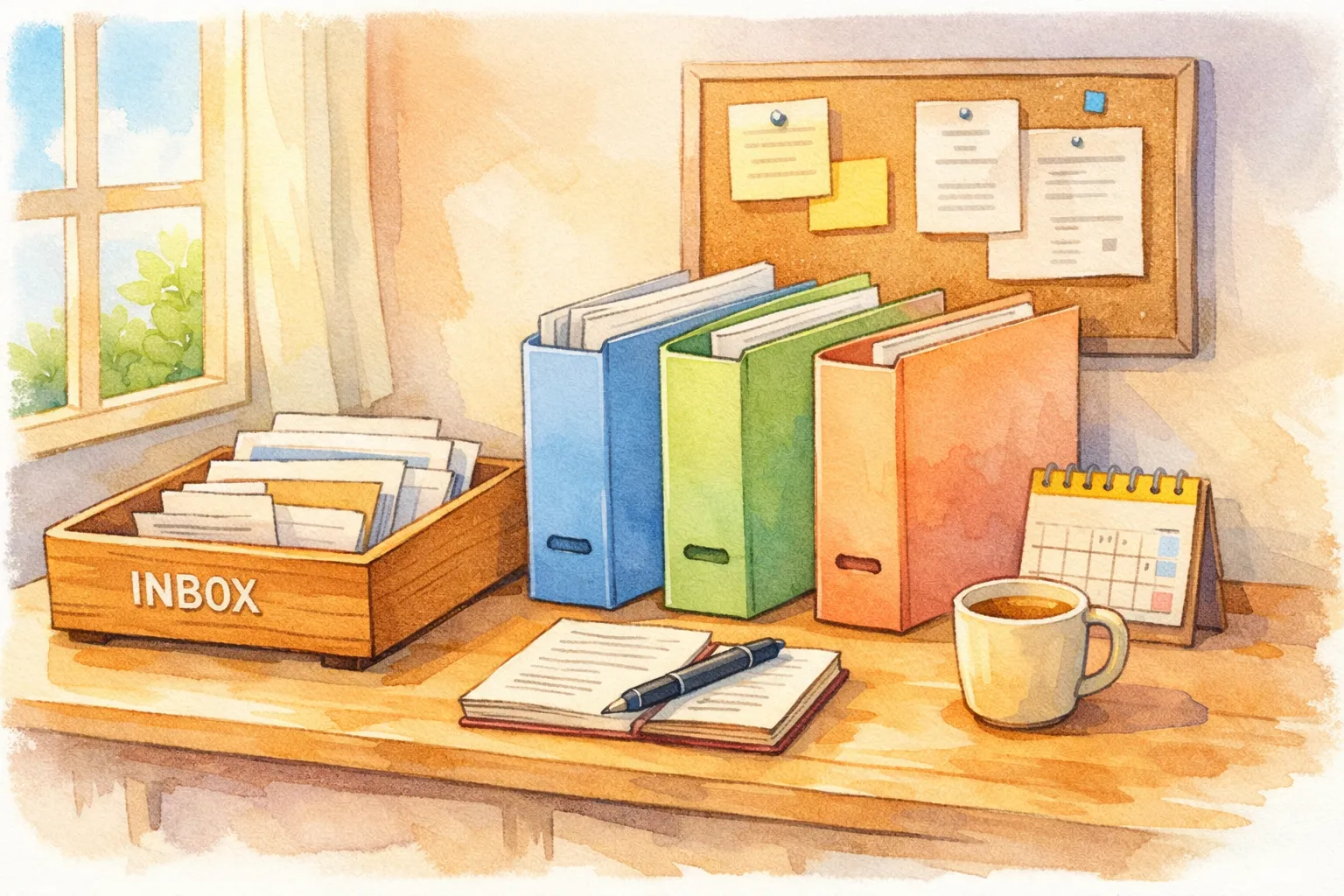
    “Calm paper organization system for seniors who hate apps with an inbox tray and three folders for to-do, file, and shred”
    “A calm paper system isn’t fancy—it’s predictable. One inbox, three folders, and a 10-minute weekly reset.”

    Cindy’s Column × Senior AI Money

    Prepared doesn’t mean complicated. It means steady.

    If you’ve ever tried an app “to get organized” and felt more stressed than before, you’re not alone. Many adults 55+ tell me the same things:

    • “I don’t want more passwords.”

    • “I don’t want notifications.”

    • “I just want to know where my paperwork is.”

    • “I’m tired of searching for things when I need them.”

    This 2026 guide is for seniors who want a paper system that feels calm, practical, and easy to maintain—without turning your home into a filing cabinet.

    This is not about being perfect.
    It’s about building a small system that keeps important things findable—especially when you’re tired, sick, or in a hurry.


    Why a paper system still works (especially after 55)

    Paper has a few quiet advantages:

    • It doesn’t need charging.

    • It doesn’t update or change layouts.

    • It doesn’t lock you out.

    • It works during internet outages.

    • It’s faster than searching through “where did I save that?”

    For many seniors, the real goal isn’t “organization.”
    It’s reducing stress, avoiding missed bills or appointments, and making it easy for your future self.


    The 2026 Paper Rule

    One Core Rule: Paper only does three jobs—Capture, Decide, Store.

    That’s it.

    • Capture: papers enter one place, not many places

    • Decide: you make one small decision about what happens next

    • Store: important papers live in predictable homes

    If a paper system tries to do more than that, it usually collapses under its own weight.


    Part 1: The only supplies you actually need

    You don’t need a printer, label maker, or fancy binders.

    Start with:

    1. One “INBOX” tray or basket (for incoming papers)

    2. Three folders (or three thin file pockets)

    3. One small notebook OR one single page “weekly plan”

    4. A pen you like

    Optional (only if helpful):

    • a zip pouch for medical cards / copies

    • a 12-pocket file organizer (for simple monthly sorting)

    The calm goal is: fewer tools, fewer decisions.


    Part 2: The simple 3-folder method (works in almost any home)

    Name your three folders:

    1. TO DO (things that need action)

    2. TO FILE (things you’re keeping, but not urgent)

    3. TO SHRED / RECYCLE (things leaving your life)

    That’s the whole sorting system.

    Most paper clutter isn’t “hard.”
    It’s just undecided.

    A folder system gives paper a place to land while you stay calm.


    Table 1: The Calm Paper System in One Page (2026)

    Section What goes here When you touch it Time needed
    INBOX tray mail, forms, receipts, notices once a week 10 minutes
    TO DO folder bills, calls, appointments, renewals 1–2 times/week 5–15 minutes
    TO FILE folder statements you keep, medical summaries, home docs once a week 5 minutes
    TO SHRED/RECYCLE junk mail, duplicates, expired papers once a week 3 minutes
    Home File (Archive) truly important long-term papers once a month 10 minutes

    If you can keep the INBOX small, your system stays light.


    Part 3: The “mail moment” that prevents piles

    Many seniors don’t struggle with paperwork because they’re disorganized.
    They struggle because mail arrives daily and life is already full.

    Try one calm rule:

    Mail gets opened near a trash can. Immediately.

    Then do this:

    • Toss obvious junk right away

    • Put “action items” into TO DO

    • Put “keep but not urgent” into TO FILE

    • Put anything uncertain into the INBOX (not the kitchen counter)

    You’re not finishing tasks in this moment.
    You’re simply keeping paper from spreading.


    Part 4: How to file without turning it into a project

    This is where many systems fail: people try to “file perfectly.”

    A calmer approach is a small archive with a few broad categories:

    • Medical

    • Home (lease, repairs, insurance, manuals)

    • Money (tax, banking, retirement, benefits)

    • Identity (ID copies, important records)

    • Car / Travel (if relevant)

    Inside each category, you can keep things in a simple stack.
    Perfect labeling is optional. Calm is the priority.

    If you have to make 20 decisions to file one paper, you won’t file it.
    If you have to make 2 decisions, you probably will.


    Part 5: The “10-minute weekly paper reset” (the part that makes it sustainable)

    A paper system survives when it has a weekly rhythm.

    Pick one day—many people like Friday or Sunday.

    Set a timer for 10 minutes:

    1. Empty your INBOX (not perfectly—just move papers into the three folders)

    2. Pull the TO DO folder and choose the next 1–3 actions

    3. Put everything else back where it belongs

    That’s it.

    You’re not solving your entire life in one sitting.
    You’re keeping your system from overflowing.


    Table 2: Weekly Paper Reset (10 Minutes) — a realistic rhythm

    Minute What you do Why it works
    0–2 Gather papers into INBOX stops the “paper spread”
    2–6 Sort into TO DO / TO FILE / TO SHRED reduces decisions later
    6–9 Choose 1–3 actions only prevents overwhelm
    9–10 Put folders back in place system stays visible and usable

    If you only do the first 6 minutes, you still win.
    Because the pile shrinks.


    Part 6: What goes in “TO DO” (and what doesn’t)

    Your TO DO folder should contain only papers that lead to a clear action.

    Good examples:

    • a bill you need to pay

    • an appointment reminder that needs scheduling

    • a renewal notice

    • a medical form that needs filling out

    • a letter that requires a call

    Not good for TO DO:

    • statements you’re simply keeping

    • catalogs

    • “maybe someday” papers

    If you put “maybe someday” into TO DO, your brain starts avoiding the folder.


    Part 7: A calm system for medical paperwork (the one most seniors care about)

    Medical paperwork causes stress because it can feel high-stakes.

    Try a very simple medical mini-system:

    • One Medical Folder (Active): recent visit summaries, referral notes, current test results

    • One Medication List Page (one sheet, updated when needed)

    • One Insurance/Benefits Folder (cards copies, letters, approvals)

    That’s enough for most people.

    The calm goal is: when a clinic asks a question, you can find the answer within 2 minutes—not 20.


    Part 8: Real senior examples (what “calm paper” looks like)

    Elaine, 69 (lives alone, hates apps)
    Elaine used to keep mail in three places: a kitchen pile, a side table pile, and a “I’ll deal with it later” bag. She switched to one INBOX basket and the 3-folder method.
    After 3 weeks, she told me the biggest change wasn’t organization—it was mood.
    “I don’t feel chased by paper anymore.”
    Her weekly reset took 9 minutes most weeks. She paid two bills on time that month without last-minute stress.

    Dennis, 76 (caregiver stress + paperwork overload)
    Dennis was managing paperwork for himself and occasionally helping a sibling. He didn’t want more systems.
    He used one TO DO folder and a rule: “Only 3 actions per week.”
    His stress dropped because he stopped trying to do everything at once.
    Within 6 weeks, he reduced his “paper panic” episodes from about 3 times a week to about once every two weeks—simply because the pile stopped growing.

    Maria, 66 (medical-heavy year)
    Maria had frequent appointments and was overwhelmed by test results. She created a “Medical Active” folder and kept only the last 90 days there, moving older items to archive monthly.
    She told me the biggest benefit was not having to re-read old paperwork every time she opened the folder.


    Printable Checklist: 2026 Calm Paper System (Seniors 55+)

    Copy/paste or print this checklist:

    • I have one INBOX tray/basket for all incoming paper

    • I have three folders: TO DO / TO FILE / TO SHRED

    • Mail gets opened near a trash can (junk removed immediately)

    • Action papers go into TO DO (not on counters)

    • I chose one weekly “paper reset” day (10 minutes)

    • During the reset, I pick only 1–3 actions to do next

    • Important categories have simple homes (Medical / Home / Money / Identity)

    • I keep a one-page medication list updated when needed

    • I do a monthly 10-minute archive tidy (optional, but helpful)

    Small note: A calm paper system is one you can repeat even on tired weeks.


    Common sticking points (and gentle solutions)

    “I don’t know what to keep.”
    If it feels unclear, place it in TO FILE temporarily. Decide later during your weekly reset.

    “I’m behind. I have piles.”
    Start with today forward. Then do one small “catch-up scoop” per week (only 10 minutes). The pile didn’t form in one day; it doesn’t need to disappear in one day.

    “I feel guilty throwing things out.”
    You’re not throwing out “responsibility.” You’re removing noise. Keep what supports your life now.


    Disclaimer (important)

    This article is for general educational purposes only and does not provide medical, financial, legal, or professional organizing advice. Individual health conditions, cognitive needs, mobility levels, and household situations vary. For personalized guidance, consider speaking with qualified professionals.


    Read More Post at artanibranding.com 

    Facing Fears by Ho Chang

  • 2026 Retirement “Calm Month” Plan (55+): A Simple Routine to Lower Bills, Reduce Stress, and Make Life Feel Lighter

    Two-panel pastel cartoon illustration showing a calm month plan for seniors in 2026, contrasting a cluttered, stressful month with a simplified, organized routine that reduces bills and daily stress.
    A 2026 Calm Month Plan for seniors: fewer surprises, simpler routines, and a month that feels lighter and more manageable.

    Cindy’s Column × Senior AI Money
    Calm systems for real life after 55.

    Some months feel like they swallow you.

    Bills come in waves.
    Appointments stack up.
    One “small” problem turns into five phone calls.
    And even if nothing terrible happens, you still feel… behind.

    A lot of seniors assume this is just how life is now.

    But often, it’s not age—it’s the lack of a calm monthly rhythm.

    This 2026 guide is for adults 55+ who want to:

    • lower day-to-day stress without becoming “disciplined”

    • reduce recurring costs without living in deprivation

    • avoid surprise bills and late fees

    • protect energy and independence

    • feel like life has more space in it

    This is a Calm Month Plan: a simple, repeatable routine you can run every month—paper-first, app-optional, and gentle.


    Why a “calm month” matters more than a “perfect budget”

    Many retirement money systems fail because they require:

    • tracking every purchase

    • constant attention

    • ongoing decisions

    • complicated categories

    That’s exhausting. And exhaustion creates expensive mistakes.

    A calm month approach does something different:

    • it reduces friction

    • it prevents surprises

    • it builds trust with yourself

    • it makes money feel less like a threat

    You’re not trying to control every dollar.
    You’re trying to stop money from stealing your peace.


    The 2026 Calm Month Principle

    Stability first. Optimization later.

    When your month is stable, everything gets easier:

    • decisions

    • health follow-through

    • relationships

    • spending

    • sleep


    Part 1: What causes a “messy month” after 55?

    Most messy months come from a few predictable patterns:

    Pattern A: Bills are scattered

    Different due dates. Different logins. Different payment methods.

    Pattern B: Small renewals pile up

    Subscriptions, insurance changes, price creep.

    Pattern C: Fatigue drives spending

    Takeout because cooking feels hard. Delivery because errands feel heavy.

    Pattern D: Too many commitments

    Appointments + errands + family needs = no recovery time.

    A calm month reduces these patterns with simple structure.


    Part 2: The 5-Part Calm Month Routine (done in short blocks)

    You’ll do five things during the month—each one is small.

    1. Calm Week 1: Money orientation

    2. Calm Week 2: Bills & renewals

    3. Calm Week 3: Home & health stability

    4. Calm Week 4: Joy planning (yes, intentionally)

    5. A 10-minute “month close”

    This is not a bootcamp.
    It’s maintenance that protects your life.


    Table 1: Calm Month Overview (copy/paste friendly)

    Week Focus Time Needed Outcome
    Week 1 Orientation 15–25 min You know where you stand
    Week 2 Bills & renewals 20–40 min Fewer surprises & leaks
    Week 3 Stability 20–45 min Less friction at home/health
    Week 4 Joy planning 15–30 min Less deprivation & impulse spending
    Month close Reset 10 min A clean start next month

    Part 3: Week 1 — Money orientation (no spreadsheet)

    This is the “am I okay?” check.

    Do these 3 steps

    1. Look at your main account balance

    2. List income sources coming this month

    3. Write top 5 essentials you must cover (housing, utilities, food, meds, transport)

    That’s enough to reduce background anxiety.

    The one sentence that matters:

    “My essentials are covered, or I need an adjustment plan.”

    If you need an adjustment plan, you still won—because you know early.


    Part 4: Week 2 — Bills & renewals (where most calm comes from)

    This week prevents late fees and silent leaks.

    Step A: Make a “Bills Page” (one page only)

    • bill name

    • due window

    • how it’s paid (autopay/manual)

    • where you access it (paper statement / portal / phone)

    Step B: Find one leak and fix it

    Leaks are usually:

    • unused subscriptions

    • insurance creep

    • duplicate charges

    • “convenience fees”

    • forgotten memberships

    Fix one leak per month and you’ll feel real progress.


    Table 2: Common Retirement Leaks (and gentle fixes)

    Leak How it shows up Gentle fix
    Subscription creep “I don’t remember this charge” Cancel 1 per month
    Delivery fatigue Fees + tips add up Keep 2 backup meals at home
    Insurance creep Premium increased quietly Review annually; ask about options
    Bank fees Overdraft/late fees Alerts + calendar reminders
    Duplicate services Multiple protection plans Keep one, remove extras

    The goal is not “cut everything.”
    The goal is “remove what doesn’t help.”


    Part 5: Week 3 — Stability (home + health + energy)

    You can’t have a calm month if daily life is full of friction.

    Pick one stability project:

    • clear one surface that creates stress (counter, bedside, entryway)

    • refill or organize medications for the week

    • schedule one important appointment

    • improve one safety point (lighting, cords, tripping hazards)

    Small stability wins reduce fatigue spending and help you follow through.

    Simple rule:

    Fix what makes you sigh every day.

    That sigh is your data.


    Part 6: Week 4 — Joy planning (this prevents impulse spending)

    Here’s the truth:
    Many overspending patterns happen because people feel deprived.

    So we plan joy on purpose.

    Choose 2 “low-cost joys” for the next month

    Examples:

    • one coffee outing

    • one library trip

    • one small hobby purchase (capped amount)

    • one visit with a friend

    • one scenic walk

    • one matinee movie

    Planned joy reduces:

    • impulse shopping

    • emotional spending

    • “I deserve it” splurges that lead to regret


    Table 3: Joy Planning Menu (low-cost, senior-friendly)

    Joy Type Example Cost Range
    Social coffee with a friend $5–$15
    Outdoors park walk + bench time $0
    Comfort cozy meal at home $5–$12
    Curiosity library + new book $0
    Creativity small craft project $5–$25
    Calm guided breathing / music $0–$5

    Joy doesn’t need to be expensive to be real.


    Part 7: The 10-minute “Month Close” (the magic step)

    At the end of the month, do this:

    1. Look at your balance and notice: surprising or expected?

    2. Write down one thing that worked

    3. Write down one friction point you want to reduce next month

    4. Choose one leak to fix next month

    5. Choose one joy you want to plan

    That’s it.

    This creates a calm loop:

    • awareness → small action → relief → repeat


    Table 4: Month Close Prompt (paste into a notes app)

    Prompt Your answer
    One thing that worked
    One thing that drained me
    One leak to fix next month
    One stability project
    Two planned joys

    Part 8: If you’re overwhelmed, start with the “minimum calm month”

    If your energy is low, do only these:

    • Week 1: essentials list

    • Week 2: one leak fix

    • Week 4: one planned joy

    • Month close: one sentence (“This month felt ____ because ____.”)

    Even the minimum version helps.


    Real-life examples (quiet wins)

    Diane, 67
    Did one leak fix: canceled a forgotten subscription at $12.99/month.
    But her biggest win was emotional:

    “I stopped feeling like money was sneaking up on me.”

    Ron, 74
    Chose one stability project: cleared the entryway and added a place for keys.

    “I didn’t realize how much that daily searching drained me.”

    Helen, 70
    Planned joy: two low-cost outings per month.

    “When joy was planned, I stopped ‘treating myself’ out of stress.”

    No miracles—just less friction.


    Printable checklist: 2026 Calm Month Plan

    • Week 1: “Am I okay?” essentials orientation

    • Week 2: Bills page + fix one leak

    • Week 3: One stability project

    • Week 4: Plan 2 low-cost joys

    • Month close: 10-minute reset


    Disclaimer

    This article is for general educational purposes only and does not provide financial, legal, tax, or investment advice. Individual circumstances vary. For guidance tailored to your situation—especially regarding debts, benefits, or retirement withdrawals—consult a qualified professional.


    Read More Post at artanibranding.com

    Facing Fears by Ho Chang


  • 2026 Energy-Protecting Daily Habits for Seniors (55+): How to Stop Feeling Drained Without Doing Less of What Matters

    Pastel cartoon illustration showing energy-protecting daily habits for seniors in 2026, including a calm morning start, intentional rest, and reduced phone notifications.
    Energy-protecting habits for seniors in 2026: small daily choices that reduce fatigue and protect independence.

    Cindy’s Column × Senior AI Money
    Protecting energy is protecting independence.

    Many seniors don’t say, “I’m exhausted.”

    They say:

    • “I just don’t have the same stamina.”

    • “Everything feels like it takes more out of me.”

    • “By mid-afternoon, I’m done.”

    What’s frustrating is that this fatigue often isn’t caused by illness or age alone.
    It’s caused by small daily drains that quietly add up.

    This 2026 guide is for adults 55+ who want to:

    • protect their energy without shrinking their lives

    • stop feeling drained by ordinary days

    • understand where energy actually goes

    • make small changes that add up to more good hours

    This is not about doing less.
    It’s about doing things differently.


    Why energy changes after 55 (and why it’s not your fault)

    After midlife:

    • recovery time increases

    • sleep is more easily disrupted

    • stress affects the body faster

    • decision-making uses more energy

    • sensory overload (noise, clutter, screens) hits harder

    So energy loss often comes from friction, not weakness.

    The goal in 2026 is not “more energy.”
    It’s less unnecessary drain.


    The 2026 Energy Rule

    Protect energy before trying to increase it.

    When leaks are sealed, energy naturally returns.


    Part 1: The hidden energy drains most seniors overlook

    These don’t look dramatic—but they matter.

    Common daily energy leaks

    • too many decisions early in the day

    • cluttered visual environments

    • long, undefined errands

    • constant low-level notifications

    • rushing between tasks without rest

    None of these alone cause burnout.
    Together, they do.


    Part 2: The “energy budget” mindset (simpler than it sounds)

    Think of energy like money:

    • some activities cost energy

    • some are neutral

    • some restore it

    Your goal isn’t to avoid spending energy.
    It’s to spend it on what matters.


    Table 1: Energy Cost vs Energy Return (examples)

    Activity Energy Cost Energy Return
    Social lunch Medium High
    Long shopping trip High Low
    Short walk outside Low Medium
    Family conflict High Very low
    Quiet hobby Low High

    If something costs a lot and gives little back, it deserves limits.


    Part 3: Morning energy protection (before noon matters most)

    Energy lost in the morning is hard to recover later.

    Gentle morning protections

    • avoid heavy decisions early

    • delay news and email

    • eat something light

    • move gently before sitting too long

    This sets the tone for the whole day.


    Part 4: The power of “one hard thing per day”

    Many seniors unknowingly stack difficult tasks.

    Instead:

    Plan only one energy-heavy task per day.

    Examples:

    • doctor appointment

    • long drive

    • paperwork

    • emotionally difficult conversation

    Everything else becomes lighter—or optional.


    Table 2: Stacked Day vs Protected Day

    Time Stacked Day Protected Day
    Morning Errands + calls One key task
    Afternoon More obligations Rest or light activity
    Evening Exhausted Calm, present

    This single rule changes everything.


    Part 5: Social energy (often the biggest drain)

    Not all social time restores energy.

    Ask:

    • Do I feel better or worse afterward?

    • Do I need recovery time?

    • Am I doing this from love—or obligation?

    You can care deeply without overextending.


    Part 6: Energy-restoring habits that actually work

    Simple, repeatable habits:

    • daylight exposure

    • brief rest periods

    • predictable routines

    • comfortable environments

    • saying “not today” without explanation

    Energy returns when the nervous system feels safe.


    Table 3: Small Habits, Big Impact

    Habit Time Benefit
    10-min rest Short Reset
    Early dinner Easy Better sleep
    Fewer notifications Once Ongoing relief
    Clear one surface 5 min Visual calm

    Part 7: When low energy is a signal (not a failure)

    Sometimes fatigue is telling you:

    • you need more rest

    • you need support

    • something no longer fits your life

    Listening early prevents bigger problems later.


    Real stories (quiet changes)

    Marilyn, 72
    Stopped scheduling two demanding things in one day.

    “I stopped crashing by dinner.”

    Paul, 68
    Turned off notifications except calls.

    “I didn’t realize how tired my phone was making me.”

    Susan, 79
    Protected mornings from visitors.

    “I got my afternoons back.”


    Printable checklist: Energy-Protecting Habits (2026)

    • One hard task per day

    • Gentle mornings

    • Clear boundaries

    • Short rest breaks

    • Fewer notifications

    • Say no without guilt


    Disclaimer

    This article is for general educational purposes only and does not provide medical advice. Fatigue and energy levels vary by individual health conditions and medications. Consult a qualified healthcare professional if low energy is persistent or worsening.


    Read More Post at artanibranding.com

    Facing Fears by Ho Chang


  • Monthly Budget Checklist for Seniors on Fixed Income (2026)

    Six-panel panoramic infographic for seniors on fixed income (2026) showing a monthly budget checklist: confirm income, protect essentials, plan health costs, include small joys, set a spending limit, and do a mid-month check-in.
    Monthly Budget Checklist for Seniors on Fixed Income (2026): six calm steps to manage money without stress.

    A calm, realistic way to manage money without stress or spreadsheets

    When your income is fixed, money isn’t about growth.
    It’s about stability.

    Many seniors don’t overspend — they simply feel uncertain.
    Bills feel unpredictable.
    Prices keep changing.
    And budgeting advice online often feels written for people still earning more each year.

    This guide is different.

    It’s a monthly budget checklist designed for seniors on fixed income — calm, practical, and focused on peace of mind rather than perfection.


    Who This Budget Checklist Is For

    • Seniors living on Social Security, pensions, or retirement income

    • Older adults who want clarity without complex apps or spreadsheets

    • Anyone who feels anxious about monthly bills or surprise expenses

    • Seniors who want to protect essentials and still enjoy small pleasures


    Why Monthly Budgets Matter More Than Annual Plans for Seniors

    Annual budgets are abstract.
    Monthly budgets are livable.

    For seniors on fixed income, monthly planning helps you:

    • see cash flow clearly

    • catch problems early

    • avoid end-of-month stress

    • adjust gently instead of panicking

    This checklist focuses on one month at a time — because that’s how real life works.


    How to Use This Monthly Budget Checklist

    • Print it or write it by hand

    • Review it once at the start of each month

    • Update it once mid-month if needed

    • Stop when it feels clear — not perfect

    This is a support tool, not a test.


    Step 1: Confirm Your Monthly Fixed Income

    Start with what is predictable.

    Write down:

    • Social Security (net amount)

    • Pension payments

    • Retirement account withdrawals

    • Any regular support income

    Checklist

    • I know my total monthly income after taxes

    • I’ve confirmed payment dates

    • I’m not counting irregular or “maybe” money

    Clarity here reduces anxiety everywhere else.


    Step 2: Protect Essential Expenses First

    Essentials come before optimization.

    These usually include:

    • housing (rent, mortgage, HOA)

    • utilities

    • food

    • medications & health insurance

    • transportation

    Checklist

    • Essentials are fully covered by fixed income

    • I know which bills are non-negotiable

    • I can see which expenses are flexible

    If essentials don’t fit, the solution is adjustment or support, not self-blame.


    Step 3: Plan for Health Costs Separately

    Health expenses are often uneven — not monthly.

    Create a small health buffer category for:

    • co-pays

    • medications

    • medical supplies

    • unexpected appointments

    Checklist

    • I set aside something monthly for health costs

    • I know my deductible or out-of-pocket limits

    • I track medical bills separately from daily spending

    Separating health costs prevents them from overwhelming your regular budget.


    Step 4: Include “Life Enjoyment” on Purpose

    A budget without joy is not sustainable.

    Even on fixed income, plan for:

    • coffee out

    • small gifts

    • hobbies

    • short outings

    Checklist

    • I included a small joy category

    • I don’t feel guilty spending it

    • I keep it predictable

    Planned enjoyment costs less — emotionally and financially — than impulse spending.


    Step 5: Set One Simple Monthly Spending Limit

    You don’t need dozens of categories.

    Many seniors do best with:

    • one weekly spending allowance, or

    • one monthly discretionary limit

    Checklist

    • I know my “safe spending” amount

    • I track it simply (notes, envelope, or bank app)

    • I stop when the limit is reached

    Boundaries create freedom.


    Step 6: Prepare for Irregular Expenses

    Some costs don’t happen monthly — but they are predictable.

    Examples:

    • annual insurance

    • property taxes

    • gifts

    • home maintenance

    Checklist

    • I listed irregular yearly expenses

    • I divide them by 12

    • I save a small amount monthly

    This turns surprises into plans.


    Step 7: Do a Mid-Month Check-In (5 Minutes)

    Halfway through the month, ask:

    • Am I on track?

    • Did anything unexpected happen?

    • Do I need to adjust gently?

    Checklist

    • I check my balance calmly

    • I adjust without panic

    • I don’t judge myself

    Budgets are living tools.


    Common Budgeting Mistakes Seniors Make

    • Trying to copy younger people’s budgets

    • Ignoring small leaks instead of adjusting calmly

    • Feeling shame about needing help or changes

    • Making budgets too strict to maintain

    A good budget should reduce stress, not create it.


    A Simple Monthly Budget Rhythm

    • Start of month: review income + essentials

    • Mid-month: 5-minute check-in

    • End of month: note what worked and what didn’t

    That’s enough.


    30-Second Summary

    • Monthly budgeting works best for seniors on fixed income

    • Protect essentials first, then plan for health and joy

    • Keep categories simple and predictable

    • Small adjustments beat strict rules

    • A calm budget supports independence and peace

    Money management in retirement is not about control.
    It’s about confidence.


    Editorial Disclaimer

    This article provides general educational information about budgeting for seniors. It is not personalized financial, tax, or investment advice. For guidance specific to your situation, consult a qualified financial professional.


    Read More Post at artanibranding.com 

    Facing Fears by Ho Chang


  • Subscription Cleanup for Seniors (55+): Cancel These Quiet Budget Leaks in 30 Minutes

    Panoramic collage showing a subscription review list, a phone subscription settings screen, and a calm home money-check setup for adults 55+.
    A 30-minute subscription cleanup: find recurring charges, cancel what you don’t use, and keep your monthly budget calmer in 2026.

    Cindy’s Column × Senior AI Money
    A calm, practical money-and-life guide for adults 55+.

    Some expenses don’t feel expensive—until you add them up.

    A forgotten streaming add-on here, a “free trial” that quietly turned paid there, a delivery membership you barely use, a news subscription that keeps renewing, a phone app you don’t remember downloading. None of it feels dramatic in the moment, but together they can pull real money out of your month—money you’d probably rather keep for groceries, prescriptions, comfort, travel, hobbies, or simply peace of mind.

    This guide is a senior-friendly, no-shame system to do one thing well: find and stop quiet subscription leaks in about 30 minutes.

    No spreadsheets required. No new apps required. And you don’t have to cancel everything. You’re simply going to stop paying for things that no longer earn a place in your life.


    Why subscription cleanups matter more after 55

    Subscriptions are designed to be invisible. That’s the point.

    In retirement or semi-retirement, your financial life often becomes more “fixed”: predictable income, fixed bills, less tolerance for surprise fees. Subscription creep is especially stressful because it creates the opposite: small, repeated surprises you don’t remember agreeing to.

    A subscription cleanup helps you:

    • Reduce monthly outflow (even $20–$200/month is common)

    • Lower “money fog” and anxiety

    • Prevent overdrafts and late fees

    • Make room for spending that actually improves your life

    • Reduce scam risk (many scam charges masquerade as “memberships”)

    And the biggest benefit isn’t just savings. It’s control.


    The 30-minute plan (simple and realistic)

    Set a timer. The goal is progress, not perfection.

    Minute 0–3: Choose your method (pick ONE)

    Option A: Paper method (low-tech, reliable)

    • Grab a pen and paper.

    • Write: “Subscriptions to Review.”

    • You’ll list items as you find them.

    Option B: Email method (fast if you use email receipts)

    • Search your email for: “receipt”, “invoice”, “subscription”, “renew”, “trial”, “membership”.

    • Write down anything repeating.

    Option C: Bank/credit statement method (best visibility)

    • Open your last 1–2 months of statements.

    • Look for repeating charges or similar vendor names each month.

    You only need one method today.


    Minute 3–10: Find your subscriptions quickly (where they hide)

    1) Streaming + TV add-ons

    These often appear as separate line items:

    • a base plan + “premium channel”

    • an add-on you activated during a free preview

    • a bundle that rose in price

    What to look for:

    • multiple entertainment charges

    • unfamiliar channel names

    • duplicate services (two music apps, two video services)

    2) Phone apps and “in-app subscriptions”

    Many people don’t realize phone apps can charge monthly.

    Check:

    • iPhone/iPad: Settings → Apple ID → Subscriptions

    • Android/Google: Play Store → Payments & subscriptions → Subscriptions

    If this feels confusing, ask a trusted person to sit with you. It usually takes 2 minutes once you’re in the right menu.

    3) Delivery and “convenience memberships”

    These are easy to forget because they “help” occasionally:

    • grocery delivery memberships

    • free shipping memberships

    • restaurant delivery memberships

    Ask one question:
    “Would I pay for this again today?”
    If the answer is no, it’s a candidate to cancel.

    4) News, magazines, audiobooks, “learning” platforms

    These renew quietly and often use pricing that feels small.

    If you haven’t used it in the last 30 days, it’s probably not serving you.

    5) Health, fitness, and “wellness” subscriptions

    Be careful here. Some are worth keeping because they support mobility and routine. But many are aspirational purchases that become guilt charges.

    A gentle rule:
    If it causes guilt more than it provides comfort, pause it.

    6) Security, backup, and “device protection” services

    Some are helpful. Some are redundant. Some are sold aggressively at checkout.

    Examples:

    • identity monitoring

    • cloud storage upgrades

    • antivirus bundles

    • extended warranties

    You don’t have to cancel these blindly. You just need to verify:

    • Do I understand what it does?

    • Do I use it?

    • Is it overlapping with something else I already have?


    Minute 10–18: Sort into three buckets (keep it simple)

    On paper, make three headings:

    KEEP (worth it)

    You use it regularly and it improves your life.

    PAUSE (test it)

    You’re not sure. Cancel now, and if you truly miss it, re-subscribe later.

    CANCEL (doesn’t earn its place)

    You don’t use it, don’t enjoy it, or don’t remember agreeing to it.

    This avoids the trap of trying to decide everything perfectly. You’re just sorting.


    Minute 18–25: Cancel the “easy wins” first

    Start with the CANCEL list. Pick one to three items. That’s enough for today.

    Common easy wins for seniors

    • Duplicate streaming/music services

    • Unused app subscriptions

    • A “premium” tier you never use

    • Delivery membership you used once

    • A “trial” that became paid months ago

    • An old magazine/news subscription

    If you’re nervous about canceling:

    • Take a screenshot of the subscription details first (price, renewal date).

    • Write down the login you used (if you know it).

    • Then cancel.

    A senior-friendly cancellation script (phone or chat)

    If you must contact support, use plain language:

    “Hello. I’d like to cancel my subscription effective immediately and ensure there are no future charges. Please confirm the cancellation in writing and tell me the date my access ends.”

    If they try to keep you with a discount:

    • If you truly want it, fine.

    • If you don’t, repeat: “No thank you. Please cancel.”


    Minute 25–30: Set one protection habit so this doesn’t happen again

    The goal isn’t to do this every week. It’s to prevent new leaks.

    Choose one habit:

    Habit A: The “Subscription Day” (every two months)

    Put a reminder in your calendar:

    • March 1, May 1, July 1, etc.
      Spend 10 minutes checking recurring charges.

    Habit B: The “One-In, One-Out” rule

    If you add a new subscription, you cancel or pause one old one.

    Habit C: The “Email label” method

    Create an email label/folder called:

    • “Receipts—Subscriptions”
      Move receipts there so you can find them later.

    Habit D: The “No free trial without a note” rule

    If you start a free trial:

    • immediately write the end date on your calendar

    • add a reminder 2 days before renewal

    This one rule alone prevents a huge amount of wasted money.


    A simple table you can use (copy into your notes)

    Subscription Monthly/Yearly Cost Used in last 30 days? Bucket (Keep/Pause/Cancel) Renewal Date

    You don’t need to fill every row today. Even listing 5 items is progress.


    What if you see charges you don’t recognize?

    This is important. Unknown charges can be:

    • a subscription you forgot

    • a company name that looks unfamiliar (but is actually something you use)

    • or a fraudulent charge

    Do this calmly, in order:

    1. Check if the charge repeats monthly (that hints subscription).

    2. Search your email for the amount or vendor name.

    3. If still unknown, contact your bank/card issuer using the number on the back of your card.

    4. Avoid calling numbers listed in suspicious emails or texts.

    A safety note:

    • If anyone pressures you to pay via gift cards, crypto, wire transfer, or asks you not to tell family—treat that as a serious red flag.


    Why older adults get hit hardest by subscription creep (and why it’s not your fault)

    Subscription systems are designed to exploit human attention:

    • confusing menus

    • tiny “renewal” language

    • auto-renew defaults

    • vendor names that don’t match the app name

    • discounts that expire into higher rates

    None of that is a personal failure. It’s design.

    Your 2026 advantage is that you can choose a different value:
    clarity over convenience when convenience becomes expensive.


    A realistic example (illustrative)

    A 72-year-old checks two statements and finds:

    • Streaming add-on: $7.99/month (forgotten)

    • Two music services: $10.99 + $9.99/month (didn’t realize both were active)

    • Unused phone app: $4.99/month

    • Delivery membership: $14.99/month (used once)

    • News subscription: $12.00/month (rarely read)

    Canceling three of those saves about $30–$40/month, or $360–$480/year.
    That’s not tiny. That’s a buffer. That’s medicine copays. That’s a weekend trip. That’s relief.


    The gentle mindset that makes this easier

    Some people avoid canceling because subscriptions feel like “future optimism”:

    • “Maybe I’ll use it next month.”

    • “Maybe I’ll start exercising again.”

    • “Maybe I’ll watch those shows.”

    A kinder thought:
    If something becomes useful later, you can re-subscribe later.
    Your money doesn’t need to keep paying for “maybe.”


    Quick checklist (printable-friendly)

    • Pick one method: paper, email search, or bank statement

    • Find repeating charges (last 1–2 months)

    • Sort into Keep / Pause / Cancel

    • Cancel 1–3 items today

    • Add one protection habit (calendar reminder, one-in/one-out, trial note rule)

    • If you see unknown charges, verify safely with your bank/card issuer


    Closing: what success looks like

    Success is not canceling everything.

    Success is:

    • seeing what you’re paying for

    • keeping what truly helps

    • stopping what doesn’t

    • and creating a small system that protects you going forward

    If you cancel even one forgotten subscription today, you’ve already improved 2026.


    Disclaimer (legal safety, at the end)

    This article is for general educational purposes only and does not constitute financial, legal, or medical advice. It does not consider your personal circumstances. For individualized guidance, consult qualified professionals. If you suspect fraud or unauthorized charges, contact your bank or card issuer using official contact information.


    Read More Post at artanibranding.com 

    Facing Fears by Ho Chang


  • Senior-Friendly Online Banking Tips for 2025

    Senior-Friendly Online Banking Tips for 2025


    Meta Description

    Discover safe and simple online banking tips for seniors in 2025. Learn how to manage money, avoid scams, and stay confident with digital banking.


    Hero Image Prompt:
    A pastel-colored cartoon illustration with bold outlines, showing a smiling senior using a laptop for online banking at home.
    Add bold title text “Smart Banking” in the center-right.
    16:9, bright, senior-friendly.


    Summary Audio Script

    “Online banking has never been easier for seniors in 2025. With improved safety features, user-friendly apps, and clear tips, older adults can manage their money with confidence. Here’s how seniors can enjoy stress-free and secure online banking this year.”


    Getting Started

    Banking is an essential part of daily life, and in 2025, more seniors than ever are embracing digital banking tools. From checking balances to paying bills and transferring money, online banking makes financial management faster and more convenient. However, many older adults still feel hesitant due to concerns about scams, privacy, and complicated technology.

    The good news is that banks and credit unions are improving their platforms with seniors in mind. User-friendly designs, stronger security features, and dedicated customer support mean that online banking is now safer and easier than ever.

    This guide shares the most practical online banking tips for seniors in 2025. Whether you’re new to digital banking or already using it, these strategies will help you stay safe, avoid fraud, and make the most of today’s financial technology.


    How We Chose

    • Ease of Use — Only tools and tips that simplify the banking experience are included.
    • Accessibility — Solutions are designed for different levels of tech comfort, from beginners to confident users.
    • Price — Many online banking features are free, and we highlight options that don’t require expensive upgrades.
    • Safety — Protecting seniors from scams and fraud is a top priority.
    • Availability — All recommendations are widely available across major U.S. and global banks in 2025.

    Section 1 — Use Trusted Banking Apps

    The safest way to bank online is through your financial institution’s official app or website. In 2025, most banks provide easy-to-use mobile apps with clear layouts, large fonts, and voice-assist options. These apps let seniors pay bills, check balances, and deposit checks with just a few clicks.

    👉 Case Example: Maria, 73, was nervous about online banking until her credit union introduced a senior-friendly app with simplified menus. She now pays her utility bills online every month without needing to visit a branch.

    🔗 Consumer Financial Protection Bureau – Online Banking Basics


    Section 2 — Strengthen Your Security

    Security is one of the biggest concerns for seniors. In 2025, many banks now require multi-factor authentication (like a text code or fingerprint scan) to access accounts. Seniors should also create strong passwords that mix letters, numbers, and symbols.

    Never share login information with anyone, even family members, unless legally authorized. If you receive suspicious emails or texts claiming to be from your bank, always verify through the official app or phone number.

    👉 Case Example: George, 76, received a fake text message asking for his password. Because he only communicates through his bank’s app, he avoided the scam and reported it to customer service.

    🔗 Federal Trade Commission – Protecting Against Online Scams


    Section 3 — Automate Payments for Convenience

    Forgetfulness can sometimes lead to missed payments, which may result in fees or service disruptions. Online banking makes it easy to set up automatic payments for recurring bills such as utilities, insurance, or subscriptions.

    In 2025, many banks also allow seniors to receive text or email reminders before payments are processed, giving them control and peace of mind.

    👉 Case Example: Linda, 80, set up automatic bill pay for her electricity and phone. She no longer worries about due dates and says it makes her financial life stress-free.

    🔗 AARP – Online Bill Paying Guide


    Section 4 — Monitor Accounts Regularly

    Checking your account regularly is one of the simplest ways to detect fraud early. In 2025, most banks provide instant alerts for unusual activity, such as large withdrawals or out-of-state purchases. Seniors should review their accounts weekly or enable real-time notifications.

    This habit not only increases safety but also helps track spending and manage budgets more effectively.

    👉 Case Example: Charles, 79, gets a text alert every time his debit card is used. Last year, he quickly caught a fraudulent $200 charge and resolved it with his bank the same day.

    🔗 FDIC – Money Smart for Older Adults


    Bonus Tips

    1. Use a secure internet connection—avoid public Wi-Fi when banking online.
    2. Bookmark your bank’s official website to avoid phishing attempts.
    3. Ask a trusted family member or financial advisor to help set up accounts if you’re new to online banking.

    FAQ

    Q1: Are online banking apps safe for seniors?
    A1: Yes. Most banks use advanced security features like encryption and multi-factor authentication. Seniors should always download apps from official stores and avoid sharing passwords. Staying alert against scams adds another layer of protection.

    Q2: What should I do if I suspect fraud in my account?
    A2: Contact your bank immediately using the phone number on the back of your card or in the official app. Most banks in 2025 offer 24/7 fraud support and can freeze accounts quickly to prevent further losses.

    Q3: Can seniors pay bills online without extra fees?
    A3: Yes. Many banks and credit unions provide free online bill pay services. Some may even offer reminders or automatic payments at no additional cost, helping seniors save time and avoid late fees.


    Conclusion

    Online banking in 2025 is designed to be safe, convenient, and senior-friendly. By using trusted apps, strengthening security, setting up automatic payments, and monitoring accounts regularly, older adults can confidently manage their finances from home.

    The key is to start small—download your bank’s app, set up notifications, and try paying one bill online. With practice, online banking becomes a reliable tool that saves time, reduces stress, and offers greater financial control.

    Seniors who embrace digital banking not only stay independent but also protect themselves from fraud by staying informed. With these tips, managing money online in 2025 can be both simple and secure.